








How Arabusta Shaped Catimor Coffee in Yunnan
Catimor is a cross created in 1959 by Portuguese breeders, who mated Brazilian Caturra with Timor, a variety known as Arabusta. That Robusta lineage gave Catimor strong resistance to coffee leaf rust, the disease that swept producing countries from 1970 to 1990 and pushed many Latin American farms to plant it in the 1980s. Yunnan later adopted it as its main variety.
The trade-off is flavor: Arabusta also brings rougher, less delicate cup qualities than pure Arabica, which is why Catimor divides opinion. However, among arabica coffee producing countries, processing changes results. A V60 comparison of two Baoshan lots, washed and Red Cherry natural, shows how much sweetness and fruit a carefully handled Catimor can carry.
Catimor is one of the most controversial yet most widespread coffee varieties in the world. Thanks to its Robusta lineage, it has gained super-strong disease resistance, but it also carries the stereotype of having a rough flavor. From the perspective of Front Street, this article sorts out Catimor's breeding history and its introduction to Yunnan, explaining why it became the main variety of Yunnan coffee. At the same time, through a V60 brewing comparison of two Baoshan Catimor beans from Front Street—washed and Red Cherry natural—it concretely presents the flavor profiles Catimor can display under different processing methods, helping enthusiasts rediscover this everyday yet special coffee.

To learn more about specialty coffee, welcome to follow Front Street Coffee (Frontsteet Coffee).
The name Catimor may be familiar to people who often drink coffee, but they may not necessarily know its origins and development. Today, Front Street starts with Yunnan small-bean coffee and thoroughly sorts out the details of the Catimor variety.
Catimor
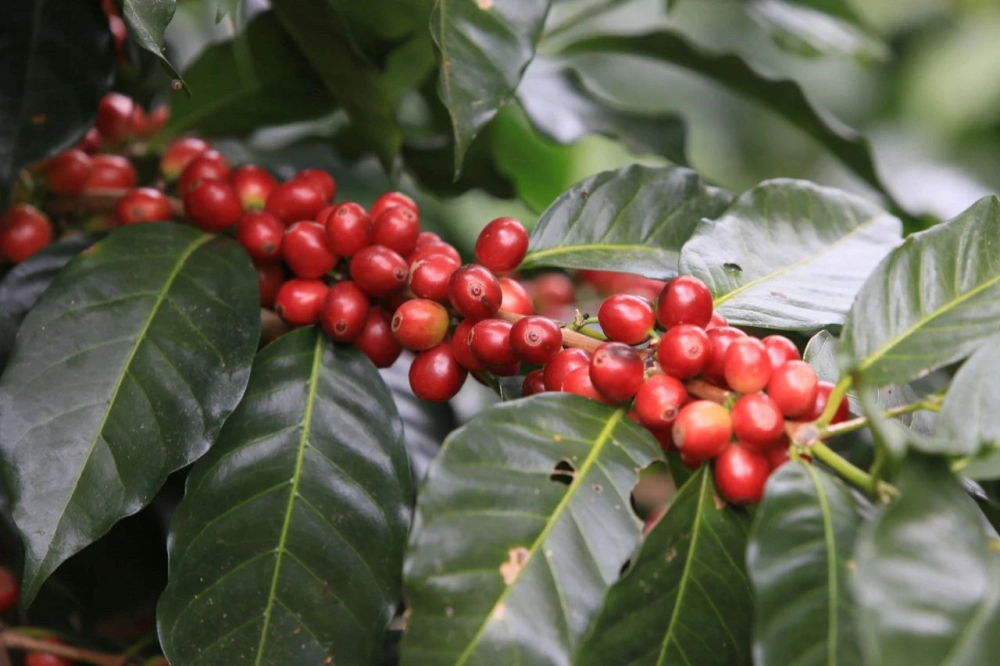
In 1959, the Portuguese crossed Caturra from Brazil with Timor to obtain Catimor, which has outstanding disease resistance. Today it has become an important player among commercial coffee beans. East Timor was ruled by Portugal for four hundred years, so the Portuguese were no strangers to local coffee trees. In 1959, they brought Caturra, a mutation of Bourbon from Brazil, to East Timor and crossed it with Timor, which carries Robusta lineage, and unexpectedly succeeded in breeding Catimor, which has extremely strong disease resistance and yield.
From 1970 to 1990, leaf rust swept through coffee-producing countries around the world. Promoted by international organizations, countries planted Catimor on a large scale to resist leaf rust and increase yields per unit. This highly disease-resistant plant has the ability to resist coffee leaf rust, so it was widely introduced by Latin American countries in the 1980s. Unfortunately, Timor variety (also known as Arabusta) is the product of a natural cross between Typica Arabica and Robusta. Although it can bring disease resistance, it also greatly reduces the delicate and elegant taste originally found in Arabica. Catimor inherited the disease-resistant advantages of Robusta, and along with them the genes for a rougher flavor. In addition, although early Catimor had high yields, it needed shade trees for protection, otherwise it was prone to withering.
Yunnan Catimor Coffee
In 1959, the Portuguese moved Caturra, a mutation of Bourbon from Brazil, to East Timor and crossed it with Timor, which carries Robusta lineage, successfully cultivating Catimor with extremely strong disease resistance and productivity. Because leaf rust spread to coffee-producing regions around the world, with the assistance of international organizations, producing countries began vigorously promoting Catimor to combat leaf rust and increase yields.
Starting in 1992, Nestlé established a coffee agriculture department specifically to guide and research the improvement and cultivation of Yunnan coffee. At the same time, it introduced high-yield and highly disease-resistant Catimor and purchased coffee at U.S. spot market prices. Catimor is not of pure Arabica lineage. It is the hybrid offspring of Timor variety (a hybrid of Arabica and Robusta) and Caturra (a mutation of Bourbon), so it contains about 25% Robusta lineage. It is precisely this portion of Robusta genes that determines its flavor shortcomings: the aroma is not rich enough in layers, the overall bitterness is relatively heavy, and it easily develops astringency and a pungent musty taste.
At present, the coffee variety commonly planted in Yunnan is Catimor and its improved varieties, which is what the market often calls Yunnan small-bean coffee. It can be said that most of what is currently planted in Yunnan is Catimor. This variety belongs to the cross between Caturra, a branch of the Arabica Bourbon line, and the Robusta line. The reason it is widely planted is that Catimor carries Robusta genes, giving it significantly stronger disease resistance than single older varieties, and its yield is also more guaranteed. By contrast, those delicate old varieties have poor disease resistance and low yields, so farmers naturally prefer to grow Catimor, and thus a Catimor trend swept through Yunnan.
Growth period: Yunnan small-bean coffee is a fruit-bearing tree at 3–4 years old.
Coffee is a short-day plant and has the characteristics of flowering multiple times with a concentrated flowering period. The flowering period of Yunnan small-bean coffee is from February to July, with the peak flowering period concentrated from March to May. Flowering is greatly affected by climate, especially rainfall and temperature. Coffee flowers have a very short lifespan, only 2–3 days. Small-bean coffee usually begins to open at 3–5 a.m. and is in full bloom from 5–7 a.m. Coffee fruit development takes a long time. Small-bean fruit needs 8–10 months to mature, generally maturing from October to December of the same year. Rainfall has a significant impact on fruit development, and climatic conditions directly affect fruit quality.
Speaking of Catimor processing methods, Front Street happens to have two beans with different processing methods, one washed and one Red Cherry natural. What differences will there be in their flavors? Front Street Coffee (FrontStreet Coffee) will brew them separately and compare.
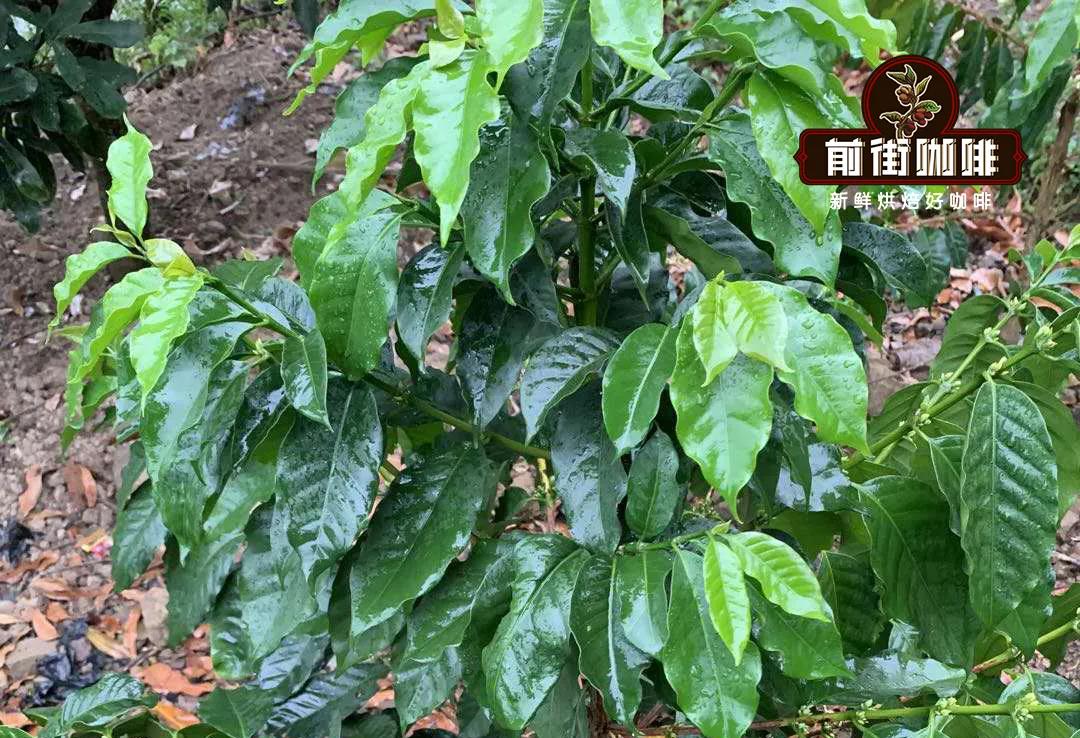
Front Street Coffee (FrontStreet Coffee): Yunnan Small-Bean Coffee Beans Region: Baoshan, Yunnan, China Altitude: 1200m Variety: Catimor Processing method: Washed
Front Street Coffee (FrontStreet Coffee): Yunnan Catimor Coffee Beans Region: Lujiangba, Baoshan, Yunnan, China Altitude: 1450-1550m Variety: Catimor Processing method: Red Cherry Natural
【Hario V60】Brewing
The ribs of the V60 dripper are arranged in curved lines from top to bottom, with varying lengths. During brewing, air is released smoothly and the flow rate is relatively fast, so the extracted coffee has clearer flavor layers. Next, Front Street will use the V60 to brew a pot of Yunnan small-bean coffee, using a staged extraction method to increase the bean's extraction rate.
Parameters and method: Grind size Ek43s setting 10 (80% passing through China standard No. 20 sieve), water temperature 91°C, coffee-to-water ratio 1:15. First bloom with 30 grams of water for 30 seconds. Pour until 125 grams and pause. When the water level drops and is about to expose the coffee bed, continue pouring to 227 grams. When the water level drops again and is about to expose the coffee bed, remove the dripper. The extraction time (starting from the bloom) is 1:42.
Yunnan Small-Bean Washed Brewing Flavor: melon, cucumber, cream, citrus, chocolate, almond, sweet orange, black tea sensation, with melon-fruit sweetness in the finish and a passion fruit-like acidity. The overall flavor layers are relatively clear.
Yunnan Catimor Natural Brewing Flavor: nuts, chocolate, spices, caramel, red berries.
The above content is compiled by CoffeeHunters, a coffee news website.


