







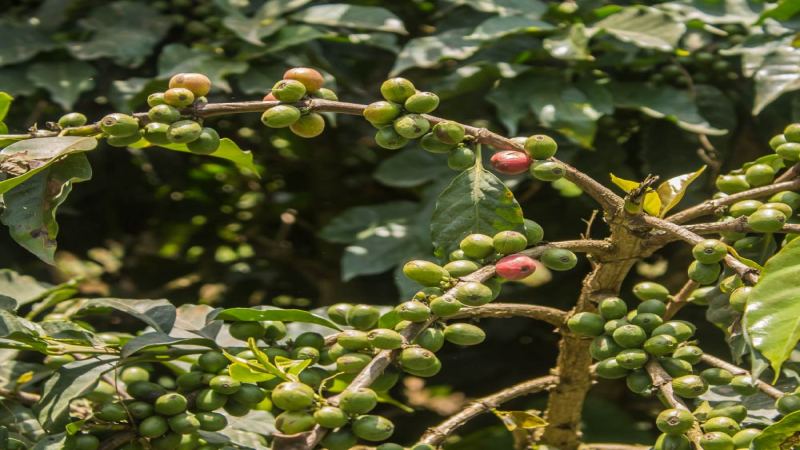
How does Kenya PB peaberry differ from normal two seeds coffee?
Kenya PB stands for Peaberry, the round bean formed when a coffee fruit develops only one seed instead of the usual two. In ordinary two seeds coffee, each bean has one curved and one flat side, like a peanut. A peaberry is oval and whole, sorted out during grading alongside size classes such as AA.
Kenyan coffee is graded by bean size and quality, and PB is kept as its own lot. The article also covers the SL28 variety, its history and cup character, plus V60 parameters using Sasini Estate PB and Front Street Asalia. Because a peaberry is a single rounded seed, it often roasts and extracts slightly differently from flat beans.
Kenyan coffee has always been renowned for its bright fruit acidity and rich mouthfeel, but there are also many questions surrounding it: What exactly do AA and PB stand for? What is the origin of SL28? Starting from Front Street Coffee's store experience, this article systematically sorts out the grading system of Kenyan coffee, explains in detail the origin and characteristics of PB peaberry, introduces the historical background and flavor performance of the SL28 variety, and takes the Sasini Estate PB and Front Street Asalia as two examples to provide complete V60 brewing parameters and tasting descriptions, helping coffee enthusiasts fully understand the unique charm of Kenyan coffee.
For more specialty coffee knowledge, please follow the WeChat official account: Front Street Coffee (FrontStreet Coffee)
Although Front Street's stores currently only retain Asalia among Kenyan coffees, in the past Front Street had a fairly rich reserve of Kenyan beans, and many Kenyan coffees can be found through the Coffee Review mini-program. In order to give everyone a chance to appreciate the flavor differences among different producing regions, Front Street tends to select batches that can reflect the typical characteristics of the producing region when choosing beans, thereby avoiding Kenyan coffees on the shelves having flavors that are too similar. However, around Kenyan coffee, consumers always have many questions in mind, such as "What does Kenya AA stand for," "What are the taste characteristics of Kenyan coffee," "How should Kenyan coffee be brewed to taste good," "What does the SL28 variety mean," and so on. Today, Front Street Coffee (FrontStreet Coffee) will systematically explain knowledge points related to Kenyan coffee and respond to the above questions one by one.
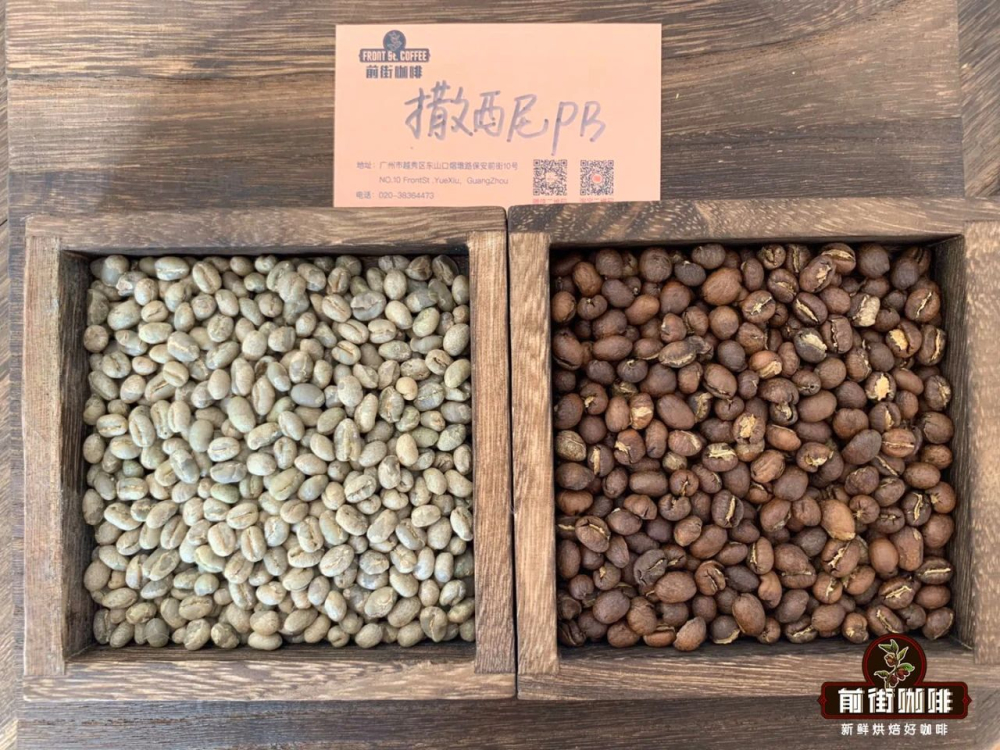
Let's first answer the most frequently asked question: What exactly do "AA" and "PB" refer to? Many consumers will see such English labels on Front Street's Kenyan coffee packaging. In fact, they represent the grading of Kenyan coffee. PB is the abbreviation of Peaberry, which is what is commonly called round bean. Generally, a coffee fruit contains two seeds, namely the coffee beans we commonly see, with one side curved and one side flat, shaped somewhat like a peanut; this is called a flat bean. A peaberry, however, means that a fruit contains only one coffee bean, oval in shape, and accounts for an extremely low proportion of the fruits on the entire coffee tree. Peaberries need to be manually sorted one by one, so the overall quality is relatively guaranteed, and it is not hard to understand why their flavor is outstanding.
Front Street Coffee (FrontStreet Coffee) previously launched a Kenyan Sasini Estate PB coffee bean. The following is information about this bean:
Front Street Kenya Sasini Estate PB
Region: Kiambu
Washing station: sasini
Variety: SL28
Altitude: 1650 meters
Processing method: Washed
It is not hard to see that this coffee bean is exactly a peaberry. Front Street has also simultaneously put other Kenyan AA coffee beans on the shelves, so besides these two grades, what other classifications does Kenyan coffee have? Front Street will explain them all clearly here at once.
Overall, Kenyan coffee is graded according to bean size (screen size), with a total of 7 grades: AA, AB, C, PB, TT, T, MH|ML. As explained earlier, PB is peaberry; AA-grade coffee beans are usually between 17 and 18 screen sizes, AB grade is between 15 and 16, and C grade is between 12 and 14; E grade refers to elephant beans, which, as the name suggests, are huge, above 18 screen size. TT grade is lighter-weight beans screened out from AA and AB, while T grade is lightweight beans selected from C grade. As for MH|ML, it refers to coffee fruits that naturally fall after ripening or are not harvested, accounting for about 7% of Kenya's total coffee production. These beans usually have very prominent acidity and are basically consumed locally. The largest export volume is still the high-quality AA and AB grades.
Therefore, the Kenyan coffee most familiar to domestic consumers is mostly AA grade, but above AA there are actually AA+ and AA TOP. If a bean is only labeled AA, it usually only indicates that it meets the AA size standard and does not specify a particular farm or cooperative; the flavor is not necessarily the best, and it only reflects neat bean shape and good appearance. If the label specifies a particular farm, cooperative, or even buyer, then no matter whether the bean is AA or AB, Front Street believes it is worth trying.
In order to give consumers a better experience, this Kenyan Asalia in Front Street's stores belongs to the AA TOP grade. Its basic information is as follows:
Front Street Kenya Asalia
Region: Thika
Washing station: Asalia
Variety: SL28
Altitude: 1550-1750 meters
Processing method: K72 washed
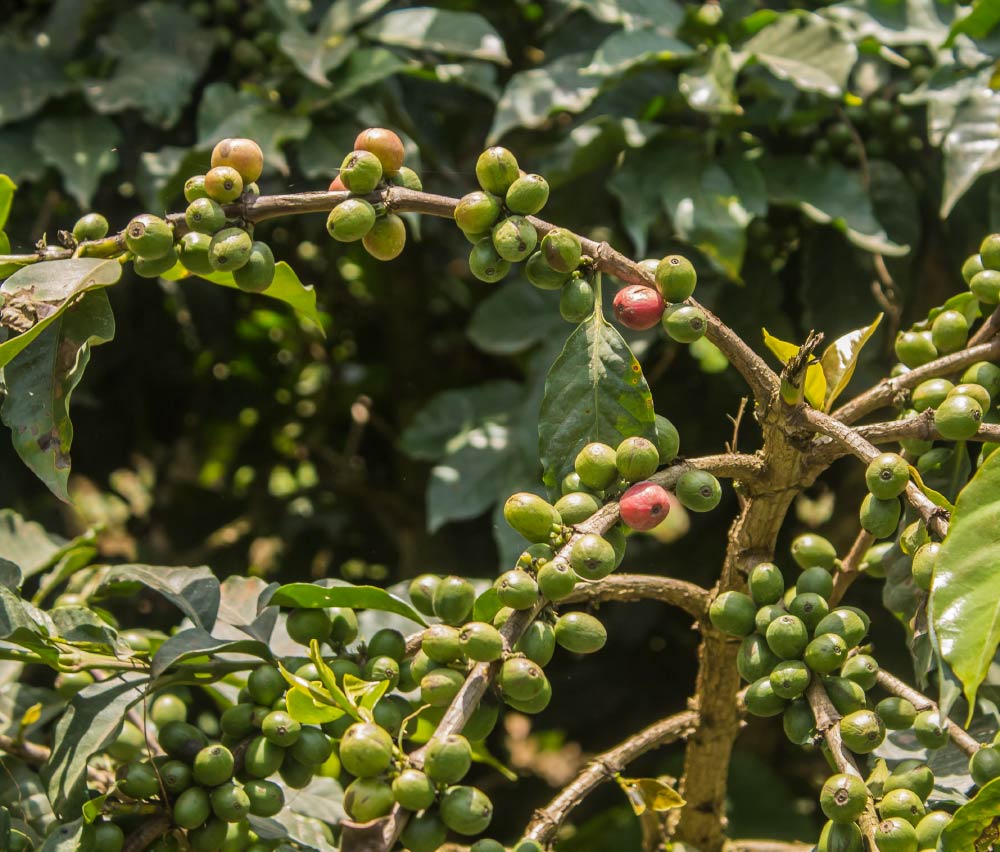
By this point, I believe everyone has noticed the common point of these two coffee beans—their variety is SL28. So what exactly is the origin of this unique variety? Front Street will briefly introduce it here: In the early twentieth century, French and British missionaries and researchers selected and cultivated this direct descendant of Bourbon in Kenya. Over more than a hundred years, it adapted to Kenya's highly concentrated phosphoric acid soil and gave birth to the unique acidic aroma spirit of Kenyan beans, completely different from Bourbon beans in Central and South America. This native Kenyan variety was created by Scott Laboratories in 1930, abbreviated as SL. Agronomists hoped to find a Bourbon that was both resistant to pests and diseases and had high-yield potential. After repeated experiments, SL28 was finally obtained. As a genetic variant, SL28 has mixed ancestry from French missionaries, Mocha, and Yemeni Typica. The original breeding goal was to produce coffee beans with both high quality and resistance to pests and diseases.
Although SL28's yield later failed to meet expectations, its bronze-colored leaves and broad-bean-shaped seeds gave it excellent sweetness, balance, and layered flavors, with prominent citrus and dark plum notes. This important variety let us understand the unique Kenyan style: strong and rich fruit acidity, full-bodied mouthfeel, and beautiful balance. Besides SL28, Scott Laboratories also developed varieties such as SL34 and SL14, but currently the mainstream coffee varieties in Kenya are SL34 and SL28. Sometimes you see both variety names in Kenyan coffee at the same time because coffee farmers did not strictly distinguish SL28 from SL34 when planting.
Kenya, located in East Africa, is one of the major coffee-producing countries, but it is mostly grown in the form of smallholders and cooperatives. Most Kenyan coffee is planted between 1,400 and 2,000 meters above sea level. Producing regions include Ruiri, Thika, Kirinyaga, Mt. Kenya West, Nyeri, Kiambu, and Muranga, mainly on the slopes of Mount Kenya and the Aberdare Range. In Kenya, many producing regions strive to preserve the native forest ecosystem, protect the natural gene pool, and support the reproduction of wild coffee varieties, thereby nurturing rich and diverse coffee trees.
Taking Front Street's Asalia coffee beans as an example, brewing still uses Front Street's standard production parameters:
Front Street brewing parameters:
V60 dripper
Water temperature 91°C
Water-to-coffee ratio 1:15
Coffee dose 15g
Grind size (80% passing through China No. 20 standard sieve)
Front Street brewing method: First bloom with twice the coffee dose in water, then pour in a small stream in circles until 125 grams for a stage break. When the water level drops and is about to expose the coffee bed, continue pouring until 225 grams and stop. When the water level drops again and is about to expose the coffee bed, remove the dripper. (Timing starts at the beginning of blooming.) Extraction time is 2 minutes 00 seconds.
Kenyan AA coffee characteristics and taste: During the wet aroma stage, ripe tomato and rich floral notes can be sensed. At high temperature, it presents caramel-like sweetness. After the temperature drops slightly, the acidity of cherry tomatoes and sour plum gradually appears. The acidity is very bright and the taste is clean. Front Street believes this is a coffee bean with a distinct personality, though due to changes in Kenya's soil composition in recent years, the small-tomato flavor in Kenyan coffee has somewhat diminished.
For professional coffee knowledge exchange and more coffee bean information, please follow Coffee Workshop (WeChat official account cafe_style)
For more specialty coffee beans, please add the private WeChat Front Street Coffee (FrontStreet Coffee), WeChat ID: kaixinguoguo0925
The above content is compiled by CoffeeHunters, a coffee news website.


