







Yunnan is the province with the largest coffee planting scale in China and has long enjoyed the reputation of "Hometown of Chinese Coffee," with the quality of its coffee also rising year by year. Nowadays, many cafés offer one or two Yunnan single-origin beans. This article focuses on Yunnan small-bean coffee, first sorting out the origins and characteristics of the main cultivated varieties (Catimor, Typica, Bourbon), then introducing the geographical conditions of the four major production regions—Pu'er, Baoshan, Dehong, and Lincang—followed by an explanation of the flavor differences among three products: Front Street Dark Cocoa Basic Blend, Front Street Yunnan Small Bean, and Front Street 2013 Yunnan Natural Typica. Finally, it provides V60 three-pour brewing parameters suitable for Yunnan coffee with a mid-range profile, and separately describes the mouthfeel of washed Catimor and natural Typica.
In China's coffee landscape, Yunnan ranks first in both planting area and output, and is therefore called the "Hometown of Chinese Coffee." In recent years, the quality of local coffee has continued to improve, and many cafés have one or two Yunnan single-origin options on their menus. If someone wants to get to know this production region, we usually introduce Front Street Dark Cocoa Basic Blend, Front Street Yunnan Small Bean, and Front Street 2013 Yunnan Natural Typica. All three possess the regional flavor of Yunnan while each having its own character.
What coffee varieties are grown in Yunnan?
Unlike the Robusta medium-bean coffee produced in Hainan, Yunnan mainly cultivates Arabica, also commonly known as small-bean coffee, which local farmers habitually call Yunnan small bean. At present, Catimor has the largest planting area in Yunnan, while Typica and Bourbon account for only a relatively small proportion.
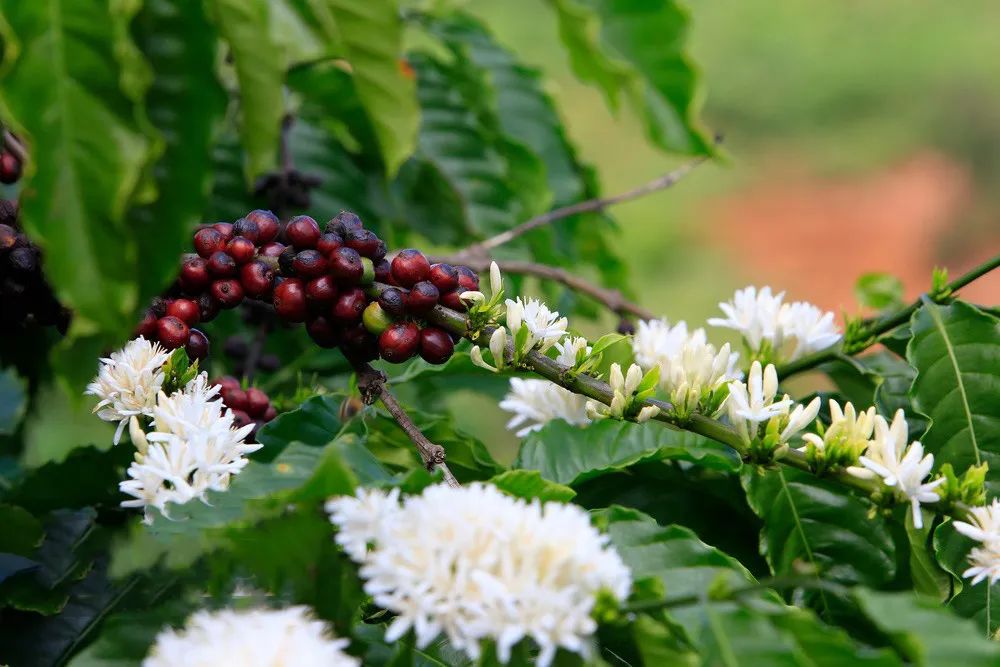
In 1952, in order to promote local agriculture, experts from the Yunnan Academy of Agricultural Sciences introduced 80 kilograms of coffee seeds (Typica and Bourbon), distributed them to farmers in Lujiangba, Baoshan, and taught scientific management methods. Yunnan thus entered a stage of large-scale cultivation. Most of the Yunnan Typica we drink today originates from trees planted during that period. Typica is a pure-line Arabica variety. The young leaves of the plant are bronze-colored, hence the name "red-top coffee." It can produce coffee with rich sweet-and-acidic notes and is recognized as a high-quality old variety. However, its disease resistance is quite poor, it is susceptible to disease, and its fruit yield per plant is also low, so it requires more labor to care for.
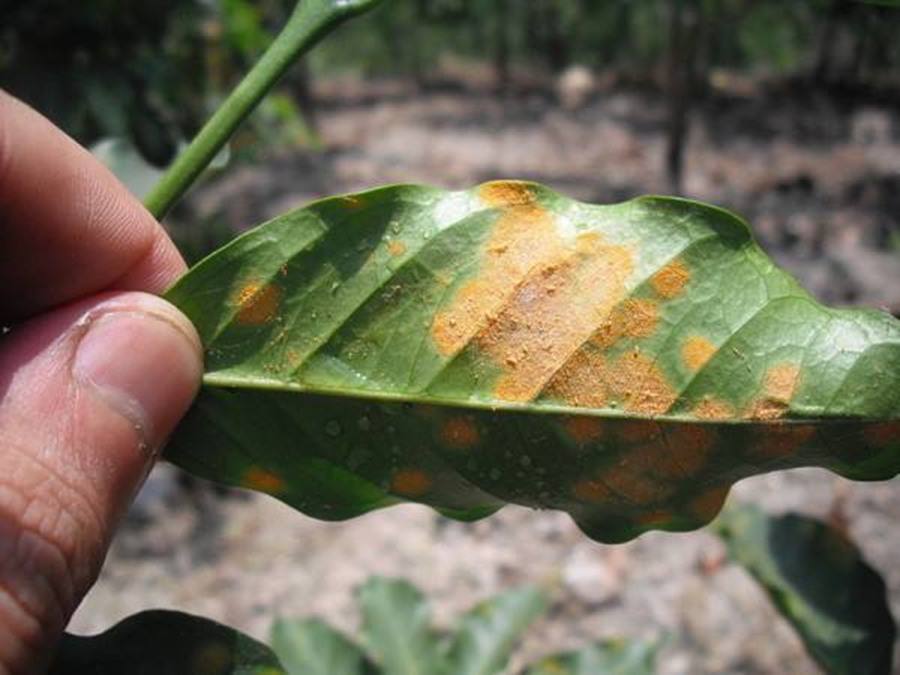
Entering the 1980s, leaf rust swept through coffee-producing regions around the world, and industry practitioners sought solutions one after another. In 1990, with the push of foreign-funded companies such as Nestlé, Yunnan introduced Catimor from Central South America, which had stronger disease resistance and higher yield, to replace the less profitable Typica. After that, Catimor spread across Yunnan on a large scale, and production rose steadily, but its flavor performance was not outstanding. In addition, due to limited green bean processing technology at the time, the resulting batches were often sold to Europe at low prices and used as one of the raw materials for instant coffee.
After the turn of the millennium, as the specialty coffee wave rose, Yunnan coffee gradually upgraded in every stage from seed selection and picking to green bean processing. Some coffee people able to go deep into the producing areas came to Yunnan to establish estates and introduce new varieties; for example, the well-known Geisha also began to take root in Yunnan. Front Street Yunnan Small Bean uses precisely the most widely planted Catimor.
The production areas of Yunnan small-bean coffee
Small-bean coffee is mainly grown in four production areas in southwestern Yunnan: Pu'er, Baoshan, Dehong, and Lincang. These places have the natural conditions of low latitude, high altitude, and large temperature differences between day and night.
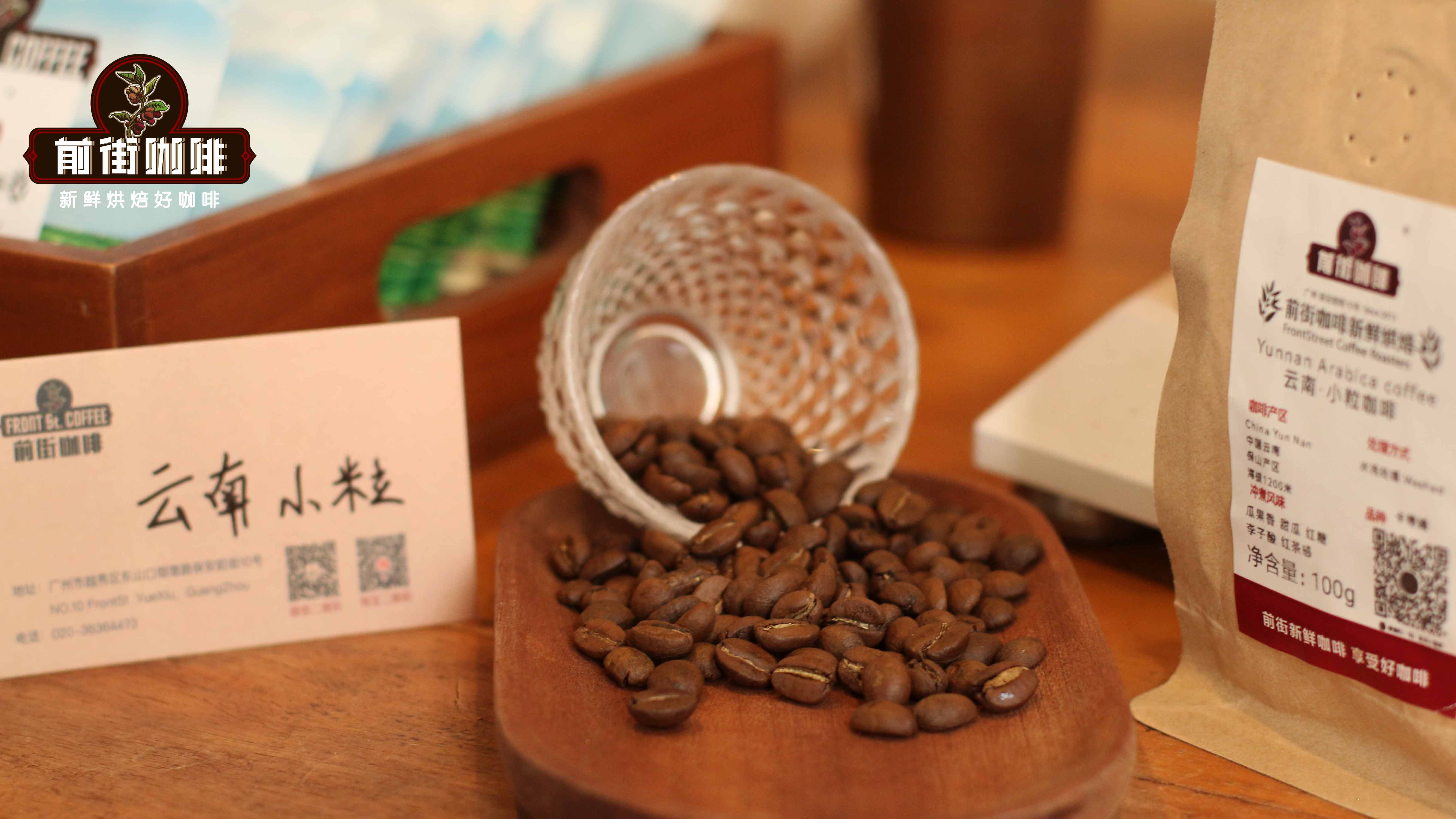
Baoshan is the place where small-bean coffee first became famous. It has a mountainous subtropical monsoon climate and is located on a low-latitude plateau. Its complex topography and landforms create a three-dimensional climate of "one mountain, four seasons; ten li, different weather." The local annual temperature difference is small while the daily temperature difference is large, with an average annual temperature of 14–17°C. Rainfall is abundant, with distinct wet and dry seasons and uneven distribution, and annual rainfall of 700–2,100 millimeters. The reasonable rainfall provides excellent conditions for the growth of coffee cherries and also creates the distinctive sweet aftertaste of Baoshan small-bean coffee. The beginner-friendly Front Street Yunnan Small Bean Coffee comes from Baoshan. It is listed as one of the representative everyday beans of this production region, allowing people to taste the flavor of washed Yunnan small bean.
There is also another Front Street exclusive product, Front Street 2013 Yunnan Natural Typica. The reason it is called exclusive is that it comes from Front Street's own estate.
In 2013, Front Street established its own estate in Lincang. Site selection, variety selection, seedling cultivation, planting, harvesting, processing, and roasting were all completed by Front Street, and a great deal of experience was accumulated in the process. Lincang is affected by the warm, humid airflow from the Indian Ocean and the southwest monsoon. The distinction between the four seasons is not obvious, but the dry and wet seasons are clear. Rainfall is relatively high, sunshine duration is long, and the frost period is short; in some areas there is no frost all year round. The three-dimensional climate is significant, and the average annual temperature in mountainous areas is 13–15°C. Front Street deliberately chose the most original Arabica variety—Typica. After 5–6 years of cultivation, Front Street finally harvested its first batch of fruit in 2020, used natural processing, and named it "Front Street 2013."
Front Street planted the coffee in a forest at an altitude of 1,300 meters. The day-night temperature difference brought by the high altitude allows Typica to accumulate more nutrients, and the ripening period is also later than that of low-altitude coffee. Every winter, Front Street begins busy harvesting, picking only fully red cherries at just the right ripeness, and turning them from time to time to ensure even drying. The mesh of the drying bed helps the fruit breathe and avoids negative flavors caused by over-fermentation. This natural Typica has a fuller body, with citrus and berry notes, as well as a hint of fermented wine aroma and caramel sweetness.
The mouthfeel characteristics of Yunnan small-bean coffee
Front Street's descriptions of coffee flavor are all based on freshly roasted beans. If stored for more than two months, most of the aroma has likely already dissipated. After roasting, coffee enters its best tasting period after a 4–7 day resting period. After that, the aroma volatilizes faster and the flavor is greatly reduced. Therefore, Front Street only ships beans freshly roasted within 5 days, so that everyone receives them when they are at their most aromatic stage.
If you are brewing Yunnan coffee for the first time, you can refer to the extraction parameters commonly used in Front Street cafés to brew a delicious cup of Yunnan coffee more quickly.
Considering that the flavor of Yunnan coffee belongs to a mid-range profile, Front Street uses brewing parameters different from those for light roasts and dark roasts to make the mouthfeel more balanced. Here, a medium-fine grind size and medium water temperature are used for extraction. Compared with other conical drippers, the V60 dripper has a larger outlet diameter, and the spiral ribs connecting the top and bottom make it easier for steam to escape, thereby enhancing flavor layering.
Dripper: Hario V60
Dose: 15g
Water temperature: 90°C
Grind size: 75% passing through a No. 20 sieve
Water-to-coffee ratio: 1:15
Three-pour pouring: Wet the coffee bed with twice the amount of water as the coffee grounds, forming a dome and blooming for 30s. Then pour in a thin stream in circles from the inside out until 125g, pausing in stages. When the coffee bed drops to half the height of the dripper, continue pouring the third stage with the same thin stream until 225g, and wait until all the coffee liquid has filtered through before removing the dripper. The time is about 2 minutes.
Front Street washed small-bean Catimor has a dry aroma of nuts and berries. On the palate, you can taste the sweet aromas of nuts, herbs, chocolate, and brown sugar, the balanced acidity of plum, and a lingering finish with a faint fruity acidity.
Front Street natural Typica, by contrast, presents aromas of dried fruit, chocolate, and roasted hazelnut, with a black-tea-like finish. The various flavors blend well, and the sweetness is very prominent.
The above content is compiled by CoffeeHunters, a coffee news website.


