







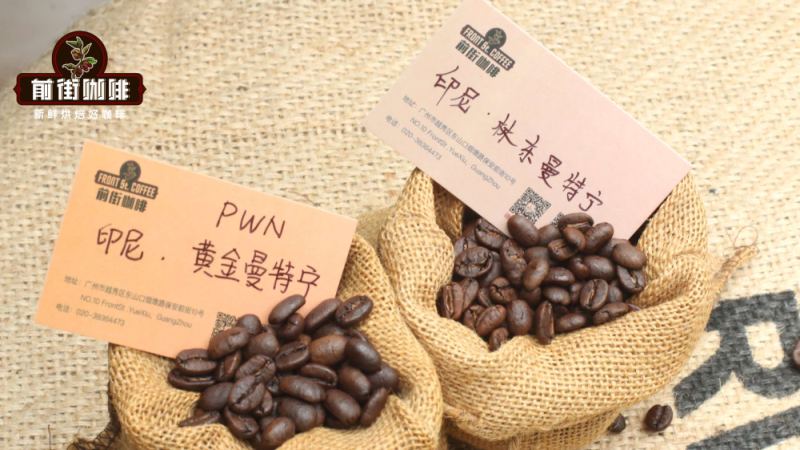
Mandheling is the most representative coffee of the Indonesian island of Sumatra, and the Golden Mandheling produced by PWN is the benchmark of quality among them. This article begins with the geography and climate of the origin, sorting out the high-altitude growing conditions in Aceh Province, North Sumatra Province, and around Lake Tawar and Lake Toba, explaining the roles of the Mandailing, Batak, and Gayo peoples in coffee cultivation, and analyzing how PWN's strict screening standards and Indonesia's unique wet-hulling method shape a regional flavor woven from wood, spice, and herbs. The article also introduces the product positioning of Front Street Lintong Mandheling daily beans and Front Street PWN Golden Mandheling, the medium-dark roast approach, and brewing recommendations such as the KONO dripper, 88°C water temperature, and a 1:15 coffee-to-water ratio, helping readers understand how to identify Golden Mandheling and where its flavor comes from.
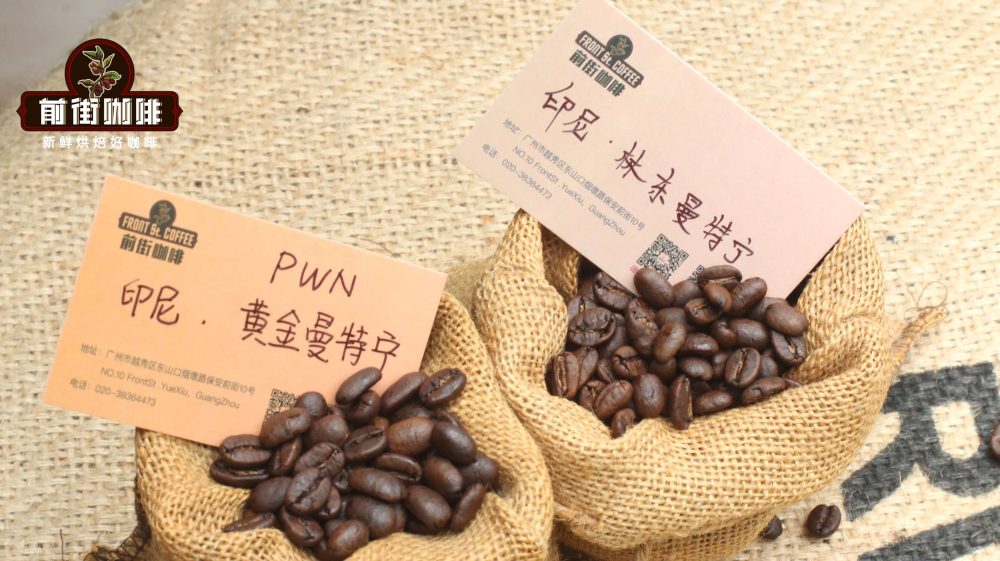
Most of the Mandheling we encounter day to day follows a dark roast profile, because only in this way can the acidity be suppressed and the thick bitterness take center stage. Front Street currently has two Mandheling coffees on sale: Front Street Lintong Mandheling daily beans and Front Street PWN Golden Mandheling. The former comes from Sumatra's Lintong region, the latter from the Aceh region, and both use a medium-dark roast. What Front Street wants to express is a tonality of dark chocolate and caramel, while not masking that rough, rugged herbal note of Mandheling. This distinctive aroma is closely tied to the environment where Mandheling grows and the way it is processed.
The homeland of Mandheling is the Indonesian island of Sumatra, an island that has always carried a certain mystique. The island is divided into eight provinces, but only the higher-altitude Aceh Province and North Sumatra Province grow Arabica coffee on any real scale. Sumatra has a tropical rainforest climate, with mist and clouds frequently shrouding the forests and mountains and rain falling almost constantly, adding a hazy veil to the island. Each year from September to April is the period when the coffee cherries ripen, and farmers can be seen busily picking throughout the mountains. Traditional Lintong Mandheling is cultivated by the Mandailing and Batak peoples, while the later-rising Lake Tawar Mandheling comes from the hands of the Gayo people.
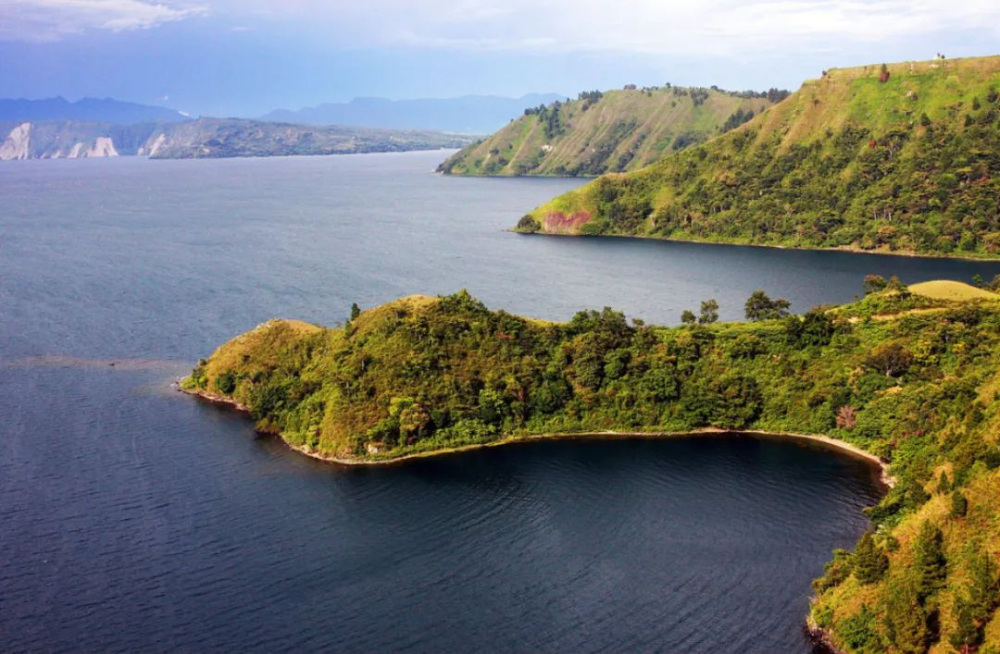
The locals arrange their coffee planting around two volcanic lakes, namely Lake Tawar and Lake Toba. The Gayo Mountains around Lake Tawar possess quite ideal coffee-growing conditions, organic farming is widely adopted, and combined with a long history of cultivation, the coffee produced in this area has advantages in both quality and yield. Many green bean traders therefore place particular importance on this region, among them the well-known local Pwani Coffee Company (PWN).
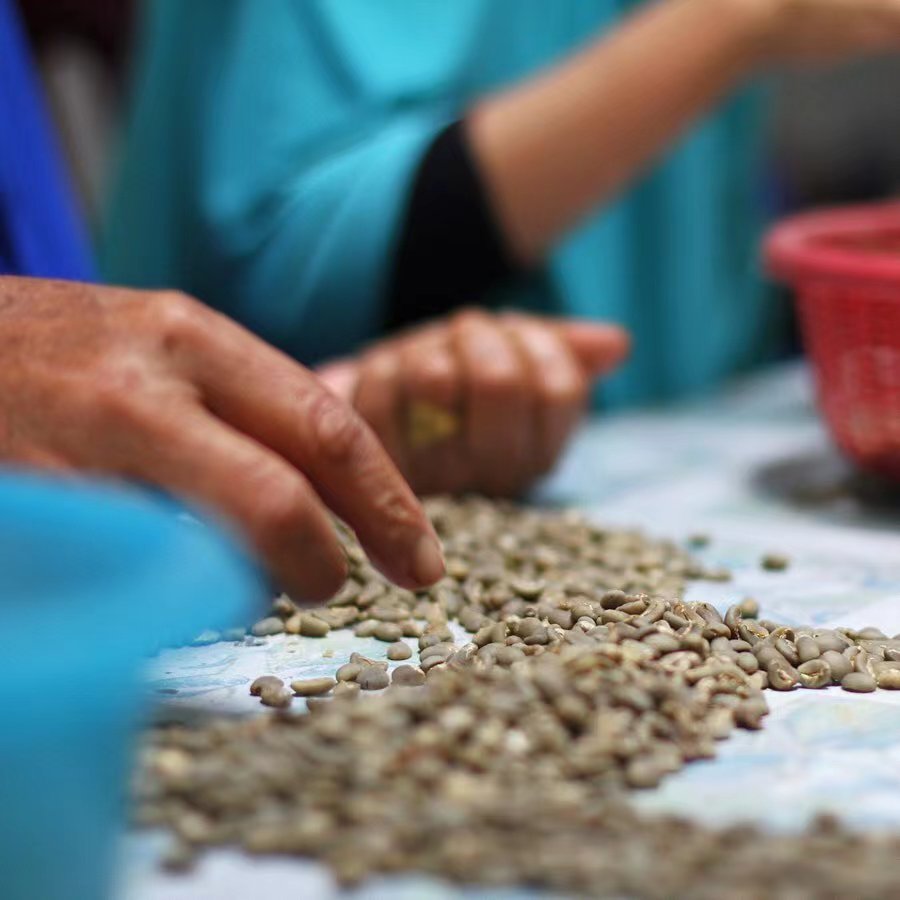
PWN's main business is purchasing high-quality Mandheling green beans. After buying them in, the beans undergo one mechanical sorting plus three rounds of manual hand sorting to pick out plump, defect-free beans, so the coffee beans it produces all reach specialty grade, and "Golden Mandheling Coffee" is precisely this company's signature product.
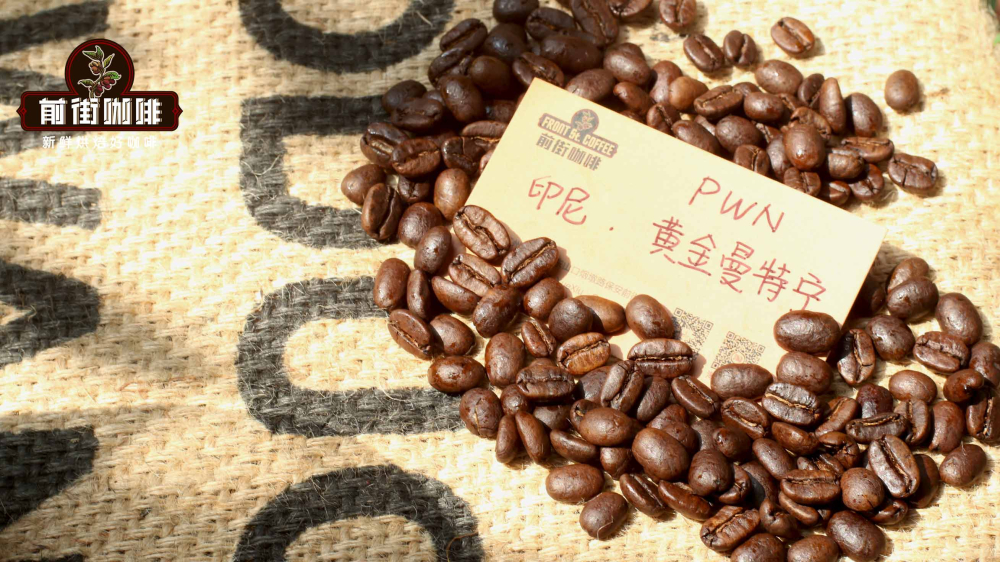
In order to monopolize the supply of Golden Mandheling, PWN registered the English trademark for "Golden Mandheling" very early on. In other words, only the Golden Mandheling produced by this company deserves to be called true Golden Mandheling. Front Street Golden Mandheling coffee beans are likewise "genuine goods" purchased from PWN, and they use Indonesia's unique wet-hulling method.
The flavor characteristics of Indonesian Mandheling stem from the wet-hulling method
The biggest difference between Indonesia and many coffee-producing regions lies in the local humid climate. Indonesia's humidity stays between 70 and 90% year-round, typhoons come without warning, and annual rainfall even exceeds 2000mm. Under such harsh weather conditions, there is simply no way to do the 2 to 3 weeks of sun-drying used in Africa; washed processing is both time-consuming and requires more labor and water resources, which Indonesia, with its goal of mass production, cannot afford. So the locals figured out a unique semi-washed method: wet hulling.
Coffee cherries with the skin and pulp removed are dumped directly into pools for a brief fermentation of a few hours. At this point a small amount of mucilage still remains on the parchment, and the sticky layer needs to be removed by scrubbing. The parchment beans are then taken out to dry. The first drying only needs to bring the moisture content down to 30–40%; after about two or three days, the coffee farmers resell the green beans to collectors. Once the collectors get these semi-dried parchment beans, they hull them directly by machine to extract the innermost green beans.
The friction of the hulling machine is considerable, tearing open the parchment layer clinging tightly to the green beans, and at this stage white or green mucilage often oozes out. Because the beans have been soaked in mucilage for a long time and are also in a humid environment, the green beans eventually become soft, pale, and swollen, taking on a grayish-green color. Under the agitation of friction, the green beans are also more easily crushed or bruised, especially at both ends, forming small notches, the so-called "goat hoof" beans. These "naked beans," stripped of the parchment layer, dry extremely quickly, but at the same time they are directly exposed to the humid air, and various microorganisms take the opportunity to grow. It is precisely this process that gives Indonesian coffee its unique notes of wood, spice, and herbs, what we often call the "taste of the region."
In order to compare the flavor differences among various Golden Mandheling coffees on the market, FrontStreet Coffee once bought several Golden Mandheling coffees for a blind test. As a result, FrontStreet Coffee's baristas could all accurately pick out Front Street PWN Golden Mandheling from a pile of Mandheling coffees. The reason is that the cleanliness of Front Street PWN Golden Mandheling is unmatched by other products.
Of course, for ordinary consumers, distinguishing Front Street PWN Golden Mandheling by taste alone is indeed quite difficult. Besides the flavor, consumers can also ask the merchant to show the jute sacks and origin certificates for Golden Mandheling green beans, to prove whether this Golden Mandheling really comes from PWN. Both of these proofs can be seen at Front Street's store in Yuexiu District, Guangzhou.
In order to highlight the mellow mouthfeel and rich, distinctive aroma of Golden Mandheling, Front Street set the roast level at medium-dark when developing the roasting curve. Therefore, for the brewing stage, Front Street's recommended parameters are as follows:
Dripper: KONO
Water temperature: 88°C
Dose: 15 grams
Coffee-to-water ratio: 1:15
Grind size: 70% passing through a Chinese standard No. 20 sieve
As for the choice of dripper, Front Street recommends using one with an immersion function, such as the KONO dripper, so that the final cup has a fuller mouthfeel.
First pour 30 grams of hot water and bloom for 30 seconds, then from the center point pour in a thin stream in slow circles up to 125 grams; when the water level in the dripper drops to where the coffee bed is almost exposed, continue pouring in circles up to 225 grams, for a total extraction time of about 2 minutes.
The above content is compiled by CoffeeHunters, a coffee news website.


