







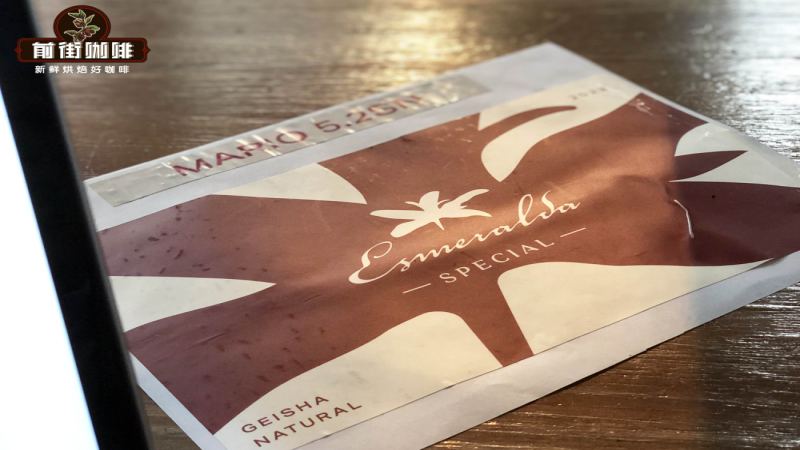
In the specialty coffee world, Geisha is almost synonymous with top-tier flavor, and Panama's Hacienda La Esmeralda is the force behind bringing this variety to legendary status. From its breakthrough at the 2004 BOP competition to repeatedly breaking auction price records, Hacienda La Esmeralda has defined the benchmark for Geisha through its unique terroir and processing techniques. This article will systematically review the history and differences of Hacienda La Esmeralda's Red Label, Green Label, and Blue Label, decipher the flavor codes of the three major plots—Jaramillo, Canas Verdes, and El Velo—and share Front Street Coffee's brewing recommendations for Red Label and Green Label Geisha, helping coffee enthusiasts fully understand this legendary bean.
For more specialty coffee knowledge, welcome to follow our WeChat public account: Front Street Coffee (FrontStreet Coffee).
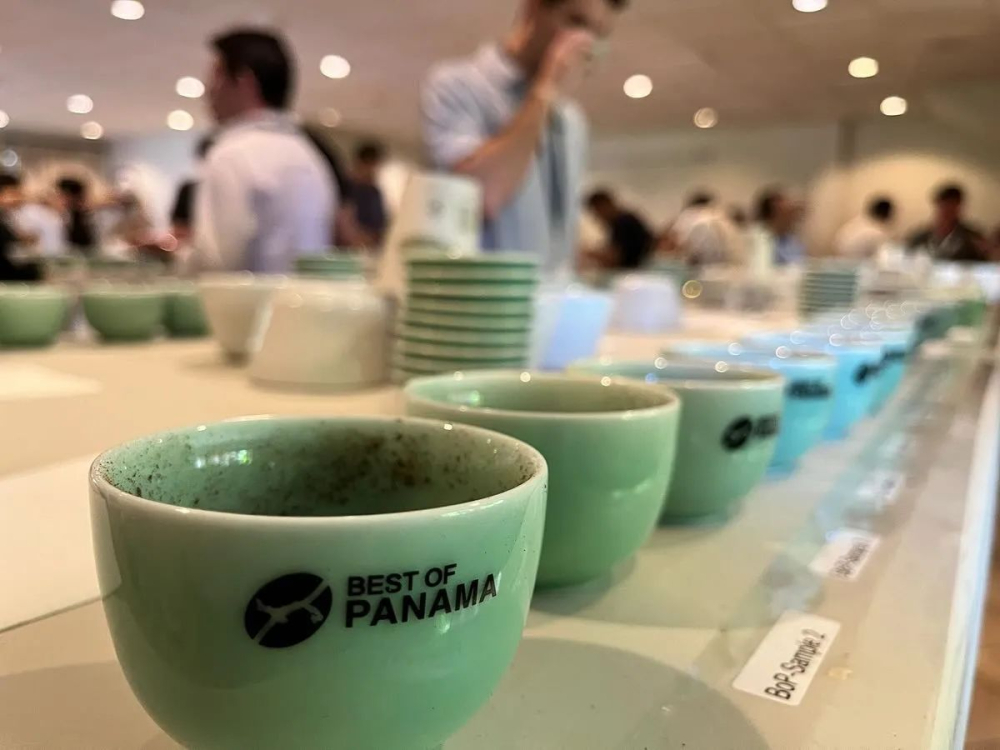
Nowadays, whenever people talk about "sky-high coffee," what comes to mind is basically Geisha; and when it comes to the ultimate representation of Geisha, the vast majority of baristas will unhesitatingly mention Panama's Hacienda La Esmeralda. In 2004, Daniel, the third-generation head of Hacienda La Esmeralda, brought a Geisha coffee bean whose flavor was not known for its body to the then BOP (Best of Panama) green bean competition, and adopted a light roast approach that was not yet popular at the time.
Front Street · Hacienda La Esmeralda Red Label Geisha displays bright rose floral and citrus aromas, full juice-like body, clear layers, and outstanding sweetness. The Green Label leans more toward intense jasmine floral notes, with honey-like sweetness in the mid-palate, and oolong tea and brown sugar sweetness emerging in the finish—the overall taste is clean and bright, unforgettable after one sip.
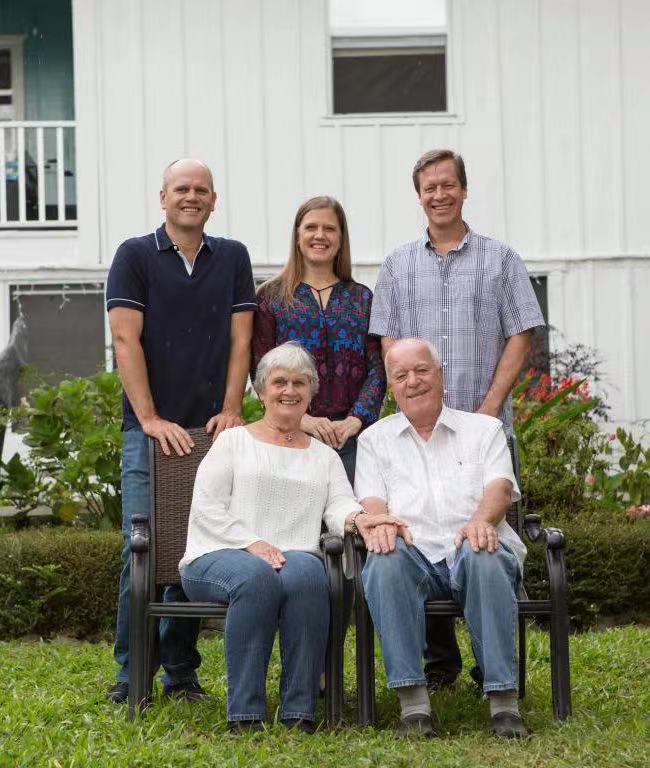
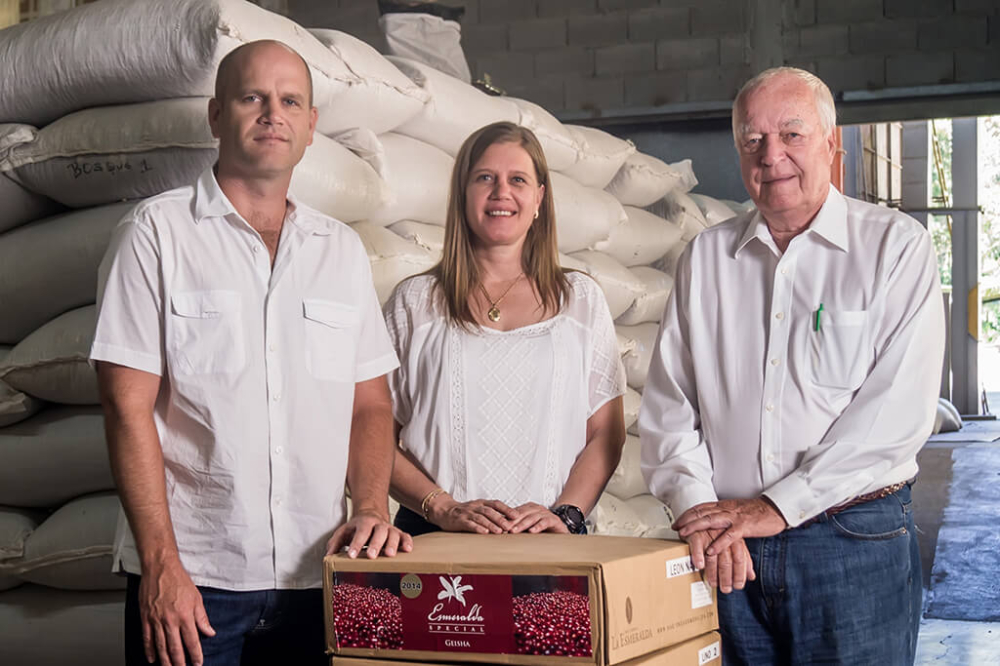
The first person on the left in the back row is Daniel.
In this competition, the fascinating floral and fruity aromas of the Geisha coffee bean not only conquered all the judges but also pushed the coffee industry into a whole new wave. According to Daniel's recollection, Geisha coffee was initially not favored; his father—Price Peterson, the second-generation manager of Hacienda La Esmeralda—even thought during the first cupping that these beans seemed contaminated by perfume and that no one would like them. But at the time, SCAA members thought this coffee was very special, so Daniel insisted on sending this distinctive batch of beans to the 2004 BOP, ultimately winning first place and rising to fame ever since.
Because the flavor of this batch of Hacienda La Esmeralda Geisha coffee beans was completely different from traditional Panamanian coffee, coffee grown in Panama became a hot topic in the industry almost overnight. Over the following decade or so, Panama coffee's status jumped from obscurity to high prominence. And Hacienda La Esmeralda's coffee beans set new price records in online auctions in 2004, 2006, 2007, and 2010. (Detailed prices are as follows)
June 2004, $21 per pound
May 2006, $50.25 per pound
May 2007, $130 per pound
May 2010, it even reached $170 per pound.
In addition to winning multiple championships in the BOP competition, Hacienda La Esmeralda has also won a large number of championship titles in other competitions, and in consecutive editions at that.
Specialty Coffee Association of America (SCAA) Cupping Competition Champion (2007, 2006, 2005) Specialty Coffee Association of America (SCAA) Coffee of the Year Second Place (2009, 2008) Best of Panama Champion (2010, 2009, 2007, 2006, 2005, 2004) Rainforest Alliance Coffee Quality Cupping Competition Champion (2009, 2008, 2007, 2006, 2004)
Precisely because of this, whenever people mention Geisha coffee, their first reaction is often Hacienda La Esmeralda. Even though many estates later also grew excellent Geisha and won championships, Hacienda La Esmeralda's position in the specialty coffee world remains unshakable.
Hacienda La Esmeralda is located in Boquete, a specialty coffee-producing region in Panama. The coffee grown in this area is mainly Typica, Bourbon, Catuai, and Geisha. Through careful care and special attention to the natural environment, the estate obtained Rainforest Alliance certification. Although Hacienda La Esmeralda is world-famous for the Geisha variety, its exceptional estate environment and green bean processing techniques also make its coffee beans highly esteemed.
Hacienda La Esmeralda mainly has three plots: Jaramillo, Canas Verdes, and El Velo. Each plot is further subdivided into smaller plots.
Jaramillo has an average altitude of 1600-1700 meters. This plot is subdivided into 5 small plots: Mario, Noria, Reina, Bosque, and Buenos Aires. The "Panama Hacienda La Esmeralda Natural Red Label Coffee Beans" sold by Front Street Coffee (FrontStreet Coffee) comes from the Mario plot.
Canas Verdes has an average altitude of 1600-1800 meters. Canas Verdes contains a total of 9 small plots: Lino, Coronado, Fundador, León, Montaña, Trapiche, Chinta, Cabaña, and Tumaco.
El Velo is the most recently purchased plot by Hacienda La Esmeralda, with an average altitude of 1700-1900 meters. El Velo includes a total of 7 small plots: Guabo, Portón, Durazno, Higuerón, Higo, Buena Vista, and Águila.
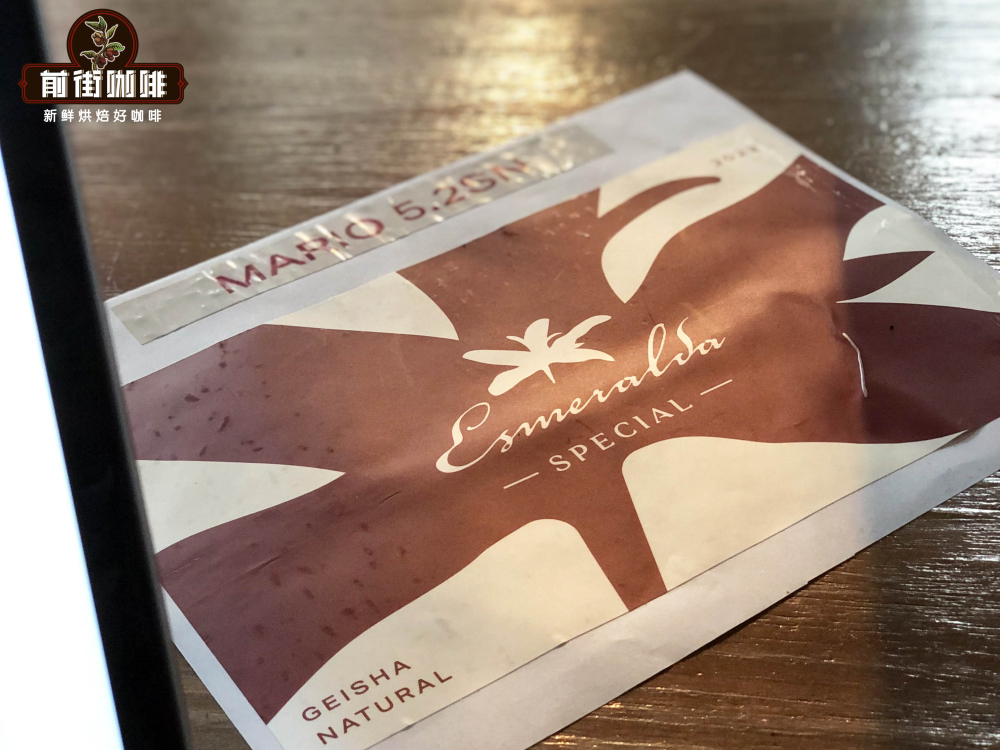
Hacienda La Esmeralda's current Geisha product line is divided into "Esmeralda Special" and "Private Collection," which are what we know as Front Street · Red Label Geisha and Front Street · Green Label Geisha.
The Esmeralda Special series (Red Label) is the highest-quality Geisha coffee bean sold by Hacienda La Esmeralda, grown at clearly defined plots at 1600-1800 meters altitude, and each lot must score over 90 points in cupping. This series usually comes from the two sub-estates Jaramillo and Canas Verdes.
Front Street Red Label lots also have another characteristic: each lot has an independent number, and all coffee beans in a lot come from the same small plot. For example, this year's new crop Front Street · Red Label Geisha comes from the Mario plot. In this way, buyers can choose the lot that suits them based on preferences for subtle flavor differences.
The Front Street Private Collection series (Front Street · Green Label Geisha), on the other hand, emphasizes the signature flavor of Hacienda La Esmeralda's high-altitude Geisha coffee and does not highlight a specific plot like the Red Label. This series is a blend of lots produced from various clearly defined plots. (In fact, Green Label can roughly be understood as Red Label without plot separation.)
Speaking of this, are some of you wondering: isn't there also a Blue Label? According to Front Street Coffee's understanding, Hacienda La Esmeralda officially announced in the 2021 crop year that it would no longer release the Blue Label series. We also saw on Hacienda La Esmeralda's official website that Blue Label has already been removed from the product introduction, and only Red Label and Green Label remain in the Geisha category.
Blue Label was originally named "Geisha1500," and because its logo has a blue background, it was simply called Blue Label. Blue Label was defined as a blend of Geisha coffee from around 1500 meters altitude across Hacienda La Esmeralda's three sub-estate regions (Jaramillo, Canas Verdes, and El Velo).
Currently, at Front Street Coffee's Tmall flagship store, you can purchase Front Street · Esmeralda Red Label Natural Geisha Coffee Beans and Front Street · Esmeralda Green Label Washed Geisha Coffee Beans. In order for everyone to taste the most complete flavor of the coffee beans, all coffee beans shipped by Front Street Coffee are dispatched within 5 days after roasting is completed.
In order to preserve the enchanting flavor of Hacienda La Esmeralda Geisha coffee beans, Front Street Coffee uses a light roast to retain Geisha coffee's bright acidity and captivating floral and fruity aromas.
Because Geisha coffee grows at high altitudes, the temperature difference between day and night gives the coffee beans enough time to grow and develop flavor, so Geisha variety beans are relatively hard and easily sink to the bottom and clog the drainage holes. Therefore, Front Street Coffee recommends a grind size with a 78% pass rate using China standard No. 20 sieve (about the size of fine granulated sugar), and a brewing water temperature of 90-91°C.
Front Street's recommended brewing parameters and pouring technique for Geisha coffee: 15g coffee grounds, paired with a Hario V60 small filter cup, then brew using a 1:16 coffee-to-water ratio.
Once everything is ready, use a three-stage brewing technique: start the timer, pour water for the first time up to 30g, and let it bloom for 30 seconds; then begin the second stage, pouring in a circular motion with a small stream of water up to 125g, wait until the water level in the coffee bed drops halfway before pouring again, then continue pouring in a circular motion with a small stream of water up to 225g, and after all dripping is complete, the total extraction time is about 2 minutes 10 seconds to 2 minutes 20 seconds.
The above content is compiled by CoffeeHunters, a coffee news website.


