








Robusta Coffee Beans: Origins, Flavor, and Market Applications
Robusta coffee beans belong to the Coffea canephora species, native to the forests of central and western sub-Saharan Africa. Today, where are robusta coffee beans grown? Vietnam leads global output, with Brazil, Indonesia, Uganda, and India also producing large volumes. These plants favor low altitudes and warm climates, and their hardiness makes them a reliable crop for many tropical regions.
Robusta beans contain roughly twice the caffeine of arabica, which contributes to their bitter, nutty, and earthy flavor. They have a full body and low acidity. Roasters use them in espresso blends to boost crema and strength, and instant coffee producers value them for cost and intensity. These qualities keep robusta in steady demand across the global coffee market.
In coffee shops, Arabica beans occupy an almost absolute mainstream position, while Robusta rarely appears as a single-origin offering. Both belong to the coffee family, yet they differ significantly in origin, morphology, growing conditions, chemical composition, and flavor expression. From Front Street's perspective, this article addresses common questions about these two varieties one by one: where Robusta originated, what its bean shape is like, what environmental requirements it has, how large the caffeine content gap is, why its disease resistance is stronger, and what coffee products it ultimately ends up in. Whether you are a beginner enthusiast or an advanced player wanting to understand blending logic more deeply, you can gain clear insights from this.
The names Robusta and Arabica are surely familiar to coffee lovers. But have you ever been puzzled by this: coffee beans sold in cafes are almost uniformly labeled Arabica, while Robusta is rarely seen as a single-origin offering? Both are coffee beans, so what exactly is the difference between them? Below, Front Street will sort out the matters concerning Arabica and Robusta one by one.
Q1: Where did Arabica and Robusta originate?
Arabica's lineage can be traced back to Ethiopia, and to this day that primeval forest still harbors a large number of coffee tree species that have not yet been named. Robusta originated in the Congo region of West Africa; it actually belongs to the Canephora species, also called the Congo species. Unfortunately, under Canephora only the variety Robusta has achieved commercialization and become widely known, so over time Robusta has almost become synonymous with the entire species group.
Q2: What are the differences in bean shape characteristics between Robusta and Arabica?
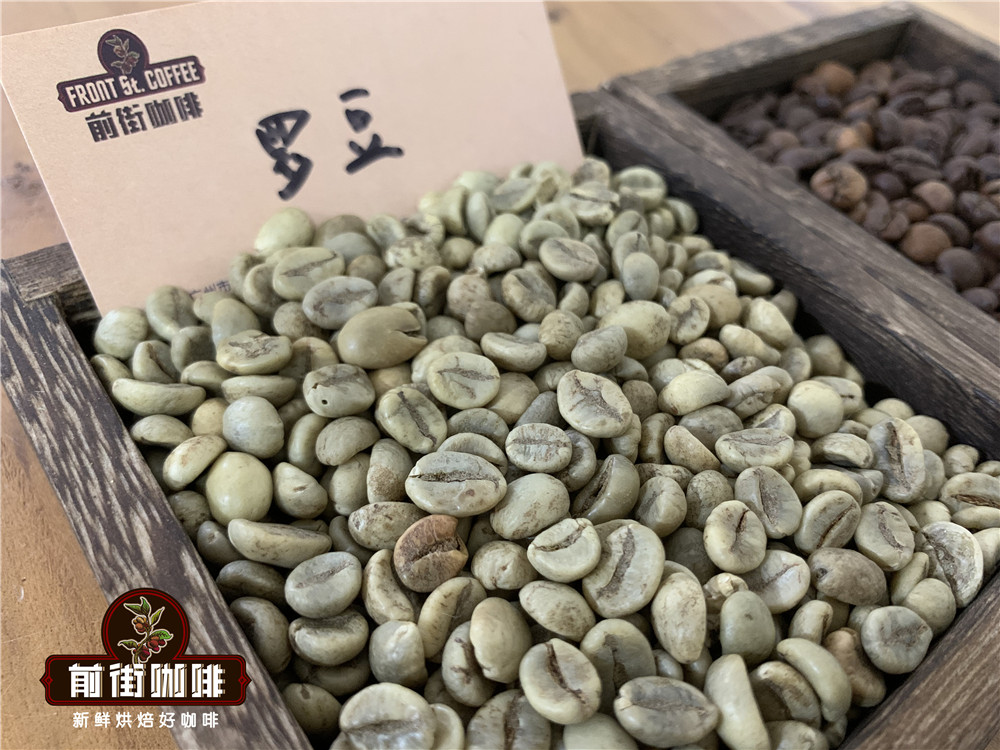
The fruit of Robusta usually contains only one seed, that is, one bean per fruit. The bean body is rather round, with a C-shaped outline, and the center line appears as a straight line shaped like the character "1".
The fruit of Arabica generally contains two coffee beans, though occasionally only one grows; because its shape is close to a three-dimensional oval, this kind of bean is called a peaberry or pearl bean. Normal Arabica beans are oval, rather slender and flat, with a center line curved like a "C" or "S".
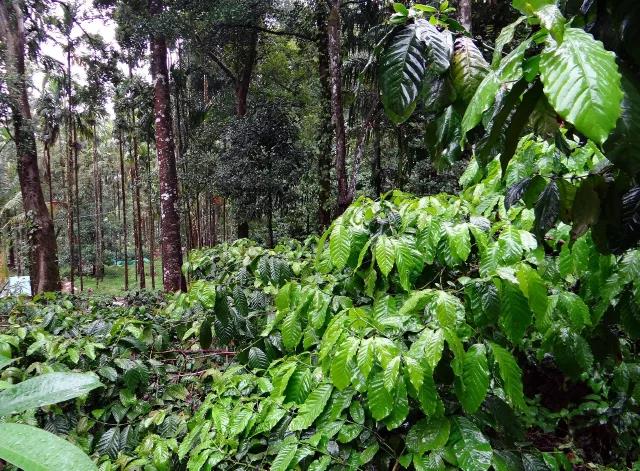
Q3: What are the differences in their requirements for growing environment?
Arabica is quite picky about cultivation conditions; suitable temperature and higher altitude are basic thresholds. Different altitudes, temperature changes, microclimates, humidity, and soil conditions will all cause obvious differentiation in Arabica's flavor direction. The day-night temperature difference brought by high altitude lengthens the coffee tree's growth cycle and also allows more complete accumulation of flavor compounds.
Robusta is not so particular; it can adapt to lower altitudes and higher temperatures. It grows faster than Arabica and has better tolerance when facing extreme weather. Vietnam, Brazil, India, and other countries widely cultivate Robusta, and China's Hainan also has it.
Q4: What are the caffeine contents of the two respectively?
Arabica's caffeine content is relatively low, roughly between 0.9% and 1.2%; its fat content is 60% higher than Robusta's; and its sugar content is twice that of Robusta. Precisely because of this, Arabica tastes clean and sweet on the palate, its acidity is usually relatively soft, and its flavor layers are quite rich. By contrast, Robusta's caffeine content is in the higher range of about 1.6% to 2.4%, with less fat and sugar, so its bitterness is more prominent and its impact is stronger. Caffeine itself is also the most effective natural defense against pests.
Q5: Why is Robusta's disease resistance superior to Arabica's?
After consulting materials, Front Street learned that Arabica coffee trees rely on self-pollination to reproduce, while Robusta uses cross-pollination, and the pollination process is directly related to genetic inheritance. Offspring produced by cross-pollination carry the genetic traits of both parents at the same time, and it is very possible for new characteristics to emerge, thereby helping the plant survive in changing environments. In comparison, self-pollinating Arabica is quite fragile; as generations reproduce, its genes only become more and more uniform, similar in principle to inbreeding in the biological world. Once it encounters a disease such as leaf rust that threatens coffee trees, Arabica plants carrying the same genes may all be wiped out. Robusta, however, can adapt to environmental changes by continuously adjusting its genes.
Q6: What are the flavor characteristics of Arabica coffee beans?
Arabica is mostly grown at high altitudes, with significant day-night temperature differences and a slow growth rhythm, so it has ample time for flavors to fully develop. Taking the familiar Typica, Bourbon, and Geisha as examples, after cupping Typica from different producing regions, Front Street believes that being quiet, clean, and balanced is the most distinctive label of this variety; Bourbon shows more excellent aroma and a fuller mouthfeel; what Geisha is most praised for is its rich floral fragrance and soft acidity.
Q7: What are the flavor characteristics of Robusta coffee beans?
As Front Street mentioned earlier, Robusta mostly grows in low-altitude regions, grows quickly, and its flavor formation is relatively limited. In addition, the Robusta coffee tree itself has a higher chlorogenic acid content—which is an important source of bitter substances—so its flavor is more full-bodied and lower-toned, often carrying notes of walnut, peanut, hazelnut, wheat, grain, and sometimes even a pungent earthy aroma.
Q8: Where are Robusta coffee beans usually used?
Although Robusta's flavor is not outstanding, it has extremely high body and rich oils. Most commercially available instant coffee uses Robusta as its raw material, and after adding large amounts of saccharin and creamer, it can still deliver a full-bodied texture. Front Street Coffee (FrontStreet Coffee), by contrast, takes a different approach, blending Robusta with Colombian and Brazilian coffee beans to create an espresso blend. Robusta contributes enhanced body and oils to this blend, while the Colombian and Brazilian beans bring rich nutty and cocoa aromas.
Professional coffee knowledge sharing. For more coffee bean information, please follow the WeChat official account: Front Street Coffee (FrontStreet Coffee)
The above content is compiled by CoffeeHunters, a coffee news website.


