







How does coffee aroma description training improve your tasting?
Tasting coffee is a learnable skill, not a fixed talent. Many daily drinkers notice only bitterness, yet the differences between roast levels, origins and processing methods are detectable with practice. A simple routine of tasting two or more coffees side by side builds sensory precision faster than drinking a single kind over and over, because comparison sharpens attention to aroma and flavor.
Start by buying two different coffees from a local roaster and asking the coffee bean roasters for details about each lot. Brew small batches in two French presses for a direct comparison, then record what you smell and taste. Keeping nasal passages clear matters, and quitting smoking helps, since much of coffee aroma description depends on the sense of smell.
Many people drink coffee every day, yet they can only taste bitterness and find it hard to distinguish the flavor differences between different beans. In fact, tasting ability is not innate. Through scientific and systematic sensory training, everyone can gradually identify the unique flavors of coffee with different roast levels, from different regions, and processed in different ways. This article will share a practical set of tongue training methods, from buying coffee, brewing comparisons, to recording tastes, to gradually help you improve your taste and smell sensitivity. It will also remind you of precautions during training, such as keeping your nasal passages clear and the importance of quitting smoking. As long as you keep practicing, you will find that the world of coffee is far richer and more wonderful than you imagined.
You say you love coffee, and you also say you have to drink several cups every day. Perhaps one day you will suddenly realize that this cup of coffee and that cup of coffee do not actually taste the same. In fact, as long as you practice systematically, we can absolutely distinguish the flavor differences brought by different roast levels, different origins, and different processing methods.
Through training, we can also identify the subtle taste differences between different kinds of coffee, and CoffeeHunters thinks this is also very important for improving the coffee experience. So today CoffeeHunters will share with you how to train~
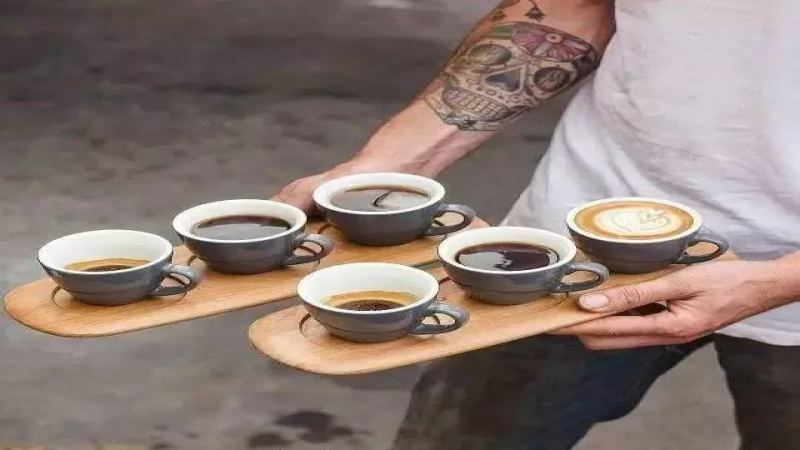
In comparative coffee tasting tests, we usually taste two or more varieties of coffee at the same time, which is extremely important for training sensory precision. If you always taste only one kind of coffee, your understanding of coffee flavors will not be comprehensive enough, and sometimes there will even be deviations.
How to train your tongue?
The process of training your tongue is not complicated. You only need enough patience and as many varieties of coffee as possible to improve your tasting ability. The following are the simple steps for training your tongue:
① Buy coffee
Go to a nearby roaster or café and buy two different kinds of coffee. When purchasing, ask the roaster or café owner for information about the coffee. The information they provide will be very helpful for your sensory training.
② Small French press coffee
Go buy two small French presses. The amount made at one time is just enough for you to use during tasting.
③ Brew the coffee
Use the two French presses to brew the two coffees separately. Using small French presses can minimize coffee waste.
④ Cool slightly
Although we all love drinking hot coffee, when training your senses it is best to let the coffee cool slightly. In this way, the coffee's flavors will be easier to identify.
⑤ Compare repeatedly
Once both cups of coffee are ready, now please sip the coffee in small amounts, taste carefully, and repeatedly compare the flavor differences between the two cups. Before tasting the other cup of coffee, wait a few seconds so that the taste of the previous cup does not affect your perception of the other cup's flavor.
⑥ Ponder the mouthfeel
Before you begin identifying flavors, first distinguish the mouthfeel of the two cups of coffee. Which cup is heavier? Which cup is cleaner? Record the mouthfeel you perceive so that later you can better distinguish the characteristics of the two cups of coffee.
⑦ Don't get too hung up on flavor
Although your goal is to train how to identify flavors, since you are only at the beginning stage, if you encounter a flavor that is hard to describe, don't get too hung up on it. You only need to record the tastes you detect, and afterward summarize and analyze them. As your training continues to deepen, one day you will taste more flavors!
⑧ Refer to the label
Here it should be explained that you should not look at the label before the training begins! You need to train your tongue based on your own feelings, rather than following other people's reference opinions step by step. But after the training ends, you need to refer to the label to judge whether your descriptions of flavor, mouthfeel, and body are accurate. This can not only help you accumulate more professional vocabulary, but also improve sensory precision.
So, how often should we train?
It is recommended to train as often as possible. Training is a process of gradual accumulation and cannot be achieved overnight, so frequent training will make your tongue more sensitive and make your perception of flavors more accurate. Moreover, after mastering certain techniques, the tasting process will become very interesting~
Other precautions
① Check your nose
Did you know that our sense of smell and sense of taste are actually interconnected? For example, when you have a cold and your nose is blocked, you cannot taste anything. This is because a cold blocks the nasal passages, making it difficult for the nose to perceive aroma. Therefore, before tasting, check whether your nose is clear.
② Quit smoking
Cigarettes will greatly affect the sensitivity of the tongue and other senses. But there is no need to worry too much. Even if you have smoked for a long time, quitting smoking will still allow your senses to recover to their original level. If you want to taste the subtle flavor characteristics of coffee, it is best to choose to quit smoking.
......

Anyone can taste the refined flavors in coffee as long as they keep training. You only need to practice patiently and keep accumulating, and the door to the world of coffee will open to you. In addition, CoffeeHunters would also like to remind you that when training your senses, you must use high-quality coffee bought from specialty coffee shops or roasters. Do not go astray by using inferior coffee. A specialty coffee brand like Front Street Coffee that can provide freshly roasted coffee and transparent information is a good choice for sensory training.
As long as you keep training, before long you will be able to taste the subtle flavor differences between one coffee and another. CoffeeHunters believes that with just a little effort, your coffee experience will also be greatly improved~
About coffee, here you will find everything you want.
The above content is compiled by CoffeeHunters, a coffee news website.


