







What defines Sidamo coffee flavor and natural processing?
Sidamo coffee comes from Ethiopia's Sidamo region, where volcanic soil and native varieties produce floral and fruity cups with a sweet finish. Beans from the Hambella area, sold as Huakui, are processed naturally, meaning whole cherries dry in the sun before the seed is removed, which builds the berry and stone-fruit character the region is known for.
Ethiopia grades and names coffee by origin, so Yirgacheffe and Sidamo sit in the same broad specialty system but differ in processing: Yirgacheffe is mostly washed, while Sidamo leans on natural methods. Brew Sidamo Huakui as a pour-over with water around 90-92C to keep the fruit notes clear.
Ethiopia, as the birthplace of coffee, is home to many distinctive specialty coffee regions, among which Sidamo and Yirgacheffe stand side by side as the two most renowned origins. With its diverse terrain, fertile volcanic soil, and abundant native varieties, the Sidamo region presents an extremely multifaceted flavor profile. This article will explore the region's geography, the origins of Hambella and Huakui, and the natural processing method, offering a detailed interpretation of Sidamo coffee's unique charm, along with Front Street Coffee's brewing suggestions and parameter references to help coffee enthusiasts gain a more comprehensive understanding of specialty coffee from this region.
Ethiopia is widely recognized as the birthplace of coffee. When people think of coffee from this country, most first think of washed Yirgacheffe. Front Street Coffee's everyday staple bean—washed Yirgacheffe—is precisely a representative calling card of Ethiopia as a coffee-producing nation. In Ethiopia, coffee is typically named directly after its region of origin; for example, beans from the Yirgacheffe region are simply called Yirgacheffe coffee, while those from the Sidamo area are known as Sidamo coffee.
At Front Street's stores, there are more than a dozen single-origin Ethiopian coffees. Why are they so popular? Front Street believes the reason lies in the distinctive flavors of each Ethiopian region. As the birthplace of coffee, the country boasts an extraordinarily rich array of native varieties, like a treasure trove waiting to be discovered. Combined with its unique climate conditions, Ethiopian coffees generally carry floral notes, fruity aromas, and a sweet finish that is unforgettable after just one sip. For this reason, to allow enthusiasts to experience Ethiopian flavors from more different regions, Front Street Coffee has progressively released over a dozen single-origin coffees for everyone to taste.
Yirgacheffe and Sidamo are Ethiopia's two most renowned specialty coffee regions. Although both belong to the broader Sidamo specialty coffee system, their processing methods are entirely different. The Yirgacheffe region primarily uses washed processing, such as Front Street's washed Yirgacheffe and washed Yirgacheffe Kochere; while the Sidamo region excels in natural processing, with representative products including natural Sidamo Huakui and natural Sidamo Huakui 5.0.
Today, Front Street will provide a detailed interpretation of Ethiopia's Sidamo specialty coffee region.
Sidamo Coffee Region
As Front Street has previously noted, coffee flavors differ between regions, closely tied to local topography and altitude. Combined with the existence of numerous mutations and yet-to-be-classified native coffee varieties, Ethiopia's regions span an enormous range of flavors—even micro-regions or individual farms within the same region may have remarkably different cup profiles. Therefore, coffee buyers often base their purchasing decisions on region, altitude, and cupping score rather than distinguishing Ethiopian coffees by variety.
The Sidamo coffee region sits at altitudes between 1,400 and 2,200 meters in southern Ethiopia, bordering Kenya, and is a famous specialty coffee area. The standout characteristic of Sidamo coffee beans is their extremely diverse flavors; different soil types, microclimates, and countless native varieties cause coffees from each town to display significant differences and unique personalities. In the 2010–2012 period, the region consistently received high scores of 92 to 94 from the authoritative American coffee evaluation website CR, demonstrating the excellence of its green bean quality. The region's terrain is rich and varied, encompassing towering mountains, highlands, plateaus, valleys, and plains. Geologically, it features nutrient-rich, well-draining volcanic soil with a soil depth of nearly two meters and topsoil in dark brown or brown hues. The greatest advantage here is that soil fertility is maintained through organic matter cycling, with fallen leaves from surrounding trees and plant root residues naturally converting into fertilizer. Sidamo coffees from higher-altitude areas perform especially well in flavor.
The two most renowned coffee-growing areas within the Sidamo region are Guji and West Arsi. The Guji region lies to the southeast of Yirgacheffe, with terrain dominated by towering mountains, valleys, and plains, and soil consisting of fertile black earth. The significant day-night temperature difference brought by high altitude gives Sidamo coffee from this area its distinctive character.
Hambella Coffee Region
The Huakui coffee we often mention comes from the Hambella region of Sidamo, a name given by a Chinese green bean merchant. Front Street believes that even just from the name, this bean evokes a sense of beautiful anticipation. Hambella's western side faces Yirgacheffe's Kochore across the mountains, while its southeastern and northern sides border other Guji sub-regions—Shakiso, Uraga, and Kercha, respectively. In the Hambella mountains, villagers have lived for generations in deep mountains at an altitude of 2,000 meters, with poor transportation and no electricity; a water tap built with government aid at the village entrance is the entire village's only source of drinking water.
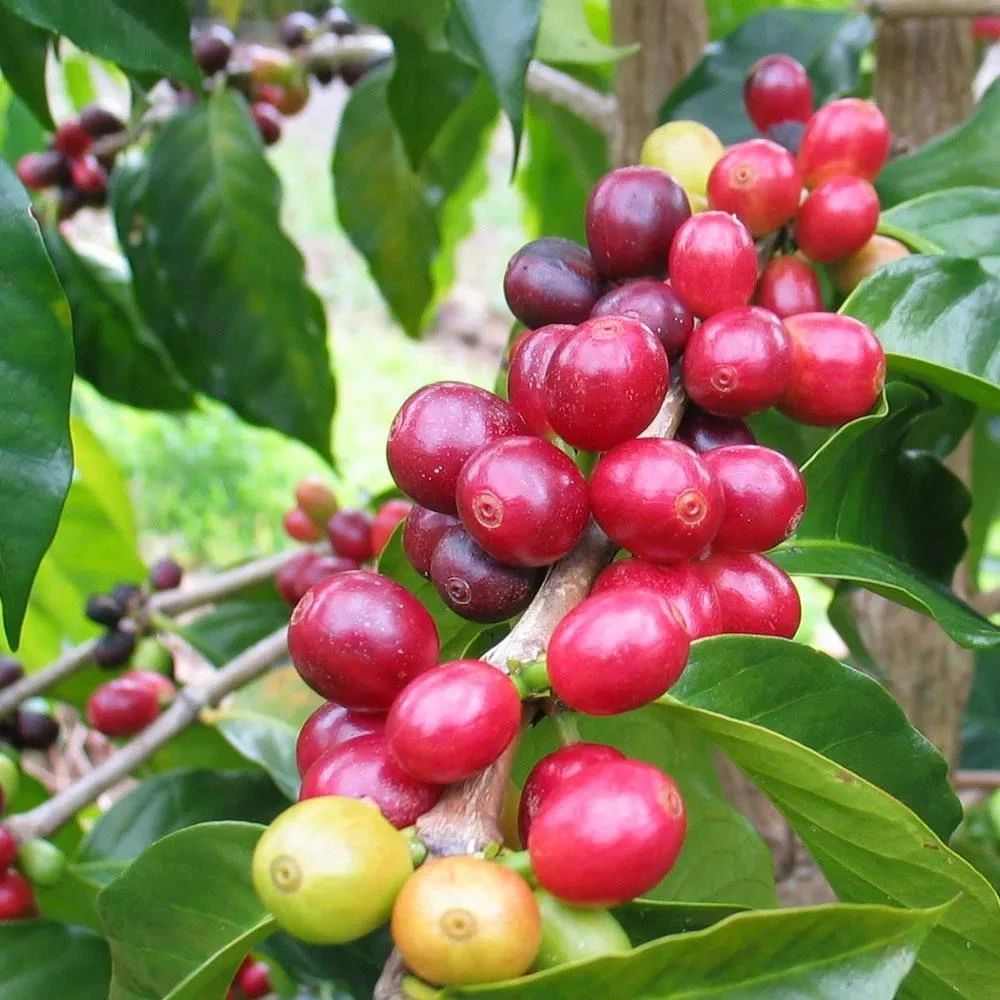
Currently, the Hambella region has about 20 processing stations of varying scales. The Huakui coffee beans that made the Guji region famous come from the Buku processing station. This station is located in Buku Abel village at an altitude of 2,200 meters and has enjoyed exceptional conditions from the start: reddish-brown soil rich in humus, with Enset trees providing shade. Coffee cherries receive ample sunlight to accumulate rich flavors while not over-consuming nutrients, thereby retaining more essence within the fruit. During the harvest and processing season (December to January of the following year), the unique growing environment and natural climate together create this bean's distinctive flavor profile.
Sidamo Coffee Natural Processing Method
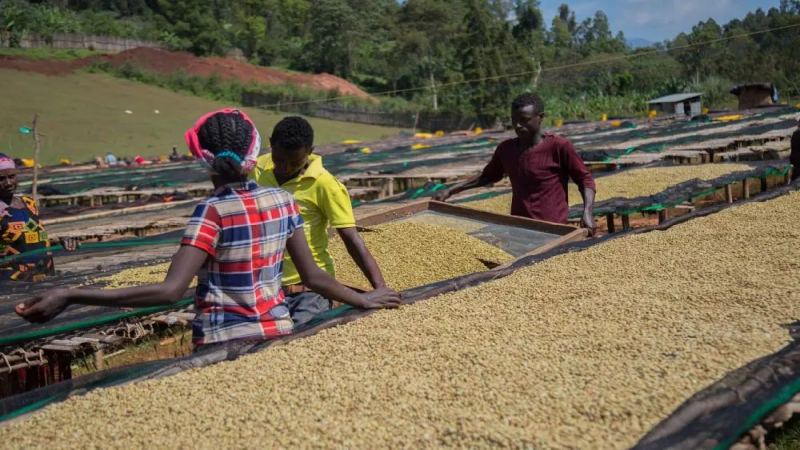
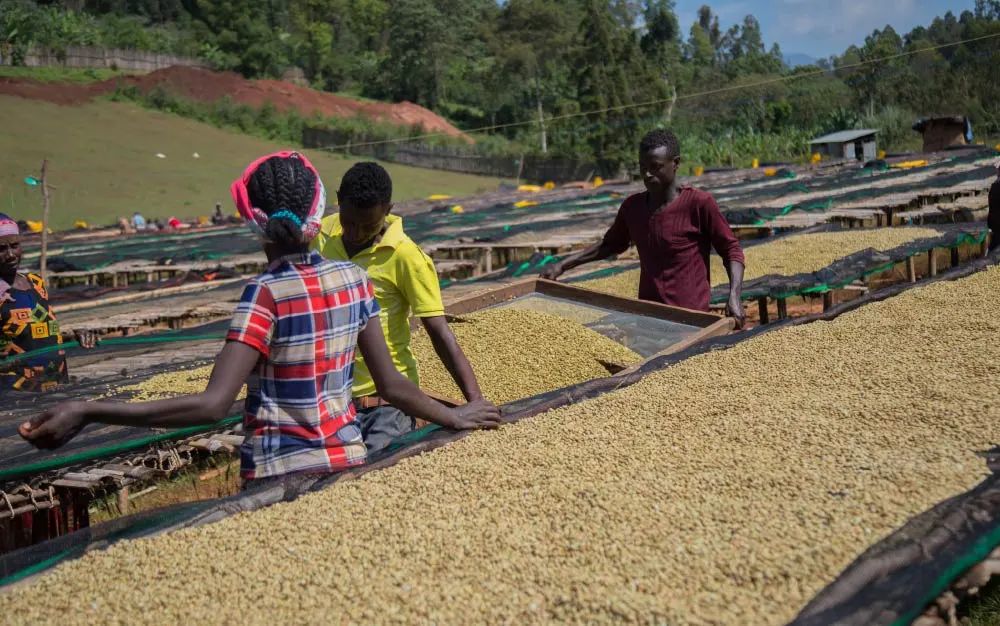
The natural processing in the Sidamo region is extremely rigorous. During harvest, only ripe cherries are picked, ensuring that the harvested coffee cherries are uniform in size, consistent in ripeness, and free of impurities. The processing begins with strict hand sorting to remove defective beans, after which the coffee cherries are spread flat on raised wooden racks or entire drying beds for sun-drying, preventing the fruit from developing mold or absorbing undesirable odors like dirt during the drying process.
During drying, the cherries must be constantly turned to ensure even sun exposure and consistent moisture loss; every three to five days, farmers manually pick out defective and moldy beans. Once the fruit skin has dried and hardened, a hulling machine is used to remove the dried skin. After obtaining the green beans, a final sorting is carried out in pursuit of a more perfect cup profile.
Sidamo coffee has a balanced flavor, higher sweetness, and better body than Yirgacheffe. In particular, the red-wine-like acidity and sweetness produced during natural pulp fermentation intertwine with the coffee's own cocoa bitterness, giving certain batches of Sidamo a liqueur-chocolate-like intoxicating flavor. From the original Huakui 2.0 to today's Huakui 6.0, each year's production batch is individually named. Coffee is essentially an agricultural product; climate conditions vary each year, and flavors change accordingly, hence the naming and differentiation of each vintage of Huakui.
Front Street Coffee Brewing Suggestions
For brewing, Front Street recommends using freshly roasted coffee beans to experience the coffee's rich flavors to the fullest. Front Street Coffee ships beans within 5 days of roasting, because Front Street deeply understands the importance of freshness to flavor. Front Street's roasting philosophy is "Freshly roasted good coffee," ensuring every customer who places an order receives the freshest possible state upon delivery. Coffee's resting period is about 4 to 7 days, so by the time customers receive it, it is at its peak flavor.
Of course, some customers need Front Street to grind the coffee for them, which is entirely fine. But Front Street must remind you: once coffee beans are pre-ground, they no longer need a resting period, because the pressure from carbon dioxide inside the packaging during transit also rounds out the flavor, so the ground coffee can be brewed and enjoyed immediately upon receipt. However, ground coffee should be used up as quickly as possible, because once exposed to air it oxidizes faster, flavors dissipate more quickly, and quality declines accordingly. Therefore, Front Street recommends buying whole beans and grinding fresh for each brew to better appreciate the coffee's flavors.
Front Street Coffee Brewing Parameters:
To fully extract the rich layers of Ethiopian coffee beans, Front Street uses a higher water temperature and a finer grind. However, to avoid over-extraction caused by high temperatures, a faster-flowing dripper such as the V60 is chosen. The V60 has a 60° cone shape; the conical angle allows coffee grounds to concentrate, and the water flow automatically converges toward the center of the dripper when pouring, ensuring sufficient contact time between water and coffee grounds to extract a suitable brew. Additionally, the ribs on the inner wall of the V60 extend in a clockwise spiral from bottom to top, leaving enough gap between the filter paper and the dripper for better water flow. Combined with the large hole at the bottom, the overall flow rate is faster than many other drippers.
Dripper: Hario V60, Water temperature: 90°C, Coffee dose: 15g, Coffee-to-water ratio: 1:15, Grind size: medium-fine (80% passing through Chinese standard No. 20 sieve)
[Natural Huakui Coffee Flavor] Floral and fruity notes are very pronounced—strawberry, jackfruit, passion fruit—with high sweetness.
For professional coffee knowledge exchange and more coffee bean information, please follow Coffee Workshop (WeChat public account: cafe_style)
For more specialty coffee beans, please add the private WeChat of Front Street Coffee: qjcoffeex
The above content is compiled by CoffeeHunters, a coffee news website.


