







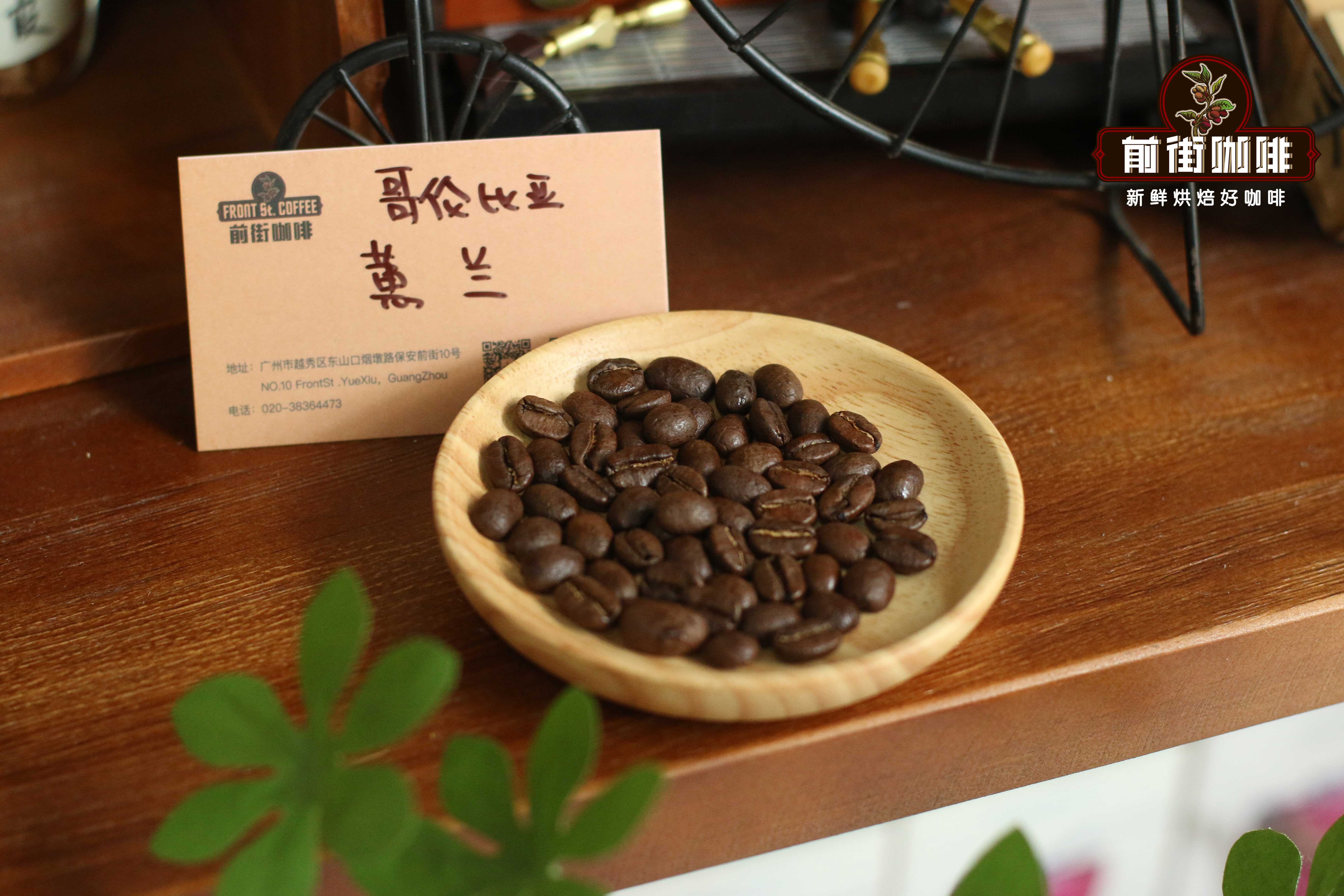
Colombia, with its exceptional geographical and climatic conditions, has become a major producer of high-quality Arabica coffee worldwide. This article starts with Front Street Colombia Washed Huila coffee beans, introducing their region, altitude, processing method, and variety information, and analyzing the characteristics of this everyday bean: balanced, with prominent sweetness, and chocolate and caramel-nut flavors. It also reviews Colombia's well-known regions, specialty bean distribution, and the history of coffee and brand marketing, helping coffee enthusiasts understand more systematically the flavor sources and purchasing directions of Colombian coffee.
Front Street Colombia Washed Huila Coffee Beans
Country: Colombia
Region: Huila
Altitude: 1,500-1,800 meters
Processing Method: Washed
Variety: Caturra
Compared to many coffee-producing countries in Central and South America, Colombia enjoys an almost "inherent" advantage in coffee cultivation. Its diverse terrain and varied climate types create an excellent natural environment for the growth of high-quality Arabica coffee. Next, Front Street will talk with you about the unique aspects of Colombian coffee.
It should be noted here that you will find most of Front Street's everyday beans use the washed processing method. Front Street believes that among the many processing methods, washed coffee beans best showcase the local terroir. When brewing this coffee using Front Street's standard serving method, we find that this Front Street Colombia Washed Huila coffee bean has a balanced profile, very pronounced sweetness, a rich chocolate taste right on the entry, caramel and nut flavors, and a faint fruit acidity at lower temperatures. It's worth noting that this Front Street Colombia Washed Huila everyday bean is roasted darker compared to coffee beans from other regions of Colombia.
Colombia's coffee-growing regions are distributed quite widely, with the most well-known being Medellin, Armenia, and Manizales, often collectively referred to as "MAM." As for Colombia's specialty coffee beans, they are mainly concentrated in the southern region, mostly at altitudes above 1,500 meters, covering San Augustin in Huila, Popayan in Cauca, the Nariño Department, and the Tolima Department. Coffee from these areas often features delicate acidity and berry notes, accompanied by caramel aromas, with particularly outstanding sweetness.
Colombia Huila: Located in southwestern Colombia, it is one of Colombia's main coffee-growing regions. Because the Huila region is dotted with famous coffee-growing sites, the names of various small areas have become brand names in circulation. Although the growing conditions in this region are also very good, the coffee farms and the surrounding cultivation infrastructure are not yet well developed. The green bean drying equipment and washed processing facilities are not yet complete, which is a regrettable point. The Front Street Colombia coffee everyday beans we've prepared for you come from Colombia's Huila coffee region.
Before introducing the regions, Front Street will, as usual, give everyone an introduction to Colombia's coffee history. The origin story of Colombian beans has been told through several different accounts. Although there is no definitive answer, most people believe coffee was introduced to Colombia by Jesuit priests in 1723. Coffee's acceptance as a cash crop across various regions of the country was quite slow. Colombia's coffee production did not increase significantly until the late 19th century, and by 1912, coffee accounted for 50% of its total imports.
What sets Colombia apart from other coffee distributors is their focus on branding and marketing. A farmer named Juan Valdez became the "poster boy" for Colombian coffee, and his image along with his mule became symbols appearing on bags and advertising campaigns. This specific branding added value to Colombian coffee and made it a recognized coffee brand in the United States.
The above content is compiled by CoffeeHunters, a coffee news website.


