







Brazil is the world's largest producer of Arabica coffee, and its coffee-growing history can be traced back to a romantic diplomatic anecdote from three hundred years ago. Today, seventeen Brazilian states produce coffee, with the southeastern producing regions being particularly concentrated. This article focuses on Brazil's three most representative origins—Minas Gerais, Santos, and Cerrado—and takes an in-depth look at two Brazilian single-origin coffees on Front Street Coffee's bean list: Cerrado Red Bourbon and Rainha Estate Yellow Bourbon. From variety origins and estate background to roasting and brewing parameters, it fully presents the flavor characteristics of Brazilian coffee—low acidity, smooth body, and prominent nutty and chocolate notes—helping coffee lovers understand the unique charm of Brazilian coffee.
Since 2021, Arabica coffee futures prices have doubled, and the country that has stirred up such waves is none other than Brazil—today's world number one in Arabica coffee bean production.
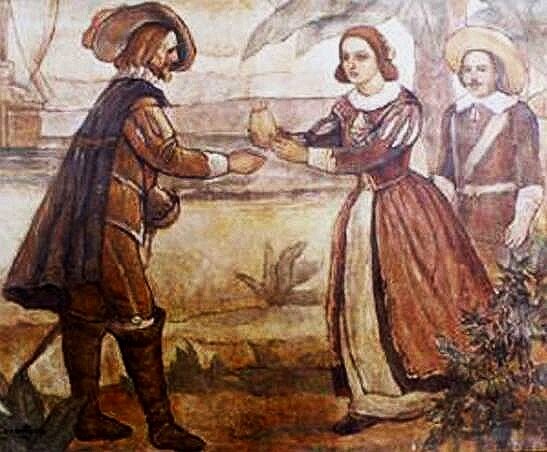
Yet more than three hundred years ago, on this Brazilian land that Europeans regarded as brimming with wealth, not a single coffee tree could be found. At the time, Brazil was a Portuguese territory, and an official named Francisco de Melo Palheta was sent on a diplomatic mission to French Guiana, where he met the local governor's wife, and the two quickly fell in love. When Francisco was preparing to return to Brazil, the governor's wife gave him a bouquet of flowers, in which coffee seeds were hidden. After returning to Brazil, Francisco planted the seeds, and thanks to Brazil's mild climate and abundant rainfall, coffee quickly took root and multiplied there. By 1840, Brazil's coffee production already accounted for 40% of the world's total.
By the 1920s, Brazil's coffee bean production accounted for 80% of the world's total. However, from the late 1920s to the early 1930s, the Great Depression in the United States dealt a severe blow to Brazil's largest coffee export market. The collapse of exports caused coffee prices to plummet, and Brazilian coffee beans piled up like mountains, ultimately meeting the fate of being burned. In 1937, nearly 70% of the stock was burned. But today, the situation is completely different.
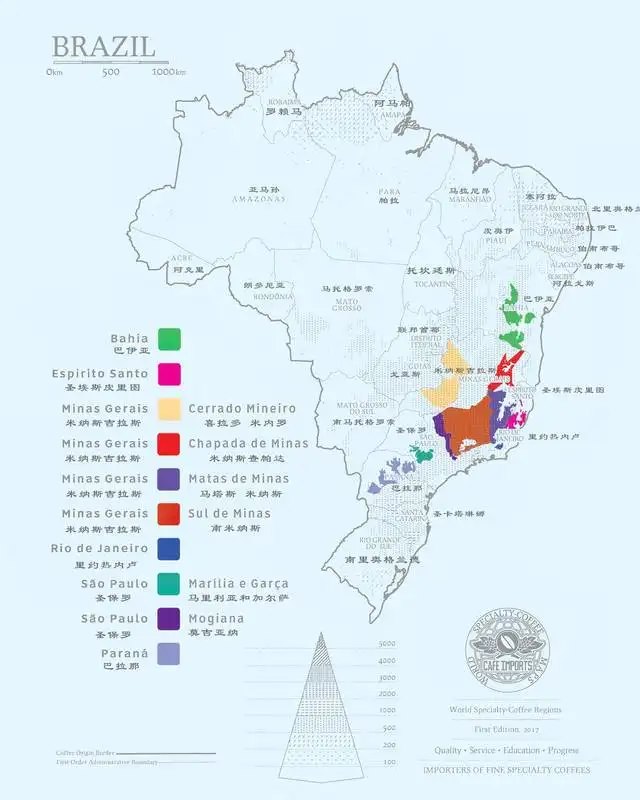
Today, as the world's largest coffee producer, Brazil has far more producing regions and area than any other country. Currently, a total of 17 states in Brazil produce coffee, mainly concentrated in the southeast. Front Street here mainly introduces three of the more representative local coffee origins: Minas Gerais, Santos (Santos), and Cerrado.
Santos is Brazil's largest and oldest port, and also the world's largest coffee export port. The jute sacks of green coffee beans exported overseas from this port are all marked with "SANTOS." Santos is located in São Paulo state, which holds a pivotal position in Brazil. São Paulo has two main coffee-producing areas: Central-West São Paulo and Mogiana. The Brazilian Queen Estate coffee on Front Street's bean list comes from Mogiana.
Mogiana is adjacent to South Minas, and most coffee trees are planted among shrubs, grasses, and vegetation. The local fertile red volcanic soil provides ample nutrients for the coffee fruit, allowing it to develop a full aroma. Some farms in the area adhere to traditional operating methods, while others have introduced modern standardized management, greatly improving coffee quality as a result. From the coffee produced locally, Front Street tasted a fresh sugarcane sweetness not found in other producing regions, along with both fruity and chocolate flavors.
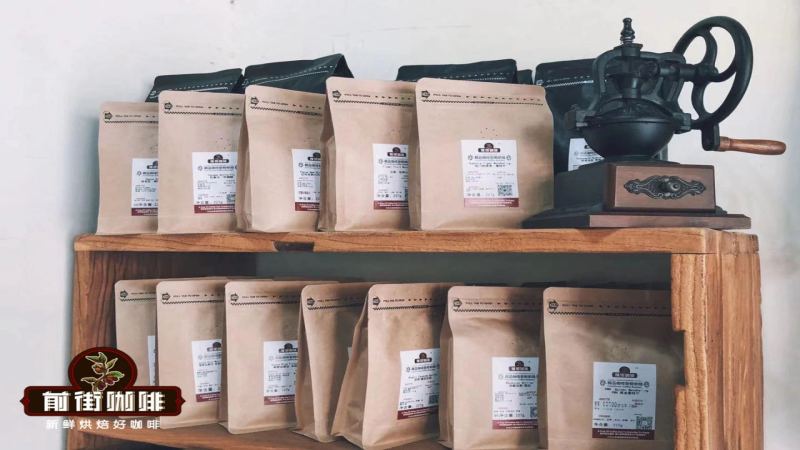
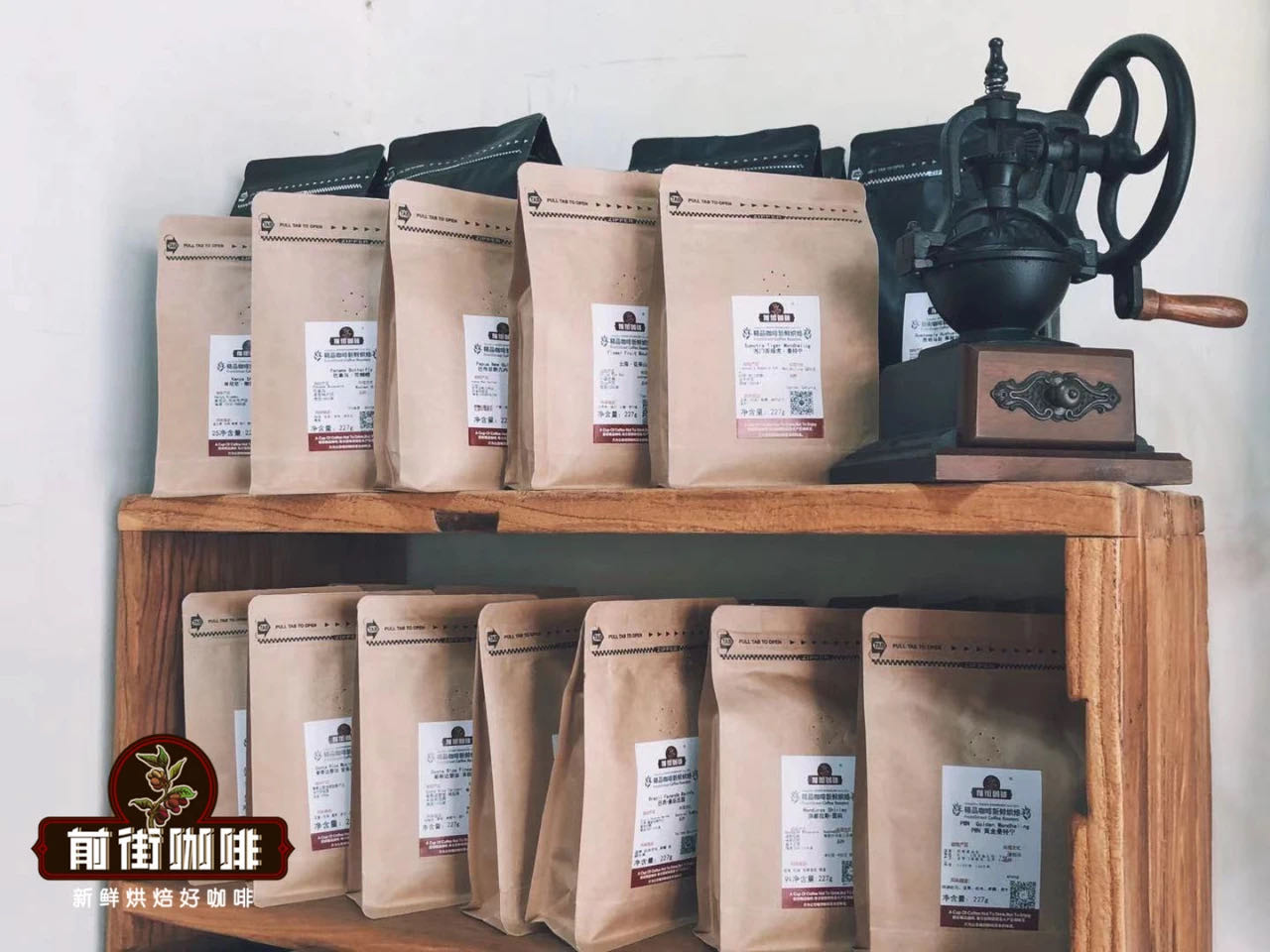
Many friends who are new to specialty coffee come to Front Street's store and hesitate over the bean list. Once Front Street Coffee's baristas learn that they do not like acidity, they recommend coffee beans from Brazil. Unlike Colombia, the difference between Colombian and Brazilian coffee beans lies in the fact that some Colombian producing regions have prominent fruity acidity, while Brazilian coffee is generally low in acidity and smooth on the palate. This is because Brazilian coffee mostly uses sun-exposed cultivation, allowing the coffee fruit to ripen quickly.
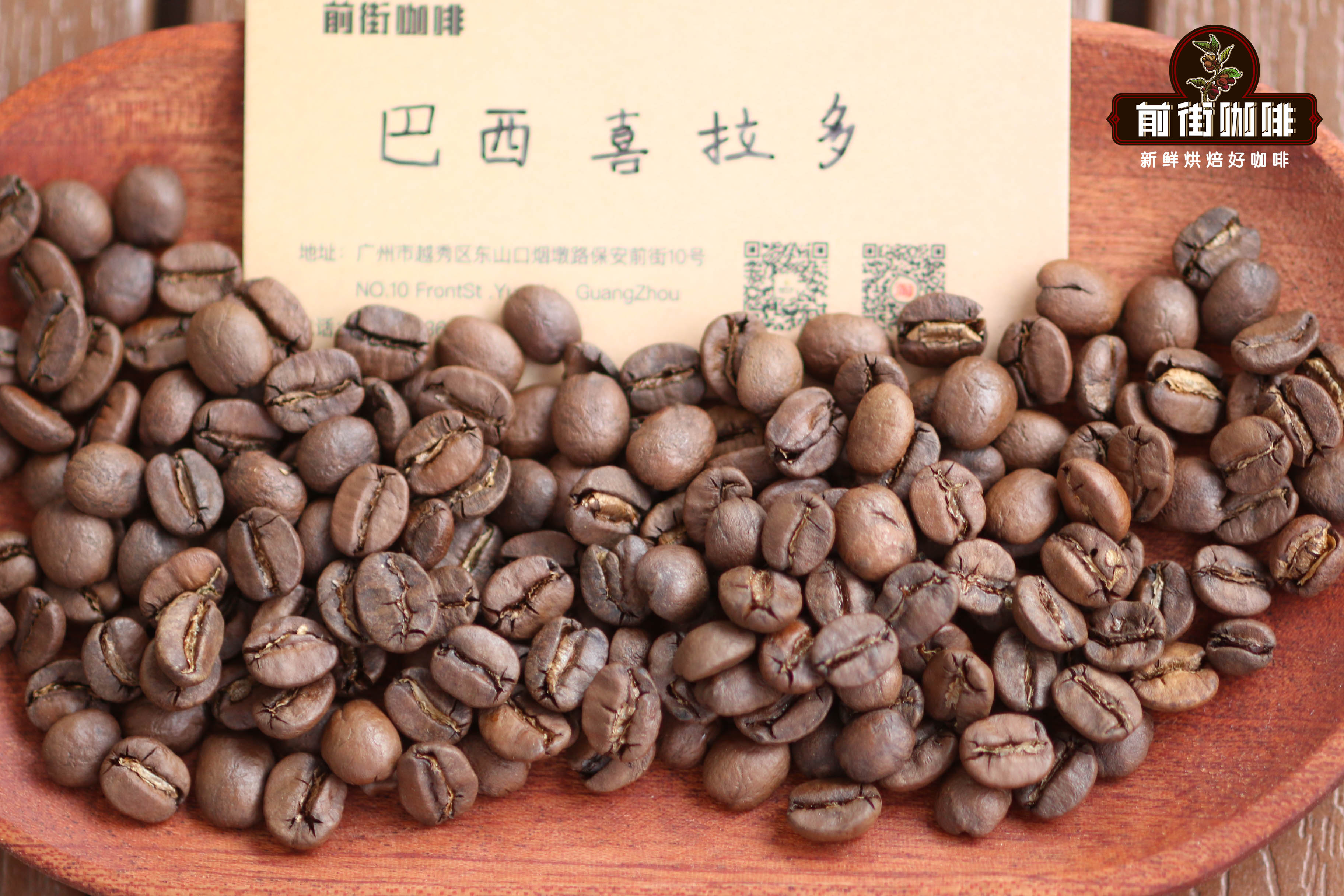
On Front Street's bean list, the Brazil section has only two beans: Red Bourbon from Cerrado in Minas Gerais, Brazil, and Yellow Bourbon from Queen Estate in Mogiana, São Paulo, Brazil. Among them, Brazilian Red Bourbon best reflects the characteristics and taste of Brazilian coffee beans.
Front Street Coffee Brazilian Red Bourbon
Region: Cerrado, Minas Gerais, Brazil
Altitude: 1,000 meters
Variety: Red Bourbon
Processing method: Semi-washed
Front Street Coffee Brazilian Queen Estate
Region: Mogiana, São Paulo, Brazil
Estate: Queen Estate
Altitude: 1,400m–1,950m
Variety: Yellow Bourbon
Processing method: Natural
The Bourbon variety has only been cultivated in Brazil for nearly 90 years. Before the 18th century, Brazil planted Typica, but Typica had low productivity, so around the 1850s, the Red Bourbon variety was introduced to Brazil from Réunion Island. By the 1870s, Red Bourbon had become Brazil's main coffee variety.
Around 1871, a yellow coffee fruit never seen before in Brazil appeared in large numbers of records in São Paulo state, but its yield was low. Later scientific verification confirmed that this yellow fruit was Yellow Bourbon, a mutation of Red Bourbon.
[Yellow Bourbon]
Yellow Bourbon has low yield and is relatively susceptible to coffee leaf rust, requiring more attention and care than other varieties. When Yellow Bourbon is planted in areas above 1,000 meters in altitude, its flavor has considerable potential. Through cupping, Front Street found that Yellow Bourbon has a fresher aroma, obvious citric acidity, and greater sweetness.
The Brazilian Queen on Front Street's bean list is precisely the Yellow Bourbon variety. Queen Estate is located in the Mogiana region of São Paulo state, at the border between São Paulo state and Minas Gerais state. Mogiana is named after the local railway company, the Mogiana Railroad Company.
Queen Estate (Fazenda Rainha) is located in Brazil's Grama Valley, an ancient volcanic valley spanning Mogiana and Minas Gerais, with rolling hillsides covered in lush patches of forest. Queen Estate has a planted area of about 280 hectares, of which 200 hectares are planted with Yellow Bourbon. Queen Estate has repeatedly reached the finals of the Cup of Excellence (COE) in Brazil, winning awards 12 times in 7 consecutive years, taking first place in 2011. In the 2021 Brazilian Cup of Excellence competition, a natural-process bean from Queen Estate ranked twenty-third with 87.47 points.
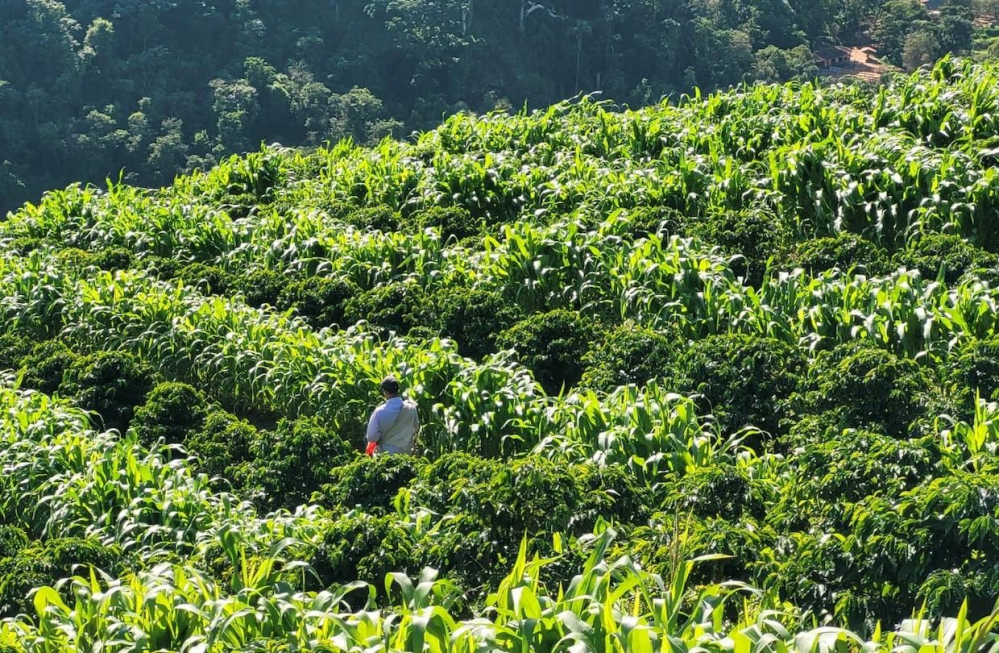
Front Street's Brazilian Queen uses the natural processing method, making the already sweet Yellow Bourbon even softer in acidity and better in sweetness, while carrying the aroma of tropical fruit. Because traditional natural processing cannot guarantee quality while processing coffee beans in large batches, Queen Estate adopts small-scale refined natural processing, spreading the yellow coffee fruit on African raised beds and assigning dedicated personnel to turn them, avoiding the coffee beans picking up earthy or fermented flavors.
After receiving this Queen Estate Yellow Bourbon coffee bean, Front Street Coffee's roaster, in order to highlight Yellow Bourbon's sweetness, nutty and chocolate notes, and rounded mouthfeel while presenting a faint lemon aroma, developed it for two minutes after first crack before unloading, that is, a medium-dark roast.
After Front Street Coffee's baristas receive such carefully roasted coffee beans, considering that it is a medium-dark roast, in order to better highlight its rounded and full-bodied mouthfeel, they choose the KONO dripper. Because the KONO dripper has a relatively slow flow rate and is an immersion-style dripper, the grind size is relatively coarse, based on a 75% pass rate through a Chinese standard No. 20 sieve. In addition, the water temperature needs to be somewhat lower to avoid bitterness caused by over-extraction, so the water temperature is 88 degrees Celsius.
Dripper: KONO
Water temperature: 88 degrees Celsius
Coffee dose: 15 grams
Coffee-to-water ratio: 1:15
Grind size: 75% pass rate through a No. 20 sieve
In order to give the final cup a richer sense of layering, Front Street recommends a three-stage pour for extraction. When pouring in circles, treat the coffee grounds as gently as possible. If too much disturbance is caused to the layering, or if the motion is too aggressive, the movement of coffee particles and water will be more intense, which may bring about over-extracted bitterness.
First, pour 30 grams of water to completely wet the coffee grounds, and let it bloom for 30 seconds. Then slowly pour in circles with a small stream until 125 grams for the staged pour. When the water level in the dripper drops to the point where the coffee bed is about to be exposed, proceed with the third pour. The third pour also needs to be slowly poured in circles until 225 grams, then stop pouring. After the water in the dripper has completely fallen through to the container below, the dripper can be removed. The total extraction time is about 2 minutes.
Front Street reminds you here that when pouring the third stage of water, be careful that the water level does not exceed the area of the dripper wall covered by coffee grounds, because water will flow away from places with larger gaps and lower resistance, such as areas not covered by coffee grounds, and the resulting coffee may end up tasting rather "watery."
Brazilian Red Bourbon already gives off rich peanut and nutty aromas during the blooming stage, and when finally sipped, it also has chocolate notes, a caramel-like sweetness, a smooth mouthfeel, and overall balance.
Brazilian Queen Estate releases a rich nutty aroma during brewing, has a faint lemon aroma on the palate, a clear sugarcane-like sweetness, and a creamy, silky mouthfeel, overall more intense than Red Bourbon.
For more coffee bean information, please follow Coffee Workshop (WeChat public account cafe_style)
For professional coffee knowledge exchange, please add WeChat ID kaixinguoguo0925
The above content is compiled by CoffeeHunters, a coffee news website.


