







How Does the Ethiopian Coffee Grading System Work?
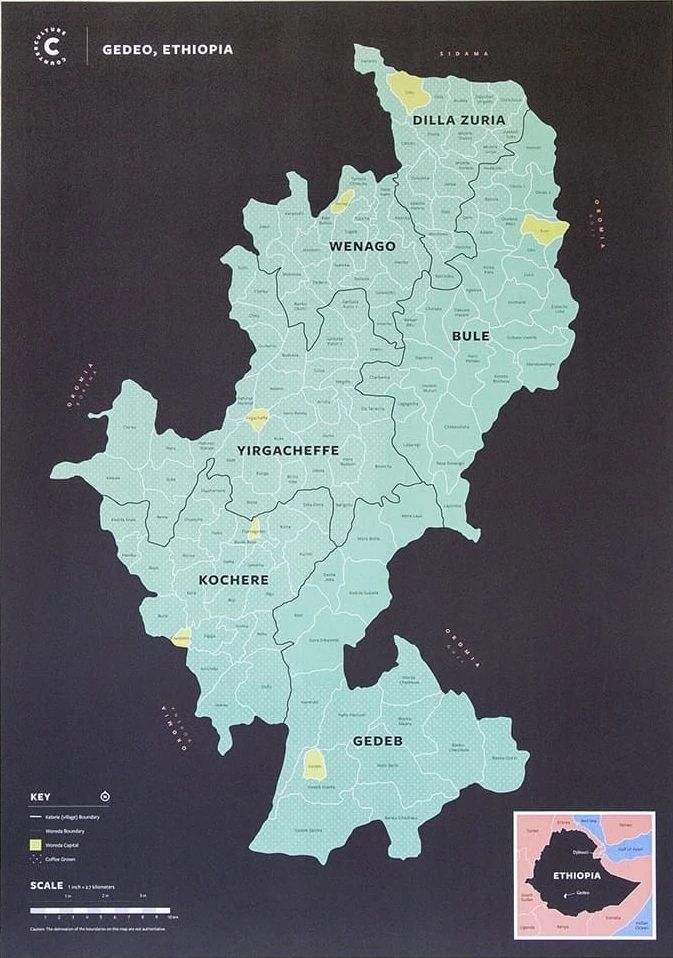
Ethiopia divides coffee into three types under its grading system: specialty, commercial, and local, sorted by physical attributes and cup profile. The ECX commodity exchange also split Yirgacheffe into four small areas, Yirgachefe, Wenago, Kochere, and Genlena abay, each with its own cultivation methods and distinct flavor. Yirgacheffe sits in Sidamo at around 2,000 meters.
Natural processing and the Red Cherry Project raised quality from the source. Yirgacheffe beans are small to medium, light yellow-green, plump, and uniform. The area's fertile soil, altitude above 1,800 meters, and wide day-night temperature swings support the berry sweetness natural lots are known for, and selective cherry picking improves the raw material before roasting and brewing.
Yirgacheffe, as a representative of Ethiopian specialty coffee, has always attracted attention for its region divisions, grading system, and processing methods. With the establishment of the ECX commodity exchange, Yirgacheffe was subdivided into four small areas, and Ethiopian coffee was also classified into three types—specialty, commercial, and local—based on physical attributes and cup profile. The rise of natural processing has allowed Yirgacheffe to show rich berry sweetness, and the Red Cherry Project has further improved coffee quality from the source. Front Street Coffee takes Yirgacheffe Natural Red Cherry as an example to share roasting analysis and V60 brewing suggestions, helping you fully understand this uniquely characterful coffee.
After the specialty coffee wave swept the globe, the Yirgacheffe region gradually became familiar to the public. As Ethiopia's coffee industry moved toward standardization, the division of Yirgacheffe's producing areas also underwent adjustments. Front Street Coffee is here today to talk about Yirgacheffe coffee.
Yirgacheffe is located in the Sidamo region southwest of Ethiopia. The coffee beans it produces are small to medium in size, and the green beans are light yellow-green in color, plump and uniform, occupying an iconic position in the East African specialty coffee landscape.
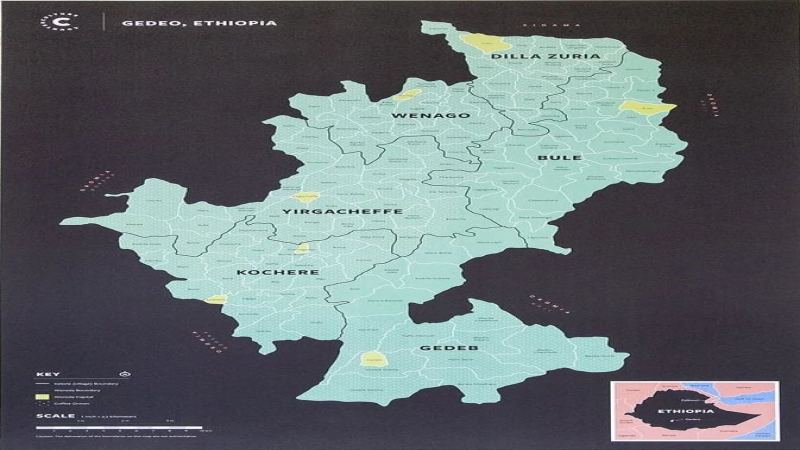
Under the current ECX system, Yirgacheffe is further divided into four small areas: Yirgachefe, Wenago, Kochere, and Genlena abay. This area has fertile soil, an average altitude of more than 1,800 meters, and significant temperature differences between day and night. The unique cultivation methods of each small area, together with the local distinctive native coffee gardens, give each batch of coffee beans its own distinct flavor and prominent characteristics.
Yirgacheffe is located in Sidamo Province, Ethiopia, on a plateau at an altitude of about 2,000 meters. It is one of the highest-altitude coffee-producing areas in Ethiopia on average, and the coffee produced here is called Yirgacheffe (yirga cheffe). "Yirga" means to settle down, and "cheffe" means wetland, so together it means "let us settle in this wetland." This small town sits on the eastern side of the East African Rift Valley.
Yirgacheffe is an outstanding washed Arabica bean with a unique and bright fruity sweet-tartness, and its fresh, transparent aroma can be felt as soon as it enters the mouth. This highly distinctive Yirgacheffe uses bold floral notes and citric acidity to express the layers of coffee flavor just right, and drinking it even gives a slight illusion of tea. Therefore, many people say Yirgacheffe does not taste like coffee, but rather like a soft and pleasant fruit tea. It can be elegant and also bold, striking a precise balance between simplicity and complexity.
Yirgacheffe was originally mainstream and famous for the washed processing method, but today naturally processed Yirgacheffe has also won enthusiastic market pursuit with its rich berry sweetness. As demand has grown substantially, the production of natural Yirgacheffe has increased considerably as well.
After Ethiopia established the ECX (Ethiopian Commodity Exchange) in 2008, it adopted a method of grading and classification that combines the physical attribute characteristics of green coffee beans with cup profile characteristics.
According to processing method, ECX defines non-washed and washed as three types:
a. Specialty: few defects, high cup profile quality
b. Commercial: does not reach specialty grade, but is above the local/domestic consumption grade
c. Local/Domestic: many defects (unripe beans), and relatively poor flavor due to being out of season or poorly stored. (Consumed within Ethiopia, not circulated in the international market)
Among these, specialty and commercial are aimed at the export international market. The grading standards for different types differ slightly.
Commercial grade classification
Based on the total score of physical attribute characteristics and cup profile characteristics, ECX divides green coffee beans into nine grades, of which physical characteristics account for 40% and cup quality accounts for 60% (SCAA cupping standards). The grading standards are as shown in the table below.
Specialty grade classification
This grade rating is further divided on the basis of commercial classification. When commercial classification reaches Grade 1-3, a special cupping evaluation is then conducted for it. For evaluation standards, please refer to the basic requirements of SCA standard cupping.
In recent years, many emerging small production areas or cooperatives have appeared in Ethiopia's Sidamo and Yirgacheffe regions. They have one after another sold under their own cooperative or farm names in the international market, which both reflects confidence in their own coffee quality and is intended to build international brands and loyalty. Coffee farmers insist on harvesting ripe cherries and treat every processing step rigorously. Whether natural washed or natural sun-dried, they perform outstandingly, presenting unexpectedly fragrant aromas and excellent taste. This is exactly why Ethiopian coffee keeps coffee lovers eagerly awaiting it every year. An example is the Operation Cherry Red assisted by the Dutch government.
Front Street Coffee: Yirgacheffe Natural Red Cherry Region: Ethiopia Yirgacheffe Estate: Aricha Estate Altitude: 1700-2200m Variety: Local native heirloom Processing method: Natural processing Flavor: berries, strawberry, lemon, fermented wine aroma
The Red Cherry Project is essentially a commercial project to promote improvement in coffee quality. Its initiator is Menno Simons, founder of the Dutch green bean trader Trabocca. Trabocca realized that the quality of Ethiopian coffee beans was uneven, it was difficult to raise prices, and coffee farmers' incomes were also relatively low. To reverse this situation, they jointly launched the Red Cherry Project with local coffee farmers, starting from the source. By raising the purchase price for high-quality green coffee beans, they encourage coffee farmers to more carefully complete each step such as picking and processing. During the picking stage, all work is done by hand, selecting only highly ripe cherries.
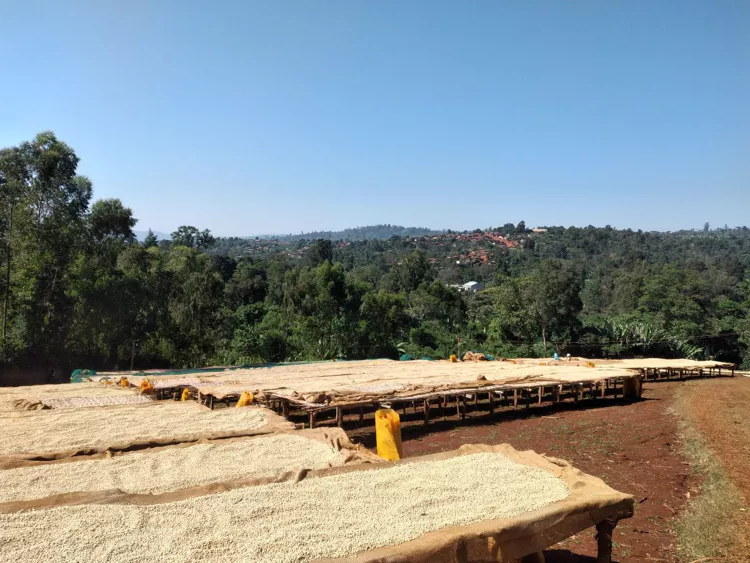
Red Cherry adopts the natural processing method. After harvest, before the cherries are sun-dried, unripe green cherries or defective cherries are removed by hand, and during the sun-drying process damaged or moldy cherries are removed again. After two weeks, when the sugar and essence of the fruit pulp have fully permeated the coffee beans and the moisture content has dropped to 12%, the hardened pulp, pectin layer, and parchment are scraped clean with a hulling machine. The extracted coffee beans still need to undergo density and bean color testing to eliminate defective beans, and then workers visually remove any defective beans that slipped through, with screening at every stage. Therefore, every resulting coffee bean is a specialty bean, ensuring a clean and refined quality with a rich, alluring fruity aroma.
Front Street Coffee roasting analysis
Naturally processed Yirgacheffe coffee is sweet and delicious. In order to highlight Yirgacheffe's floral and citrus flavors, Front Street used a light roast. Also, because Ethiopian beans vary in size, extra attention must be paid to controlling the temperature rise process.
Charge at a drum temperature of 200°C, with heat at 130 and airflow opened to 3; the turning point is at 1'55", and when the drum temperature is 120°C, open the airflow to 4 while keeping the heat unchanged; when the drum temperature is 165.8°C, the bean surface turns yellow, the grassy smell completely disappears, and it enters the dehydration stage; at 7'56", wrinkles and dark patches appear on the bean surface, and the toast aroma clearly turns into coffee aroma, which can be defined as the prelude to first crack, and at this time you must listen carefully for the sound of the first crack point; first crack begins at 9'25", open the airflow to 5, develop for 1'40" after first crack, and drop at 196°C.
Front Street brewing suggestion
Front Street Coffee uses a V60 dripper to brew this coffee bean. The V60 cone dripper has a larger opening and, together with its unique spiral curved ribs, allows air to escape more easily, thereby improving extraction quality. The mouthfeel may not be thick enough, but the sweet-tartness and obvious aroma brought by its high concentration are precisely one of its major characteristics.
Water temperature: 91-92°C Grind size: fine granulated sugar size (80% passing through a No. 20 standard sieve) Coffee-to-water ratio: 1:15 Dose: 15 grams
Dripper: V60
Front Street brewing method: For the first pour, add 30 grams of water for a 30-second bloom, then pour 95 grams (the electronic scale shows about 125 grams), finishing the pour in about 1 minute; when the water level drops to 2/3 of the coffee bed, pour the remaining 100 grams (the electronic scale shows about 225 grams), finishing the pour in about 1 minute 40 seconds. Dripping is completed at 1'55"-2'00", remove the dripper, and extraction is finished.
For more specialty coffee beans, please add the private WeChat of Front Street Coffee, WeChat ID: kaixinguoguo0925
The above content is compiled by CoffeeHunters, a coffee news website.


