








Which Coffee Grind Level Suits a Washed Yirgacheffe?
Ethiopia's Yirgacheffe is the clean, bright side of African coffee, and how it is roasted and ground shapes what ends up in the cup. A washed Yirgacheffe usually wants a medium to medium-fine coffee grind level for pour-over, so the florals and citrus acidity come through without the brew turning thin or bitter.
The article covers Africa's overall profile, then narrows to Yirgacheffe's producing districts and grading system. Using a washed Yirgacheffe as the sample, it walks through the roasting curve and a matching brewing plan, showing how flavor shifts from the first sip to the aftertaste. Kenya and Rwanda also appear as eastern-belt Arabica origins, with West Africa mostly growing Robusta.
Africa, as the continent of coffee's origin, holds an irreplaceable position in the global specialty coffee landscape. Among them, Ethiopia and Kenya can be considered the two pillars of African coffee, and Yirgacheffe, with its clean and bright flavors, has become a favorite of countless enthusiasts. This article will start with the overall characteristics of African coffee, gradually focus on the Yirgacheffe producing region's divisions and grading system, and use [Front Street] Gudingding coffee beans as an example to thoroughly break down its roasting curve and brewing plan, guiding you through the complete flavor transformation of this washed Yirgacheffe from the first sip to the aftertaste.
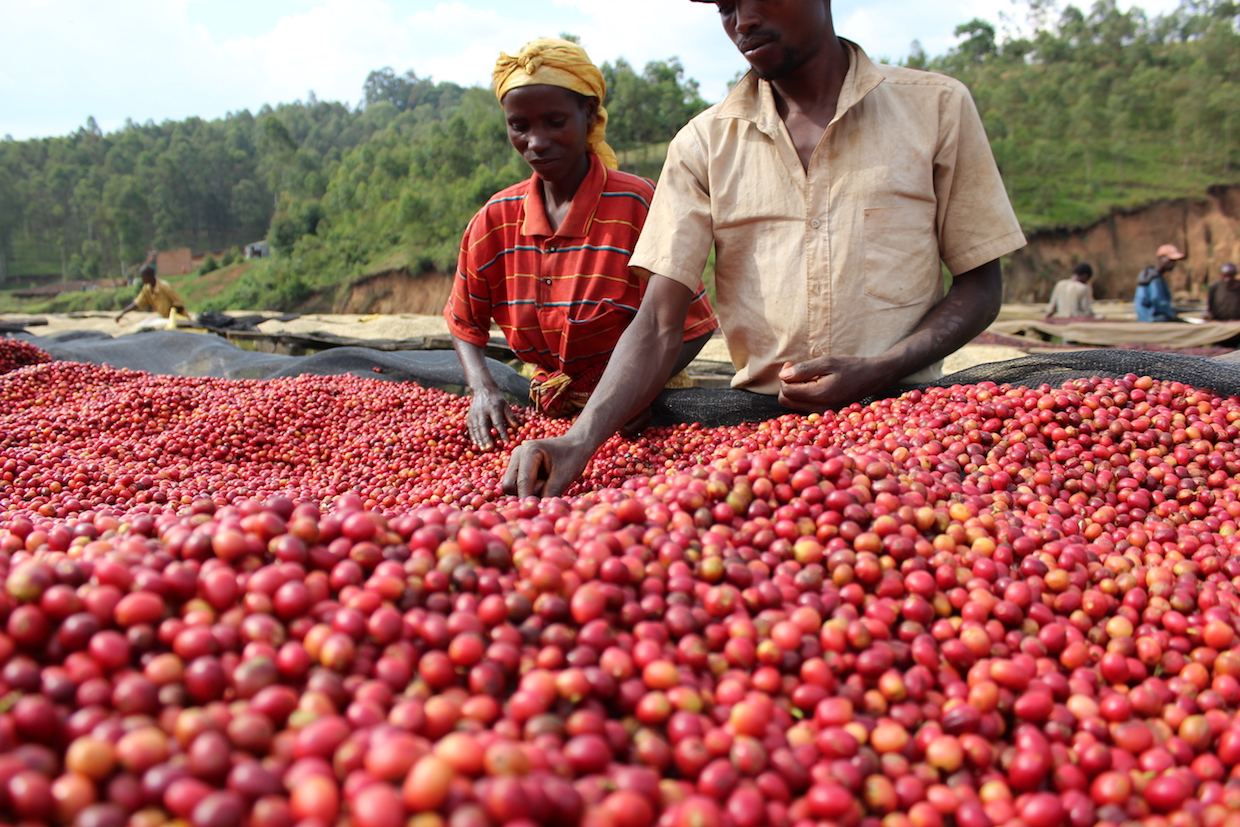
Located along the equator, the African continent is a highly distinctive origin in the global coffee landscape. The two countries of Ethiopia and Kenya can be said to be the core forces upholding the reputation of African coffee; the absence of either would deal an incalculable blow to the entire African coffee industry. For this reason, the coffees of these two countries have long won widespread recognition from the global industry and accumulated a large number of loyal fans. However, the charm of African coffee goes far beyond this, and there are many more origins worth exploring.
Looking across all of Africa, high-quality Arabica coffee beans are mainly concentrated in the eastern belt—extending from Ethiopia and Kenya to Rwanda; while some West African countries such as Senegal and Cameroon mainly grow Robusta. Next, let us turn our attention to the representative origin of African specialty coffee—Ethiopia.
Coffee's birthplace is in Africa, which gives African coffee an irreplaceable position in the entire industry. Although commercial cultivation has advanced globally for hundreds of years, Africa still preserves a huge number of wild coffee varieties, and these resources have always been the most treasured repository for researchers. African coffee generally presents characteristics of rich aroma and alluring fruit acidity; that lively, bright acidity is invigorating. However, its body is usually on the thin side, and its sweetness is not particularly prominent. Because the producing regions have dry climates and limited water resources, green beans are mostly processed by the natural method, so the bean shape is often not uniform enough, and the proportion of defects is relatively high.
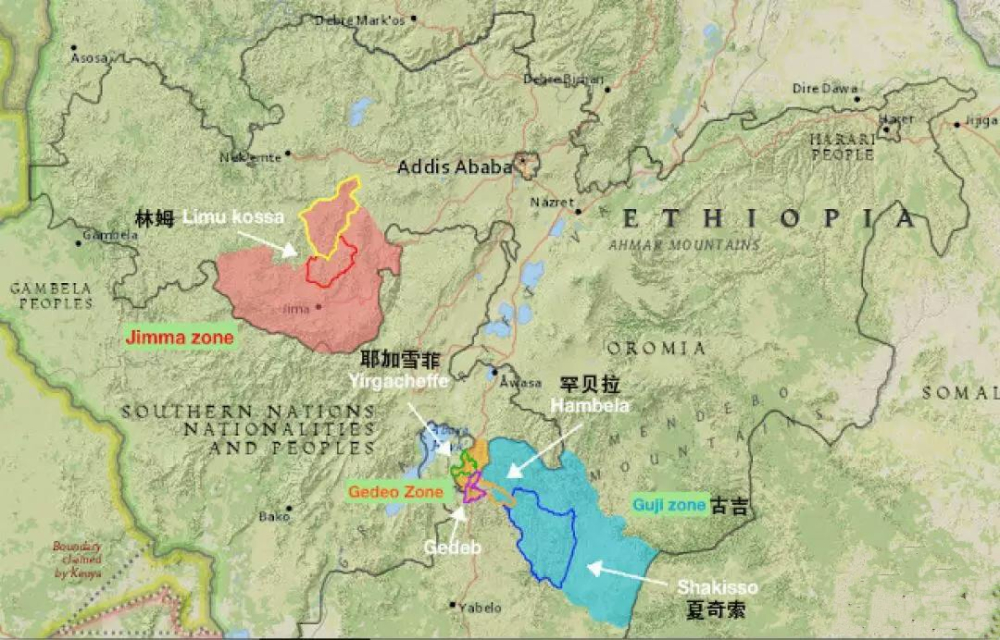
Yirgacheffe (specialty producing region): altitude 1,800–2,000 meters | garden coffee system |
Yirgacheffe was originally part of the Sidamo producing region, but because its flavor expression is so distinctive, it was later separated out on its own. Its scope includes not only the town of Yirgacheffe itself but also surrounding sub-regions such as Wenago, Kochere, Gelena, and Abaya. Therefore, in the newer grading system, Yirgacheffe A, Wenago A, Kochere A, and Gelena/Abaya A are priced higher than the B grades of the same names. In addition to washed and natural processing, the Yirgacheffe producing region today has also seen many beans with special processing methods emerge. If you want to appreciate the charm of Ethiopian specialty coffee, [Front Street] Yirgacheffe is a choice worth trying first; it has a clean mouthfeel, intense white floral aromas, and a lasting sweet finish, and even [Front Street]'s baristas are very fond of it.
[Front Street] Yirgacheffe Gudingding coffee beans Producing region: Yirgacheffe producing region, Ethiopia Cooperative: Gudingding Cooperative Altitude: 2000m–2100m Variety: local heirloom varieties Processing method: washed processing
Roasting recommendation
[Front Street] Gudingding is a bean suitable for light-medium roasting, which better showcases its clean texture and bright fruit acidity, with a clearer sweet aftertaste.
Machine: Yangjia 800N roaster
Charge temperature: 180°C
Turning point: 5'00", 149.9°C
First crack: 8'42", 183.8°C
After first crack, develop for 1'48" and discharge at 193.5°C.
[Front Street] Gudingding brewing recommendation
Dripper: Hario V60
Water temperature: 90°C
Coffee-to-water ratio: 1:15
Grind size: medium-fine grind
First bloom with 30 grams of water for 30 seconds, then pour in a circular motion with a slow stream; at 125 grams, make one pour break, and when the water level drops to almost exposing the coffee bed, continue pouring until 225 grams and stop; once the water level is again about to reach the bottom, remove the dripper. (Timing starts from the bloom.) Total extraction time is about 2'00".
Flavor description: On the palate, citrus and black tea notes can be felt; as the temperature drops, cream, caramel, and almond tones gradually emerge; the finish has a lasting sweet aftertaste, and the overall mouthfeel is clean and sweet.
The above content is compiled by CoffeeHunters, a coffee news website.


