







How Does the Colombian Coffee Green Bean System Work?
Colombia grows high-quality Arabica across the three ranges of the Andes, from the traditional MAM region to the southern specialty area of Huila. Altitudes run from about 800 to 2,300 meters, and the varied microclimates spread the harvest across the whole year. Green beans are graded under the Excelso system by screen size, so lots are sorted for uniformity before export and roasting.
The article reviews Colombia's growing regions, cultivation conditions and the FNC growers' association model, then explains the Excelso grading rules and the main cultivated varieties with the washed processing flow. A Huila washed bean is brewed as an example at a medium-dark roast, showing the mellow, balanced cup the country is known for.
Colombia, with the natural terrain of the Andes Mountains and its diverse climates, has become an important producer of high-quality Arabica coffee worldwide. From the traditional MAM region to the highly regarded southern specialty region of Huila in recent years, different microclimates and processing methods have given coffee a myriad of flavors. This article will systematically review Colombia's coffee growing regions, cultivation conditions, and the operational model of the FNC coffee growers' association, and explain in detail the Excelso green bean grading system based on screen size, while also introducing the main cultivated varieties and washed processing flow. Finally, Front Street Coffee uses a Huila washed bean as an example to share brewing parameters and flavor performance under a medium-dark roast, leading you to a comprehensive understanding of the classic mellow taste of Colombian coffee.
For more specialty coffee knowledge, please follow the WeChat public account: FrontStreet Coffee
Compared with other coffee-producing countries in Central and South America, Colombia has an exceptionally vast growing area, and its complex terrain gives rise to rich climate types, creating superior natural conditions for the growth of high-quality Arabica coffee. Next, Front Street will explore with everyone what characteristics Colombian coffee actually has.
Colombian coffee is distributed across the Andes Mountains
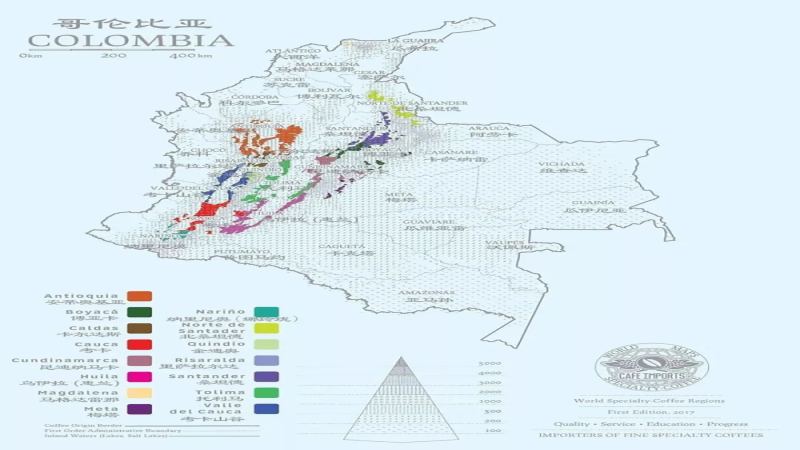
The Andes Mountains run across western Colombia and split there into three mountain ranges running north to south. These three ranges seem like a paradise tailor-made for coffee trees. The soil contains large amounts of organic matter, and coffee trees are planted at altitudes ranging from 800 to 2,300 meters, where they can both bathe in ample sunlight and receive natural shade from cloud cover. The climate differences between the ranges are striking, causing the coffee harvest period to span the entire year. Coffee fruits of different varieties in different regions mature one after another at various times, so year-round one can see coffee farmers moving through the groves busy picking.
Colombia's coffee-growing areas can be divided into the traditionally well-known "MAM" region and the specialty regions centered on the south.
The "MAM" region is mainly located in the central Andes range, among which coffee produced in Medellin is especially outstanding, with plump beans, rich aroma, and balanced, gentle acidity and sweetness. It is particularly suitable for dark roasting, capable of showing a deep, alluring aroma, and is deeply favored by coffee lovers. With the rise of the specialty coffee wave, consumers' enthusiasm for coffee with floral and fruity notes has grown increasingly strong, and more and more estates have begun devoting themselves to producing micro-lot high-quality coffee.
Narino has an altitude of 1,500–2,300 meters, and some of Colombia's high-altitude coffee comes from here. The flavor and mouthfeel of coffee from this region show quite high complexity. Growing coffee in a high-altitude environment is by no means easy; the plants are prone to die-back disease, which undoubtedly increases the management difficulty for growers. Fortunately, the area is close to the equator, and the climatic conditions are still suitable for coffee growth. Among the 40,000 producers in this producing region, the vast majority are smallholders, with an average coffee plot area of only 2 hectares per person.
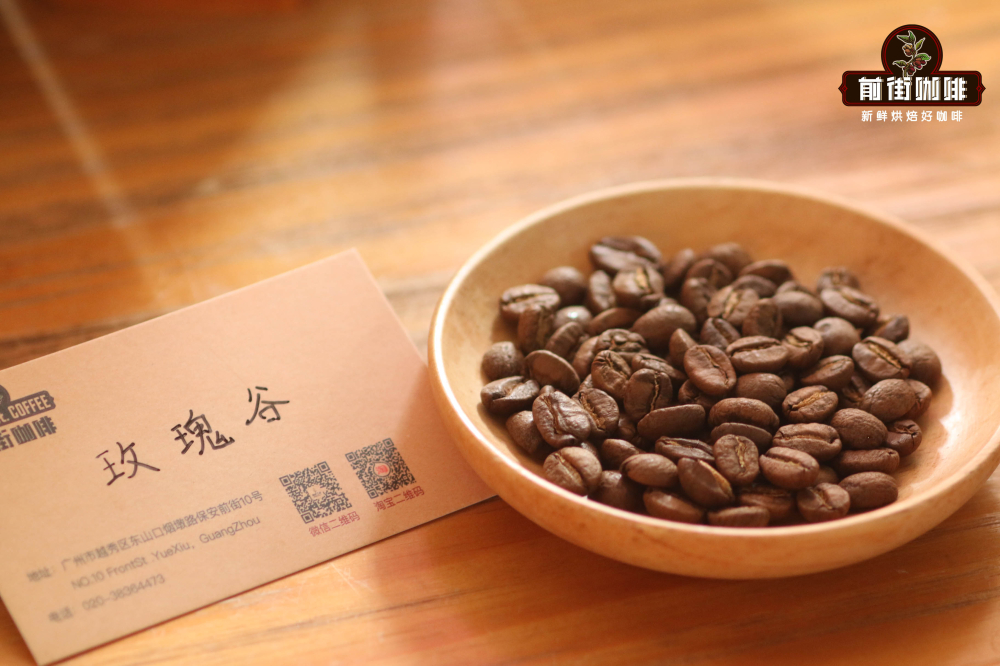
In the eastern range, Santander is the most well-known producing region. Located in northern Colombia, its climate is relatively dry, and the growing altitude is between 1,400 and 1,600 meters. Local coffee trees are mostly planted within forests, with appropriate shade conditions, so the coffee fruit maturation period is therefore longer. Coupled with fertile soil and significant day-night temperature differences, the coffee produced here mainly shows a rich and intense aroma, lasting sweetness, and a unique fresh herbal note. Rose Valley on Front Street's bean list comes precisely from the Santander producing region, with rich aromas of rose and peach.
Huila in the south is a very popular specialty producing region in recent years, accounting for 12% of Colombia's total coffee production. It is surrounded by diverse mountains and hills, with an altitude above 1,500 meters. The Colombia River converges here, providing abundant water resources for coffee tree growth. Unlike the classic mellow flavor traditionally associated with Colombian coffee, the Huila producing region is mostly dominated by micro-lot coffee supplied by smallholders. Different microclimates and distinctive green bean processing methods create unique flavor profiles. But Front Street believes that to understand a coffee origin, one should start by tasting the flavor of the coffee itself, that is, using natural processing methods: washed and sun-dried. Front Street chose washed coffee from the Huila producing region as the representative face of Colombia, using a medium-dark roast to restore the classic mellow taste of Colombia.
FrontStreet Coffee: Colombia Huila Coffee Beans
Region: Huila
Altitude: 1,500-1,800 meters
Processing method: Washed
Variety: Caturra
Flavor: Nuts, dark chocolate, caramel, soft fruity acidity
The support behind FNC
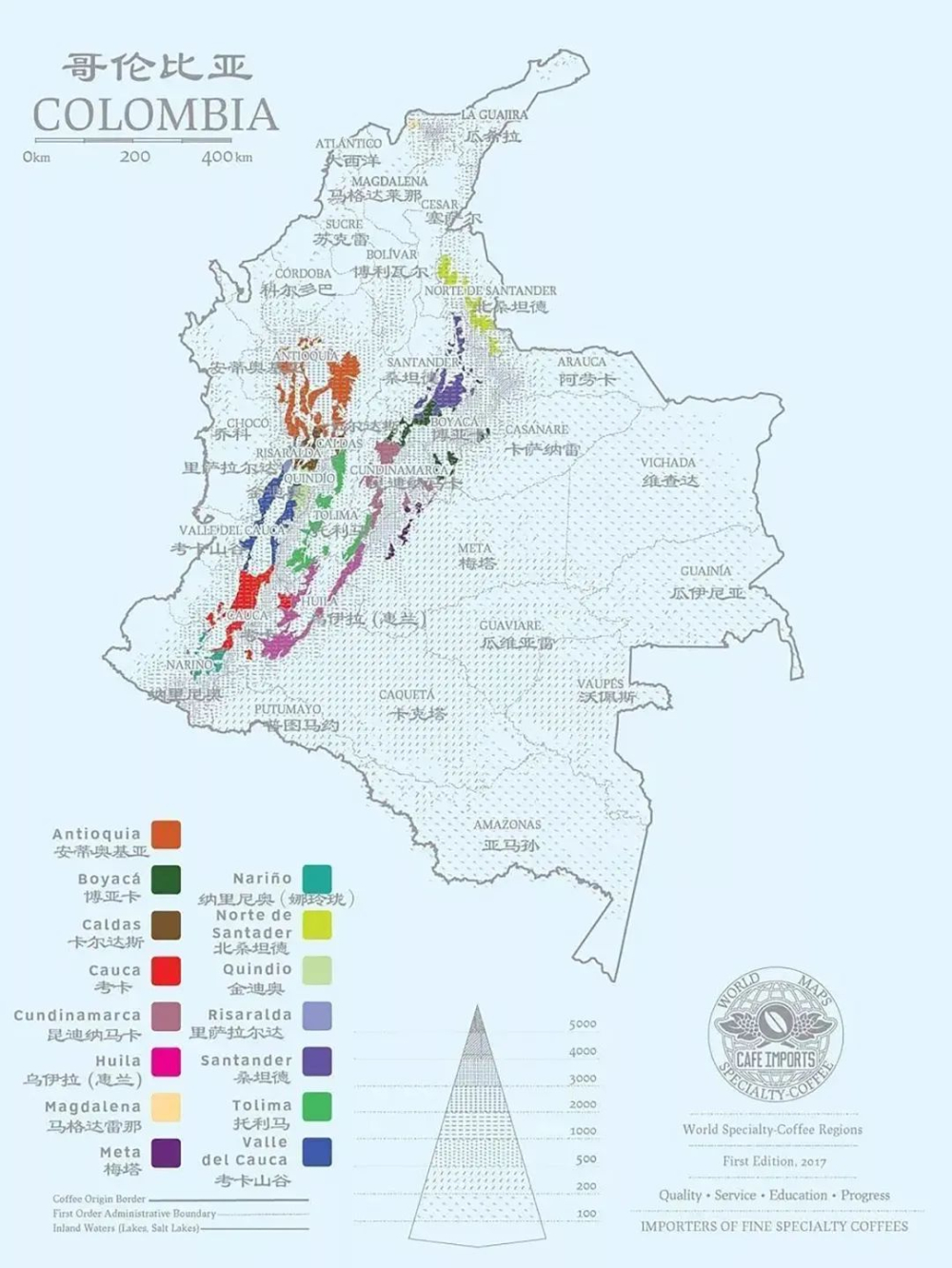
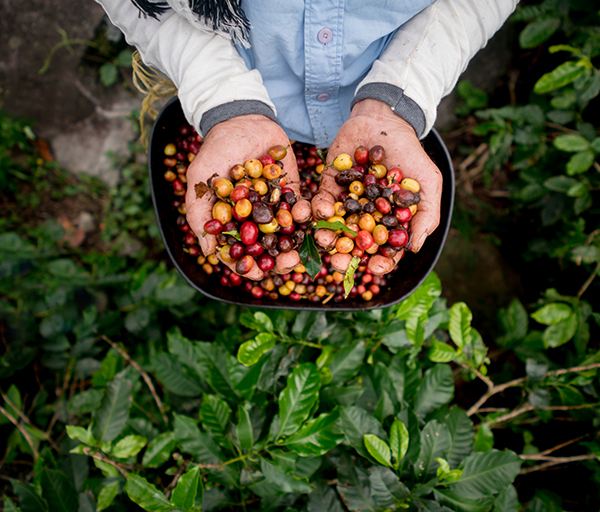
Colombia has more than 500,000 coffee growers, the vast majority of whom are mainly family-based small-scale producers. For these coffee farmers, coffee is both a cash crop for making a living and a witness to generations of family cultivation and harvest. Every harvest season, they can be seen in the groves carefully selecting coffee cherries at just the right ripeness. The Colombian coffee industry's vigorous development would not be possible without the strong support of the National Federation of Coffee Growers of Colombia. (Federacion Nacional de Cafeteros, FNC for short)
FNC is a non-profit organization founded in 1927, whose purpose is to protect the rights and interests of coffee producers. From knowledge dissemination in areas such as variety research and development, cultivation techniques, picking standards, green bean processing, and quality control, FNC has always insisted on purchasing green beans from coffee farmers at the best price of the day, truly dedicating itself to maximizing Colombia's "land potential" and "coffee farmer potential." In terms of commercial marketing, FNC created the image of "Juan Valdez" leading a mule, successfully making Colombian coffee famous around the world.
Colombian coffee grading
At present, Colombian coffee green beans are graded according to screen size. Fixed-size screens are usually used, with different specifications corresponding to different hole sizes. For example, if the mesh is 17 screen size, beans larger than this size cannot pass through the screen. Therefore, the larger the screen number, the larger the beans retained on the screen.
The most common are UGQ, EP, and Supremo. Regardless of the green bean screen-size grade, as long as the green beans are exported they belong to the Excelso grade. In other words, most burlap sacks of Colombian coffee green beans exported around the world today must be marked with the word Excelso grade. UGQ belongs to the Excelso grade, EP belongs to the Excelso grade, and Supremo also belongs to the Excelso grade. The Excelso export grade is currently the most widely used export standard grade adopted by FNC and is also the highest grade for Colombian green bean exports.
Excelso UGQ 12*60 (1.5%): The full name of UGQ is Usual Good Quality. Green bean size is above screen 14, and 1.5% of green beans may be allowed between screens 12 and 14, but they must be above screen 12, and more than 50% must be larger than screen 15.
Excelso EP 12*60 (10%): The full name of EP is European Preparation. Green bean size is above screen 15, and 10% of green beans may be allowed to be smaller than screen 15, but they must be above screen 14.
Excelso Supremo 12*60 (5%): Green bean size is above screen 17, and 5% of green beans may be allowed to be smaller than screen 17, but they must be above screen 14.
In addition, Colombia also has Extra for beans above screen 16, Premium for beans above screen 18, which are even larger than Supremo, and Minama for green beans almost entirely uniform at screen 15, and so on. Each farmer reports a number and enters green bean information, which facilitates future traceability of the green beans. The names of Colombian exported coffee green beans are usually country + producing region + grade + other information. For example, the green beans of Front Street's Huila daily drinking coffee are Colombia Huila Supremo SC17/18 FNC.
Colombian coffee varieties and processing methods
The vast and resource-rich Colombian producing regions have many coffee varieties. In addition to high-quality varieties most commonly seen in Central America, such as Caturra, Bourbon, and Typica, there are also disease-resistant varieties developed by Colombia itself: Castillo, Tabi, and "Colombia" named after the country. With the pursuit of variety diversity, some local estates have begun introducing popular varieties such as Geisha.
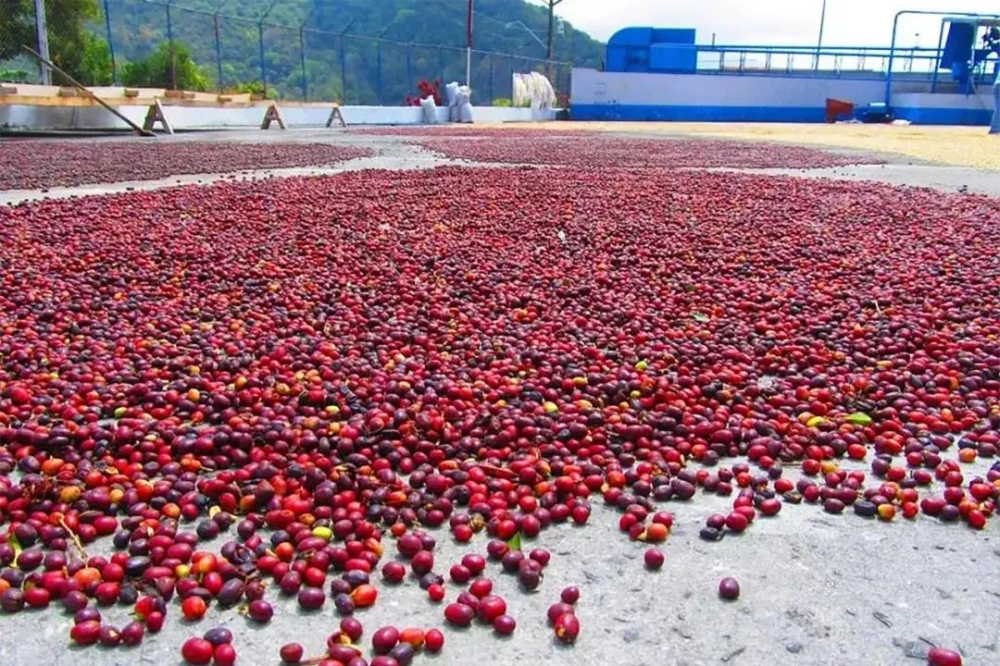
The Colombian producing regions are rich in water resources, and most coffee is washed. Family-based farms are equipped with specially made green bean processing machines (Ecomill or Eco-Pulper). The harvested coffee cherries are poured in, which not only removes the skin and pulp, but also requires only a very small amount of water to remove most of the mucilage. The parchment beans with a small amount of residual mucilage then enter a small pool or container, possibly a tiled pool, and are left overnight to ferment, loosening the remaining mucilage. The next day they are rinsed clean with clear water, and finally spread out under the sun to dry to the target moisture content. The washing steps greatly reduce the defect rate of the coffee beans, preserve the beans' own flavor, and present higher cleanliness.
Brewing suggestions for Front Street Huila daily drinking coffee
The flavor description of every Front Street coffee is based on freshly roasted beans. If the coffee beans have been stored for more than a month, part of the aroma has likely already been lost, and it is very difficult to reproduce it in brewing. Front Street also deeply understands the importance of freshness, so it ensures that only coffee beans freshly roasted within 5 days are shipped, so that everyone can enjoy the fullest tasting window when they receive them.
Considering that the Huila daily drinking coffee uses a medium-dark roast, with flavors leaning toward the rich, mellow notes of nuts and chocolate, the deeper roast makes the coffee beans more porous and the coffee grounds more absorbent. In order to avoid over-extraction, Front Street uses a medium grind size and medium water temperature, paired with a KONO dripper for extraction.
Brewing parameters: KONO dripper, 90 degrees Celsius water temperature, grind size with 75% passing a No. 20 standard sieve, 1:15 coffee-to-water ratio, coffee dose: 15 grams, three-stage extraction
Pour the coffee grounds into a V60 dripper, wet the coffee bed with twice the amount of water as the coffee grounds to form a dome and let it bloom for 30s, then pour in a small stream in a circular motion from the inside out until 125g, then pause. Wait until the coffee bed drops to half the height of the dripper, continue pouring the third stage with the same fine stream until 225g, and after all the coffee liquid has filtered through, remove the dripper. The time is about 2 minutes.
This Colombia Huila daily drinking coffee has obvious roasting aromas of chocolate, nuts, and caramel on entry, smooth and sweet, with moderate body and a clean mouthfeel. As the temperature drops, a pleasant soft acidity can be felt.
For professional coffee knowledge exchange and more coffee bean information, please follow Coffee Workshop (WeChat public account cafe_style)
For more specialty coffee beans, please add the private WeChat of FrontStreet Coffee, WeChat ID: qjcoffeex
The above content is compiled by CoffeeHunters, a coffee news website.


