







Where Are Robusta Coffee Beans Grown, and What About Yunnan?
Robusta is grown mainly in Vietnam, Indonesia, Brazil, Uganda and parts of West Africa and India, at lower altitudes and warmer temperatures than Arabica. Yunnan, by contrast, plants almost entirely Arabica small-bean coffee, spread across Pu'er, Baoshan, Dehong and Lincang, each region giving the cup a different profile.
Catimor became Yunnan's main variety because it resists disease and yields well, though it can carry bitterness and an earthy aftertaste. Typica, the original Arabica brought to Yunnan, is being replanted for finer flavor. Estates such as the Lincang sun-dried Typica lot show how variety and terroir shape the finished cup.
Yunnan coffee has risen rapidly on the specialty path in recent years. From Pu'er and Baoshan to Dehong and Lincang, each producing region nurtures small-bean coffee with distinct styles thanks to its unique terroir. The Catimor variety, once disdained by seasoned coffee lovers, became the mainstay due to its disease resistance and high yield, yet it inevitably carries bitterness and an earthy aftertaste. Pure Arabica varieties, represented by Typica, are now becoming the breakthrough point in the pursuit of refined flavors. Front Street Coffee has established its own estate in Lincang and delivered impressive results with a sun-dried Typica. This article reviews the characteristics of Yunnan's major producing regions, the evolution of varieties, and shares the brewing parameters and flavor profile of Front Street 2013 Yunnan Sun-Dried Typica, offering you a fresh perspective on the potential of Chinese coffee.
Today, coffee has long been integrated into many people's daily lives, especially among young people, who treat it as an essential daily pick-me-up. Coffee shops can be found on street corners, in alleyways, and in shopping mall nooks everywhere.
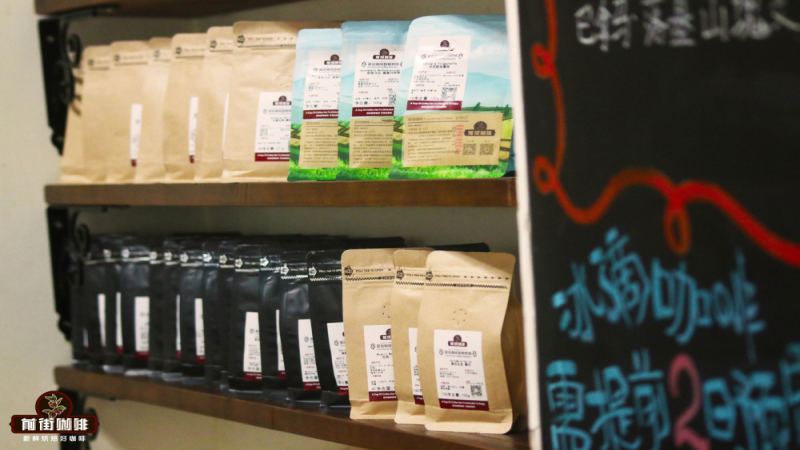
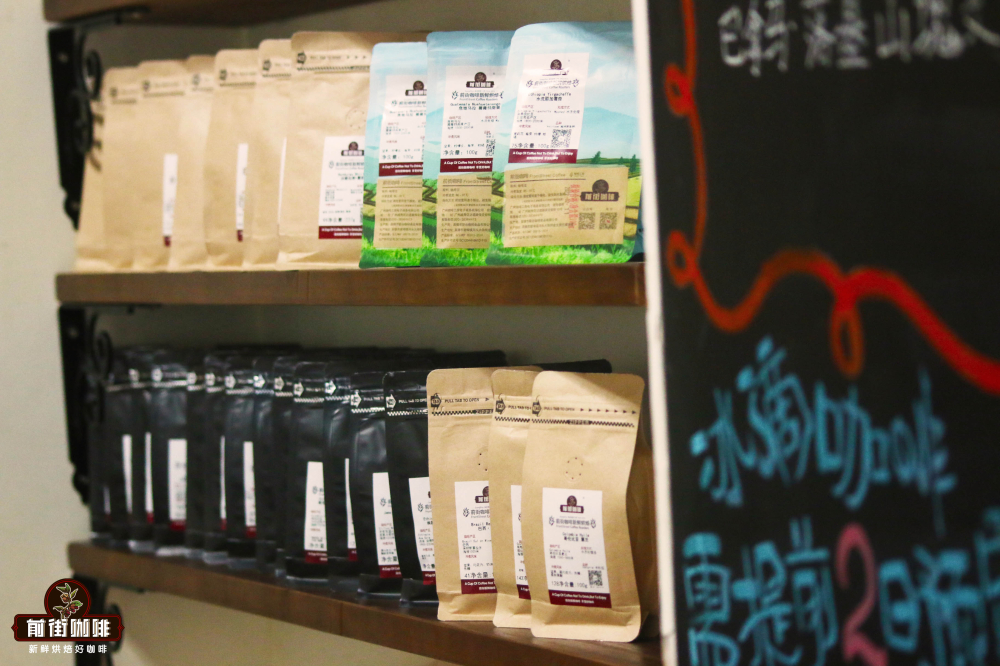
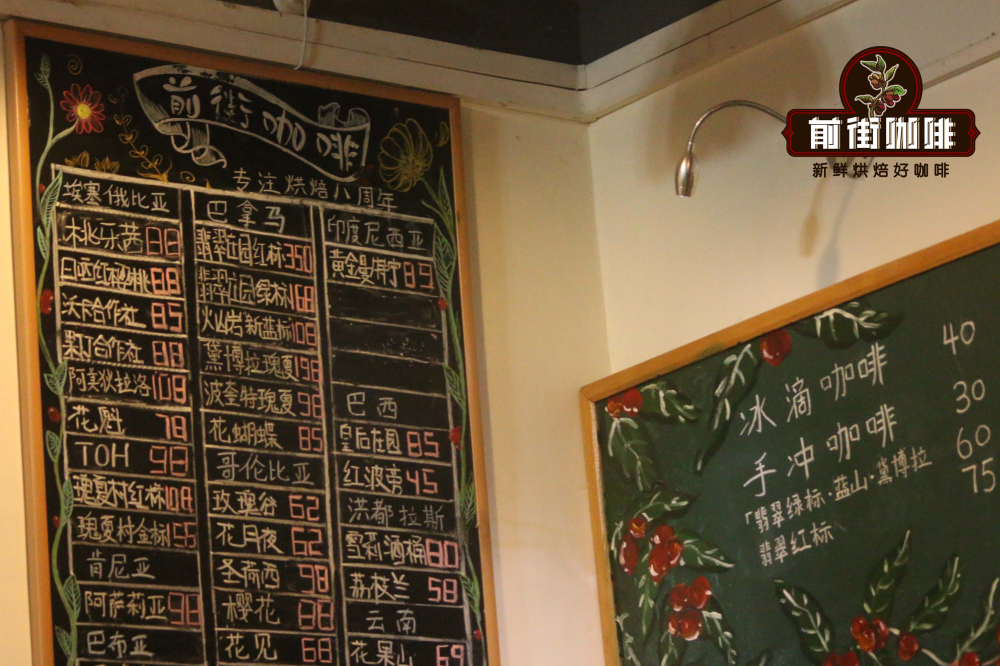
If you pay attention to coffee shop menus, you'll notice that in recent years imported beans no longer dominate — Chinese Yunnan coffee beans have claimed their own place. The blackboard at Front Street's shop displays dozens of beans, and the Yunnan producing region holds its own spot. With the government vigorously promoting Yunnan coffee and the influence of film and television productions, Yunnan coffee has gained unprecedented attention. Some enthusiasts even make special trips to coffee shops just to taste Yunnan beans. The taste and flavor of Yunnan small-bean coffee have also led more and more coffee fans to change their past stereotypes about it.
The rise of "guochao" (national trend) has made more people realize that Yunnan coffee can present such diverse flavors. Once you delve deeper, you'll naturally encounter Yunnan's major producing regions. In fact, Yunnan's coffee-growing areas extend far beyond the Baoshan and Pu'er that most people know — Dehong and Lincang also hold important positions. Yunnan coffee beans have long been exported overseas and have won considerable praise.
【Pu'er】
Those familiar with Chinese tea will not be unfamiliar with Pu'er tea, and Pu'er is the representative place of origin for this tea. It is both the "City of Millennial Tea" and known as the "Coffee Capital."
【Baoshan】
The Yunnan small-bean coffee grown in Baoshan enjoys national Geographical Indication Product protection and is regarded as a premium product by many overseas coffee-consuming countries, often in short supply.
【Dehong】
Dehong enjoys the reputation of "Hometown of Chinese Coffee" and is one of the earliest regions in China to introduce coffee cultivation. Small-bean coffee was introduced from Myanmar in 1914, and large-scale commercial planting began in the 1950s.
【Lincang】
The Tropic of Cancer runs through southern Lincang, and its southwestern part borders Myanmar. Its unique geographical location and superior climatic conditions have made Lincang a focal point for many coffee enterprises. Front Street also noticed this treasure of a place, Lincang, and established its own coffee estate here.
If you pay attention to the bean information of Yunnan specialty coffee, you'll notice the word "Catimor" appears with extremely high frequency. Many people have only heard the name but know little about its origins and development. Seasoned coffee lovers often regard Catimor with disdain, or even aversion.
Yunnan began large-scale coffee planting in the 1950s. At that time, most Chinese coffee was exported overseas, mainly to supply the Soviet Union. Yunnan coffee beans are relatively small in size with abundant fruity notes. The taste of Yunnan small-bean coffee is fragrant without being harsh, rich without being bitter, earning praise from many foreign friends. As reform and opening up progressed, many international coffee brands noticed that Yunnan was an excellent place for coffee cultivation and made Yunnan one of their raw material sources.
In the 1970s, coffee leaf rust ravaged producing regions in Central America, causing a sharp decline in output. In order to obtain more raw materials from the same producing regions, some international brands promoted the cultivation of the Catimor variety in Yunnan.
Coffee farmers rarely give much thought to varieties and flavors — they focus more on income. Catimor is a hybrid of Brazilian Caturra and East Timorese Timo varieties, and the Timo variety contains Robusta genes. As a result, Catimor carries some Robusta characteristics, such as strong resistance to leaf rust and high yield, but also a "devilish aftertaste" — some Yunnan Catimor has a bitter or earthy taste.
Yunnan is one of the few regions in China that grows specialty coffee, typically at elevations above 1,000 meters. In pursuit of refined Yunnan terroir, Front Street naturally chose to plant pure Arabica varieties. On the FrontStreet Coffee estate, the Typica variety occupies the majority.
In 2021, the FrontStreet Coffee estate welcomed its first small-batch harvest, and all the coffee cherries harvested were processed using the sun-dried method. Later, this Yunnan sun-dried Typica was sold only in the shop, yet it was completely consumed within half a year. When the 2022 harvest season arrived, the FrontStreet Coffee estate welcomed its second bumper harvest, and the fruit from this season was also entirely sun-dried.
On Front Street's bean list, there is also a Typica from Yunnan, from Baoshan, using the washed processing method. To let customers personally experience and compare the flavor differences between washed and sun-dried Yunnan Typica, the one produced by the FrontStreet Coffee estate uses the sun-dried processing method.
FrontStreet Coffee Front Street 2013 Yunnan Sun-Dried Typica
Producing Region: Lincang, Yunnan
Estate: FrontStreet Coffee Estate
Elevation: 1,300 meters
Variety: Typica
Processing Method: Sun-Dried
Compared with the washed method, the sun-dried process retains the whole fruit for drying. The sugars in the skin, pulp, and pectin layer slowly seep into the green beans during drying, which is why the FrontStreet Coffee estate's sun-dried Typica has a particularly prominent sweetness and a fuller body.
Many customers who have tasted the Yunnan sun-dried Typica at Front Street's shop ask the baristas how to brew it to best showcase this bean's character. Below are Front Street's brewing parameters for this sun-dried Typica:
Dripper: Hario V60
Water Temperature: 89°C
Dose: 15 grams
Coffee-to-Water Ratio: 1:15
Grind Size: 75% passing through a Chinese standard No. 20 sieve
First pour 30 grams of hot water for a 30-second bloom, then pour in a thin stream from the center point while slowly circling to 125 grams. When the water level in the dripper drops to the point where the coffee bed is about to be exposed, continue pouring to 225 grams. Total extraction time is about 2 minutes.
Some customers aren't confident about their grind size and want FrontStreet Coffee to grind the beans for them. Front Street does offer a grinding service, but once coffee beans are ground, degassing accelerates and flavor compounds dissipate more quickly. Front Street recommends that customers who have a grinder at home buy whole beans and grind fresh for each brew to achieve better flavor.
The FrontStreet Coffee estate's sun-dried Typica has a soft plum acidity on entry, rich nutty notes, and a preserved-fruit-like sweetness, finishing with brown sugar sweetness and a black tea sensation.
For more coffee bean information, please follow Coffee Workshop (WeChat public account: cafe_style) For professional coffee knowledge exchange, please add WeChat ID: kaixinguoguo0925
The above content is compiled by CoffeeHunters, a coffee news website.


