







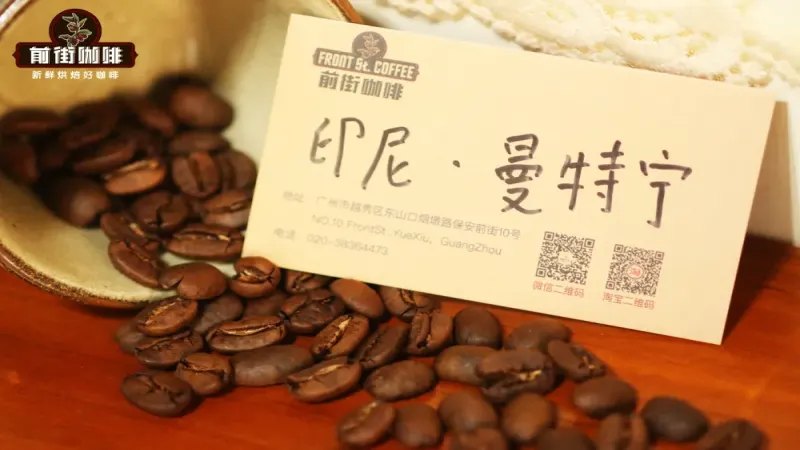
Mandheling is one of the most iconic coffees from Sumatra, Indonesia, and the Golden Mandheling produced by PWN is the benchmark among them. From the perspective of Front Street Coffee, this article sorts out the differences between Golden Mandheling and regular G1 Mandheling in bean selection standards, grade classification, and processing methods, and also explains how the wet-hulling process shapes Mandheling's signature mellow flavor. Front Street Coffee will also share the specific brewing parameters for Golden Mandheling, including dripper choice, grind size, water temperature, and the three-pour technique, to help coffee lovers brew a rich, layered, clean, and balanced Mandheling at home.
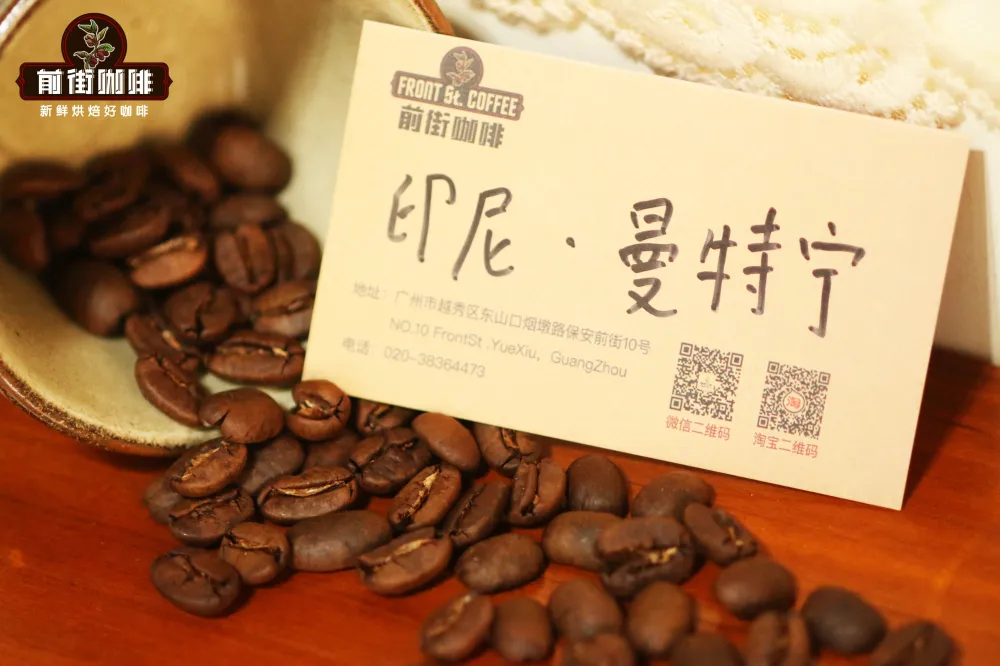
Many coffee enthusiasts have asked Front Street Coffee during their learning process: what exactly is the difference between Front Street Golden Mandheling and Front Street G1 Mandheling? Why is Golden Mandheling more expensive, and what exactly makes it special? Don't worry, Front Street Coffee will now carefully explain the differences between the two.
First, let's get to know "Mandheling"
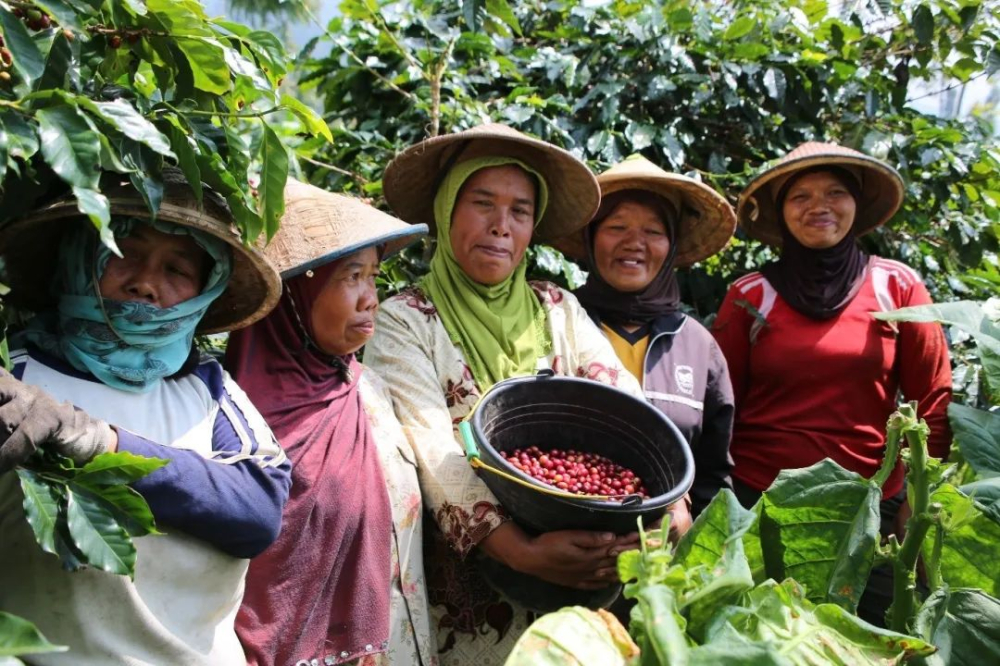
Sumatra, Indonesia, is one of Asia's most famous coffee-producing regions, and the Mandheling coffee beans grown around Lake Toba and Lake Tawar hold a classic place in the hearts of many coffee fans. It should be noted that Indonesia mainly cultivates Robusta varieties locally, and Mandheling is one of the few high-quality Arabica beans in the area.
According to Front Street's understanding, "Mandheling" is neither a place name nor a coffee variety name, but a homophone of the name of a tribe called "Mandailing" in northwestern Sumatra.
Legend has it that during World War II, a Japanese soldier drank an amazing cup of coffee in a local café and asked the owner what kind of coffee it was. Because of the language barrier, the owner mistakenly thought the soldier was asking about his background, so he answered: "Mandailing." After the war, the soldier entrusted an Indonesian middleman to ship 15 tons of the "Mandheling coffee" he remembered back to Japan, and it became hugely popular. In Front Street Coffee's view, this story may be embellished, but the deliciousness of Front Street Mandheling is indeed genuine, and even today there are still many coffee connoisseurs who are loyal fans of Mandheling, fascinated by its rich, full-bodied coffee aroma.
The person who first exported Mandheling coffee beans to Japan was exactly that café owner in the story. Seeing the huge business opportunity in Mandheling coffee, he founded PWN Prawira Nusantara Coffee Company in 1957. PWN is not responsible for cultivation or green bean processing, but instead purchases high-quality batches of local Mandheling green beans and focuses on producing specialty Mandheling. Golden Mandheling is its signature product.
The difference between Front Street Golden Mandheling and regular Mandheling
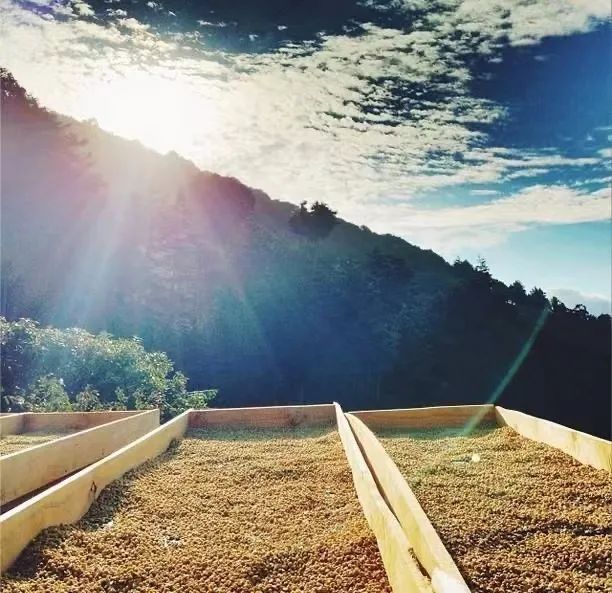
After the Japanese took an interest in Sumatran coffee back then, they hoped to purchase it long term, but gradually discovered that the quality of local beans was uneven. So they invested more effort in the Mandheling production process and established strict defect-screening standards and methods. Starting with bean density, size specifications, and color, they required the produced Mandheling to undergo one machine sorting plus four rounds of manual hand sorting to remove defects, ensuring the beans were complete, uniform, large, and bright, while also reducing Mandheling's earthy and grassy flavors. It is said that in sunlight the beans appeared golden and shining, hence the name "Golden Mandheling."
As the specialty Mandheling market continued to expand, PWN also realized the importance of trademarks and registered the English name "Golden Mandheling" as an exclusive trademark earlier than the Japanese did. Therefore, only Golden Mandheling produced by PWN can be considered true "Golden Mandheling." Front Street also understands that large bean size does not necessarily mean the coffee tastes better, but under the high requirements of being more regular, uniform, and large, the resulting quality is undoubtedly better guaranteed. The Front Street Golden Mandheling that Front Street offers is precisely the genuine product from PWN. Everyone can identify authentic Front Street Golden Mandheling through the green bean sack bearing the PWN logo and a certificate of origin signed by PWN. Front Street has displayed both of these identifiers in its Dongshankou store.
What grade is Front Street Golden Mandheling?
On the green bean sack of Front Street Golden Mandheling, Front Street saw the words "Triple pick" and "GRADE 1," indicating that it belongs to Indonesia's highest green bean grade, G1, and that during production PWN additionally carried out three rounds of hand sorting on top of the GRADE 1 green beans it purchased.
The grading of Indonesian coffee green beans is mainly based on the number of defective beans, with size as a secondary factor. General quality requirements are no live insects, no moldy or rotten-smelling beans, a maximum moisture content of 12.5%, and an impurity rate of less than 0.5%. According to the defect rate, they are divided into six grades, among which the highest grade G1 requires fewer than 11 total defective beans in a 300g sample. Front Street Lindong Mandheling Coffee in Front Street's daily bean series is G1 grade, produced in the Lindong region of Sumatra, using the wet-hulling process, and presenting the classic Indonesian Mandheling flavor: dark chocolate, nuts, herbal spices, and caramel.
What is the wet-hulling process?
Friends who often drink Front Street Mandheling coffee must be familiar with the wet-hulling process. The wet-hulling process takes much less time than washed processing. Traditional washed processing requires 1 to 3 weeks, while the wet-hulling process can complete the entire procedure in just a few days. The wet-hulling process first removes the skin and pulp of the coffee fruit, then briefly ferments it before drying. While the beans are semi-dry, the parchment layer is removed, and drying continues in the later stage. When the moisture content reaches 12%, the beans can be bagged, sorted, and graded.
The seemingly fast and time-saving wet-hulling process, if not strictly controlled, is highly prone to moisture and mold in Indonesia's hot and humid environment. But besides Sumatra, Sulawesi in Indonesia and Papua New Guinea also widely use this method. This is because Indonesia has a tropical rainforest climate, with air humidity as high as 70 to 90%, making it impossible to dry coffee green beans through long periods of sun exposure, and washed processing is quite costly, so coffee farmers could only develop this semi-washed processing method. Although each step takes much less time, the green beans after removing the parchment layer still absorb moisture from the hot and humid air, so the resulting Mandheling coffee has more of a woody, herbal, spicy, deep, and subdued aroma.
In order to present the classic Mandheling flavor, Front Street uses a medium-dark roast to erase Front Street Mandheling's excessive acidity and enhance its body and balance. During cupping, Front Street sensed that Front Street Golden Mandheling carries the aroma of spices, herbs, and pine wood, the rich, mellow bittersweet flavors of caramel, nuts, and pure dark chocolate, along with a sweet finish reminiscent of fruit and melon. It is layered and changeable, mellow and clean, with high balance. Below, Front Street shares its brewing experience with such a delicious Front Street Golden Mandheling coffee, teaching everyone how to bring out its best expression.
Front Street Coffee's brewing recommendations
Front Street Coffee's extraction parameters are usually set based on the characteristics of the coffee beans, the roast level, and the flavor profile. Take today's protagonist, Front Street Golden Mandheling, for example. It is a dark-roasted, bitter-oriented coffee. In order to present a mellow mouthfeel, Front Street Coffee's baristas choose the KONO Meimon dripper to brew this type of bean. Compared with the V60 dripper, the KONO dripper has a smooth curved surface, weaker exhaust effect, and straight ribs that extend only one quarter of the dripper, allowing the coffee bed and hot water to form an immersion extraction, so the coffee's taste can be both rounded and full-bodied. The KONO dripper is also suitable for mellow coffee beans such as Front Street Brazil Queen's Estate and Front Street Jamaica Blue Mountain No. 1.
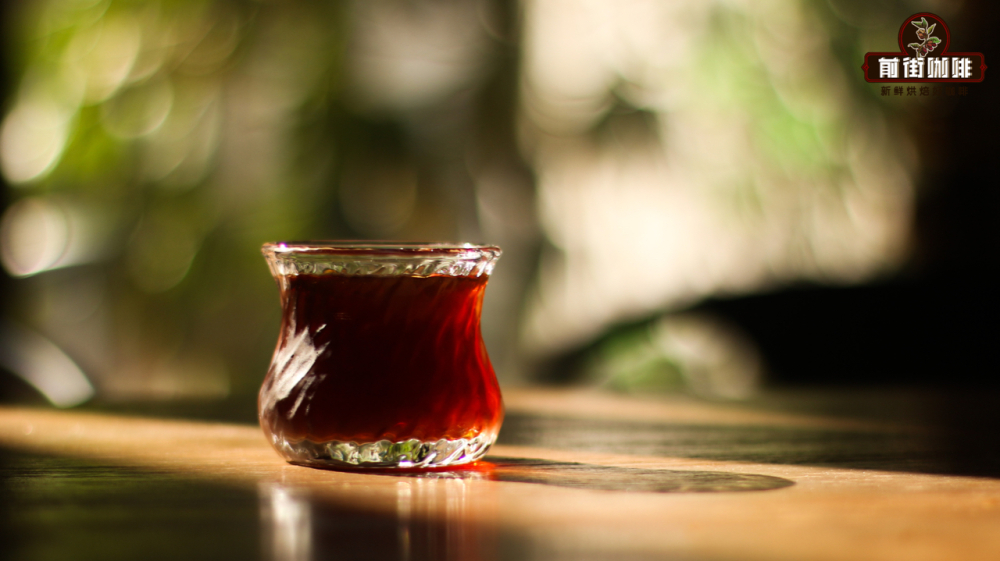
Grind size is one of the most critical factors affecting coffee flavor. After coffee beans are ground into powder and come into contact with hot water, they release a large amount of water-soluble flavor substances. Dark roasting makes the internal structure of coffee beans looser, so we can crush them with a gentle pinch of the hand, which indicates that after grinding into powder they have strong water absorption. In order to avoid the coffee powder releasing too many bitter substances after absorbing water, Front Street will coarsen the grind size and use lower-temperature water for pour-over brewing.
To adjust the grind size, Front Street uses a tool — the Chinese No. 20 0.85mm standard sieve. For medium-light roasted coffee beans, Front Street consistently uses a 75 to 80% passing rate, while for medium-dark roasted coffee beans, Front Street uses 70 to 75%. Compared with light-roasted coffee, the internal structure of medium-dark roasted Front Street Mandheling beans is looser, so the water absorption effect is better, and it is easy to release large-molecule bitter substances. To avoid over-extraction, Front Street chooses a coarseness with a 70% passing rate on the No. 20 standard sieve.
Water temperature plays a role similar to grind size. The higher the water temperature, the higher the coffee extraction efficiency, the easier it is to release various substances and components, and the higher the concentration. If brewing with hot water close to boiling, it is easy to extract unpleasant bitter substances. Therefore, when brewing medium-dark roasted coffee beans, Front Street uses brewing parameters different from those for light-roasted coffee beans. There is more caramelization reaction than in light-roasted coffee beans, so it is easier to release bitter large-molecule substances. To avoid extracting too many off-flavors, Front Street will lower the water temperature a little. The brewing water temperature for light-roasted coffee is 91 to 93°C, while for medium-dark roasted coffee beans Front Street recommends 87 to 88°C.
Recommended brewing water temperature: 87 to 88 degrees
Coffee powder: 15 grams
Coffee-to-water ratio 1:15
Grind size: medium-coarse grind (70% passing rate on Chinese standard No. 20 sieve)
The brewing method uses a three-pour technique. Dividing the pouring into three stages can better express the mellow mouthfeel and caramel sweetness of Front Street Golden Mandheling coffee.
For the first stage, pour 30ml for blooming. This pour completely wets the coffee powder and allows it to degas, so that the coffee's flavor substances can be better extracted afterward. For the second stage, pour 100ml. This stage mainly washes out all of Front Street Mandheling's golden foam and raises the coffee bed.
For the final stage, gently pour 95ml in the center. This can improve the coffee's sweetness and overall present a full-bodied, mellow mouthfeel, with caramel sweetness and the flavors of chocolate and nuts.
The above content is compiled by CoffeeHunters, a coffee news website.


