







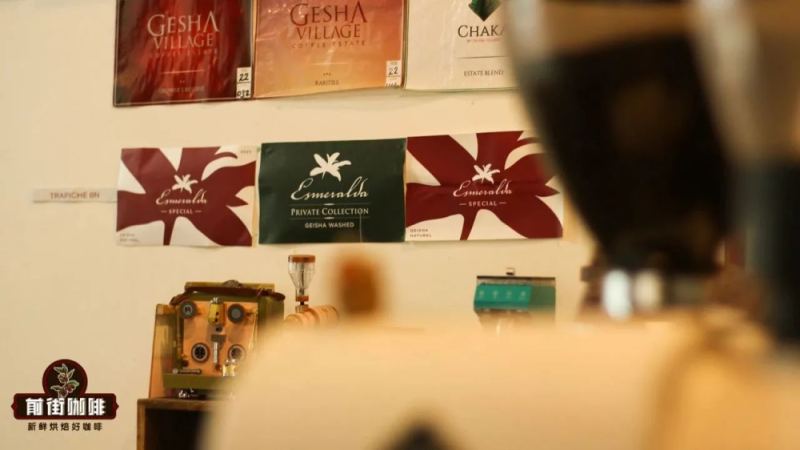
Geisha coffee is known as "expensive stuff," and its high price stems not only from its outstanding flavor but also from its scarce yield and the difficulty of harvesting. It is famous for its delicate floral aromas and citrus notes, with Panama's Hacienda La Esmeralda and Ethiopia's Gesha Village being the two major representatives. When faced with such precious beans, improper brewing inevitably leads to waste. Front Street Coffee has customized brewing plans for different Geishas: from Panama Boquete washed Geisha and Gesha Village Red Label natural, to entry-level Geisha blends, covering a variety of price points and extraction methods. This article will break down the brewing parameters and flavor performance of each bean in detail, helping you brew rich floral and fruity aromas with honey sweetness at home.
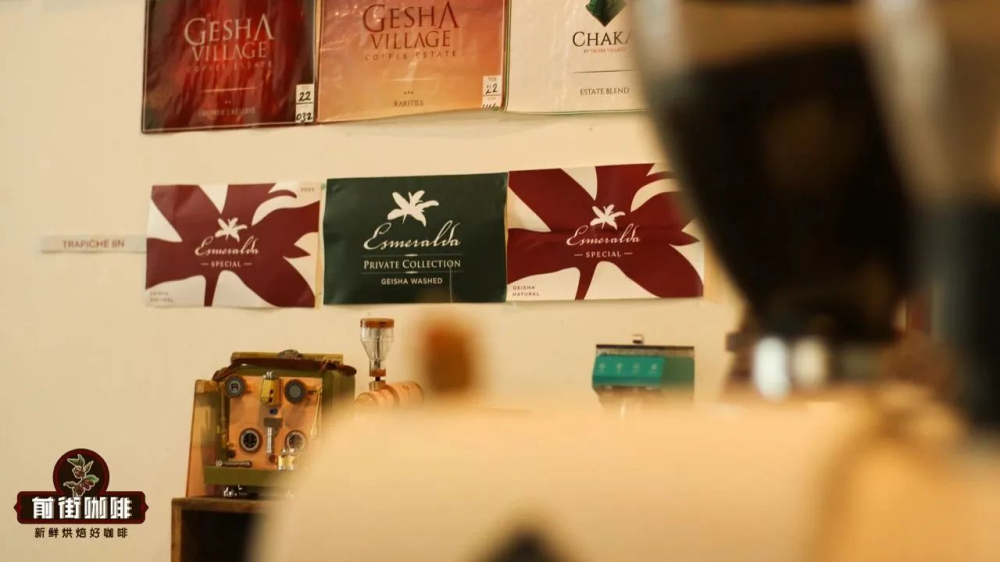
Geisha coffee is jokingly called "expensive stuff" coffee, and this name perfectly captures the fact that it is not cheap. The reason Geisha is so expensive, besides its outstanding flavor, is also due to limited production, and because the Geisha tree grows tall, harvesting is difficult, so labor input is naturally high.
Geisha coffee is known for its delicate floral and citrus flavor profile. When it comes to the more famous regions producing Geisha, the various lots from Panama's Hacienda La Esmeralda are foremost. Of course, Ethiopia, the original home of the Geisha variety, is also well represented by Gesha Village Red Label.
Speaking of representative Geisha coffees, Front Street Coffee believes Panama's benchmark is Hacienda La Esmeralda, while Ethiopia's representative is Gesha Village. Geisha coffee is very active in the specialty coffee world and is one of the most popular varieties. As specialty coffee continues to develop, more and more coffee lovers' enthusiasm for Geisha keeps growing, and producing regions in many countries have begun cultivating this famous variety.
Since Geisha coffee has such a distinctive character and is relatively expensive, failing to fully brew out its flavor would be a bit of a waste. Front Street Coffee has tailored a brewing plan for different Geishas, represented by Panama Geisha, Gesha Village Geisha, and Geisha blends.
These several coffees occupy different price tiers on Front Street Coffee's Geisha bean list: from the relatively expensive Hacienda La Esmeralda Geisha, suitable for pour-over and gifting; to the cost-effective Gesha Village Red Label, suitable for sharing with friends or everyday tasting; to the entry-level Geisha blend, suitable for pour-over, cold brew, Clever Cup, French press, and other extraction methods. You can always find a Geisha that suits you.
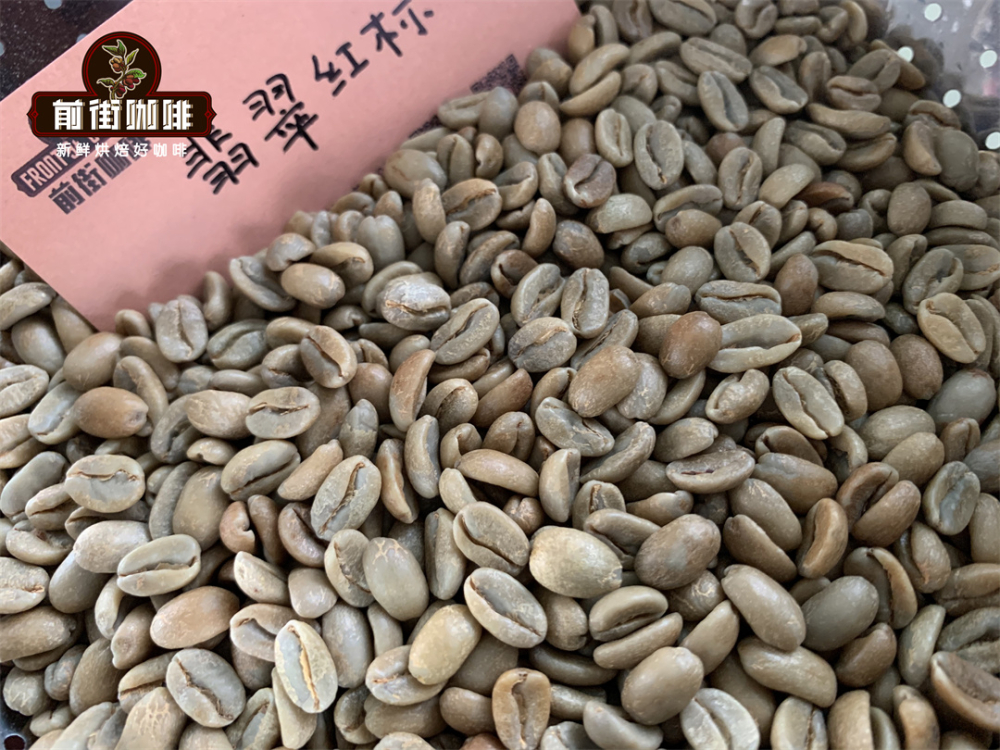
Front Street. Panama Boquete Washed Geisha Coffee Beans
Region Panama Boquete
Estate Hacienda La Esmeralda
Processing Method Washed
Altitude 1500+ meters
Variety Geisha
Brewing Flavor Jasmine, Citrus, Honey, Pomelo
The green beans are pointed at both ends and plump in the middle, and after roasting they give off a slight floral aroma. In fact, this bean is Hacienda La Esmeralda's "New Blue Label," and its quality performance is still excellent.
For the dose, Front Street still chooses 15g, using a small Hario V60 dripper. For grind size, it will be slightly coarser than Front Street's usual offerings, with a 78% pass rate on a No. 20 sieve, mainly because Geisha coffee beans are relatively hard and tend to sink to the bottom and clog the drainage holes.
The coffee-to-water ratio is adjusted accordingly to 1:16. On one hand, using an extra portion of water helps maintain the extraction yield; on the other hand, it lowers the coffee concentration to between 1.15% and 1.25%, which is the concentration that best allows you to experience the coffee's optimal flavor. For water temperature, maintain 91°C.
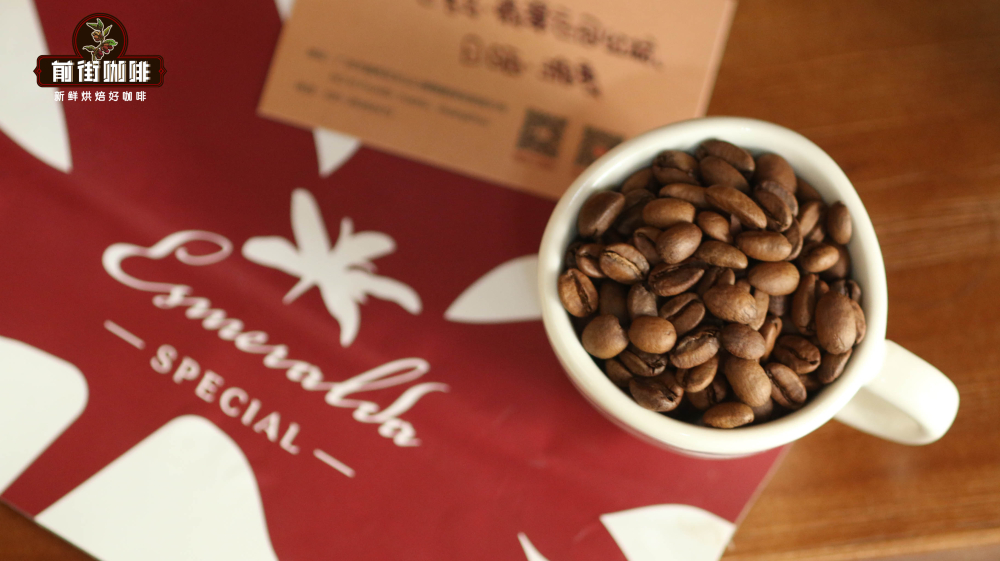
When brewing, Front Street first pours in 25ml of hot water and blooms for 30 seconds. Because Geisha beans are hard, their water absorption is not that strong, so pouring in 25ml of hot water basically moistens the entire surface of the coffee grounds; if more water is used for the bloom, the excess water will actually just fall into the server. During the bloom, you can be gentler, pouring in small circles from the center outward, which gives the best bloom pouring effect.
After the bloom ends, proceed to the second pour. At this stage, 120ml of water needs to be poured, in a "mosquito coil" spiral from the center outward, lifting the coffee bed. The pouring is finished at about 1 minute. Then wait for the water level to drop. Under normal conditions, the water level drops slowly and evenly, reaching the halfway point at about 1 minute 10 seconds to 1 minute 15 seconds, forming a "bowl shape."
At this point, begin the final pour. For this stage, pour 90ml of water in circles about half the size of the water surface, finishing at about 1 minute 35 seconds. Then all that remains is to wait for the coffee liquid to finish dripping into the server and remove the dripper to complete the brew, which takes about 2 minutes to 2 minutes 5 seconds.
Geisha coffee brewed this way shows rich floral and fruity aromas, as well as the sweetness of fruit and honey, and is overall soft and not bitter.
Front Street. Gesha Village Red Label Geisha Coffee Beans
Region Ethiopia Bench Maji
Estate Gesha Village
Processing Method Natural
Altitude 1909-2069 meters
Variety Gori Gesha
Brewing Flavor Citrus, Plum, Cream, Tropical Fruit, Fermentation Aroma
Front Street. Gesha Village Red Label Geisha. The estate is located in Bench Maji, Ethiopia, and this Red Label lot comes from the estate's Shewa-Jibabu block, located northwest of the estate, with coffee trees planted at altitudes of 1973 to 2069 meters. The variety of this Gesha Village Red Label coffee is Gori Gesha, discovered in the Gori forest.
The flavor of this Gesha Village Red Label natural Geisha coffee is obvious yellow stone fruit flavors, white floral aromas, a slight tea-like quality mixed with a distinct creamy finish. Its advantage is that the ultra-high sweetness brought by refined natural processing runs throughout; in the front section, because of the high sweetness, the acidity does not show as fruity acidity but rather as a soft acidity, and the creamy quality in the finish is even more obvious. But its disadvantage is a lack of body, and after it cools, the overall cup becomes rather bland. Since the advantage of this Gesha Village Red Label is very high sweetness but it lacks body, the goal of brewing this coffee bean is to highlight the sweetness as much as possible while enhancing the overall body.
Front Street still chooses 15 grams of coffee grounds and a small Hario V60 dripper. To enhance body, a finer grind can be chosen, with a coffee-to-water ratio of 1:15, water temperature of 91°C, and three-stage pouring.
For the first pour, pour 30 grams of water and bloom for 30 seconds. For the second pour, pour 95 grams of water, with a 10-second interval.
For the third pour, pour 100 grams of water, with a total extraction time of 1 minute 55 seconds.
Brewed this way by Front Street, the Gesha Village Red Label Geisha coffee has citrus acidity when hot, without losing body; as it cools slightly, the acidity turns softer, and the flavor leans toward yellow stone fruit flavors, creamy sweetness, slight floral aroma, and a slight dark cocoa finish; when cool, it is maple syrup and berries.
Geisha Blends
Speaking of blended Geisha coffee beans, Front Street's bean list includes two Geisha blend coffees. The first is a coffee bean from Panama's Boquete region called "Butterfly." The biggest characteristic of this bean is that it blends 70% Geisha coffee, with the remaining 30% being Panama's common Caturra and Catuai varieties. Butterfly coffee drinks with the slight floral and citrus notes brought by the Geisha variety, as well as the nutty notes and full body brought by the Caturra and Catuai varieties. So in past years, Front Street Coffee would recommend Butterfly as an entry-level Geisha coffee.
The other is Costa Rica Tarrazu Mirazu Estate Strawberry Candy. Unlike Butterfly, the Geisha blend from Costa Rica's Mirazu Estate has more rich berry flavors. Butterfly's Geisha proportion is as high as 70%, while Mirazu Estate's Geisha blend is only 50%, with the remaining 50% composed of varieties such as SL28 and ET47. So this coffee drinks differently from Butterfly's nutty notes, replaced instead by more berries and citrus, while raisin honey processing gives this Geisha blend coffee obvious candied fruit and fermented notes.
For the Front Street blend coffee, Costa Rica Mirazu is chosen as the brewing representative.
Front Street. Costa Rica Strawberry Candy Coffee Beans
Region Costa Rica Tarrazu
Estate Mirazu Estate
Processing Method Raisin Honey
Altitude 1700 meters
Variety Geisha, SL28, ET47, Maico
Brewing Flavor Rose, Strawberry, Raisin, Almond
Use a small Hario V60 dripper, with a grind size of 80% passing a standard sieve. Coffee-to-water ratio 1:15, water temperature 91°C, three-stage pouring.
For the first pour, pour 30 grams of water and bloom for 30 seconds. For the second pour, pour 95 grams of water, with a 10-second interval.
For the third pour, pour 100 grams of water, with a total extraction time of 2 minutes, then remove the dripper to complete the brew.
The above content is compiled by CoffeeHunters, a coffee news website.


