







As a top-tier category among rich, bitter profiles, is Blue Mountain coffee really that bitter? This article takes Front Street Coffee's own roasted Blue Mountain No. 1 beans as an example, breaking down everything from origin characteristics, processing method, and grade classification to brewing parameters. Front Street Coffee will share the specific method of using a Kono dripper with three-stage pouring, including key data such as grind size, water temperature, and coffee-to-water ratio, and offer adjustment suggestions for the problem of excessive bitterness, helping coffee lovers brew a Blue Mountain coffee with balanced dark chocolate, nut, and caramel aromas and a round, smooth mouthfeel.
For more specialty coffee knowledge, please follow the WeChat official account: Front Street Coffee (FrontStreet Coffee)
Specialty coffee is becoming increasingly popular, with beans featuring fruity and floral notes emerging one after another. But in an era when coffee shops had not yet sprung up everywhere, bitter flavor profiles were the mainstream, and Blue Mountain coffee is precisely the top representative of this kind of rich, bitter profile. Front Street Coffee takes its own roasted Blue Mountain No. 1 beans as an example to talk about how to brew this bean.
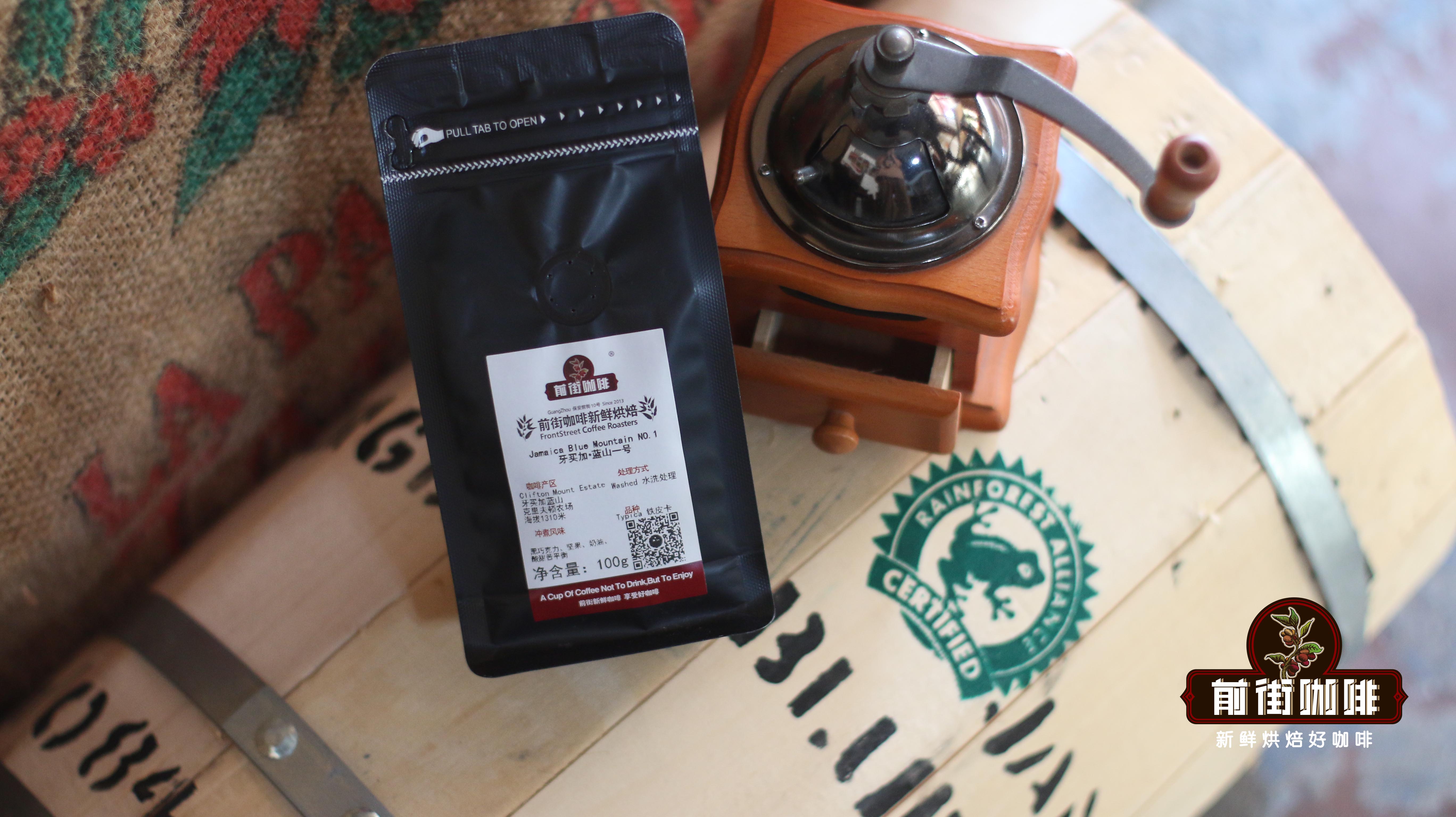
Front Street Coffee has always believed that to brew a good cup of coffee, it is essential to first understand the beans thoroughly. Understanding the relevant information helps organize the brewing logic and can also elevate the final flavor. Below, let's first discuss what characteristics Jamaican Blue Mountain No. 1 coffee beans possess.
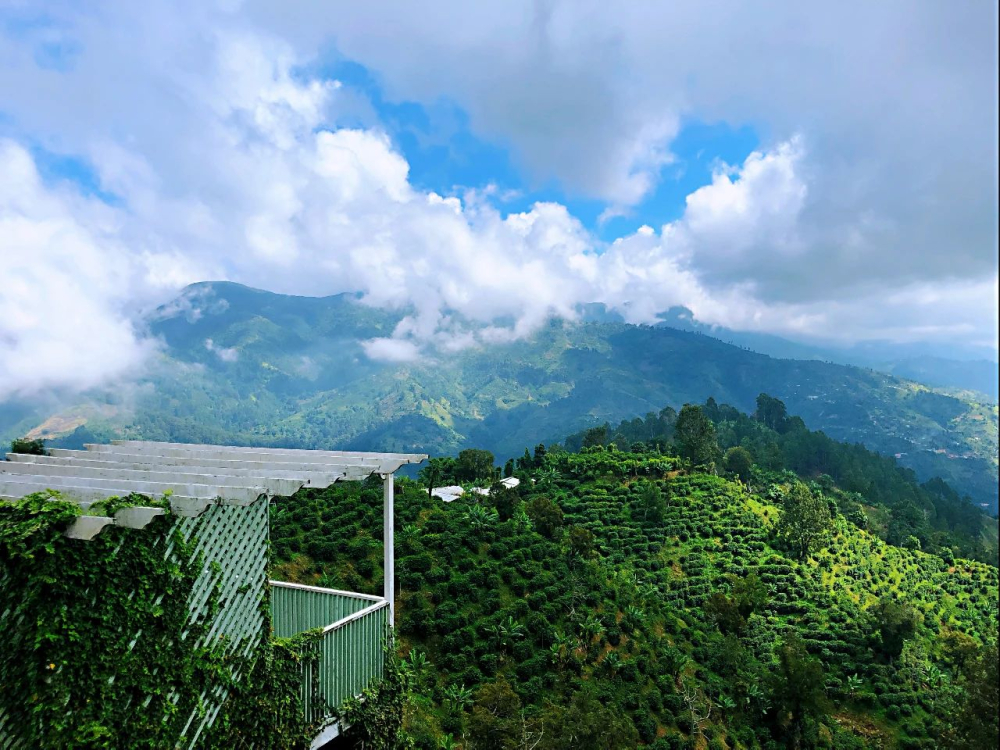
Origin: Blue Mountain coffee comes from the Blue Mountain region in eastern Jamaica, where towering mountain ranges create a unique microclimate extremely favorable for the growth of coffee, bananas, and other crops. Local temperatures are mild year-round, with clouds and mist often lingering among the mountains, so coffee trees are spared from prolonged direct sunlight. There are two concentrated rainy seasons each year, from May to June and September to November, with abundant rainfall. Combined with the steep slopes and smooth drainage, no additional irrigation is needed. According to the standards of the Jamaican Coffee Industry Board (CIB), only Arabica coffee grown above 910 meters can be called Jamaican Blue Mountain coffee; coffee from other areas is called Jamaican High Mountain coffee and Jamaican Supreme coffee. The higher the altitude, the greater the difficulty of cultivation management and harvesting, the rarer the beans produced, and naturally the higher the price.
Processing method: Traditionally, Blue Mountain coffee is mostly processed by the washed method. During washing, multiple steps remove coffee cherries that fail to meet quality standards, so the overall defect rate drops significantly. In addition, since the outer fruit pulp is removed before the green beans are dried, the flavor expression is brighter and cleanliness is higher. Front Street Coffee believes that washing can fully bring out the aroma of the Blue Mountain coffee beans themselves, and the output quality is more stable, so Front Street Coffee uses washed Blue Mountain coffee.
Front Street Coffee Blue Mountain coffee grades: Jamaican Blue Mountain coffee is also graded according to green bean specifications, defect rate, cupping flavor, and other indicators, divided into four grades: Blue Mountain No. 1, Blue Mountain No. 2, Blue Mountain No. 3, and hand-selected Blue Mountain peaberry. Among them, Blue Mountain No. 1 is the highest grade, with green bean specifications above screen size 17 and a moisture content of about 10-12.5%. After roasting, the acidity, sweetness, bitterness, body, and aroma are just right, making it an extremely precious lot. To ensure Blue Mountain coffee beans remain in good condition before roasting and to prevent moisture from seeping in during transport, Jamaicans insist on loading Blue Mountain green beans in handmade wooden barrels, which have thus become one of the important symbols of Jamaican Blue Mountain coffee.
Compared with other origins, Jamaica was the earliest to recognize coffee's "taste of place." The standards for evaluating Blue Mountain green bean quality cover multiple dimensions: green bean size, defect rate, color, uniformity, and post-roast cupping performance (dry aroma, wet aroma, acidity, flavor, body, cleanliness, etc.).
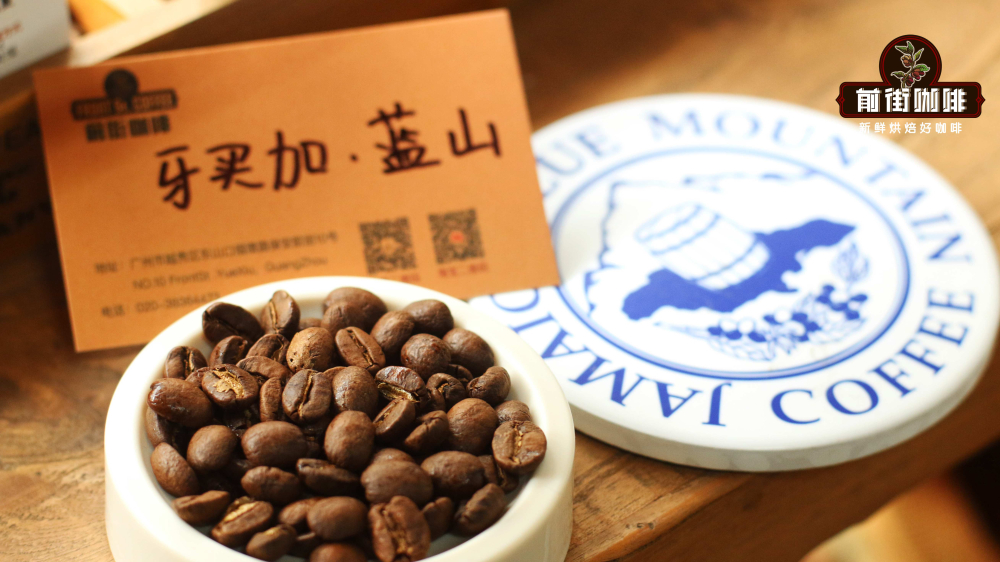
Front Street Coffee's Blue Mountain No. 1 green beans are uniform and plump, consistent in size, and overall a translucent blue-green. After roasting, Front Street Coffee conducted a cupping: the dry aroma presented nuts, melon, and chocolate; after pouring in hot water, oolong tea, caramel, honey, and dark chocolate could be smelled. On the palate, there were rich dark chocolate, roasted hazelnut, cream, and dark brown sugar; the flavor was clean and clear, the mouthfeel full-bodied, and the aroma long-lasting.
Front Street Coffee chose the Kono dripper for brewing, aiming to present the rich, rounded mouthfeel of Blue Mountain No. 1. Kono's ribs extend less than half the height of the dripper; this design is intended to make the filter paper cling tightly to the dripper wall after wetting, restricting airflow, thereby extending the water absorption time of the coffee grounds, making extraction more even, and enhancing body.
In addition, Blue Mountain No. 1 is a medium-dark roast, and the internal structure of the beans is more porous than light-roasted coffee, with better water absorption. To avoid over-extraction, Front Street Coffee chose a grind size with 75% passing through a No. 20 standard sieve, a water temperature of 88°C, and the three-stage pouring method Front Street Coffee commonly uses. 15 grams of coffee grounds, with a coffee-to-water ratio of 1:15.
Front Street Coffee uses staged extraction, namely the three-stage pouring method: first bloom with 30g of water for 30 seconds; in the first stage, pour in a small stream in circles until 125g and stop; when the liquid level drops to the point where the coffee bed is about to be exposed, continue with the second stage, pouring until 225g to end extraction. The total extraction time (including bloom) is 2 minutes 00 seconds.
The taste of hand-brewed Blue Mountain No. 1 coffee: rich dark chocolate, nut, and caramel flavors, a creamy smooth mouthfeel, moderate body, a sweet clean finish, and balanced flavor.
Brewing advice: To brew the rich aroma of Blue Mountain No. 1 coffee, Front Street Coffee believes the first prerequisite is to choose a bag of coffee beans at its peak flavor period. Once coffee beans have passed their peak flavor period, it is very difficult for the flavor to show in the cup. Front Street Coffee's principle is "freshly roasted good coffee," shipping only coffee beans freshly roasted within 5 days, so that every customer receives coffee at its best flavor stage.
Regarding hand-brewed coffee, Front Street Coffee often receives questions from friends saying that the Blue Mountain No. 1 coffee they brewed tastes too bitter. This situation mainly occurs because the extraction yield is too high, and too many bitter large molecules in the coffee are released. To improve this situation, Front Street Coffee has summarized the following points for everyone to refer to and adjust according to their own brewing conditions.
1. If the grind is too fine, substances dissolve more efficiently and extraction time is prolonged, so the coffee tastes bitter and muddy. It is recommended to adjust the grind coarser.
2. If the water temperature is too high, it leads to an obvious burnt bitterness. Front Street Coffee recommends keeping the water temperature between 86-93°C. For medium-dark roasted beans like Blue Mountain No. 1, 87-89°C is recommended.
3. If the poured stream is too strong or the agitation is too forceful, it is easy to release too many substances from the coffee and dissolve more bitter compounds. Front Street Coffee believes that with suitable brewing parameters, steady pouring can also extract the aromatic substances from the coffee. If the stream is unstable, more practice is needed.
Hand-brewed Front Street Coffee Blue Mountain No. 1 is dark chocolate and nutty, very full-bodied, with an obvious almond-like sweet aftertaste. As the temperature drops, it becomes like roasted hazelnut and creamy, sweet, and silky, carrying a hint of soft acidity and caramel sweetness, with the aroma lingering in the mouth.
For professional coffee knowledge exchange and more coffee bean information, please follow Front Street Coffee (FrontStreet Coffee)
For more specialty coffee beans, please add the private WeChat of Front Street Coffee (FrontStreet Coffee), WeChat ID: qjcoffeex
The above content is compiled by CoffeeHunters, a coffee news website.


