







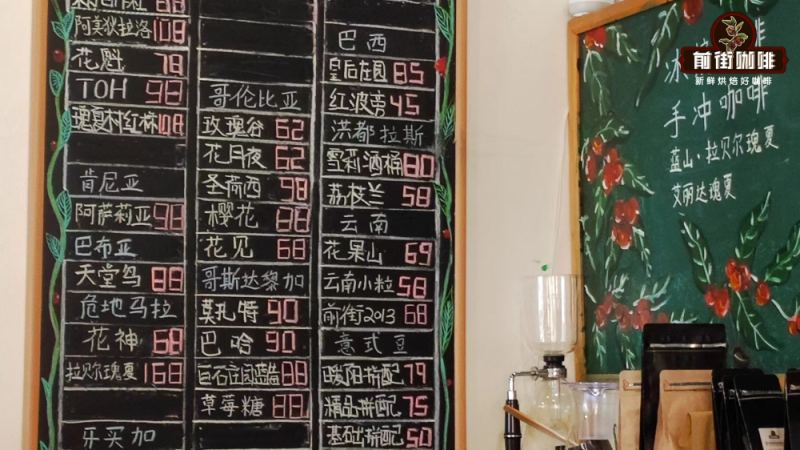
Against the backdrop of Brazil's widespread mechanized field planting, estate-level specialty coffee is particularly scarce, and Queen's Estate in Mogiana is precisely one of the finest examples. This century-old estate, belonging to the Carvalho Dias family, is renowned for its old Yellow Bourbon varieties and meticulous natural processing, with altitude and climate conditions that give the coffee beans higher density and sweetness. Front Street Coffee's bean list includes only this one Brazilian estate-level coffee bean, roasted at a medium-dark level and presented via pour-over to showcase the rich flavors of peanut, nuts, cream, and cane sugar. This article will guide you through Queen's Estate's cultivation history, processing techniques, and share Front Street's brewing recommendations.
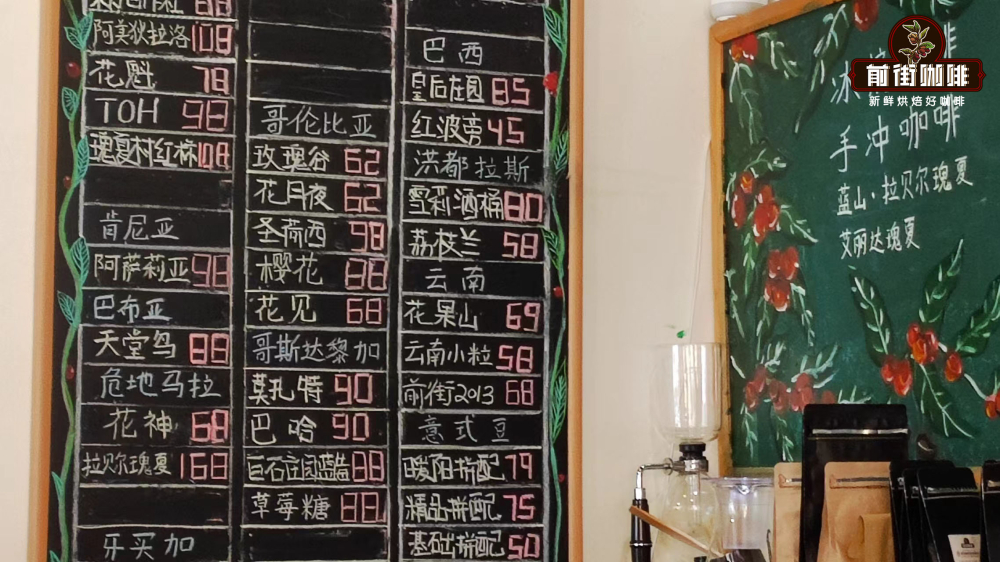
On Front Street's bean list, only one estate-level Brazilian coffee bean is included. The reason is that Brazilian coffee is mostly grown on large mechanized farms, and very few are truly operated as estates, with excellent estates being even rarer. Queen's Estate in Mogiana is precisely such a top-tier existence.
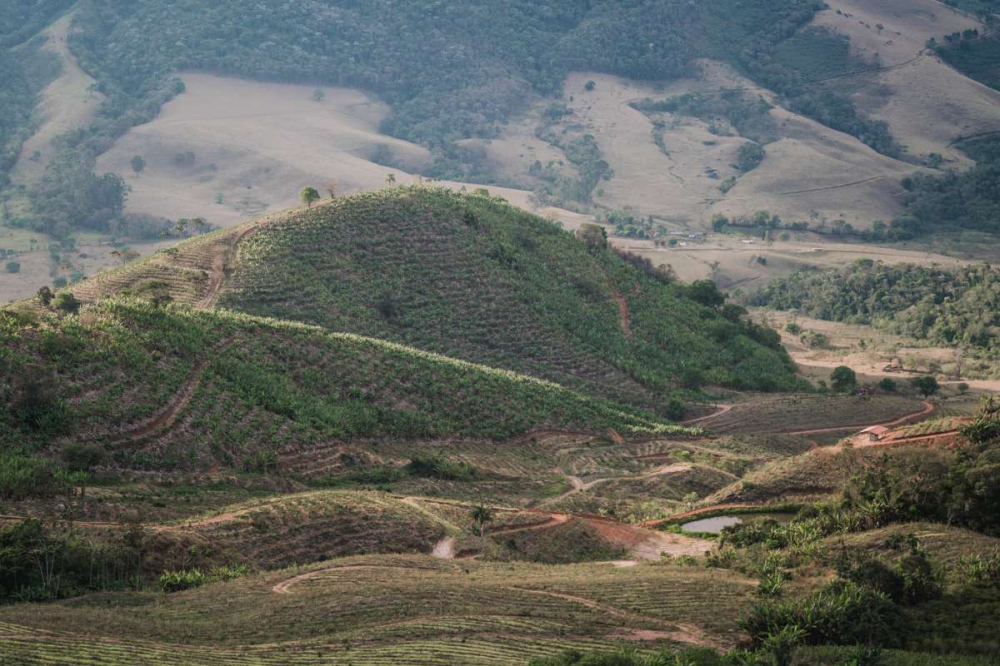
Fazenda Rainha (Queen's Estate) belongs to the Carvalho Dias family and has a history of over 116 years. The estate is located in the high mountain region of São Paulo state near the Minas border, at an altitude between 1,200 and 1,400 meters, with abundant annual rainfall reaching over 1,800 mm, though without disastrous storms, and an average annual temperature of only 19°C. This environment slows fruit maturation but yields higher bean density; although production is lower, the aroma and flavor far exceed those of ordinary Brazilian highland beans. The estate primarily grows Bourbon varieties, and even preserves Bourbon old varieties over 110 years old.
Queen's Estate (Fazenda Rainha) belongs to the prestigious and admirable Carvalho Dias family. The family's four estates have won awards every year since the first Brazil COE competition in 1999, capturing over 12 awards in seven years, and in 2004 even swept champion, 9th place, 11th place, and more. Countless Brazilian estates, large and small, have dreamed of placing and winning for years, yet this family's estates repeatedly take home trophies. Even Queen's Estate Fazenda Rainha, purchased by Oushe this time, has a dazzling record: 2000 runner-up, 2001 third place, 2005 29th place — as of now, Queen's Estate has won awards three times.
The Carvalho Dias family is also a founding member of the Brazil Specialty Coffee Association, and their commitment to coffee quality and environmental protection is evident to all. Within the family's farms, they use natural waterfalls to develop pollution-free hydroelectric power, achieving electricity self-sufficiency (another award-winning mainstay of the family is named after this waterfall — Waterfall Estate). They have also built churches, classrooms, nurseries, and medical stations, insisting on preserving native forests and continuing reforestation. Taking Queen's Estate as an example, environmental measures are quite thorough; due to the higher elevation and uneven terrain, mechanical harvesting cannot be used, and all fruit is hand-picked. The estate cultivates low-yield, high-quality Yellow Bourbon, a variant of Bourbon coffee — ordinary Bourbon ripe fruit is red, while Yellow Bourbon ripe fruit is yellow. Furthermore, through cupping comparison, Yellow Bourbon coffee's sweetness and mouthfeel are superior to ordinary Bourbon.
In addition to growing Bourbon varieties, Queen's Estate's delicate and careful processing method is another key to its exceptional quality: meticulous natural processing.
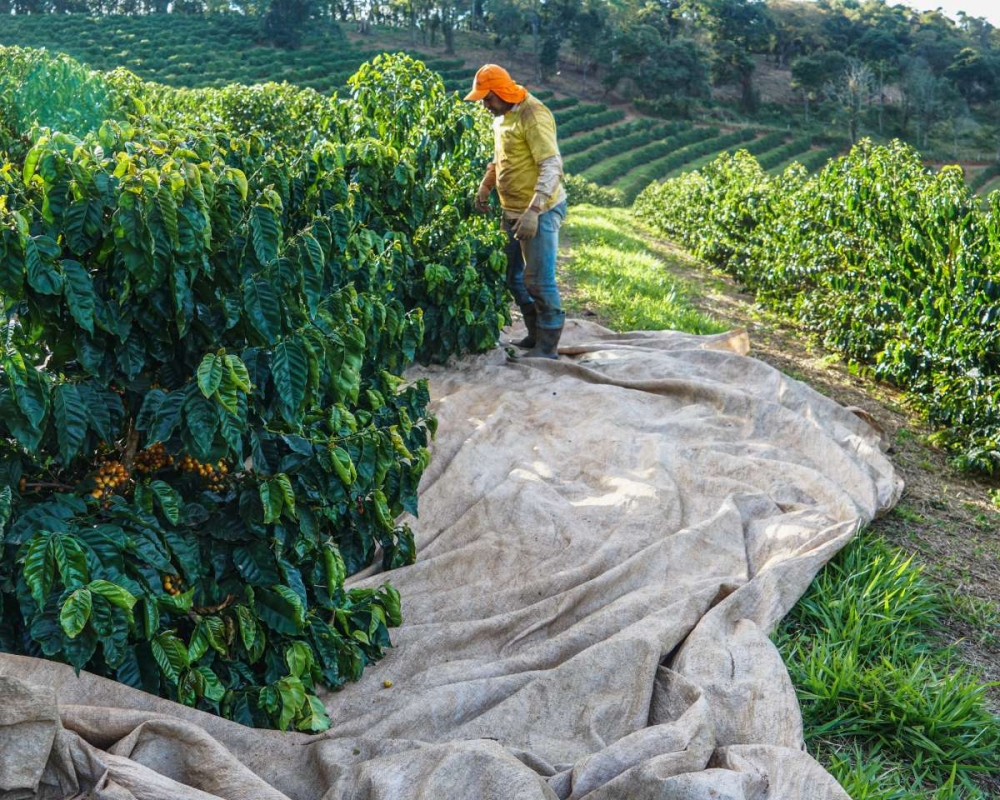
Ripe coffee cherries are hand-picked and placed directly into cloth bags, avoiding contact with the ground. Fruit harvested on the same day is always sent that day to the estate's processing station for Pulped Natural processing. Hand-picking and collecting in cloth bags is to eliminate earthy flavors and improper fermentation. Upon arrival at the processing station, the fruit is immediately floated: washed clean and screened by bean size to remove substandard or shriveled fruit. Qualified beans are spread flat on raised drying beds and turned regularly to allow even drying.
In addition, the estate is equipped with dryers; if continuous rainy weather occurs, machine-assisted drying is activated.
Specialty-grade Brazilian coffee beans have the characteristics of low acidity and high body, presenting nut, cocoa, chocolate, and toast flavors after roasting, with a smooth, balanced, and clean mouthfeel. Therefore, they are often used in espresso blend recipes, playing a supporting and neutralizing role. Front Street's bean list has 4 espresso coffee beans, three of which use Brazilian coffee as the base, giving the extracted espresso rich golden crema and intense roasted hazelnut aroma. Made into Americano, it is rich and aromatic; blended with milk as a latte, it presents a creamy smoothness.
Front Street's Queen's Estate Yellow Bourbon coffee bean is roasted at a medium-dark level, emphasizing sweetness. Front Street recommends brewing it as pour-over coffee.
Dose: 15g
Grind size: coarse sugar size (75% passing through No. 20 sieve)
Ratio: 1:15
Water temperature: 88°C
Dripper: Kono dripper
Technique: three-stage
Pouring process: First stage, pour 30ml water to bloom for 30 seconds; second stage, pour 100ml water in a circular motion; when the water level drops by half, third stage, pour 95ml water in a circular motion; when the dripper finishes dripping, extraction ends; extraction time is about 2 minutes.
Brazil Queen's Estate Yellow Bourbon coffee flavor characteristics: peanut, nuts, cream, cane sugar, rich and full-bodied mouthfeel.
For professional coffee knowledge exchange and more coffee bean information, please follow Coffee Workshop (WeChat public account: cafe_style) For more specialty coffee beans, please add the private WeChat of Front Street Coffee (FrontStreet Coffee), WeChat ID: qjcoffeex
The above content is compiled by CoffeeHunters, a coffee news website.


