







For pour-over coffee enthusiasts, grind size is often the most difficult variable to master. Starting from the industry-recognized cupping standard, this article explains how to precisely calibrate grind size with the help of a No. 20 standard sieve, and analyzes in detail the differences in brewing performance caused by grinding too fine and too coarse. It also presents Front Street Coffee's suggested practical calibration method, explains the sieve-passing rate ranges that coffee beans of different roast levels should match, and how to flexibly adjust the grind by observing the flow rate during brewing, helping you reproduce coffee flavors more consistently in your daily brewing.
"Once you get the grind size right, the difficulty of pour-over coffee is cut in half." For most pour-over enthusiasts, grind size is indeed the hardest part of the entire brewing process to control.
A reliable reference standard
Although each brewing system has its own standards, there is one benchmark recognized across the industry—cupping. Cupping was originally used to inspect the quality of green coffee beans, but this method is equally informative when it comes to extraction. The grind size used in cupping is a 70-75% passing rate through a No. 20 sieve.
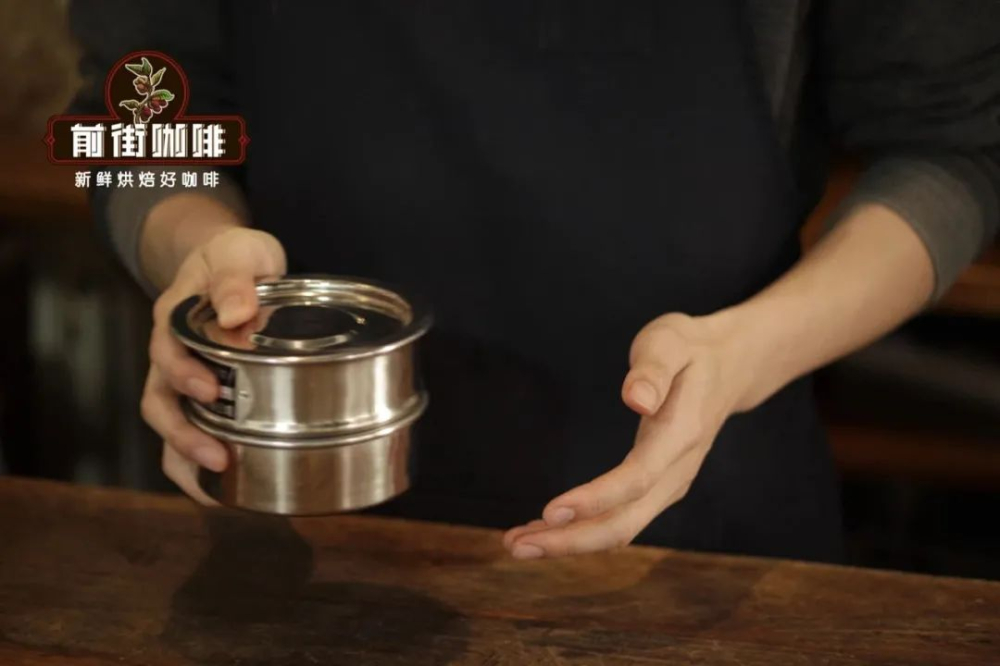
[Science note: The aperture of the No. 20 Chinese standard sieve is 0.85 mm. It is a tool used for particle size classification and particle size testing of materials. As long as a standard sieve meets factory standards, it is accurate. Calibrating coffee grind is also very simple: just pour the ground coffee into the sieve, cover it with the lid, and shake horizontally until no more particles fall through, then weigh the particles that passed through the sieve. This tells you how coarse or fine the grind is. For example, if you grind 20 g of coffee and 15.2 g passes through, then this grind has a 76% passing rate through a No. 20 sieve. The higher the passing rate, the finer the coffee grind.]
Since cupping can use a standard sieve to calibrate and determine grind size, the grind sizes corresponding to the various brewing devices we use daily can likewise be clearly listed with specific values.
What happens when coffee is ground too fine?
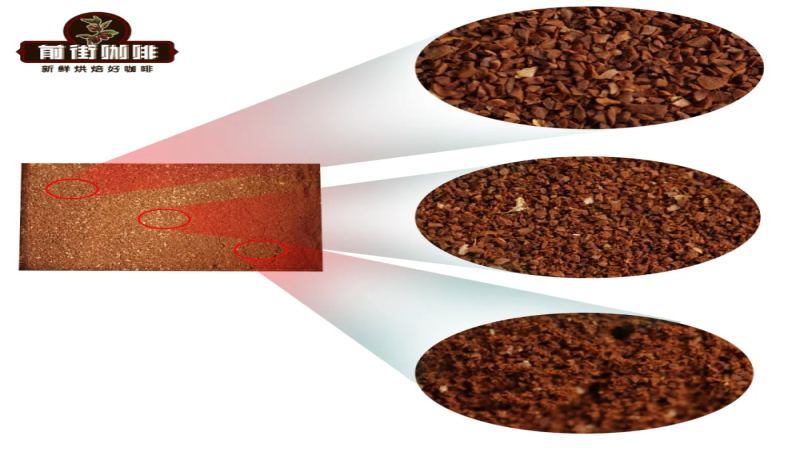
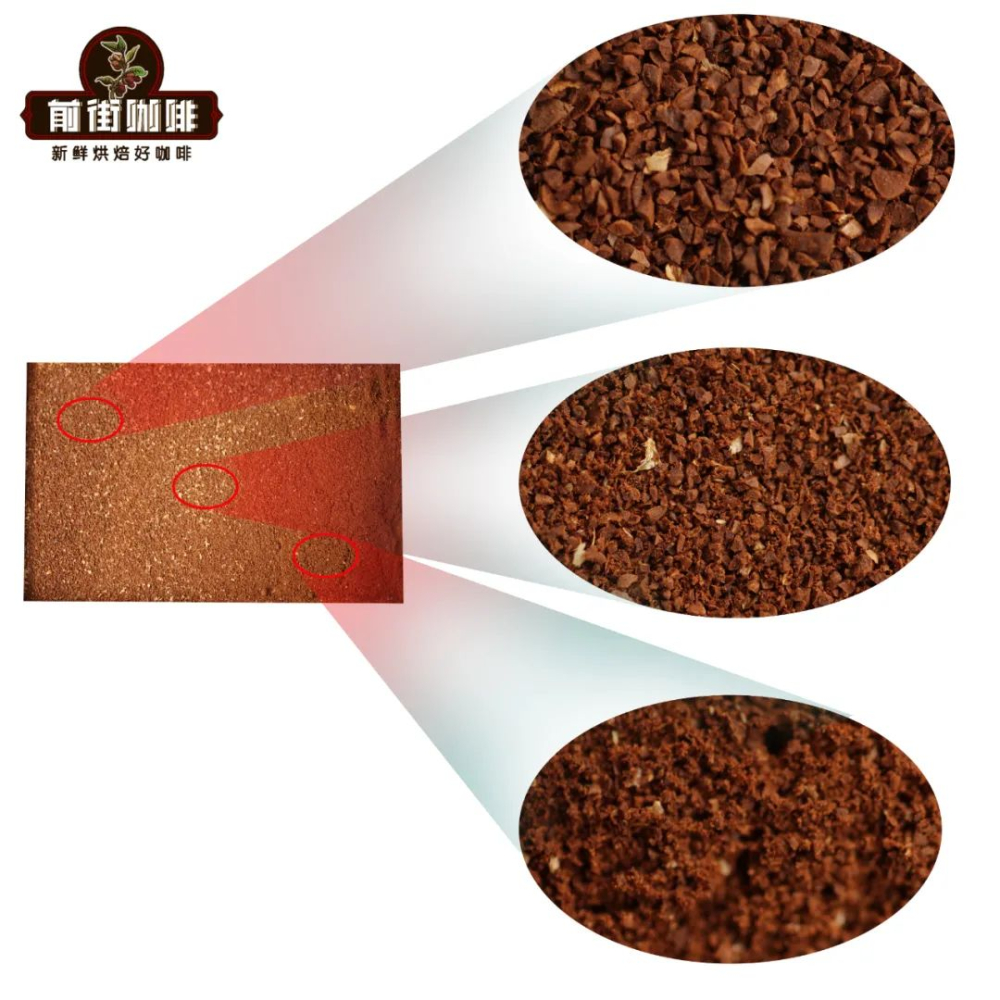
In terms of particle appearance, the powder particles are smaller, and the gaps between particles narrow accordingly, so water encounters greater resistance when passing through the coffee bed, and the drip filtration time during brewing is prolonged. Grinding too fine makes the coffee particles smaller and increases the total surface area, so there are more places where water can contact and extract coffee substances. Concentration and extraction yield rise accordingly, and the cup tastes heavy-bodied, with prominent bitterness and astringency, while other flavors are easily suppressed.
What happens when coffee is ground too coarse?
In terms of particle appearance, the powder particles are larger, and the gaps between particles are wider, so water passes through the coffee bed more easily, and filtration during brewing is faster. Grinding too coarse makes the coffee particles larger and reduces the total surface area, so there are fewer places where water can contact and extract coffee substances. Concentration and extraction yield decline accordingly, and the cup tastes weak and bland, with a thin body and almost no perceptible flavor.
How do you determine grind size?
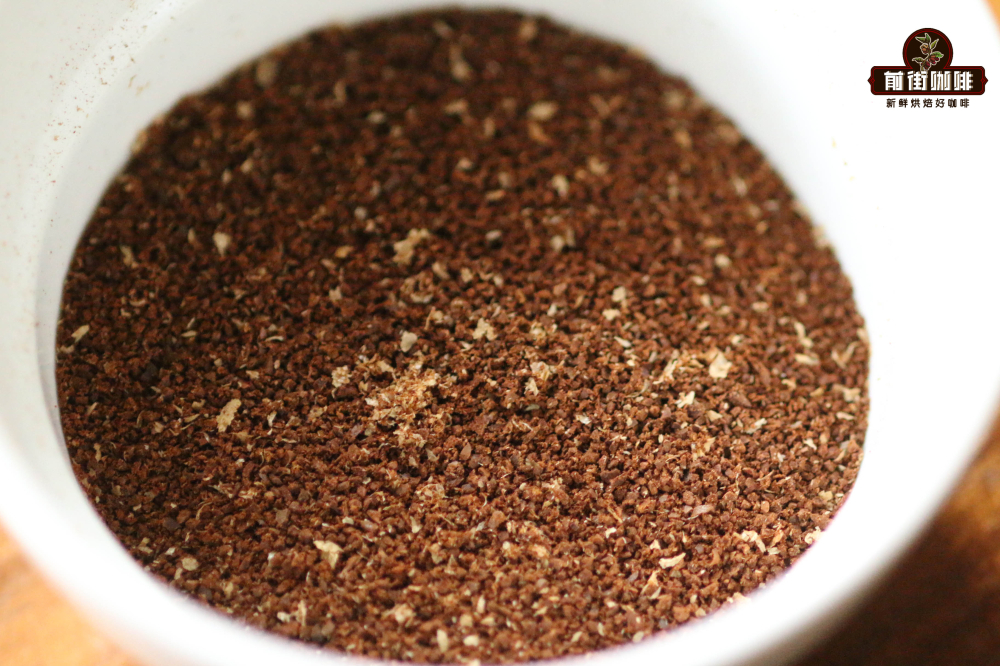
Front Street Coffee's recommended calibration procedure is: take 10 g of coffee beans (or a multiple of 10 for easier calculation; the more coffee, the more accurate the data), choose a grind setting, and after grinding, place the coffee grounds into the sieve and shake horizontally until particles no longer visibly fall through (usually shaking for 3-5 minutes). Then weigh the fallen grounds and divide by the total coffee weight to get the passing rate. For example, if the weight of grounds passing through the sieve is 5 g, the passing rate is 50%; if you want to reach the 80% standard, you need to adjust to a finer grind, grind again, and measure the passing rate until it reaches 80%.
Pour-over coffee is mainly drip-style. This method differs from immersion-style brewing, where a long steeping time easily extracts off-flavors; pour-over has a shorter brew time, roughly between 1 minute 30 seconds and 2 minutes 30 seconds. Therefore, the grind size needs to be finer than for cupping in order to fully express the coffee's flavor. Likewise, coffee beans of different roast levels require different degrees of coarseness.
For medium-light roasted coffees, such as Front Street Coffee. Washed Gedingding with white floral aromas, Front Street Coffee. Sun-dried Huakui with strawberry aromas, and Front Street Coffee. Kenya Little Tomato with obvious juicy character because the heating time is short and the texture is harder, the particles need to be smaller to release more flavor, so the grind should be on the finer side (75-80% passing rate);
For medium-dark roasted coffee beans, the heating time is longer, the interior is fluffy and absorbs water well, and more caramelized substances are produced, so the grind needs to be coarser (70-75% passing rate) to avoid over-extraction. For example, when brewing Front Street Coffee. Golden Mandheling and Front Street Coffee. Brazil Queen coffee beans, use a 70% passing rate coarseness.
There is another method: look at the brewing time
The coarseness and uniformity of the coffee grounds affect the flow rate during brewing. The coarser the coffee grounds, the faster the flow rate; the finer the coffee grounds, the slower the flow rate. The flow rate is related to the contact time between water and coffee. The longer the extraction time, the higher the coffee's extraction yield, and vice versa. So, with all other parameters fixed, we can judge the grind size of the coffee grounds by the speed of the flow rate.
Take Front Street Coffee as an example. When Front Street Coffee brews a pot of light-roast coffee, it uses 15 g of coffee, a water temperature of 92°C, and a ratio of 1:15, and the time falls within the range of 2 minutes to 2 minutes 30 seconds. If the final brewed coffee falls outside this range, then we need to adjust the grind accordingly. Because all the parameters have been fixed, the only thing that can change the extraction time is the grind. If the flow rate is too fast, grind finer; if the flow rate is too slow, grind coarser—it is just that simple~
The above content is compiled by CoffeeHunters, a coffee news website.


