







What makes classic coffee like Blue Mountain so balanced?
Jamaican Blue Mountain coffee is a classic coffee known for balanced acidity, sweetness, and bitterness with an elegant mouthfeel. The Typica variety grows in the Blue Mountain Range of eastern Jamaica, where high altitude and cool nights slow cherry ripening. Volcanic soil, steady rainfall, and mist support the trees, and washed processing plus CIB grading and oak barrel packaging protect the cup.
The Blue Mountain range sits in the global coffee belt, with its main peak near 2,256 meters. The wide day-night temperature swing lets cherries absorb nutrients longer, building aroma. Typica, introduced long ago, adapted to the island terroir while keeping its pure lineage and gaining disease resistance. These origin conditions shape the flavor before the roasting process begins.
Blue Mountain coffee is hailed as one of the finest coffees in the world, and its perfectly balanced acidity, sweetness, and bitterness, along with its elegant mouthfeel, have made it the aspiration of countless coffee lovers. But what exactly are the flavor characteristics of authentic Jamaican Blue Mountain coffee? How are its unique qualities related to Jamaica's growing environment, variety selection, processing methods, and grading system? This article, from Front Street's perspective, will systematically sort out the microclimate of Blue Mountain coffee's origin, the commitment to the Typica variety, the washed processing flow, CIB quality inspection and grading standards, and key links such as oak barrel packaging. At the same time, it will share Front Street's specific parameters and flavor performance for roasting and brewing Blue Mountain No. 1, helping readers fully understand the true charm of this classic coffee.
With its rich, full-bodied aroma and a perfectly balanced combination of acidity, sweetness, and bitterness, Blue Mountain coffee creates an elegant and captivating taste, making it one of the synonyms for top-tier coffee. To deeply understand the flavor characteristics of Blue Mountain coffee, Front Street believes it is necessary to start with its growing environment.
Like many high-quality specialty coffees, Blue Mountain coffee owes its delicate flavor expression to its unique microclimate. The Blue Mountain Range is located in eastern Jamaica, within the coffee-growing belt between 25 degrees north latitude and 25 degrees south latitude, with its main peak reaching 2,256 meters above sea level. The pronounced day-night temperature difference brought by high altitude slows the ripening of coffee cherries, giving them more time to absorb nutrients and ultimately form a rich aroma. The soil left by local volcanic activity is rich in minerals, and with abundant rainfall and mist throughout the year, coffee trees can thrive even without relying on large amounts of irrigation and fertilization.
In addition, the Blue Mountain region has a relatively closed island-type microclimate with clean, less polluted air. The Typica variety introduced many years ago gradually adapted to the terroir here, not only preserving its pure bloodline but also developing relatively strong disease resistance. Precisely because of this, even as many producing regions abandoned Typica cultivation, Blue Mountain still insists on growing this pure variety. Front Street believes this is also one of the important reasons why Blue Mountain coffee has its unique aroma.
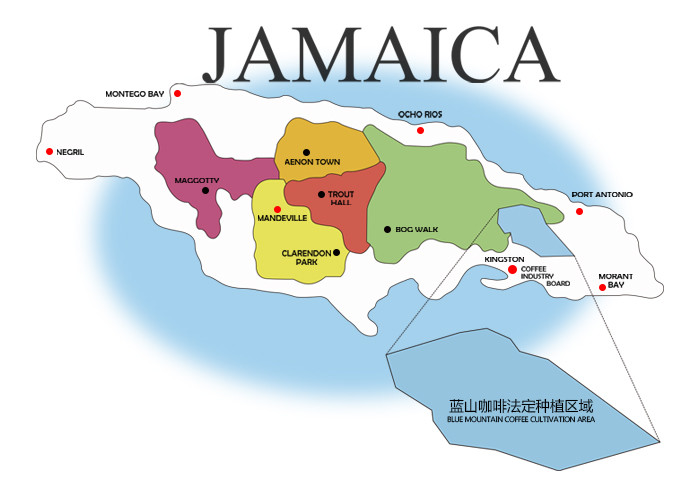
Because the overall Blue Mountain growing area spans a relatively large range and has steep terrain, coffee quality differs by altitude. To ensure consistency in coffee quality, Jamaica enacted the Coffee Industry Regulation Act, which clearly stipulates that Blue Mountain coffee may only be grown in the four administrative districts of Saint Andrew, Saint Thomas, Portland, and Saint Mary, and that only Typica coffee grown within this area at altitudes between 910 and 1,700 meters is eligible to be named Jamaica Blue Mountain. The total area of these four producing regions is about 6,000 hectares, accounting for only one-third of the entire Blue Mountain growing area.
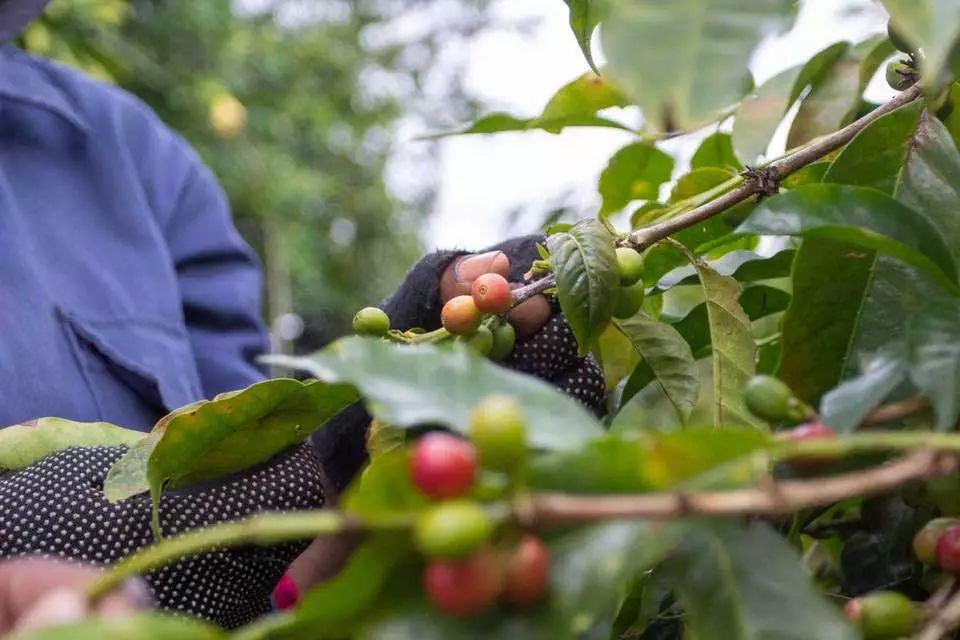
After harvesting, the green coffee beans undergo washed processing. The manually picked fresh coffee cherries are first put into water, where floating defective beans are removed, then the skin and pulp are removed, and the beans are left to ferment in tanks for 12 to 18 hours. After fermentation is complete, the beans are moved into channels and, by being pushed back and forth, are cleaned until smooth and spotless through the friction between the beans and the force of the water. They are then spread out in the sun to dehydrate and dry, and once the moisture content drops to 12% to 14%, they can be packed and stored to rest, then sent for quality inspection before export. Washed processing significantly reduces the defect rate, better restores the aroma of the Blue Mountain coffee beans themselves, and also makes the taste cleaner.
Before export, Blue Mountain green coffee beans must pass strict quality inspection and grading. The Jamaica Coffee Industry Board, authorized by the Jamaican government and referred to as CIB, conducts detailed inspections of green beans based on coffee export grade guidelines, including size, color, defects, and flavor. First, the defect rate of Jamaican Blue Mountain coffee must be below 3%, and then it is divided into four grades according to bean size. Among them, the highest grade, Jamaican Blue Mountain No. 1 green coffee beans, must be above 17 mesh, with a moisture content of about 10% to 12.5%. After roasting, it presents just the right acidity, sweetness, bitterness, body, and aroma, which is precisely the classic Blue Mountain flavor.
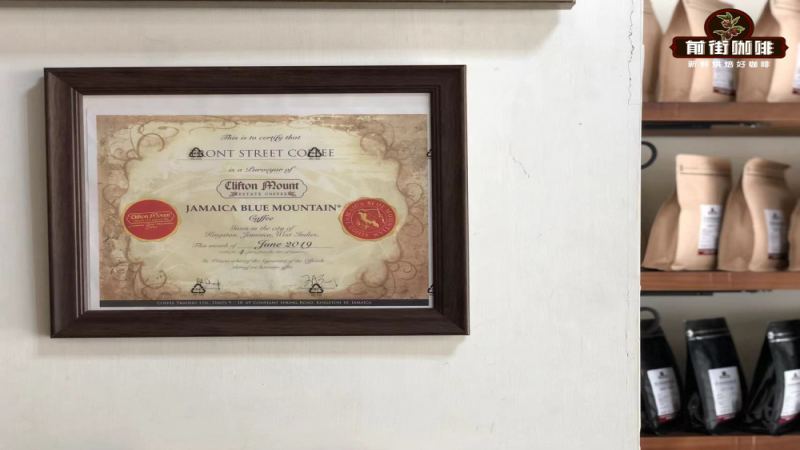
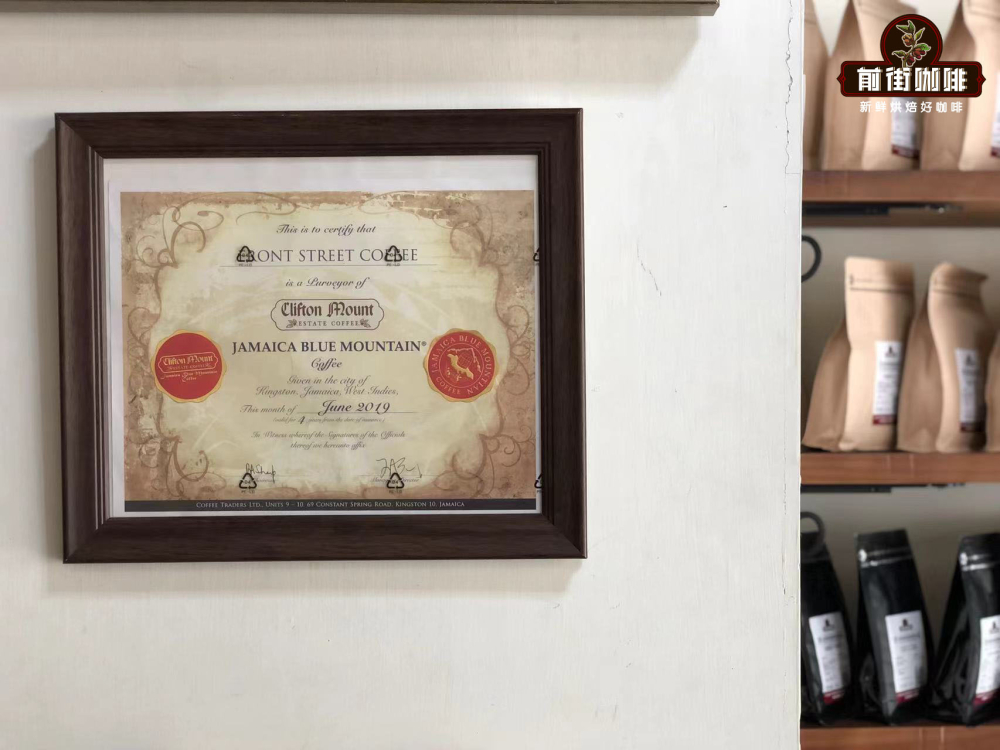
Jamaican Blue Mountain coffee that passes inspection is packaged and transported in handmade oak barrels, which has also become one of the hallmarks for identifying authentic Blue Mountain coffee. The advantage of oak barrels is that they can absorb and release internal and external moisture while blocking the coffee beans' aroma from escaping, thereby maintaining a more stable moisture content and making the roasting process more controllable. Jamaican coffee barrels come in three sizes: 70 kg, 30 kg, and 15 kg. Front Street's Dongshankou store displays an oak barrel of Blue Mountain No. 1 green coffee beans produced by Clifton Estate, so everyone can take a look while drinking coffee.
After Front Street purchased Blue Mountain No. 1 coffee, it couldn't wait to roast and taste it. Considering that the classic Blue Mountain flavor is mainly the sweetness of chocolate and nuts, accompanied by a soft and pleasant acidity, a medium-dark roast was ultimately chosen. For such an aromatic Blue Mountain coffee, there are no fixed extraction parameters for brewing. Front Street suggests that, as long as extraction imbalance is not caused, the strength can be flexibly adjusted according to personal preference.
Before brewing, Front Street recommends using freshly roasted coffee beans, especially specialty beans like Blue Mountain No. 1, because freshness largely determines the fullness of flavor during brewing. Therefore, the beans shipped by Front Street are all selected from freshly roasted batches within 5 days, ensuring that when each customer receives them, the coffee is at its optimal aroma-tasting period. If you do not have grinding equipment at home, Front Street can also provide grinding service, but once coffee beans are ground into powder, the aroma is lost relatively quickly and should be drunk as soon as possible to avoid aroma loss, so as not to let precious Blue Mountain coffee beans go to waste. If you want to experience the fullest flavor of Blue Mountain No. 1, Front Street recommends buying whole beans and grinding fresh for each brew.
When brewing coffee beans with a mainly bitter profile, Front Street usually gives priority to the KONO dripper in order to highlight the coffee's full-bodied taste. The upper part of the KONO dripper allows the filter paper to fit better. Compared with the V60 dripper, its extraction method is mainly immersion-based, which helps increase the overall concentration of the coffee and enhance body. Similarly, the KONO dripper is also suitable for brewing Brazil Queen Estate coffee beans and Golden Mandheling coffee beans.
Front Street's store brewing parameters for Blue Mountain No. 1 are as follows:
Dripper: KONO dripper
Water temperature: 88 degrees Celsius
Coffee-to-water ratio: 1:15
Coffee grounds: 15 g
Grind size: EK43s - setting 10.5 (75% passing rate on No. 20 standard sieve)
Front Street's operating steps are to first wet the KONO dripper, then align and place the filter paper so that it fits the dripper more closely. After pouring out the water in the server, add 15 g of coffee grounds, bloom with 30 g of water for 30 seconds, then pour in a small stream in a circular motion from the center until reaching 125 g, at which point begin the next stage. When the coffee bed drops to half the height of the dripper, pour the second stage in the same manner until reaching 225 g. Once all dripping is complete, remove the dripper.
Blue Mountain No. 1 coffee enters the mouth with the sweet fragrance of dark chocolate, the sweetness of caramel, and a soft, elegant acidity. The various flavors are balanced, and the mouthfeel is smooth and rich, showing a very classic Blue Mountain flavor.
For professional coffee knowledge exchange and more coffee bean information, please follow Coffee Workshop (WeChat public account: cafe_style)
For more specialty coffee beans, please add the private WeChat of Front Street Coffee (FrontStreet Coffee), WeChat ID: qjcoffeex
The above content is compiled by CoffeeHunters, a coffee news website.


