







Mandheling coffee, with its rich, intense body and unique spicy, woody aroma, has become the top choice for many coffee lovers who prefer bold flavors. But to fully unleash the charm of these beans, every step matters—from understanding its origin and processing method, to choosing the right green bean brand, to matching the appropriate brewing parameters. This article will start with the principles of the Sumatra wet-hulled method, explain why Golden Mandheling is worth recommending, and detail the KONO dripper, water temperature, grind size, and three-stage pouring scheme used by Front Street Coffee in actual brewing, helping you brew a cup of rich, full-bodied Mandheling with dark chocolate and caramel sweetness at home.
Mandheling coffee, with its solid yet not heavy mouthfeel and prominent spicy notes, has won the favor of many coffee fans who prefer a full-bodied style. Quality beans are certainly important, but if you want to truly appreciate Mandheling's uniqueness, proper extraction technique is equally indispensable. Front Street believes that before discussing how to brew Mandheling well, it is necessary to first understand this bean itself.
Mandheling coffee beans come from the island of Sumatra, Indonesia, where rainfall is abundant and the air is humid. The unique terroir of the region gives the coffee beans a distinct woody, herbal base and spicy aroma. Sumatra lies in a tropical rainforest climate zone, with frequent typhoons and constant rain throughout the year. The hot, humid environment makes it difficult to meet the requirements for stable drying of green beans, so the locals developed a unique wet-hulled method.
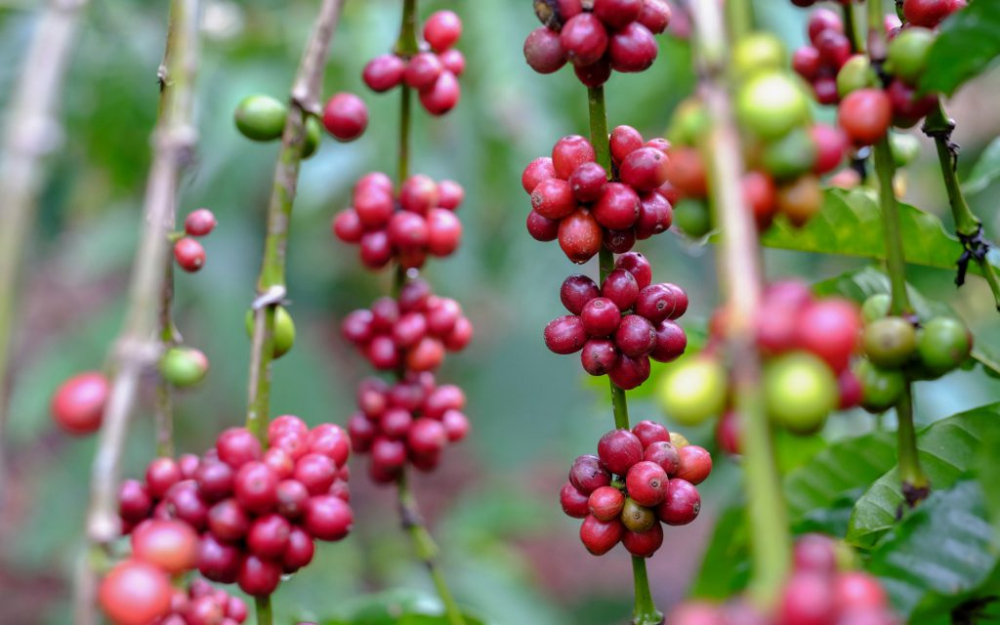
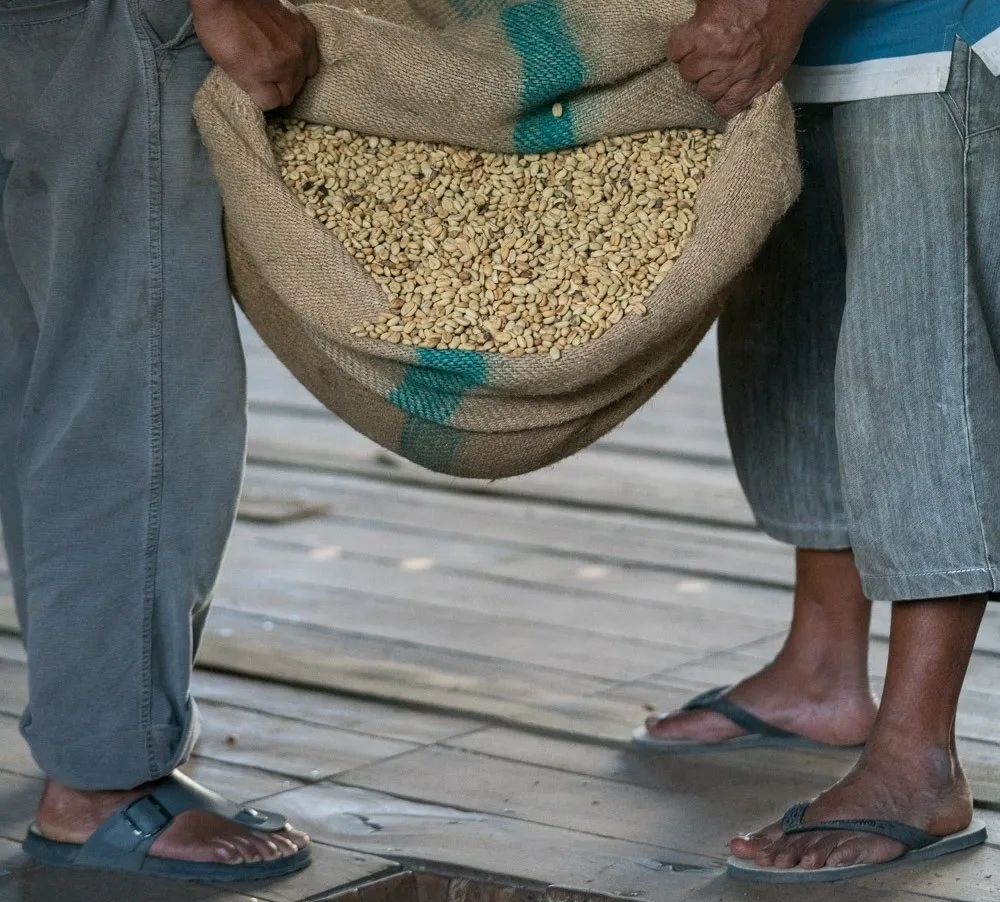
The wet-hulled method is the same as the washed process in the step of removing the fruit skin: the green beans with the mucilage layer are first soaked in a water tank to ferment for several hours. After washing off the surface mucilage, they are spread out to sun-dry. When the moisture content drops to 30–50%, the green beans are still semi-moist and the outer shell is still relatively hard. At this point, a special huller is used to tear off the still-hard parchment layer through friction. After hulling, the beans continue to dry for 2–4 days, and once the moisture content drops to around 12%, they can be bagged and stored. Front Street believes that the wet-hulled method greatly reduces Mandheling's acidity while pushing its body to a more prominent level.
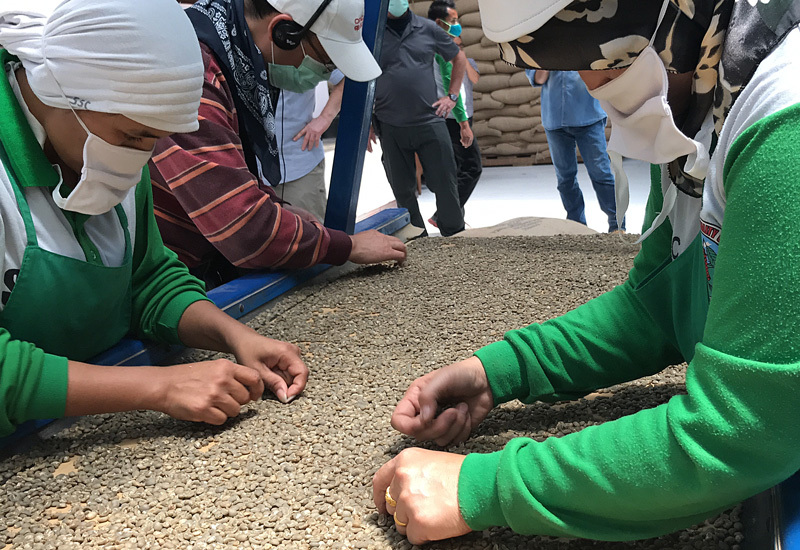
However, because the wet-hulled method removes the shell before the bean body is dry, the greater mechanical pressure easily deforms the green beans, so Mandheling green beans have a relatively high defect rate. To meet export standards, defective beans that do not meet specifications must be picked out, which improves the coffee's quality and selling price.
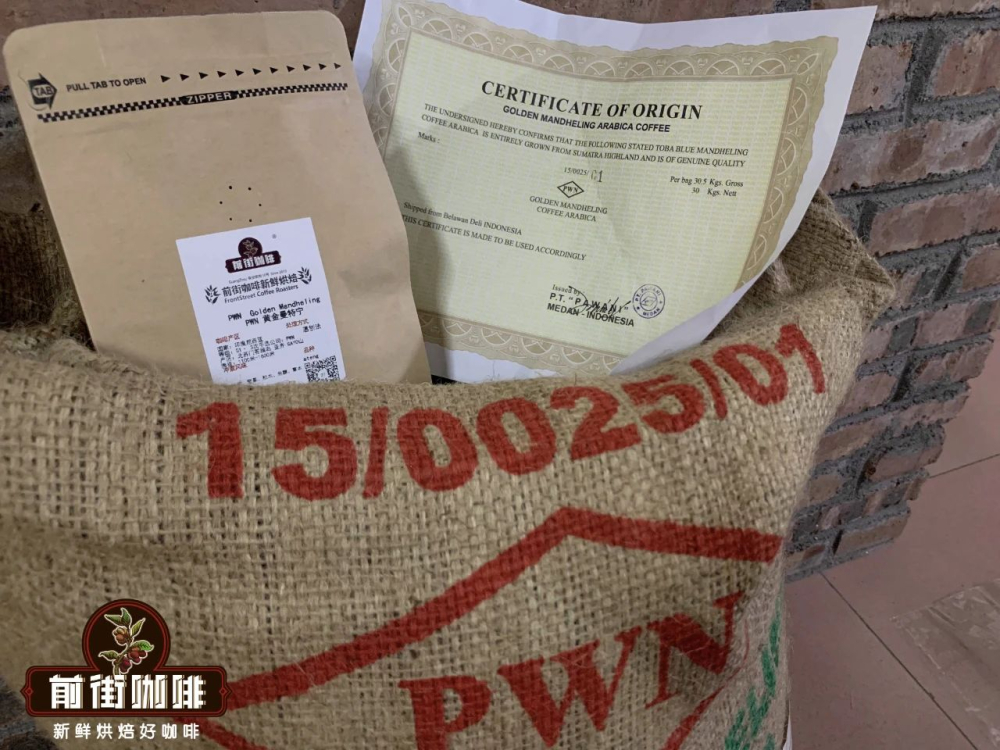
Indonesians habitually name different Mandheling coffees according to factors such as region, variety, and appearance. Common ones on the market include Lintong Mandheling, Golden Mandheling, Ding Shang Mandheling, Tiger Mandheling, and Aged Mandheling. Although these Mandheling coffees all continue the style foundation of Mandheling, each also has its own unique characteristics. If you want to taste a clear and distinct Mandheling flavor, Front Street recommends choosing PWN Golden Mandheling coffee.
Front Street PWN Golden Mandheling coffee beans come from Pawani, a well-known local Indonesian green bean buyer. PWN registered Golden Mandheling as a trademark in its early years, thus becoming the exclusive supplier of this item.
PWN mainly purchases high-quality Arabica green beans from the Aceh region of North Sumatra. After processing is completed, the beans undergo one machine pre-screening and three rounds of manual hand sorting to ensure that Golden Mandheling beans reach 18 mesh or above and that a 300-gram green bean sample contains no more than 3 defective beans, which is Indonesia's highest local grade, G1. After rounds of screening, Golden Mandheling beans are plump and uniform, and the defect rate is pressed to an extremely low level, making Mandheling's flavor brighter and clearer.
In order to showcase the substantial body of Golden Mandheling coffee beans, Front Street's roaster chooses a deep roast, allowing the aromas of dark chocolate and caramel to be released more fully.
After Front Street PWN Golden Mandheling coffee beans enter their optimal flavor period, the aroma reaches its fullest state. Front Street believes that using freshly roasted beans for brewing is crucial. Coffee's aromatic substances accelerate their loss over time, which directly affects the final flavor performance in the cup. Front Street hopes every customer can drink fresh, good coffee, so it only ships roasted beans within 5 days of roasting. Adding shipping time, customers receive them just in time to enjoy. In addition, Front Street does not recommend stocking up on too many coffee beans at once, as prolonged storage can easily cause the beans to stale, lose aroma, and develop a woody taste.
When setting brewing parameters, Front Street always refers to the characteristics of the coffee beans themselves, the roast level, and the flavor profile. Every time a new coffee bean is launched, Front Street evaluates it through cupping. Front Street PWN Golden Mandheling coffee shows flavors of nuts, dark chocolate, spices, pine wood, and caramel in cupping, with weak acidity and high body.
The baristas at Front Street Coffee choose the KONO dripper to brew this type of full-bodied coffee. Compared with the v60, the KONO dripper has a smoother curved surface and weaker exhaust effect, and the straight ribs occupy only one quarter of the dripper, creating immersion-style extraction between the coffee bed and hot water, so the final cup tastes rounder and fuller. The KONO dripper is also suitable for brewing beans such as Brazil Queen's Manor coffee and Jamaica Blue Mountain No. 1 coffee.
Deep roasting makes the internal structure of coffee beans loose, so they can be crushed with a gentle pinch of the hand, which means that after grinding, they are highly absorbent. To avoid the coffee grounds releasing too many bitter substances after absorbing water, Front Street adjusts the grind coarser and uses a lower water temperature for pour-over. For the coffee-to-water ratio, Front Street uses the commonly used 1:15; if you prefer a stronger taste, you can adjust it to 1:13, changing flexibly according to your own preference.
Suggested brewing water temperature: 87–88°C Coffee grounds: 15g Coffee-to-water ratio 1:15, Grind size: medium-coarse grind (70% passing rate on China standard No. 20 sieve)
Use a three-stage pour during brewing. Pouring in three stages better presents Golden Mandheling's full-bodied mouthfeel and caramel sweetness. The first stage is a 30ml bloom pour, intended to thoroughly wet the coffee grounds and help them degas, laying a foundation for subsequent extraction of flavor substances; the second stage pours 100ml, mainly to bring out Mandheling's golden-yellow foam while raising the coffee bed; the final stage gently pours 95ml in the center, which can enhance sweetness, presenting an overall thick, full-bodied mouthfeel, caramel sweetness, and flavors of chocolate and nuts.
Professional coffee knowledge exchange For more coffee bean information, please follow Coffee Workshop (WeChat public account: cafe_style)
For more specialty coffee beans, please add the private WeChat of Front Street Coffee (FrontStreet Coffee), WeChat ID: qjcoffeex
The above content is compiled by CoffeeHunters, a coffee news website.


