







Can sweetness in coffee stand out without bitterness taking over?
Sweetness in coffee can be pushed forward by stopping the brew before bitterness dissolves in large amounts. Coffee flavors release in order: acidity and sweetness first, bitterness and off-flavors later. The approach called high concentration, low extraction raises concentration while keeping extraction yield at a suitably low level, so sweetness leads and bitterness stays suppressed.
Concentration and extraction yield are separate variables, which is why the Golden Cup range is only a starting point. A recipe for light roasts typically uses a finer grind, a higher coffee-to-water ratio, and an earlier stop, with water temperature and pour timing adjusted around it. This connects to Japanese dark-roast brewing, where low extraction has long been used for sweetness in coffee.
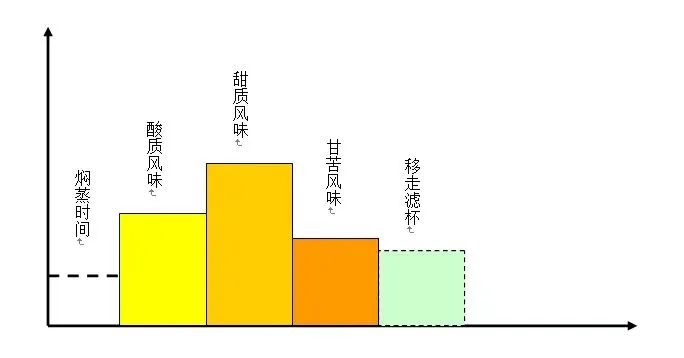
For many people, the most important thing about drinking coffee is that sweetness, but bitterness always easily barges in and ruins things. In fact, coffee flavors are released in a certain order—acidity and sweetness first, bitterness and off-flavors later. As long as you stop before bitterness dissolves out in large amounts, you can get a cup dominated by sweetness. This is the idea we're discussing today: "high concentration, low extraction"—raising concentration while controlling the extraction yield at a suitably low level, so sweetness stands out and bitterness is suppressed. Below, we'll start with the Golden Cup extraction, explain what high concentration, low extraction is, its connection to Japanese dark-roast brewing, and provide a directly referenceable pour-over recipe for light roasts.
The sweetness in coffee does not necessarily all come from sugar, but this sweetness can still put us in a great mood and send dopamine soaring, so when everyone pursues a good cup of coffee, they always put "sweetness" first.
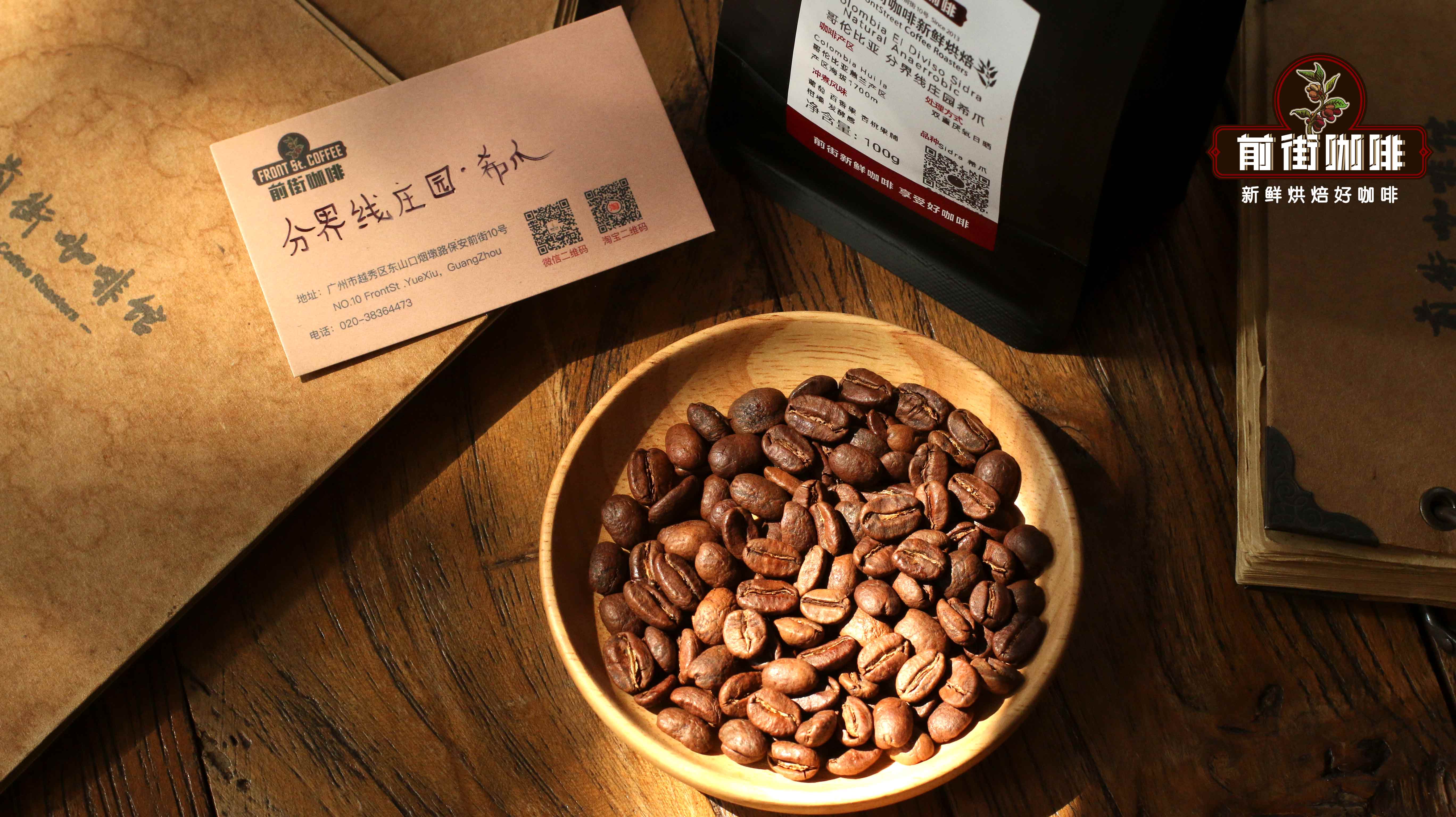
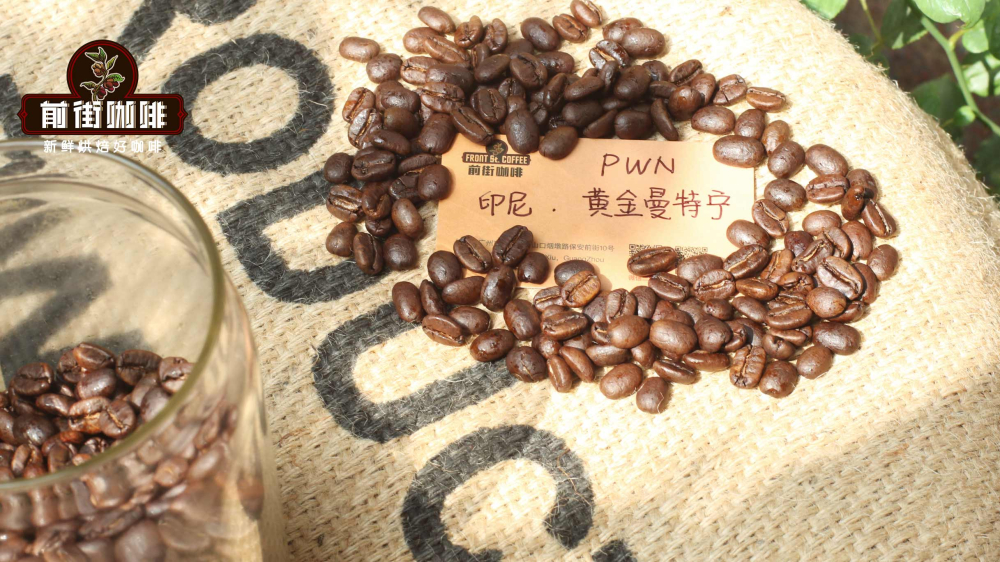
If you want a sweeter, fruity direction, you can prioritize medium-light roasts such as Front Street Coffee Strawberry Candy, Front Street Coffee Blackberry, and Front Street Coffee Sidra; if you prefer a rich mouthfeel with a sweet aftertaste, choose medium-dark roasts such as Front Street Coffee PWN Golden Mandheling and Front Street Coffee Queen's Estate. Coffee with truly prominent sweetness is not common, so when you come across it, you naturally want to brew it well.
By contrast, bitterness is the least welcome; once it is too strong, it makes people resistant and hard to swallow. So is there a way to avoid the large release of bitterness and leave only the sweetness of the coffee?
The answer is yes. Front Street Coffee often mentions that the molecules behind different tastes in coffee vary in size and dissolve at different speeds: acidic and sweet substances dissolve first, while bitter and off-flavor substances come last. As long as brewing is ended before bitterness dissolves in large amounts, the appearance of bitterness can be reduced.
Of course, this is not telling you to cut off the tail end arbitrarily—if you have not set it up in advance, directly stopping the flow will make the extraction result deviate from expectations. What Front Street Coffee wants to discuss today is not a fixed technique or a set of rigid parameters, but a brewing philosophy, a way of thinking that lets coffee be sweeter and less bitter. It is—high concentration, low extraction.
What is high concentration, low extraction?
To understand "high concentration, low extraction," you first need a brief understanding of Golden Cup extraction. The so-called Golden Cup extraction means that coffee has a generally recognized delicious range: concentration of about 1.15%–1.35%, and extraction yield of about 18%–22%. By controlling both indicators within this range, concentration and extraction yield reach balance, and the coffee will be accepted by the vast majority of people—neither too weak nor too bitter.
High concentration, low extraction can be understood as placing concentration and extraction yield at the higher and lower positions of the Golden Cup range, respectively. For example, a concentration of 1.35% and an extraction yield of 18% can count as high concentration, low extraction; even if the concentration is higher at 1.45% and the extraction yield lower at 17%, it still belongs to this category.
It must be emphasized that "low extraction" does not mean the extraction yield has to be pressed very low; it is only relative—low enough to avoid the release of off-flavors in the tail end. If the extraction yield is too low, the coffee will be bland due to insufficient substances, or appear sharply sour due to excessive acidity. So the goal is to increase concentration while keeping the extraction yield within a reasonable range.
As everyone knows, Japanese people have a particular fondness for dark-roasted coffee. But the darker the beans are roasted, the more easily bitter substances are extracted. What they truly like is the mellow, spicy, chocolate-like steady tone brought by dark roasting, not that "torturous bitterness."
So in an era when extraction theory had not yet become widespread, they explored many classic brewing methods. These methods share a common feature: a large dose and a small liquid yield. Without exception, the result was coffee that was highly sweet and not bitter.
This was the prototype of high concentration, low extraction—by reducing liquid yield and increasing extraction yield, obtaining a cup with extremely high concentration but still an appropriate extraction yield. However, because the concentration was too high, after brewing they would also add hot water to dilute it to a palatable concentration before serving it to guests.
If you do not want to use such cumbersome methods, you can also design your own high concentration, low extraction plan. After all, as Front Street Coffee says, "high concentration, low extraction" is a philosophy. The brewing methods Front Street Coffee usually shares are actually a version of high concentration, low extraction, and everyone can refer to them.
Taking light-roasted coffee as an example, for dark-roasted beans simply lower the parameters a bit: 15g dose, grind at 10 on an ek43 (80% passing a No. 20 sieve), water temperature 92°C, coffee-to-water ratio 1:15, three-stage pouring, V60 dripper, extraction time 2 minutes.
With this set of parameters, the extraction yield of light-roasted coffee is about 17.8%–19.5%, and the concentration is about 1.28%–1.42%. The flavor is full and rich, with bright acidity. This philosophy can be applied to other brewing methods: reduce the amount of water poured while increasing the extraction yield, and the concentration goes up, while the extraction yield is also limited to an appropriate range.
Ristretto in the espresso system is a similar operation—based on espresso, grind finer and reduce the extraction water, extracting more substances with a small liquid yield. Concentration rises while extraction yield is not high, so the coffee is highly sweet and not bitter.
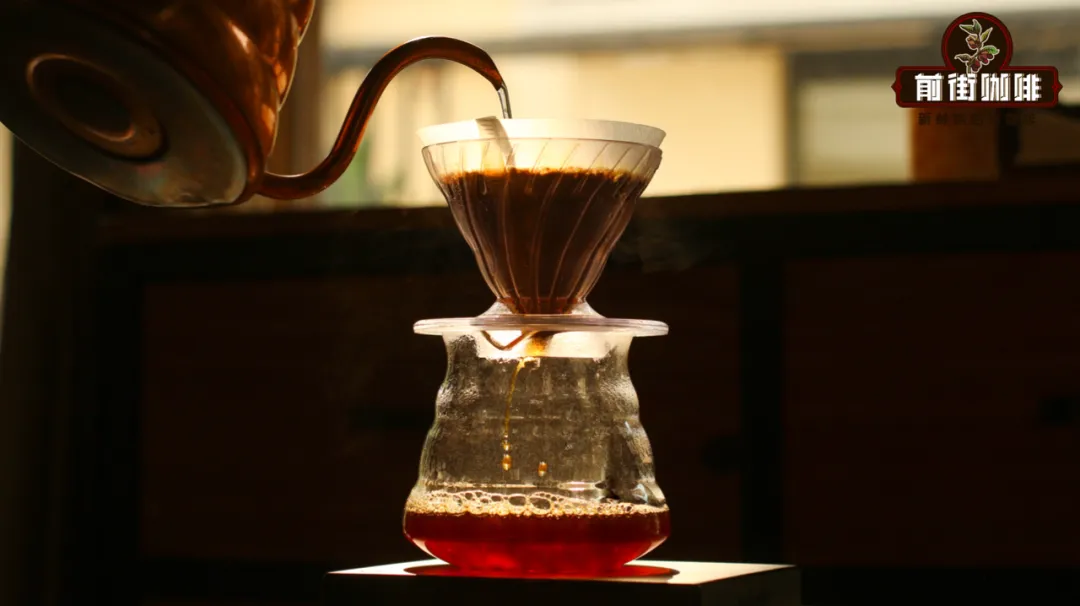
But note that overly extreme high concentration, low extraction also has shortcomings: it sacrifices a large amount of tail-end substances, and flavor, body, and aftertaste will all be compromised. If the beans are very high quality, it is best not to use high concentration, low extraction; but if the beans are far from the roast date, dark-roasted, or anaerobically processed and thus prone to bitterness, high concentration, low extraction will be a very suitable choice.
The above content is compiled by CoffeeHunters, a coffee news website.


