







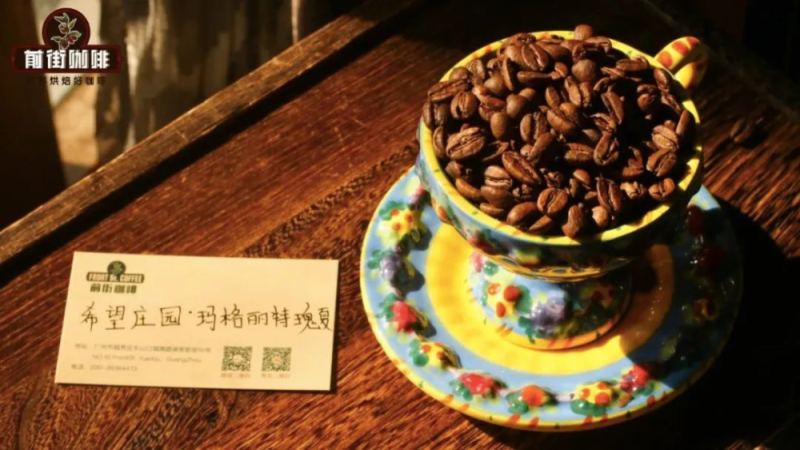
Front Street recently acquired a sun-dried Geisha coffee bean from Colombia's La Esperanza Estate. After brewing, it presents aromas of blueberry and smoked plum, with flavors of blackcurrant juice, orange, and berries on the palate, a full juicy body, and a long wine-like finish. This Geisha comes from Cafe Granja La Esperanza, an estate with a 76-year history that has won over 60 awards in global competitions and owns five sub-estates. This article will guide you through the cultivation legend of La Esperanza Estate, and using Front Street La Esperanza Geisha drip coffee as an example, explain in detail the brewing steps and water temperature recommendations for drip coffee, helping you easily enjoy a high-quality black coffee even when busy.
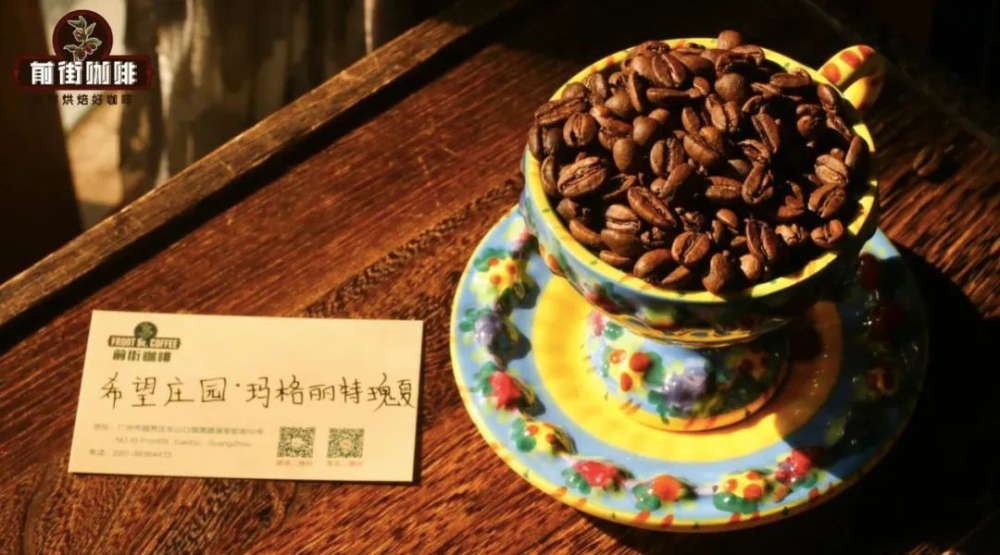
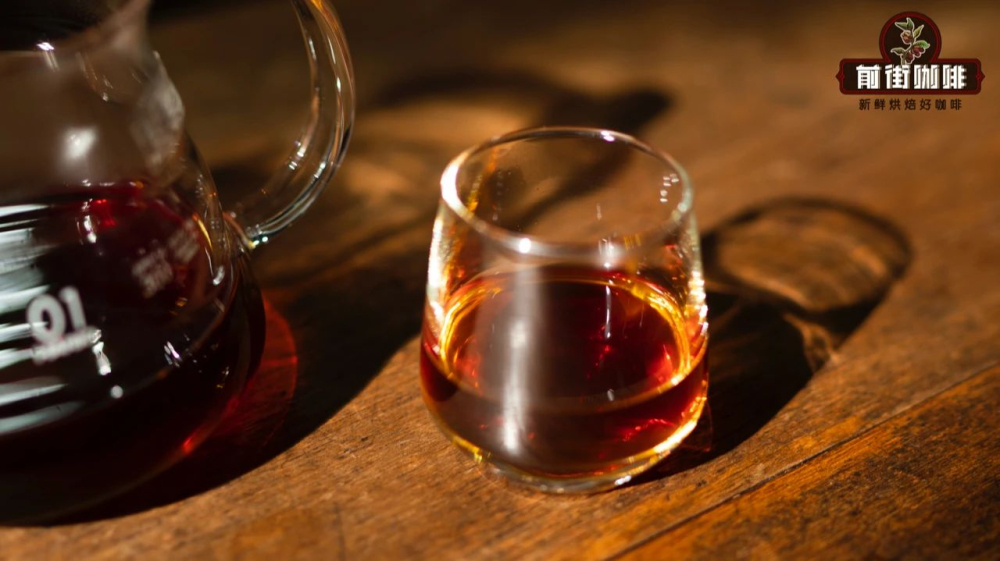
Front Street recently obtained a sun-dried Geisha coffee bean produced by Colombia's La Esperanza Estate. Through brewing tests, it emits aromas of blueberry and smoked plum, and on the palate, you can taste blackcurrant juice, orange, and berries, with a prominent full, juicy mouthfeel, and a finish reminiscent of red wine.
This Geisha comes from a renowned Colombian estate with deep cultivation heritage—Cafe Granja La Esperanza, whose Chinese translation "Hope" is both fitting and pleasant. Over the past decade, La Esperanza Estate has accumulated more than 60 awards in various global coffee competitions, frequently appearing on the winners' list of Colombian green bean competitions, and has even cross-regionally participated in the Panama BOP event with notable achievements.
La Esperanza Estate is not a single farm; it has five sub-estates within Colombia: Potosí, Cerro Azul, Las Margaritas, La Esperanza, and Hawaii. Except for Hawaii, which is located in Cundinamarca, the other four are situated in Valle de Cauca.
The estate was founded by the couple Blanca Ligia Correa and Juan Antonio Herrera. They were initially assigned to work on the Potosí farm, where they developed a strong interest in specialty coffee production, and later simply bought the Potosí estate.
At that time, Potosí Estate primarily grew Typica, but Mr. Herrera was not satisfied with this; he hoped to cultivate more high-quality specialty coffees. In 1945, the couple bought another plot of land near Potosí Estate and established La Esperanza Estate, specifically to introduce other conventional varieties such as Yellow Bourbon, Bourbon, and Caturra.
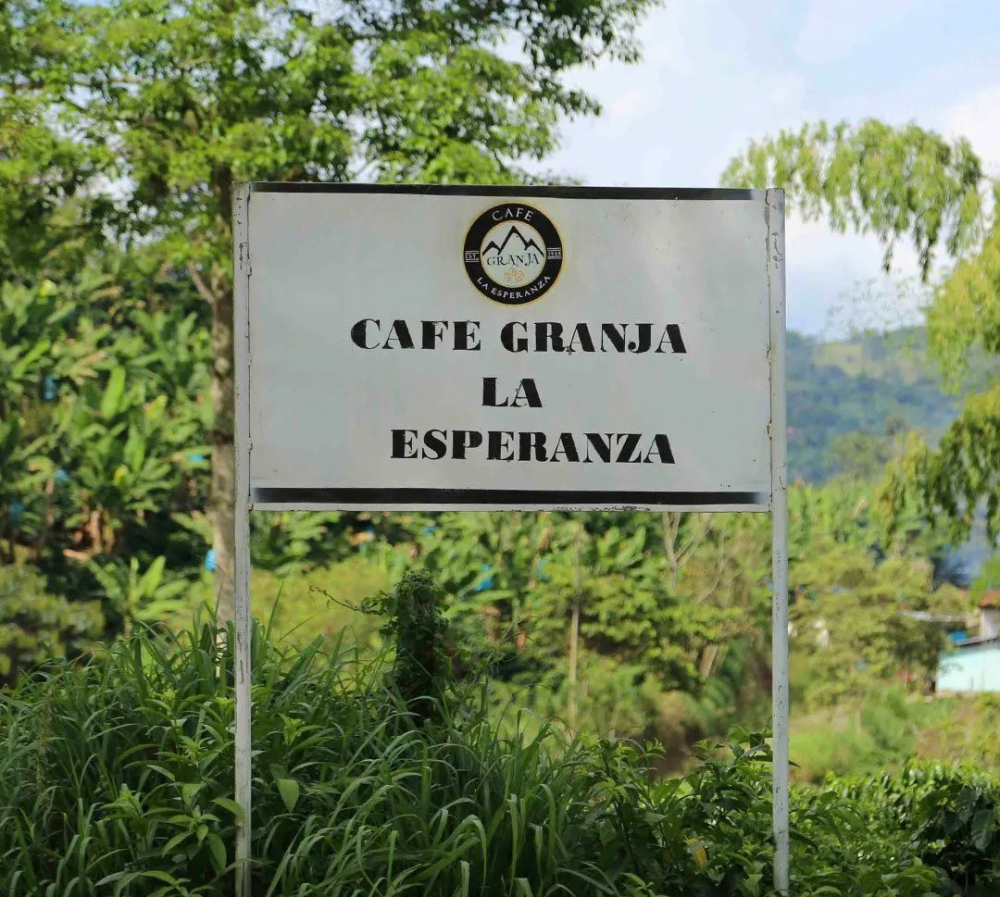
La Esperanza Estate's cultivation altitude ranges from 1400 to 1860 meters, with valley air currents moderating temperatures year-round between 17°C and 22°C, and abundant rainfall averaging 1340mm annually. While managing the estate, the couple raised 14 children, and the family flourished. Among their many children, Rigoberto and Luis showed strong interest and exceptional talent in coffee cultivation, gradually taking over the family's estate management.
In 2007, Rigoberto rented a coffee farm in Boquete, Panama, to grow Geisha, and in 2008 won the Best of Panama (BOP) championship, followed by second place in 2009. This string of achievements made La Esperanza Estate internationally famous.
Thereafter, Rigoberto introduced Geisha to La Esperanza Estate in Colombia. As business continued to expand, they successively purchased three more plots: Cerro Azul, Las Margaritas, and Hawaii (the Geisha that Front Street acquired this time comes from the Las Margaritas plot).
The five estates together cover a total area of 150 hectares, each with different cultivation altitudes, but all falling within the range of 1400 to 2000 meters. Today, the entire La Esperanza farm, in addition to retaining the original traditional varieties, also grows Geisha, Sidra, and coffee trees selected or mutated by the estate itself.
Currently, La Esperanza Estate is mainly distributed in Valle de Cauca (the province name derives from the nearby famous Cauca River). This area was once Colombia's core coffee-producing region, located in the country's central part. Thanks to the unique mountainous terrain and climate, the local area has two dry seasons and two rainy seasons per year, allowing two coffee harvests. In the era when yield was everything, this region received much government attention. However, with the rise of the specialty coffee wave, Colombia's coffee center of gravity gradually shifted south. Nevertheless, Valle de Cauca still has many renowned estates focused on cultivation and processing research, with La Esperanza Estate and Finca El Paraiso being representative examples, continuously driving the local coffee industry's development.
As a team that has endured 76 years, La Esperanza Estate is equipped with PhD-level botanists, three professional cuppers, and over a hundred staff members who jointly manage its various estates. Chief botanist Hernando Tapasco set up a weather station within the estate to track weather data and provide a basis for harvest decisions. Data collection on the farm has never stopped, with analysis conducted weekly. After the harvest ends, they compare weather data, production data, and cupping data together to find correlations.
Additionally, the workers picking Geisha cherries are rigorously trained to only harvest ripe cherries, and are paid by the day, unlike other estates that pay by weight. To prevent workers from picking unqualified fruits in a rush for speed, more than half of the pickers have over six years of experience. After picking, the fruits are immediately sent to La Esperanza Estate's central processing plant, where each Geisha lot is marked and processed separately. They first undergo three days of pre-drying on the drying beds, then are transferred to small towers for further drying.
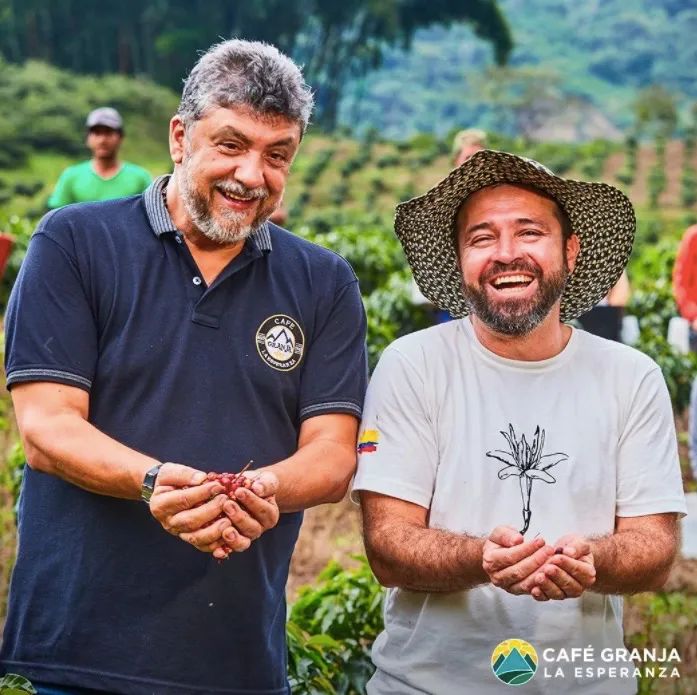
In variety experimentation and innovation, La Esperanza Estate has never stopped, continuously trying new high-quality varieties. In addition to Caturra, which originally occupied most of the estate area, varieties such as Geisha, Organic Geisha, Mocha, Bourbon (including Red Bourbon, Yellow Bourbon, Tekizik, and other different Bourbons), Pointed Bourbon, Pacamara, San Bernardo, and Pache have successively appeared on the estate, demonstrating the team's passion for the specialty coffee industry.
To fully appreciate La Esperanza Estate's refined aromas, it is best to extract using freshly ground and brewed methods. But if you are a busy office worker, Front Street drip coffee is a good choice, with each pack containing 10 grams, just enough to brew a cup of black coffee. Below, using Front Street La Esperanza Geisha drip coffee as an example, we demonstrate the specific steps:
Step 1: Choose a taller brewing container
Try to use a taller cup or pot for brewing, keeping a certain distance between the drip coffee bag and the extracted coffee liquid level.

Step 2: The water temperature for brewing drip coffee should not exceed 95°C, and should not be lower than 88°C
In medium-fine ground coffee, soluble flavor molecules need the right temperature to be better released. Front Street recommends: for medium-light roast (with floral, berry, or citrus notes) drip coffee, use water at 90°C to 92°C; for medium roast (nutty, cocoa notes) drip coffee, use water at 89°C to 90°C; for medium-dark roast (herbal, spice, or dark chocolate notes) drip coffee, use water at 88°C to 89°C.
Step 3: Pour hot water in small amounts multiple times
If you have a small coffee pouring kettle on hand, that's best, because it can control the water flow, ensuring the coffee grounds are evenly moistened and fully extracted. If not, it's fine, as long as you pour water in small amounts multiple times, and do not fill the filter bag all at once.
Step 4: The brewing ratio for drip coffee is 1:15
Front Street recommends a coffee-to-water ratio of 1:15 for drip coffee bags. Using Front Street drip coffee as an example, one pack is 10 grams, so at a 1:15 ratio, you should pour 150 grams of hot water.
The above content is compiled by CoffeeHunters, a coffee news website.


