







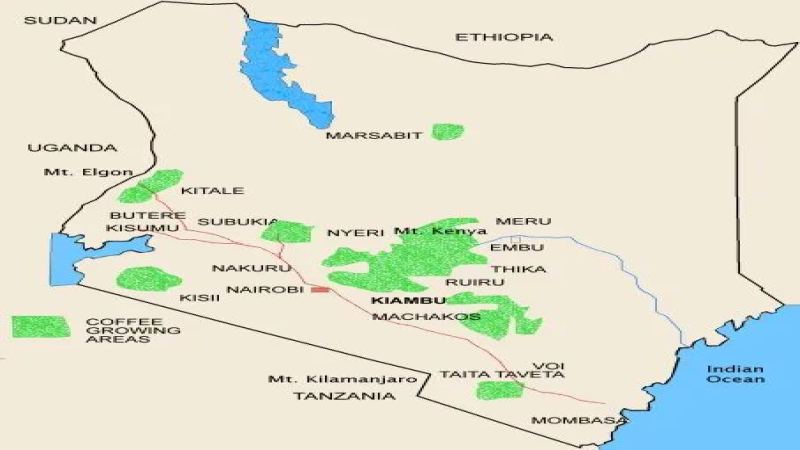
Kenya, as a representative producer of African specialty coffee, presents two drastically different flavor directions through its washed and natural processing methods. This article approaches the topic from the angles of regional distribution, cultivated varieties, and processing techniques, systematically sorting out the regional characteristics of Kenyan coffee, with a focus on comparing the impact of the K72 washed method and natural processing on flavor. It also combines specific bean selections recommended by Front Street Coffee—the Hania Estate French Mission Bourbon natural beans and the Asali Honey Processing Station AA TOP washed beans—to present the flavor performance and brewing suggestions of these two beans, helping coffee enthusiasts gain a more comprehensive understanding of the diversity of Kenyan coffee.
Overview
Capital: Nairobi
Port: Mombasa
Growers: Nearly 700,000 smallholder farming families
Planting area: Smallholders (average less than 1 hectare), estates (average 30-40 hectares, with large ones reaching several hundred hectares)
Growing altitude: 1400-2000+
Varieties cultivated: SL28/SL34, Ruiru 11, Batian, K7
Harvest season: Main crop October-January, secondary crop April-June (fly crop)
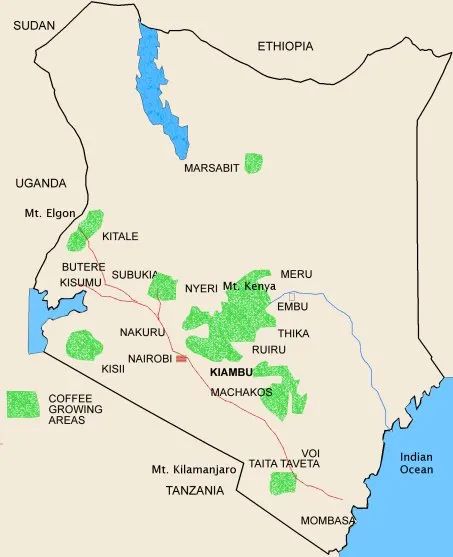
Growing regions: Central Nyeri, Muranga, Kirinyaga, Meru, Embu, Kiambu and Thika, as well as western Kericho and Kisii
Kenya is divided into 47 counties nationwide, with significant differences in coffee style from county to county. Coffee trees are mostly planted between 1400 and 2000 meters above sea level, with two harvests each year. The main growing areas cover Ruiri, Thika, Kirinyaga, Mt. Kenya West, Nyeri, Kiambu and Muranga, concentrated in the foothills of Mount Kenya and the Aberdare Range. For example, coffee from the Embu region shows good balance, with notes of citrus fruits, chocolate, and apple along with a certain acidity. The Nyeri region presents flavors of white grape, juiciness, grapefruit and cherry tomato, with abundant fruitiness and caramel-like sweetness.
The coffee characteristics of different counties are distinct. Kenyan coffee trees are mostly planted at altitudes of 1400-2000 meters, with two harvests per year. The growing regions include Ruiri, Thika, Kirinyaga, Mt. Kenya West, Nyeri, Kiambu and Muranga. They are mainly found in the foothills of Mt. Kenya and Aberdare. For example, the coffee characteristics of the Thika Kenya Thika Plateau region: balanced, with citrus fruit, chocolate, apple, and plum acidity. The coffee characteristics of the Nyeri region: white grape, juicy, grapefruit and cherry tomato flavors, full of fruitiness, sweet as caramel. Kenyan Washed Beans
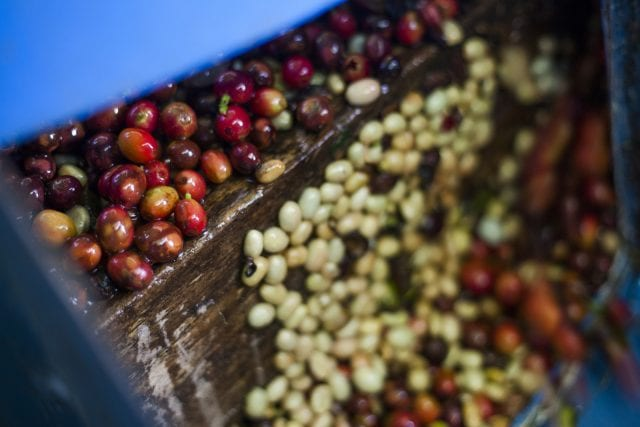
Kenyan washed processing uses a cyclical method of alternating repeated fermentation and washing. On the day of picking, the highest-quality coffee cherries are selected, and after depulping, they enter the fermentation stage. The first fermentation lasts 24 hours, followed by rinsing with clean river water. Immediately after, another 24-hour fermentation in clean water takes place, followed by washing again. This cycle is repeated three times, totaling 72 hours, which is what the industry calls the Kenyan-style 72-hour fermentation washed method, or K72. This process allows the coffee beans to undergo long fermentation at lower temperatures, thereby developing brighter, cleaner, and fuller flavor layers.
Front Street Coffee couldn't wait to brew a cup of Kenyan Asali Honey Processing Station to taste. A strong tomato aroma rushed out, accompanied by berry notes. The rise and fall of acidity and sweetness was quite pronounced, with a refreshingly sweet finish and a hint of blackcurrant in the aftertaste. This coffee opens with acidity and finishes with sweetness, making it one of Front Street's favorite coffees~ Kenyan Natural Beans
Next, let's look at traditionally natural-processed Kenyan coffee. Natural Kenyan coffee is relatively uncommon on the market, possibly because Kenyan-style washed coffee is of extremely high quality, and in addition, the loss rate of natural processing and the high labor costs mean that natural Kenyan coffee is generally only found in special custom programs by some green bean merchants. This bean is processed by the natural method. During the refined natural process, it adds body and sweetness to the already rich and variably acidic Bourbon coffee. This natural lot is limited in quantity and is a coffee that relies entirely on natural climate conditions.
The variety of this coffee is French Mission Bourbon. Around 1892-1893, French missionaries brought the Bourbon variety into Kenya for planting. This native Bourbon variety is called the French Mission Varietal, and during cultivation it avoided scientific improvement methods, preserving the most original flavor of Bourbon.
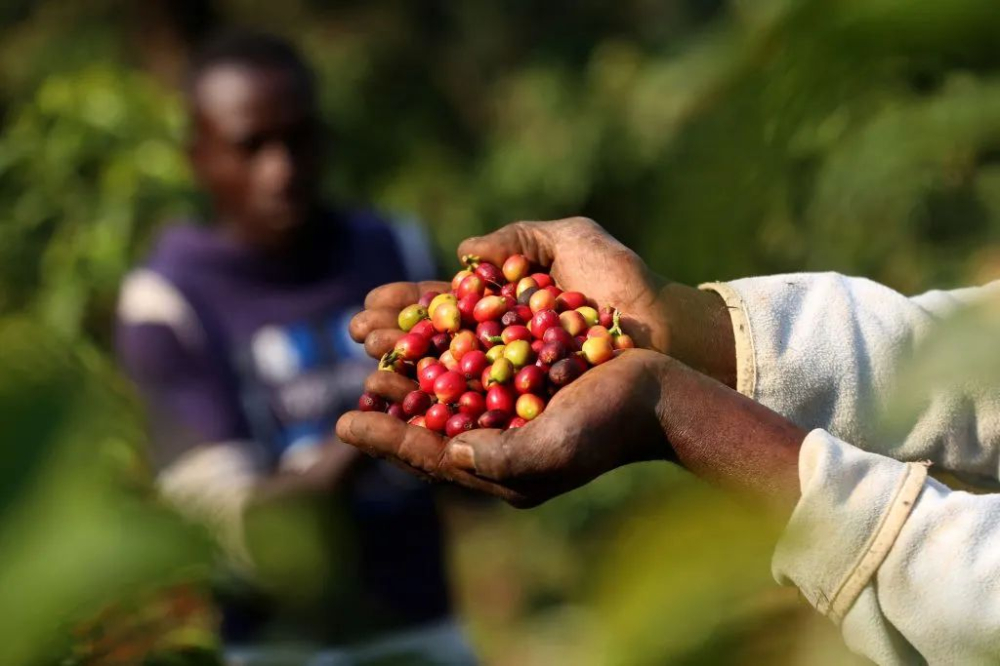
This coffee was not graded according to Kenyan standards, probably because it is a micro-lot, but its defect rate is relatively high, and the bean appearance is not very attractive. The shortcomings of the traditional natural method detract from this coffee's appearance, so how does it taste? Let's give it a try~
Surprisingly, this coffee tastes very good! The dry aroma has notes of natural fermentation, dried fruit, and vanilla. On sipping, you can taste caramel, vanilla, and mixed fruits, with a solid juicy feel. The aftertaste has berries, rich jackfruit, and coffee floral notes. The overall performance is like Africa's wild old-fashioned flavor, suitable for slow sipping in small mouthfuls. The complex aroma makes it hard to give up~ Appendix
Below are the information cards for the two comparison coffee beans used above. Interested friends can click the links to view detailed introductions, roasting and brewing suggestions~
【Kenya Hania Estate French Mission Bourbon Natural】
Country: Kenya
Region: Thika
Processing station: Chania Estates
Altitude: 1,525 meters
Variety: French Mission Bourbon
Processing method: Natural processing
************************************************
【Kenya Asali AA TOP Refined 72-hour washed】
Country: Kenya
Region: Thika
Processing station: Asali Honey Processing Station
Altitude: 1550~1750 meters
Soil: Volcanic soil
Grade: AA TOP
Variety: sl-28, sl-34
Processing method: 72-hour washed
Kenya's signature flavor is rich acidity and aroma. In particular, lightly roasted Kenyan washed coffee often carries the acidity and aroma of tomato and berries. If roasted too light, it will have grassy notes and astringent acidity. Roasting and brewing Kenyan coffee well is no easy task~ With properly roasted and brewed Kenyan coffee, you will find that its wet aroma carries a honey-like scent, with rich and varied floral layers. Whether natural or washed Kenyan beans, the brewing water temperature should not be too low, generally controlled at 91 to 93 degrees Celsius for the ideal result.
The above content is compiled by CoffeeHunters, a coffee news website.


