







With its fertile volcanic soil and continuously improving transportation infrastructure, Nicaragua is gradually emerging from the shadow of war and natural disasters to become a noteworthy coffee-producing country in Central America. This article reviews the country's coffee industry's tortuous journey from the 19th-century boom to its 21st-century revival, details its grading system and distribution of four major producing regions, and takes the Nueva Segovia Finca La Bendición sun-dried Red Catuai selected by Front Street Coffee as an example to present the complete parameters from roasting and resting to three-stage pour-over, finally summarizing the complex flavor profile of this bean with intertwined berry, caramel, and grapefruit notes.
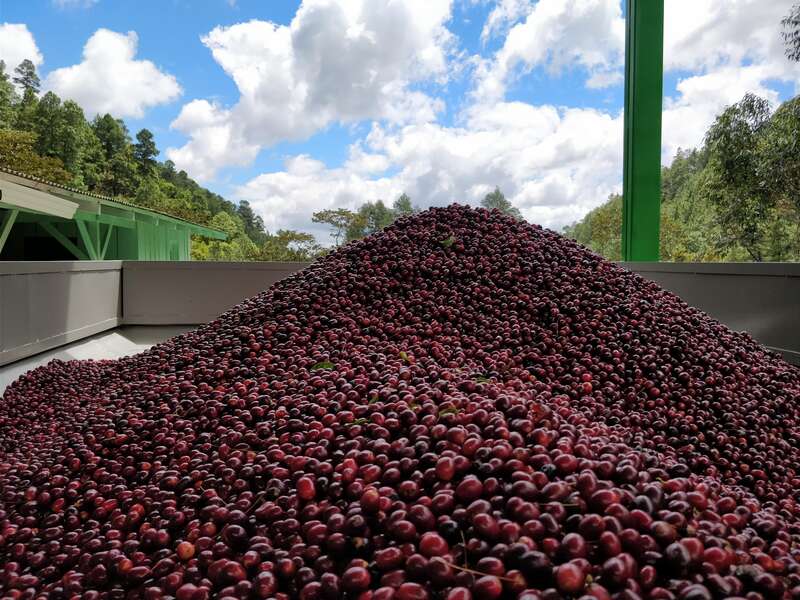
Nicaragua enjoys unique conditions for coffee cultivation, with volcanic soil rich in nutrients providing a solid foundation for growing high-quality coffee. The local coffee's mouthfeel is round and balanced, with acidity that is not sharp. However, due to frequent wars and hurricanes in history, many farms struggled to maintain long-term operations, and green bean buyers often could not trace the detailed origins of farms. This situation only gradually improved around 2003, as unfavorable factors affecting the coffee industry faded, and Nicaragua's coffee quality noticeably improved. At the same time, domestic transportation conditions also greatly improved, allowing more high-quality coffee to enter circulation.
FrontStreet Coffee has learned that Nicaragua experienced a "coffee boom" from 1840 to 1940, during which coffee became the country's most important export crop. The government provided strong support, attracting foreign companies to invest and acquire land, leading to the establishment of large estates.
But the good times did not last. The dictator Somoza established a coffee cooperative system between 1936 and 1979, which was later overthrown by the Sandinistas. Nicaragua entered a period of communist rule in 1979, dealing a heavy blow to the coffee trade.
To subvert the new regime, the U.S. CIA supported the Contras, who attacked vehicles carrying coffee workers and destroyed processing plants. Society fell into turmoil, and Nicaragua's coffee industry suffered another severe blow. Even so, coffee remained the country's most important export crop. Entering the 21st century, Nicaraguan coffee faced multiple challenges, including the price crash from 1999 to 2003, hurricanes, and the millennium drought.
Today, Nicaragua has approximately 40,000 coffee farmers. Due to a lack of funds to purchase fertilizer, many coffee trees are cultivated organically. Coffee farmers are gradually shifting their focus to quality and traceability, striving to ensure coffee is traceable. These changes indicate that Nicaragua's coffee industry is steadily moving toward recovery.
Nicaragua Coffee Grading System
Strictly High Grown (SHG): 1500–2000 meters
High Grown (HG): 1300–1500 meters
Medium Grown (MG): 1000–1300 meters
Low Grown (LG): 500–1000 meters
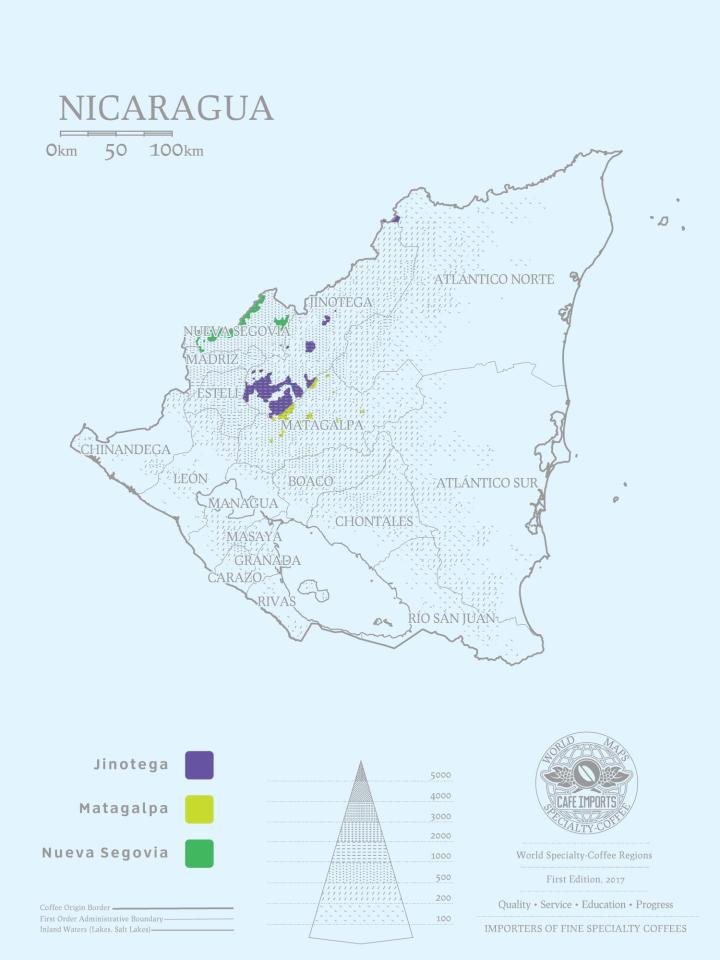
Nicaragua Coffee Producing Regions
Nicaragua is located in the central part of Central America, bordering Honduras to the north, Costa Rica to the south, the Caribbean Sea to the east, and the Pacific Ocean to the west, with a total land area of 130,400 square kilometers, making it the largest country in Central America. The north-central part of the country is highlands; the east is a coastal plain with widespread jungles and swamps and low, flat terrain; the west is a coastal lowland with many volcanoes and lakes on its eastern side.
Nicaragua is mainly divided into four major producing regions: Nueva Segovia, Matagalpa/Jinotega, Boaco, and Pacific. The Nicaraguan coffee used by FrontStreet Coffee comes precisely from Finca La Bendición in the Nueva Segovia producing region.
FrontStreet Coffee: Nicaragua Gift Coffee Beans Region: Nueva Segovia
Farm: Finca La Bendición Altitude: 1450-1700 meters Variety: Red Catuai Processing Method: Sun-dried Flavor: Berry, Caramel, Grapefruit
FrontStreet Brewing Suggestions
In pour-over coffee brewing, FrontStreet始终认为咖啡豆的新鲜度是极为关键的一环,只有新鲜的豆子才能最大程度展现出丰富的风味。FrontStreet Coffee ships coffee beans with a roasting date controlled within 5 days, because freshness has a considerable impact on flavor.
FrontStreet's roasting philosophy is "Freshly Roasted Good Coffee," striving to ensure every customer who places an order receives the freshest coffee beans. Coffee resting period is usually 4 to 7 days, so the beans arrive just at their peak flavor expression. However, from the perspective of understanding coffee, even if the resting period is not sufficient, it is worth trying, so you can experience the aroma changes coffee beans present at different stages.
FrontStreet Brewing Parameters for Nicaragua Gift Coffee Beans
Dripper: V60 #1
Water Temperature: 90-91°C
Coffee-to-Water Ratio: 1:15
Grind Size: Medium-fine (80% passing through China No. 20 standard sieve)
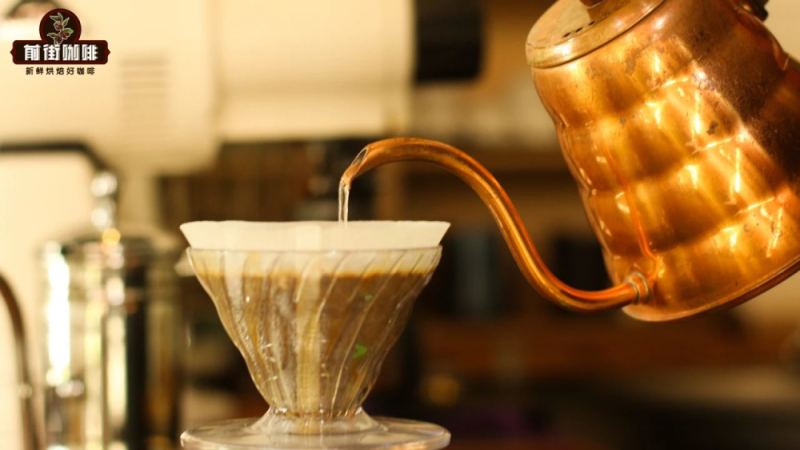
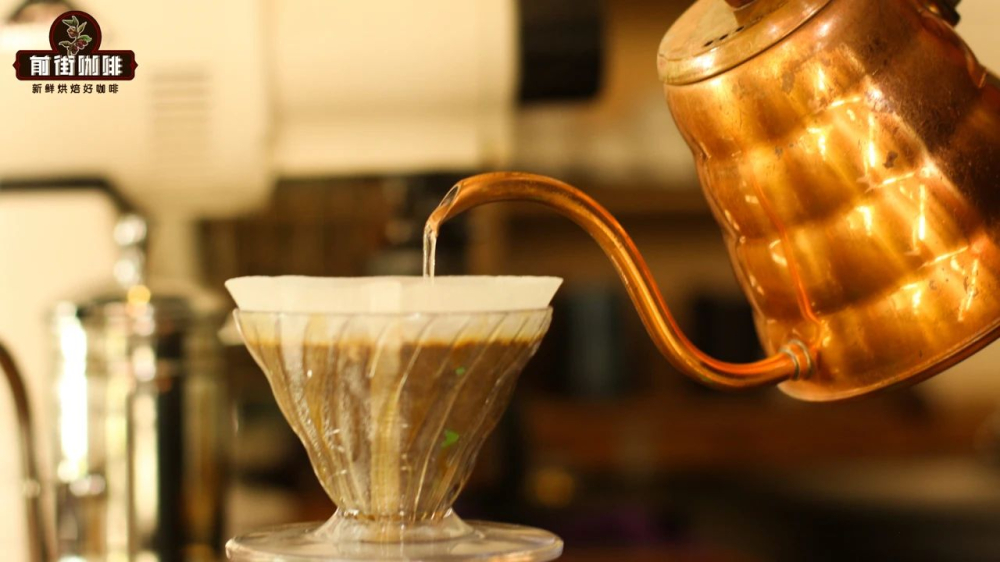
The brewing method uses three-stage extraction, with 2 times the coffee powder weight in water for blooming, i.e., 30 grams of water for 30 seconds of blooming, then pour in a small stream in circles until 125 grams, pause, and when the water level drops and is about to expose the coffee bed, continue pouring until 225 grams and stop, (timing starts from the beginning of blooming) with an extraction time of 2 minutes. Try to keep the brewing technique consistent for both beans.
Nicaragua Coffee Flavor Characteristics
Nicaraguan coffee differs from the uplifting notes of other Central American producing regions, with aromas that tend toward subdued. FrontStreet perceives from this coffee bean that its flavor is mostly complex, with a soft texture, carrying berry, caramel sweetness, and some grapefruit flavor, with pure, pleasant acidity.
The above content is compiled by CoffeeHunters, a coffee news website.


