







Why is Blue Mountain coffee so expensive?
Jamaican Blue Mountain coffee commands high prices because of limited growing area, strict official grading, and slow export volumes. The Blue Mountains form Jamaica's highest terrain, and the island's Caribbean rainforest microclimate, volcanic ash soil and persistent mist let coffee trees grow with little extra irrigation or fertilization. Only beans meeting the official standard may carry the Blue Mountain name.
Lower grades and blends are often sold under similar labels, which is why certification and packaging marks matter when buying. For comparison, other origins such as Ivory Coast coffee sit at very different price levels based on volume and grade. Checking the estate name, grade and certificate on the bag is the most reliable way to avoid imitations.
Blue Mountain coffee is hailed as the pinnacle of the coffee world, but the market is rife with imitations and it is hard to tell genuine from fake. What exactly is authentic Jamaican Blue Mountain coffee? Why does it sell for such a high price? And what is the truth behind the rumor of Japanese monopoly? This article will start from the growing environment, official definition standards, and historical price factors of Blue Mountain coffee, systematically sorting out the aroma and taste characteristics as well as the certificate and packaging markings of genuine Blue Mountain coffee. Combined with the specific product information of Front Street Blue Mountain No.1, it will teach you step by step how to identify real Blue Mountain coffee beans and avoid pitfalls and wasting money.
Most people familiar with specialty coffee know that coffee beans are graded according to quality, and the higher the grade, the better the quality and naturally the higher the price. As one of the most famous top coffees in the world, Blue Mountain coffee once enjoyed the reputation of "King of Coffee" and holds an unshakable position in the coffee market. So what truly counts as Blue Mountain coffee? Let us follow Front Street to gain a deeper understanding of the meaning and origin behind this legendary coffee.
Which country does Blue Mountain coffee come from?
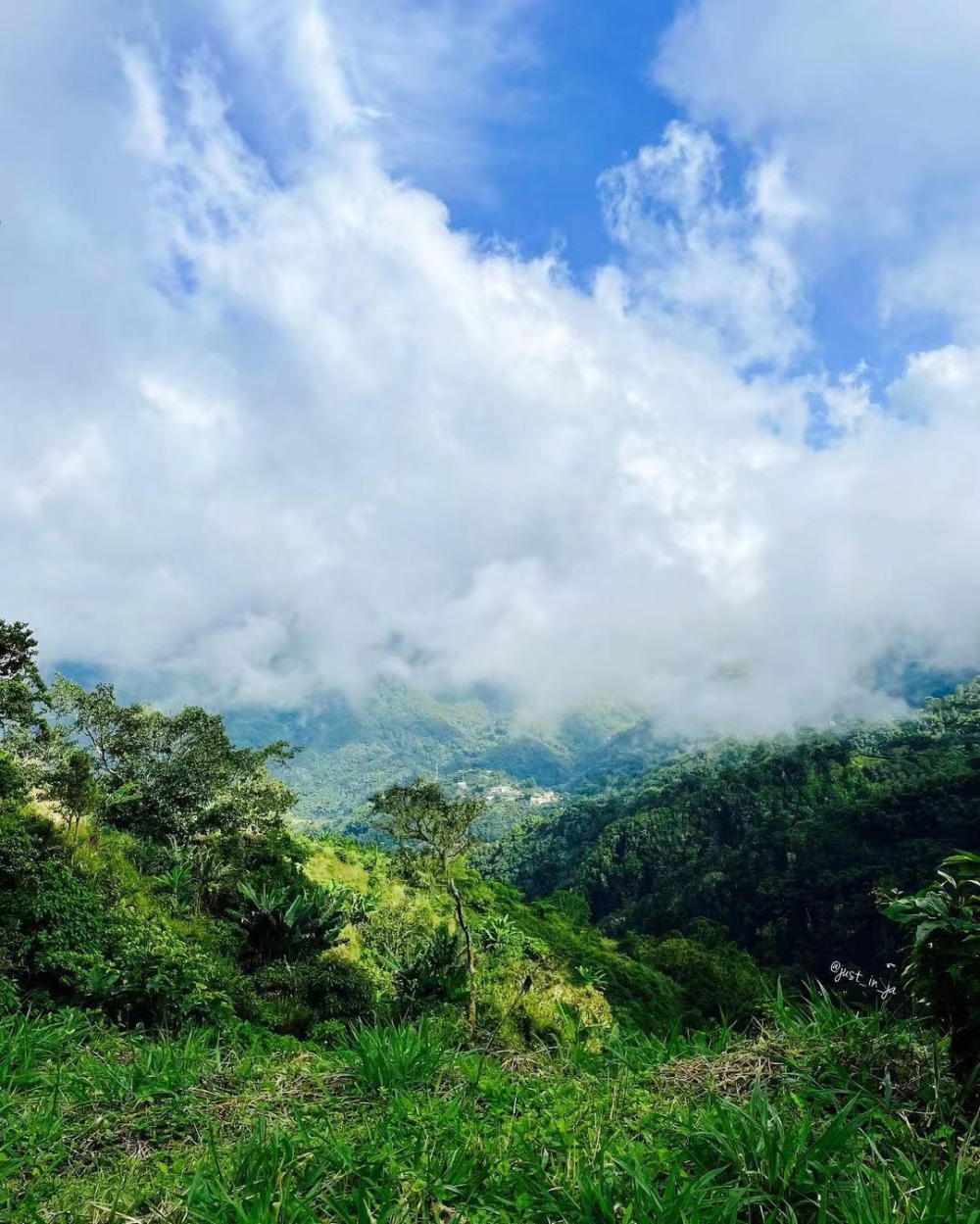
Looking at a world map, Jamaica is just a small island country in the Caribbean region. The country is roughly divided into three areas: eastern mountains, central valleys and plateaus, and coastal plains. Among them, the Blue Mountains are the highest-altitude area in Jamaica, and the rolling mountain terrain creates a unique microclimate.
According to Front Street, the outstanding quality of Blue Mountain coffee is inseparable from its exceptional growing environment. The Blue Mountains are surrounded by the waters of the Caribbean Sea, forming a unique island tropical rainforest microclimate, with concentrated rainfall in the rainy season and smooth drainage. Volcanic ash left by volcanic activity makes the soil rich in nutrients, so coffee trees do not need large amounts of additional irrigation and fertilization. The area has abundant sunlight throughout the year, frequent mist, and a cool and pleasant high-altitude growing zone, making it very suitable for crop growth. Locals are accustomed to planting coffee trees together with banana trees on the slopes of the Blue Mountains.
What kind of coffee can be called "Blue Mountain coffee"?
In order to ensure the stability of Jamaican coffee quality, the government established the Coffee Industry Board (CIB) in 1952, giving it official authority to strictly regulate the country's coffee. In 1953, the CIB designated a production area of about 6,000 hectares in the Blue Mountains, accounting for only 15% of total Blue Mountain coffee production, and clearly stipulated that only coffee produced in this area could be labeled "Jamaican Blue Mountain Coffee," while products from other areas are called "Jamaica High Mountain Coffee" and "Jamaica Prime Coffee." Because Blue Mountain coffee is so famous, its price is far higher than the latter two.
The growing areas of Blue Mountain coffee are distributed across four production regions between 910 and 1,700 meters above sea level (above 1,700 meters is protected forest area), namely St. Andrew, St. Mary, St. Thomas, and Portland. The CIB cups the coffee produced in these areas, which presents rich and mellow aromas such as chocolate and nuts, with a round and smooth mouthfeel, almost no perceptible bitterness, and harmonious integration of various flavor elements.
Why is Blue Mountain coffee so expensive?
There used to be a common saying: "Blue Mountain coffee is all monopolized by Japan, so what you buy domestically is fake." The formation of this rumor stems from the coffee contract signed between Jamaica and Japan in the 1970s.
In the 1960s, Jamaica suffered hurricane disasters, and many industries were hit hard, including the coffee industry. At that time, the Japanese company UCC reached out to help Jamaica and introduced ecological planting techniques to the Blue Mountain production area. In 1972, Jamaica signed a 30-year contract coordination with Japan, promising Japan priority purchasing rights for Blue Mountain coffee in return for the assistance of Japanese companies. During this period, 90% of Blue Mountain coffee flowed to Japan, with only a small 10% quota allocated to other countries in Europe, America, and Asia, which is also the reason why Blue Mountain coffee prices remained high in that era.
After the contract between the two sides expired, it coincided with the global economic crisis, Japan's economic downturn and declining purchasing power, and Jamaican coffee farmers were unwilling to continue being monopolized by Japanese merchants, so they significantly raised the price of green coffee beans. As of now, Japan's proportion of purchasing Jamaican Blue Mountain coffee has dropped from 90% in the past to less than 60%.
At a time when coffee culture is flourishing, we are already able to import Blue Mountain coffee beans directly from Jamaica. As Front Street summarized above, high-quality Blue Mountain coffee beans are hard to come by, so the price naturally will not be too cheap. If you see "Blue Mountain beans" selling for just a few dozen yuan per bag on a shopping platform, it is most likely a counterfeit product. You can also refer to the pricing on Front Street's bean list. Front Street Blue Mountain No.1 is sold at 158 yuan per 100g bag, and 60 yuan per single cup pour-over, which is a relatively affordable price range.
What are the characteristics of genuine Blue Mountain coffee?
Unlike the common "Blue Mountain blend coffee" and "Blue Mountain flavor coffee" on shopping platforms, authentic Blue Mountain coffee is a high-quality single-origin coffee bean produced in the Blue Mountains of Jamaica, with extremely limited output.
According to Jamaica's Coffee Industry Regulation Act, the growing areas of Blue Mountain coffee are mainly distributed across four administrative districts: St. Andrew, St. Thomas, Portland, and St. Mary, and it explicitly stipulates that only Typica variety grown between 910 and 1,700 meters above sea level can be named Jamaican Blue Mountain Coffee. The steep terrain of the high-altitude Blue Mountains makes management and harvesting difficult and labor costs high, so the coffee price will not be too low. If the "Blue Mountain beans" you buy cost only a few dozen yuan, they are very likely fake. For reference, the single bag price of Front Street's Blue Mountain No.1 coffee beans is 158 yuan/100g.
In terms of aroma, Blue Mountain coffee has a rich, dense, and lasting aroma of chocolate and roasted hazelnut, which ordinary dark-roasted blends find hard to match. In terms of taste, genuine Blue Mountain coffee balances acidity, sweetness, bitterness, and aroma, with no single flavor standing out excessively, and both body and sweetness are just right.
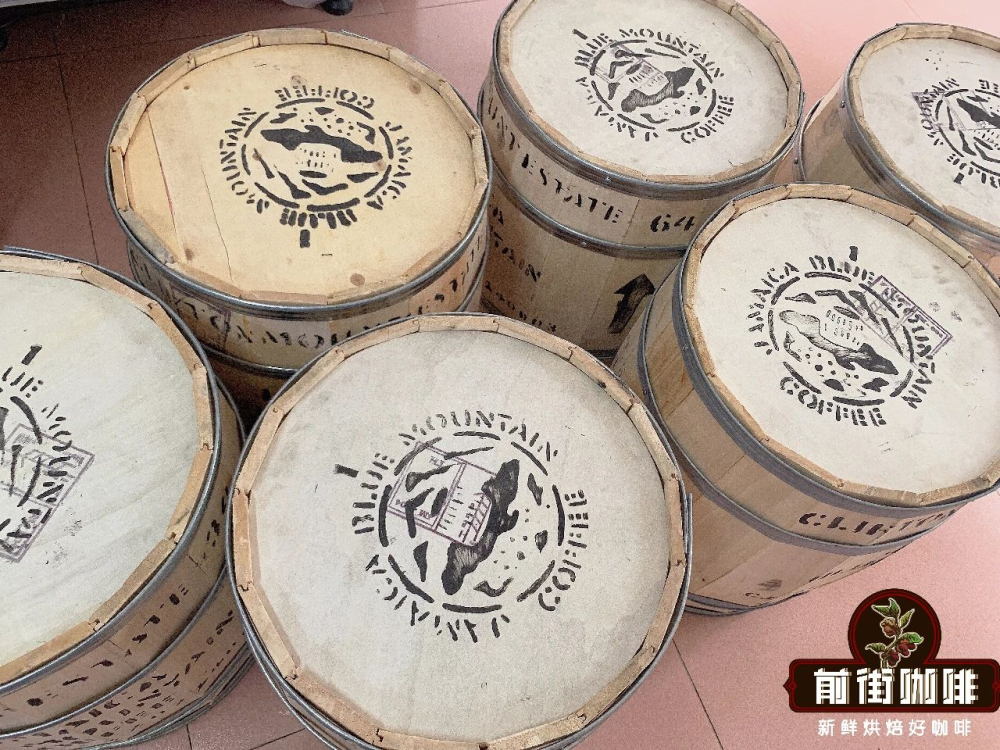
If the above two points still cannot help you distinguish it, you can ask the merchant to show the relevant Blue Mountain certificates and the wooden barrel used for packaging Blue Mountain green beans. Jamaica Blue Mountain is the only production area that uses wooden barrels to hold green beans. This Front Street Blue Mountain No.1 coffee also comes with a quality certificate issued by the Jamaica Coffee Board, an authorized sales certificate issued by the Blue Mountain coffee producer, and a certificate of origin for Jamaican Blue Mountain coffee. The relevant documentary certificates and handmade wooden barrel are all on display in Front Street stores. This Front Street Blue Mountain No.1 is produced by Clifton Estate and adopts the traditional washed processing method, which is also the most common green bean processing method for Blue Mountain.
What is "Blue Mountain No.1"?
To stabilize the quality of Blue Mountain coffee, the Jamaican government established the Jamaica Coffee Industry Board (CIB) in 1948 to regulate the cultivation, production, and sales of Blue Mountain coffee, in order to improve coffee quality, standardize production and processing procedures, and coordinate the market sales of Blue Mountain coffee. The CIB is also responsible for grading and quality testing of coffee produced in the Blue Mountains. In other words, Blue Mountain coffee sold around the world must pass CIB certification and carry its label.
Before export, Blue Mountain coffee beans are packed and sent for inspection, and are ranked by bean size and defect rate after processing, in order as Blue Mountain No.1, Blue Mountain No.2, Blue Mountain No.3, and Blue Mountain Peaberry. Bean size is measured using screens with different hole sizes, and coffee beans that cannot pass through the holes meet the corresponding specification standard.
Top-grade Blue Mountain No.1 green beans must meet a specification of 17 mesh or above, a defect rate below 3%, and a moisture content of about 13%, and must show in cupping a rich coffee aroma, a smooth and balanced mouthfeel, lower acidity, and a lasting sweet aftertaste.
To ensure that Blue Mountain coffee beans always maintain good quality before roasting and avoid moisture intrusion during transportation, Jamaicans insist on using handmade wooden barrels to hold Blue Mountain green beans, and the wooden barrel has therefore become one of the important symbols of Jamaican Blue Mountain coffee.
Front Street's roasting philosophy is to present the most classic flavor profile of coffee, such as the bright lemony acidity of Yirgacheffe and the mellow, toasty taste of Indonesian Mandheling coffee, and Blue Mountain naturally must also highlight the classic Blue Mountain flavor. Front Street uses a medium-dark roast to maximize the coffee's chocolate and nutty aromas while retaining soft acidity and sweetness, making the overall taste more balanced.
The above content is compiled by CoffeeHunters, a coffee news website.


