







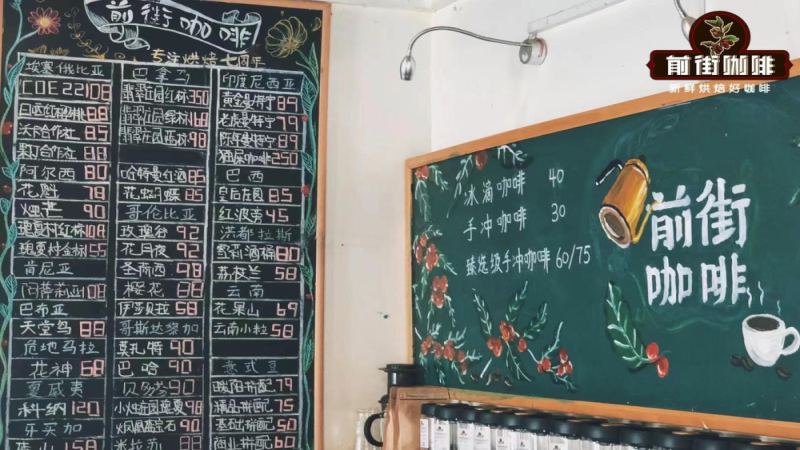
Boquete, Panama is the core producing region where Geisha coffee rose to the world stage, and Hacienda La Esmeralda is the discoverer and promoter of this legendary variety's flavor value. This article will systematically trace the history of Geisha from its origins in Ethiopia, through Kenya and Costa Rica, to its introduction to Panama, analyze the terroir advantages of the Boquete region, and focus on introducing the grade classification, plot sources, processing methods, and flavor characteristics of Hacienda La Esmeralda's Red Label and Green Label Geisha. At the same time, Front Street Coffee will also share its roasting approach and brewing parameters for Panama Geisha, helping coffee lovers gain a more complete understanding of this top-tier coffee's origin story and tasting points.
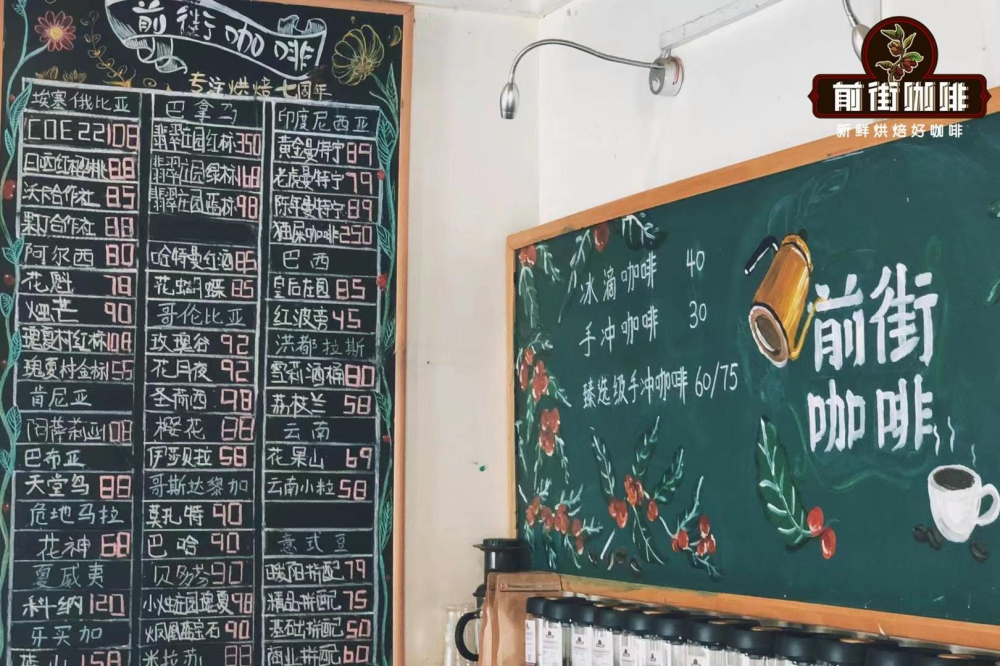
A barista at Front Street Coffee once posed this question to the younger generation of coffee lovers: which coffee is the finest in your mind? Many people gave the same answer—Panama Geisha. In fact, before Geisha coffee beans rose to prominence, Panama was not a coffee-producing country that attracted much attention; it was the emergence of Geisha that made Panama's coffee famous on the international stage.
The Geisha variety originally came from Ethiopia. In the 1930s, a British official left a record of "GEISHA" in his letters during an inspection tour in Ethiopia. Afterward, he obtained Geisha coffee seeds and sent them to the Kenya Coffee Research Institute for study. Some may wonder: since this variety was discovered as early as the 1930s, why did Geisha only truly become popular in Panama in the 21st century?
After five years of cultivation and planting by researchers at the Kenya Coffee Research Institute, the coffee trees finally bore fruit. In 1936, researchers selected plump, solid, and ripe coffee cherries and spread them to Uganda and Tanzania. In 1953, Geisha coffee seeds crossed the ocean again and arrived at CATIE, an agricultural research institution in Costa Rica.
By the 1960s and 1970s, coffee leaf rust was spreading across the Americas. In 1963, the Geisha coffee variety was introduced to Panama for planting because it was considered resistant to coffee leaf rust.
However, the Geisha coffee variety has low yield and relatively fragile branches, requiring growers to invest more care. At the time, however, coffee growers generally placed more emphasis on productivity, and their understanding of coffee varieties was still relatively vague, so Geisha coffee trees were often interplanted with other Arabica varieties.
Before Geisha became famous, many Panama coffee estates did not know much about this variety, and were even puzzled that coffee produced at lower elevations on the estate was more impressive than coffee from higher elevations.
Hacienda La Esmeralda, located in the Boquete region, often ranked low in BOP competitions at the end of the 20th century. In order to improve the estate's coffee quality, the owner obtained seeds of multiple coffee varieties from CATIE in Costa Rica for cultivation and comparative record-keeping, and ultimately discovered that Geisha coffee possessed complex fruit flavors and honey-like sweetness, completely different from the nutty and caramel notes typical of Central American coffee.
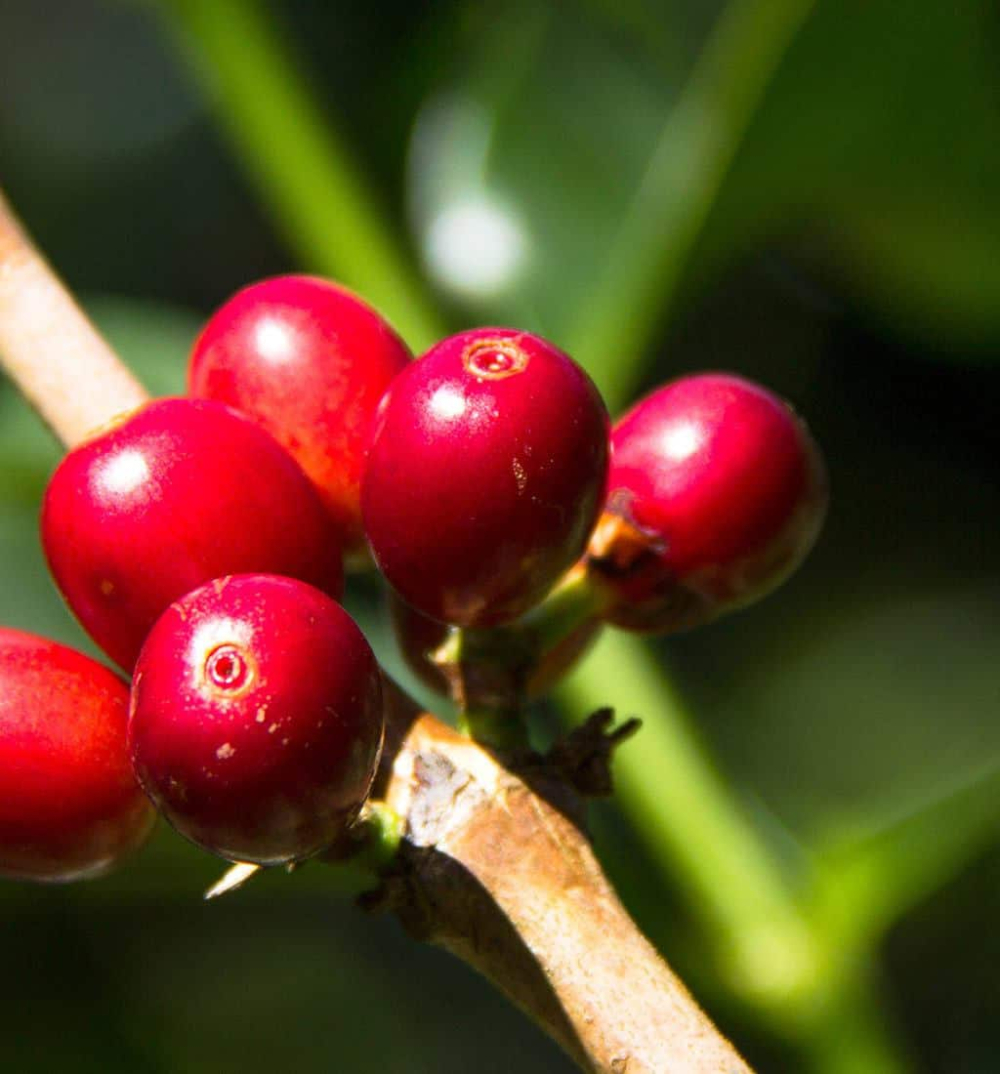
After listening to advice from industry seniors, Daniel of Hacienda La Esmeralda carefully selected a batch to enter that year's BOP, won the championship in one go, and set a new record for green coffee auction prices. For a time, Geisha coffee became the top coffee in the minds of many coffee lovers. At the same time, more Panama coffee estate owners also woke up as if from a dream and began searching for Geisha coffee trees on their own estates. A global wave of Geisha planting followed, and today Geisha coffee trees can be seen in many coffee-producing regions.
Like many companions, Front Street has always walked the path of pursuing ultimate coffee flavor. Front Street has also acquired multiple Geisha coffee beans from different producing regions for comparison, including Costa Rica, Colombia, El Salvador, Ethiopia, and Jamaica Blue Mountain.
However, through cupping comparisons, Front Street believes that to taste the classic Geisha coffee flavor, one should still choose Geisha coffee produced in Panama. The characteristics of Geisha coffee lie in white floral aromas, honey sweetness, complex juice-like body, and a clean, translucent texture, all of which are difficult for other producing regions to match.
Panama has three main coffee-producing regions. After Hacienda La Esmeralda's Geisha coffee became popular worldwide, people also learned more and more about Panama's Boquete producing region. Boquete is a town in Chiriquí Province, located near the border between Panama and Costa Rica, close to the famous Barú Volcano. The scenery here is beautiful, the soil is fertile and rich, and the climate and soil conditions have made indelible contributions to producing high-quality coffee beans with excellent taste and flavor.
On Front Street Coffee's bean list, among the Geisha coffee beans from Panama's Boquete producing region, Hacienda La Esmeralda is the most famous. Front Street believes that Hacienda La Esmeralda is both the discoverer of Geisha coffee's flavor and the promoter of Geisha coffee. If you want to witness Geisha's brilliance, Hacienda La Esmeralda's Geisha coffee is a must-try.
After years of experimentation, Hacienda La Esmeralda found that only Geisha coffee beans grown above 1,400 meters in elevation can display the special flavor that Geisha coffee should have. Therefore, Hacienda La Esmeralda's Geisha coffee grading system is based mainly on growing elevation, supplemented by actual cupping scores, resulting in the well-known Red, Green, and Blue Label Geisha coffee beans.
But by 2021, in order to maintain the estate's image, Hacienda La Esmeralda discontinued the Blue Label Geisha brand, leaving only Red Label Geisha and Green Label Geisha.
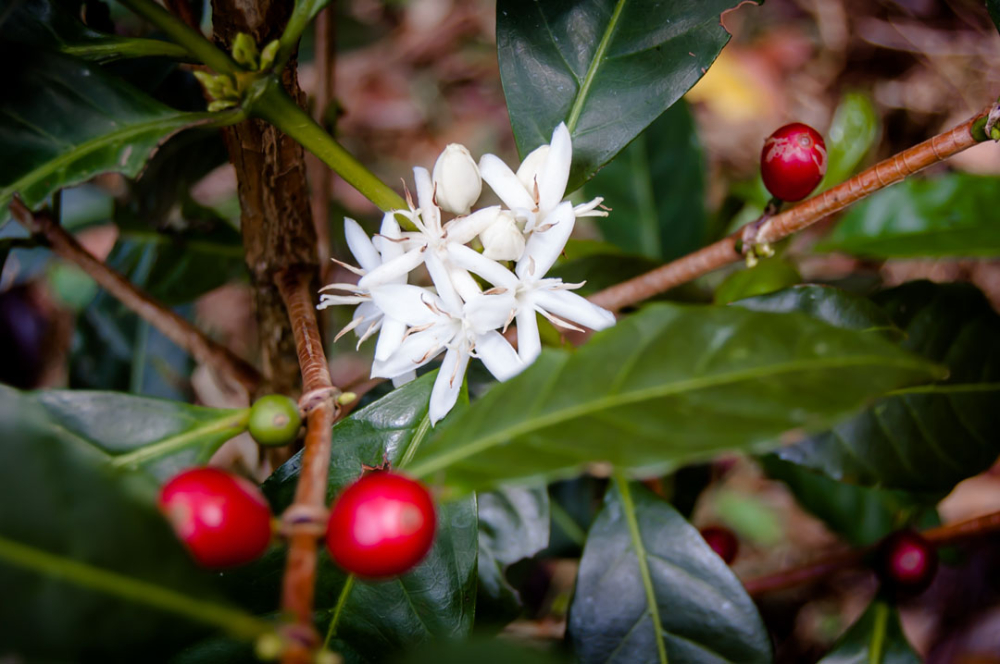
[Red Label] Hacienda La Esmeralda's Red Label Geisha coffee beans are selected from elevations of 1,600 to 1,800 meters, with cupping scores above 90.
Since Hacienda La Esmeralda holds its own independent auction for the estate every year, among the divided plots, only the Geisha lots in the auction can truly count as auction Red Label. There is also non-auction Red Label on the market, which is actually Geisha coffee beans selected from the same plots but not entered into the auction and then circulated on the market. Its quality differs only slightly from auction lots, but there is no guarantee that auction lots will necessarily taste better than non-auction lots.
Some merchants confuse buyers by attaching auction labels to non-auction Red Label and selling it to consumers, thereby obtaining huge profits from the price difference. Front Street has learned that Hacienda La Esmeralda is aware that the public has difficulty distinguishing auction Red Label from non-auction Red Label, and will make a clearer distinction between them.
The non-auction Red Label Geisha coffee beans on Front Street's shelf are selected from the "discovery site" of Geisha flavor, namely the Mario plot of Hacienda La Esmeralda's Jaramillo farm. The Geisha produced from this plot has also stood out in auctions for many years.
Front Street Coffee Panama Hacienda La Esmeralda Red Label Geisha Coffee Beans
Producing Region: Boquete, Panama
Estate: Hacienda La Esmeralda
Plot: Mario
Elevation: 1700+ meters
Variety: Geisha
Processing Method: Slow Natural
Whole coffee cherries are kept intact and evenly spread on raised beds to dry. The slow drying allows more flavor substances in the coffee cherries to better penetrate into the green coffee beans, making the flavor richer and the mouthfeel more solid.
[Green Label] Hacienda La Esmeralda's Green Label uses Geisha coffee beans from elevations of 1,600 to 1,800 meters. Because it is a blend of micro-lots from different plots, there is no detailed explanation of the plot.
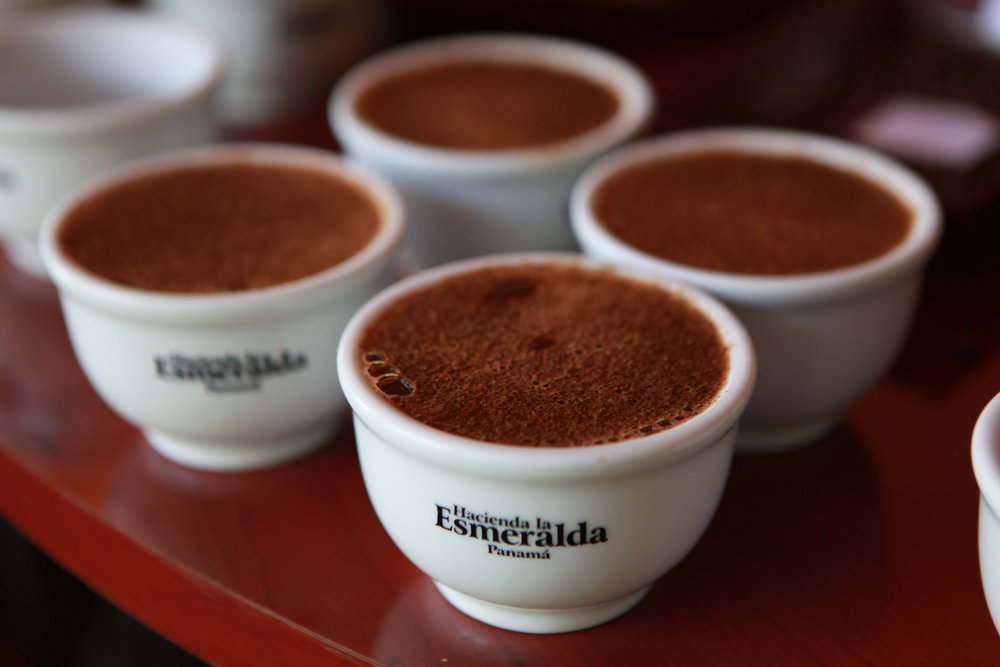
Green Label Geisha is not as high-grade as Red Label Geisha, but even though it does not participate in the auction, Front Street believes Green Label is still an excellent-quality Geisha coffee. Green Label Geisha coffee has the typical flavors of Geisha, with floral and fruity aromas and a solid juice-like body. On Front Street's shelf there is a washed Green Label Geisha. Compared with natural processing, the washed Green Label is overall fresher and more natural, bright and refreshing, and also has a sweet aftertaste like Tieguanyin tea.
Front Street Coffee Panama Hacienda La Esmeralda Green Label Geisha
Producing Region: Boquete, Panama
Estate: Hacienda La Esmeralda
Elevation: 1600 meters-1800 meters
Variety: Geisha
Processing Method: Washed
Since Panama Geisha coffee is characterized by floral aromas, rich fruity acidity, and honey sweetness, in order to follow these characteristics, Front Street Coffee's roasters generally use a medium-light roast level when roasting.
According to the roast level, Front Street Coffee's parameters for brewing Panama Geisha coffee are as follows:
Dripper: Hario V60
Water Temperature: 90°C
Dose: 15 grams
Coffee-to-Water Ratio: 1:15
Grind Size: 80% passing through Chinese standard No. 20 sieve
Because Front Street ships coffee beans freshly roasted within 5 days, by the time they arrive they have already passed a 4-to-7-day resting period. Front Street recommends blooming for 30 seconds during brewing to promote the release of carbon dioxide from the coffee grounds.
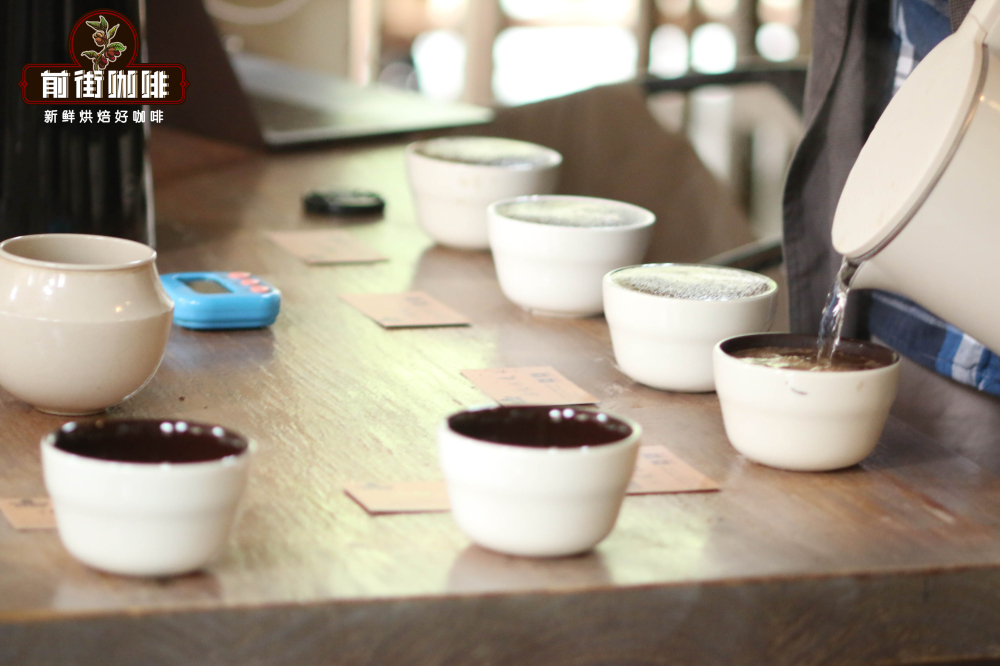
First pour 30 grams of hot water and bloom for 30 seconds. Then pour from the center with a thin stream of water and slowly circle to 125 grams. When the water level in the dripper drops to the point where the coffee bed is about to be exposed, continue pouring in circles to 225 grams. The total extraction time is about 2 minutes.
Front Street provides grinding service for companions who lack equipment at home, but as coffee beans are ground into powder, the degassing activity of the coffee grounds intensifies and the flavor dissipates accordingly. Therefore, Front Street recommends buying whole beans, or storing them properly with suitable equipment and consuming them as soon as possible to taste the best flavor.
For more coffee bean information, please follow Coffee Workshop (WeChat public account cafe_style) For professional coffee knowledge exchange, please add WeChat ID kaixinguoguo0925
The above content is compiled by CoffeeHunters, a coffee news website.


