








Mandheling is the flagship representative of Indonesian coffee, renowned for its rich, full-bodied taste and herbal, dark chocolate flavors, and is deeply favored by dark roast enthusiasts. This article, from the perspective of Front Street, traces the colonial planting history of Indonesian coffee, focuses on the Sumatra production region, and recounts the World War II anecdote behind the name Mandheling and the legend of PWN's Golden Mandheling. It also breaks down each step of the special wet-hulling process in detail and analyzes how it shapes the low acidity, high body, and unique earthy spice notes. The article also introduces two Mandheling products currently sold by Front Street and their flavor profiles, giving you a comprehensive understanding of this jewel of Indonesian coffee.
Friends who have dabbled in coffee have mostly heard of Mandheling. As a signature offering of Indonesian coffee, it has an extremely heavy body, with herbal and dark chocolate characteristics that stand out distinctly. Veteran coffee lovers and those who prefer dark roasts often have a special fondness for it. But do you know where Mandheling comes from and how its flavor is formed? Today, let's explore it together with Front Street.
The Planting Origins of Indonesian Coffee
In 1699, Indonesia was still under Dutch colonial rule, and the Dutch East India Company (VOC) introduced Arabica coffee trees here with the aim of breaking the Arab monopoly on the global coffee trade. The colonial government initially planted coffee in Batavia, around what is now Jakarta.
Subsequently, more coffee plantations were gradually established in East Java, Central Java, West Java, and parts of Sumatra and Sulawesi. Indonesia thus became the first place outside Arabia and Ethiopia to cultivate coffee on a large scale. Between 1725 and 1780, the VOC successfully controlled the monopoly on the coffee trade.
By the mid-17th century, the East India Company further expanded Arabica coffee cultivation to Sumatra, Bali, Sulawesi, and Timor. Coffee cultivation on Sulawesi Island dates back as far as 1750. In the highlands of North Sumatra, coffee was first planted near Lake Toba in 1888, and in 1924 planting followed in the Gayo Highlands (Aceh) around Lake Laut Tawar. In the late 18th century, Dutch colonists established large-scale coffee plantations on the Ijen Plateau in eastern Java.
In the 1920s, smallholder farmers across Indonesia began cultivating coffee as a cash crop. But disaster struck in 1876—coffee rust swept through Indonesia, nearly destroying the Typica variety. In 1900, Robusta coffee was introduced to East Java as a replacement, especially in the low-altitude areas ravaged by rust.
The Sumatra Production Region
Sumatra is both the largest island in Indonesia and the sixth largest island in the world. It is located in northwestern Indonesia, and thanks to this, Sumatra has the earliest harvest season in the country, lasting from November to March of the following year.
Mandheling coffee beans are precisely the Arabica variety produced on the island of Sumatra. Sumatra coffee is known for its low acidity and richly layered flavors, and many coffee enthusiasts regard it as the epitome of spice and herbal flavors.
Front Street believes that the taste of Sumatra coffee is influenced by multiple factors. On the one hand, the island's fertile volcanic soil gives the coffee an earthy undertone. The most critical factor in the formation of its low acidity, however, is the wet-hulling process widely used locally; this special processing method will be elaborated on in detail later.
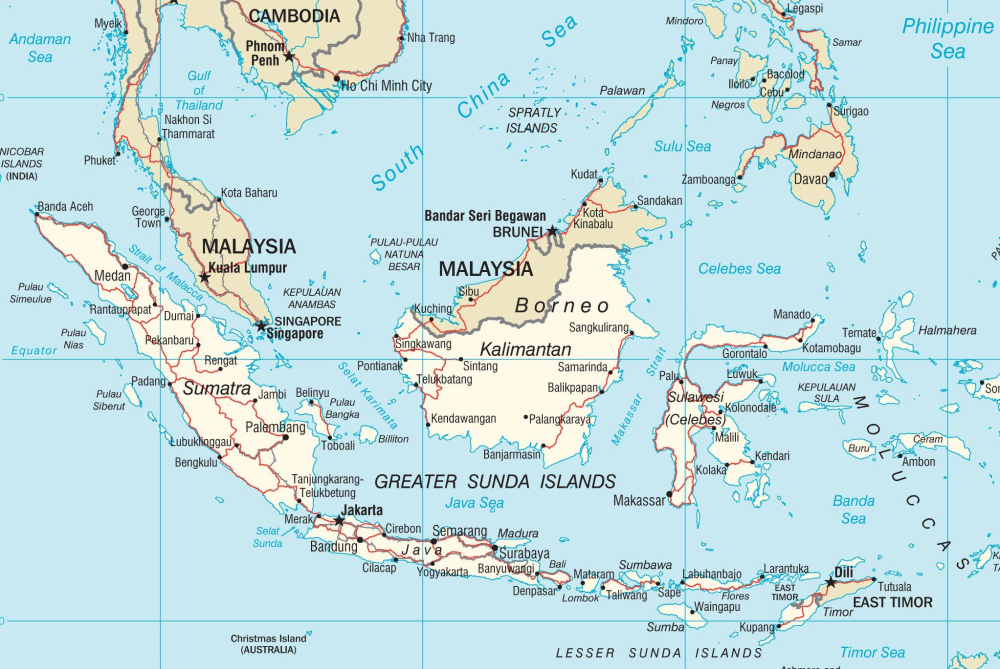
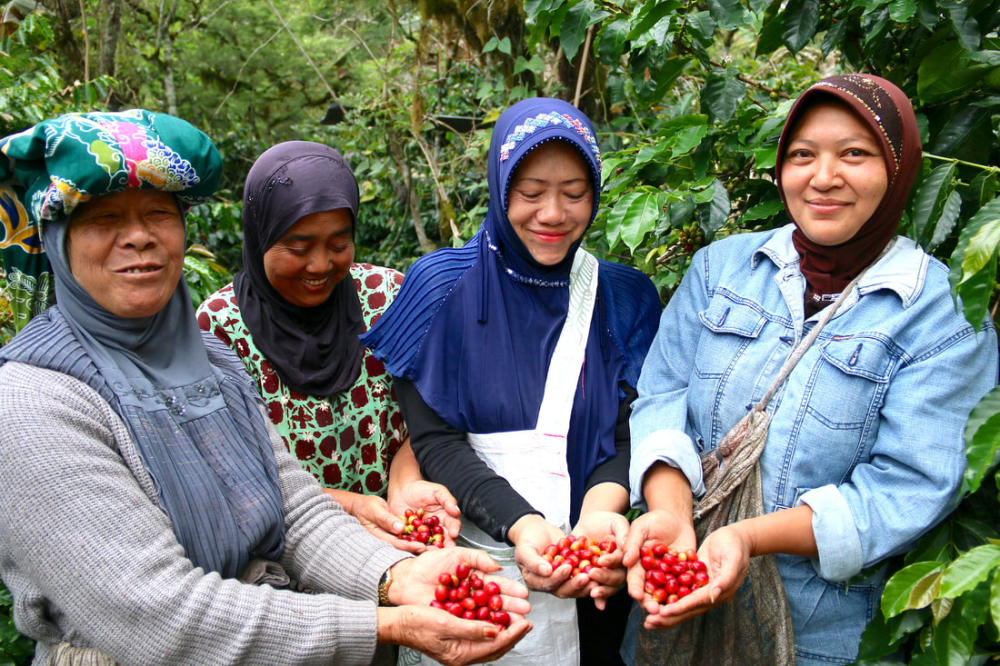
On the island of Sumatra, specialty Mandheling mainly comes from the Lintong region around Lake Toba and the Gayo Mountain region in Aceh. The two Indonesian coffees currently offered by Front Street Coffee both come from the core producing areas of specialty Mandheling. "Front Street Lintong Mandheling Coffee Beans" present flavors of baked toast, nuts, caramel, pine, and herbs; "Front Street Coffee—Front Street PWN Golden Mandheling Coffee Beans" display deeper layers, such as spices, nuts, pine, caramel, herbs, and dark chocolate.
The Origin of the Name Mandheling
Most coffee beans on the market are named after their growing region or country, but Mandheling is an exception. Its name comes from the Mandailing people, who traditionally cultivated and processed the coffee beans. What story lies behind this?
During World War II, a Japanese soldier stationed in Sumatra asked a local Sumatran where his coffee came from. The Sumatran man mistook the question as asking about his ethnic origin and answered: the Mandailing people (Mandheling). After the war, the Japanese soldier, upon returning home, recalled that the cup of coffee with a special taste seemed to be called "Mandheling." In 1968, the Nomura Trading Company of Osaka, Japan, visited the Indonesian company N.V. Pawani Medan and imported 15,000 kilograms of Sumatra Mandheling coffee, which became hugely popular after being launched on the Japanese market. From then on, the fame of Mandheling coffee and Pawani Coffee Company spread far and wide.
PWN is a well-known local Indonesian green bean purchasing company. They subject wet-hulled Mandheling green beans to one mechanical sorting plus three rounds of manual hand sorting to ensure that the produced batches reach Indonesia's highest grade, namely G1. Mechanical sorting first screens out beans that do not meet the 18-screen size, and the subsequent multiple rounds of manual selection are used to remove irregularly shaped defective beans. The reduction in defect rate significantly improves the quality of Mandheling coffee.
To distinguish it from regional Mandheling coffee, PWN registered "Golden Mandheling" as a trademark. The Golden Mandheling coffee beans sold by Front Street Coffee (FrontStreet Coffee) are all sourced from PWN. In Front Street's offline stores, you can see PWN's Golden Mandheling coffee bean certification certificates as well as coffee burlap sacks printed with the company's logo.
The Special Processing Method—Wet Hulling
Wet hulling, also called wet shelling, is known locally as giling basah and is a traditional Indonesian coffee processing method. Judging by the name alone, wet hulling seems similar to the wet process, but the coffee flavors produced by the two are completely different.
How exactly is wet hulling carried out?
Remove the skin and pulp, keeping the parchment and mucilage
Ferment in a water tank
Wash off the mucilage
Sun-dry with the parchment for 2-3 days, until the moisture content reaches 20-24%
Remove the parchment
Dry the green beans until the moisture content reaches 12-13%
Prepare for export
Front Street Golden Mandheling is a typical representative of wet hulling. Because wet hulling proceeds extremely quickly, the defect rate of the coffee beans is relatively high, and processing plants arrange workers to hand-sort and remove defects. There are usually two procedures, DP (double-picked) and TP (triple-picked); Mandheling that has undergone triple picking will see its defect rate drop significantly.
Setting aside some minor differences, the industry generally believes that wet-hulled coffee beans carry earthy, smoky, and chocolate notes, with relatively low acidity and a full body, though they are sometimes considered rather flat. PWN's Golden Mandheling coffee beans, by contrast, display a high-quality herbal aroma, with caramel sweetness particularly prominent; the entry is steady and elegant, and after swallowing, the mouth is filled with rich sweetness, body, and wild spice flavors.
The above content is compiled by CoffeeHunters, a coffee news website.


