







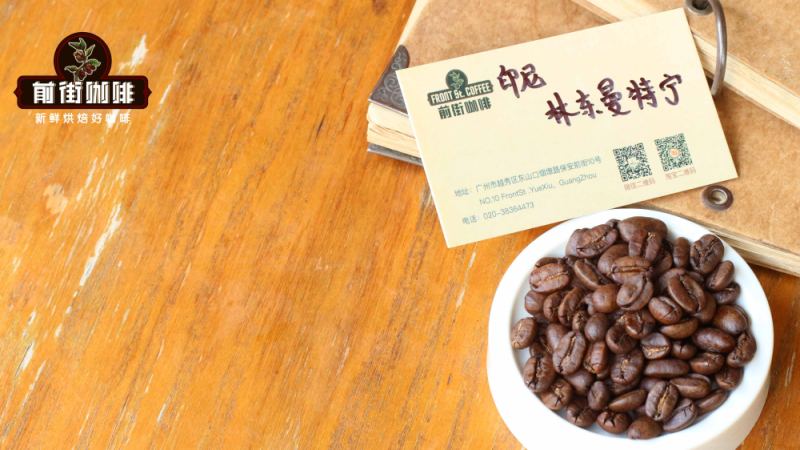
Mandheling coffee beans are famous for their rich, full-bodied taste and unique herbal, cocoa flavors, making them an entry-level choice for many coffee lovers. However, it is not named after a producing region or estate, but rather originates from the name of an ethnic group on the Indonesian island of Sumatra. This article will take you through the origins of Mandheling, explore the two core producing regions of Lake Toba and Lake Tawar, and provide an in-depth analysis of the differences between FrontStreet Coffee's Lintong Mandheling and PWN Golden Mandheling. At the same time, we will also discuss the varietal characteristics of Mandheling, the wet-hulling process, and how to pour-over a delicious cup of FrontStreet Mandheling. Whether you are a beginner just getting into single-origin coffee or a seasoned enthusiast who prefers bold flavors, you will find practical references here.
For more specialty coffee knowledge, please follow our WeChat public account: FrontStreet Coffee
The rich, full-bodied taste and unique herbal, cocoa flavors of FrontStreet Mandheling often leave beginners just getting into single-origin coffee puzzled. Compared to coffee beans from regions like Yirgacheffe or varieties like Geisha, which have lively acidity and rich, distinct floral and fruity aromas, FrontStreet Mandheling coffee comes across as so bitter—not the flavor profile that the younger generation currently favors.
But in fact, a delicious cup of FrontStreet Mandheling coffee is not just soulless bitterness. After years of cupping and comparing Mandheling coffee beans from different harvest seasons and producing regions, FrontStreet Coffee (FrontStreet Coffee) believes that compared to many coffees with bright acidity, FrontStreet Mandheling coffee, though intense and powerful, is not soullessly bitter. Instead, it is a lively hint of subtle acidity mixed with rich herbal and dark chocolate flavors—a coffee you never tire of drinking.
Where does FrontStreet Mandheling coffee come from?
Unlike many coffee beans named after their producing region/estate/processing station, "Mandheling" in FrontStreet Mandheling coffee beans is not a place name, but the name of an ethnic group on the Indonesian island of Sumatra. Only Arabica varieties from Sumatra can be called Mandheling coffee.
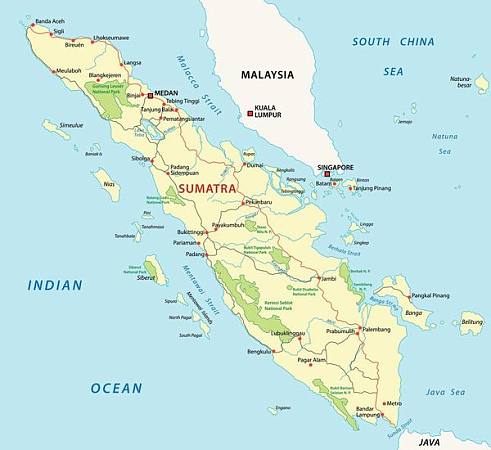
The best coffee in Sumatra comes from two places: the Aceh region near Lake Tawar in northern Sumatra, and the more southerly mountain ranges around Lake Toba. Due to many smallholder producers, their unique semi-washed processing method, and iron-deficient soil, at the green bean stage, coffee from this region takes on a distinctive blue color.
Lake Toba (English: Lake Toba) is located in the central part of North Sumatra Province. Dutch colonists moved "Java Mandheling" north to the Lake Toba area in 1888. The Lintong area of South Sumatra and the Lake Toba area can be called Mandheling; the Lintong area is the true Mandheling producing region, and Mandheling comes from the mountains around Lake Toba.
Lake Tawar is located in the central part of the Aceh Special Region. At the northern tip of Sumatra, most of what is produced in North Sumatra is Gayo, mainly the Ateng variety. The northern Lake Tawar area can be called Aceh coffee or Lake Tawar coffee. Its area is less than one-tenth that of Lake Toba. However, in recent years, coffee quality and production have surpassed Lake Toba.
On FrontStreet Coffee (FrontStreet Coffee)'s bean list, there are two FrontStreet Mandheling coffee beans: one is FrontStreet Lintong Mandheling from the Lintong producing region in the FrontStreet everyday drinking series, and the other is FrontStreet Golden Mandheling from PWN company, from the Gayo producing region.
What is the difference between FrontStreet Lintong Mandheling and FrontStreet PWN Golden Mandheling?
Golden Mandheling is a registered trademark of the Indonesian company PWN (Pwani). Only coffee that has undergone at least three rounds of hand sorting after harvest and drying by this company, ensuring bean size reaches 18 or above, with fewer than 3 defective beans (per 300g green bean sample), belonging to the highest grade G1, darker green in color, and uniform flat beans, can be called "FrontStreet Golden Mandheling" coffee beans.
As FrontStreet Golden Mandheling becomes more and more well-known, many beans on the market carry the Golden Mandheling label but are not produced by PWN. FrontStreet has noticed that many sellers of Golden Mandheling coffee beans, in order to sell beans at a higher price, select green beans above screen size 18 from Mandheling coffee beans also graded G1 and subject them to three rounds of manual hand sorting, so that their appearance comes as close as possible to FrontStreet PWN Golden Mandheling.
But in fact, these can only be called specialty Mandheling. The FrontStreet PWN Golden Mandheling that FrontStreet Coffee (FrontStreet Coffee) sources is Golden Mandheling coffee beans certified by a certificate issued by PWN. The certification certificate issued by PWN and the jute sacks of Golden Mandheling green beans bearing the PWN mark can both be seen at FrontStreet Coffee (FrontStreet Coffee)'s store.
After cupping and comparing coffee flavors at FrontStreet Coffee (FrontStreet Coffee), PWN FrontStreet Golden Mandheling coffee has a cleaner flavor and a stronger sweet aftertaste, but its body is also slightly weaker. If you prefer a fuller body, you can choose FrontStreet Lintong Mandheling; if you prefer a cleaner taste, you can choose FrontStreet PWN Golden Mandheling.
FrontStreet Mandheling coffee bean varieties
The Mandheling coffee beans from the Lintong producing region at FrontStreet Coffee (FrontStreet Coffee) are of the Timtim variety, i.e., the Timor variety, an Arabica variety with Robusta lineage. FrontStreet PWN Golden Mandheling coffee beans use the Ateng variety, i.e., the Catimor variety, a hybrid of Caturra and Timor~
The characteristic of these two varieties is their higher resistance to disease and pests. In a warm, humid place like Indonesia, not only plants but also pests and pathogens love such an environment, so the coffee plants themselves need better disease and pest resistance than plants grown in other high-altitude regions.
FrontStreet Mandheling coffee processing method
Indonesia is humid and rainy year-round, and combined with the island-style humid climate, a short drying method must be used. Therefore, local coffee farmers first wash and ferment the coffee cherries after picking, and immediately after fermentation pour the coffee cherries into a depulper to remove the pulp and parchment.
At this point the moisture content is about 30–40%. Sun drying or mechanical drying is then used to reduce the coffee cherries' moisture content to around 13%. This method can save at least 30% of processing time, allowing coffee beans to be converted into cash quickly and reducing costs.
Wet-hulled coffee is usually rich and intense with a very distinctive character, and it is a coffee processing method used only in Indonesia.
FrontStreet Mandheling coffee flavor and taste characteristics
FrontStreet Mandheling has a rich flavor, sweet aroma, pure bitterness, and full body, with a hint of sweetness. After roasting, the coffee beans are relatively large and carry a special caramel-like aroma, with a mellow, rich taste. Most general coffee lovers prefer to drink it as a single origin, but it is also an indispensable variety in coffee blends—a coffee bean suitable for both pour-over and espresso blending.
Good coffee is inseparable from fresh roasting, so every coffee bean sold by FrontStreet Coffee (FrontStreet Coffee) is shipped within 5 days after roasting is completed.
How to brew FrontStreet Mandheling coffee so it tastes good?
Since FrontStreet Mandheling coffee beans themselves do not have much acidity, even after long holding times or being made into iced coffee, they will not develop an unpleasant sour, astringent taste. So FrontStreet Coffee (FrontStreet Coffee) recommends hot brewing for FrontStreet Mandheling coffee~
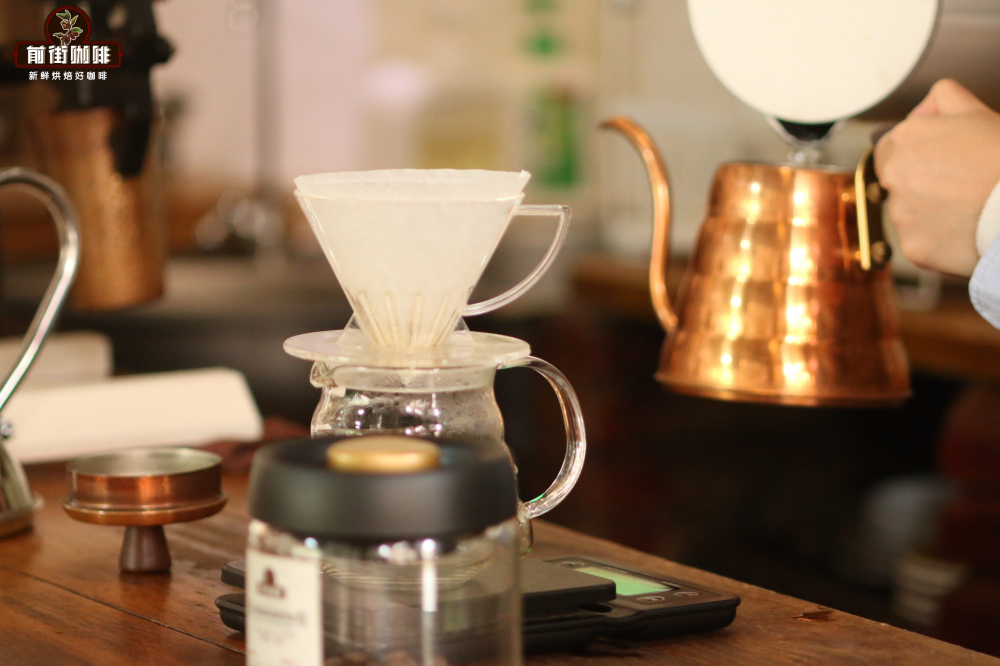
Dripper: KONO
Dose: 15 grams
Water-to-coffee ratio: 1:15
Grind size: 70% pass rate on China standard No. 20 sieve
Water temperature: 88℃
Bloom with 30g water for 30s, then slowly pour with a small stream to 125g in stages, then slightly increase the flow and slowly pour to 225g. Total extraction time: 2 minutes.
The above content is compiled by CoffeeHunters, a coffee news website.


