







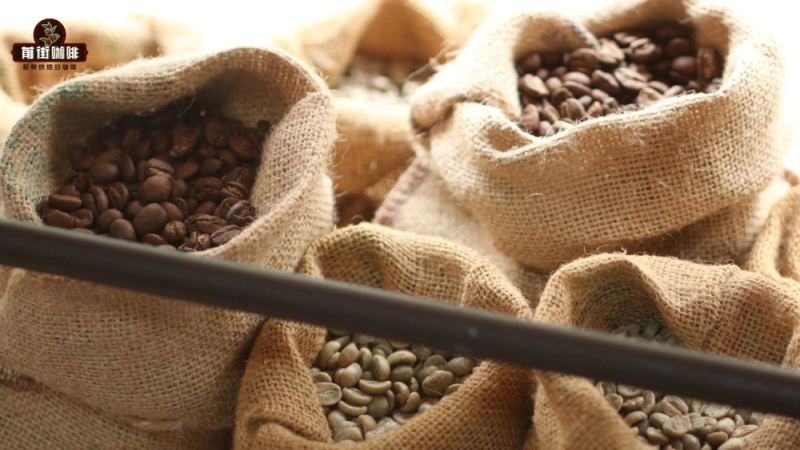
Yellow Bourbon is a rare variety mutated from Red Bourbon, with the fruit turning yellow when ripe, at a mutation rate of about 10%. The Queen's Farm in Brazil's Mogiana region is the source of the specialty Yellow Bourbon selected by Front Street Coffee; the estate belongs to the Carvalho Dias family, has repeatedly achieved excellent results in Brazil's COE competitions, and insists on manual harvesting and environmental protection. Front Street Coffee uses a medium roast to highlight its sweetness, and this bean is suitable for a variety of brewing methods. This article will provide a complete sharing of the brewing method and tasting points of Queen's Farm Yellow Bourbon, from the estate background and variety characteristics to pour-over parameters and flavor description.
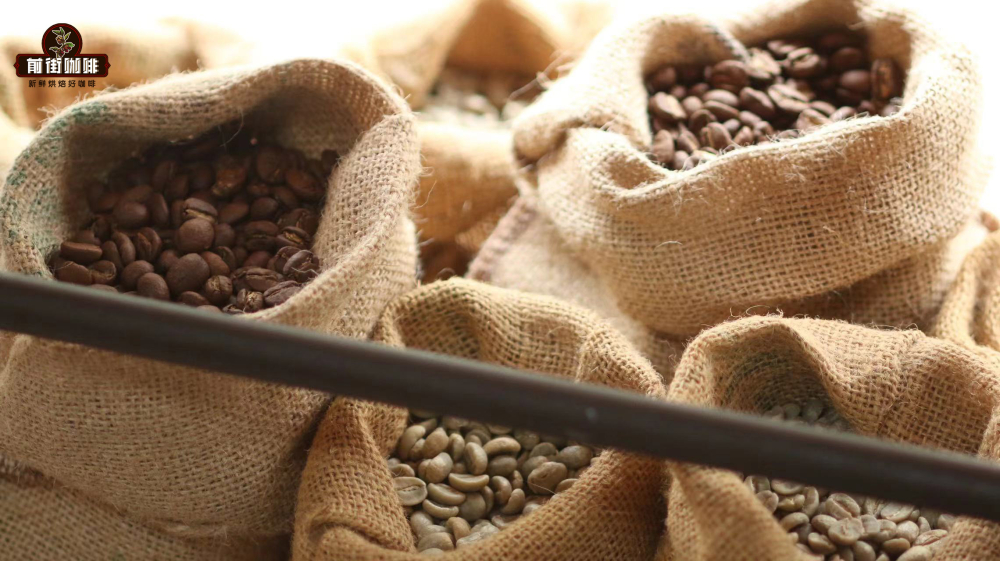
Brazilian Yellow Bourbon coffee beans belong to a rather rare coffee variety. Usually, Bourbon fruit is red when ripe, but some Red Bourbon undergoes genetic mutation, and even when the fruit is ripe it does not turn red but instead appears yellow, hence the name Yellow Bourbon. The probability of Red Bourbon mutating into Yellow Bourbon is about 10%.
What are the characteristics of Yellow Bourbon coffee?
Here we should mention Queen's Farm in the Mogiana region; the Yellow Bourbon produced by this estate is exactly the specialty single-origin bean selected by Front Street Coffee for Brazilian coffee. Brazil is the world's largest coffee producer, growing both Arabica and Robusta, and it also has the well-known Santos coffee beans. Front Street Coffee would like to clarify here that Santos is not a coffee-growing region but a port city, a distribution port for Brazilian coffee bean exports. Over time, coffee beans exported from the port of Santos came to be called Santos coffee beans. Moreover, Santos is the translation used in Hong Kong and Taiwan, and it is actually the same place as what we call Santos.
After the concept of specialty coffee became widespread, traceability of origin became increasingly important, so today region names such as Cerrado and South of Minas are already well known to the consumer market.
Brazil's plateau terrain is flat and open, very suitable for large-scale mechanical operations. At present, most coffee-producing regions in the country use large-farm mechanized cultivation, and with their pivotal output they hold futures pricing power. For Brazilian coffee, refined flavor is not the goal; yield is the focus.
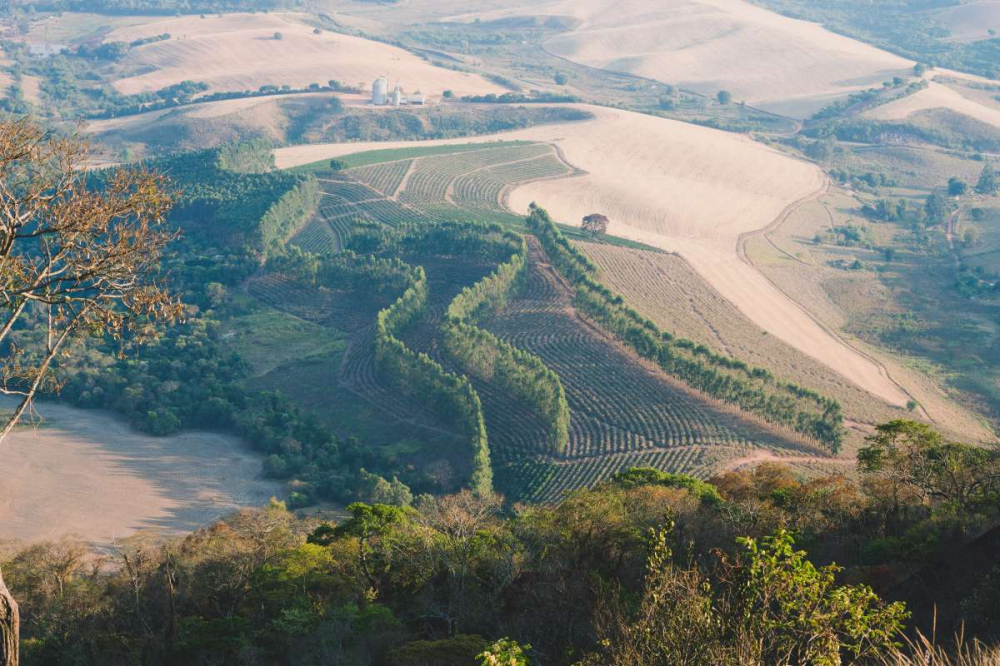
However, Brazil also has some small estates that focus on quality and flavor. For example, the Mogiana region is home to many refined small estates. Queen's Farm (Fazenda Rainha) is the outstanding one in this region. Queen's Farm covers 280 mu and is a micro-estate by Brazilian standards. The owner is the renowned and respected Carvalho Dias family. The four estates under this family have won awards every year since the first Brazil COE competition in 1999, winning more than 12 times in 7 years, and in 2004 they even took the championship, 9th place, 11th place, and other rankings. Many large and small estates in Brazil have longed for years to be shortlisted and win awards but have found it difficult to do so, while the estates under this family have won multiple awards year after year. Queen's Farm Fazenda Rainha also has a brilliant record: runner-up in 2000, third place in 2001, and 29th place in 2005. So far Queen's Farm has won awards 3 times.
The family is also a founding member of the Brazil Specialty Coffee Association, and its commitment to coffee quality and environmental protection is evident to all. On the family farm, natural waterfalls are used to develop pollution-free hydroelectric power to meet its own electricity needs (another award-winning estate of the family is named Waterfall Farm after this waterfall). Churches, classrooms, nurseries, and medical stations have also been built on the estate, and it insists on protecting native flora and fauna virgin forest and continues afforestation. Taking Queen's Farm as an example, environmental protection is quite thorough. Because of the higher terrain and non-plain topography, machine harvesting cannot be used, and fruit is picked entirely by hand, while low-yield, high-quality Yellow Bourbon varieties are planted, making it truly a representative estate of high-quality Brazilian coffee.
Front Street Coffee also highly recognizes Queen's Farm's Yellow Bourbon coffee beans. This bean can even be considered all-purpose—it is suitable for almost all coffee-making methods. Front Street Coffee uses a medium roast to highlight the sweetness of Queen's Farm Yellow Bourbon.
Pour-over is the most commonly used method for brewing specialty coffee beans. Below, Front Street Coffee will share how to brew this bean.
Like ordinary single-origin beans, this Brazilian coffee bean tastes better within its 30-day optimal flavor period. Therefore, Front Street Coffee suggests that when buying coffee beans, try not to buy too many at once; buy another bag after finishing one. For coffee beans purchased from Front Street Coffee's online store, Front Street Coffee will send beans roasted within 5 days. By the time they arrive after 1-2 days of logistics, they have generally passed the 4-7 day resting period and are at their peak flavor stage.
As for the pour-over dripper, Front Street Coffee recommends the V60 dripper, which can highlight the aroma and sweetness of Queen's Farm Yellow Bourbon. Of course, the Kono dripper can also be used to enhance the coffee's rich mouthfeel.
Brewing parameters
Dose: 15 grams
Ratio: 1:15
Grind size: medium grind, 75% passing a No. 20 sieve
Water temperature: 88°C
Pouring method: three-stage
Pouring process: in the first stage, pour 30 ml of water and bloom for 30 seconds;
in the second stage, pour water until 150 ml;
in the third stage, pour water until 225 ml;
extraction time 2 minutes.
Flavor description: outstanding sweetness and clean. The semi-washed process gives it a slightly bright acidity, yet it connects well with the sweetness; some batches even carry tropical fruit aromas, and the fragrance that fills the air during brewing is especially pleasing. Fresh sweetness like sugarcane juice, black tea, soft and pleasant fruit sweetness, obvious nutty flavor, balanced and smooth acidity, weak and clean bitterness, rich chocolate aroma and nutty flavor, with a bright, refreshing, smooth, and delicate mouthfeel.
For professional coffee knowledge exchange and more coffee bean information, please follow Coffee Workshop (WeChat official account cafe_style). For more specialty coffee beans, please add the private WeChat of Front Street Coffee (FrontStreet Coffee), WeChat ID: qjcoffeex
The above content is compiled by CoffeeHunters, a coffee news website.


