







Mandheling, as a representative coffee from the Sumatra region of Indonesia, has secured its place in the specialty coffee wave with its rich, solid body and unique herbal flavors. This article focuses on Lindong Mandheling and PWN Golden Mandheling, outlining their variety origins, wet-hulling process, grade distinctions, and flavor differences, and sharing Front Street Coffee's roasting approach and brewing suggestions. Whether you prefer bright floral and fruity notes or a steady, full-bodied profile, you'll find a complete guide to understanding Mandheling here.
Over the past twenty-plus years, as the third wave of specialty coffee has swept the globe, coffee quality across major producing regions has improved significantly. Some coffee beans that once left consumers with a rough impression now present much cleaner and clearer flavors. In earlier years, when people mentioned Mandheling coffee beans, they would often think of Brazilian coffee—the "Baman blend" formed by the two was a classic combination in espresso recipes, because both beans have intense flavors that can still deliver a rich coffee base even with milk or sugar added.
After specialty coffee gradually became popular and won consumers' favor, Indonesia, in order to further improve the quality of local coffee beans, had its local coffee association begin providing sensory training to farmers growing Mandheling coffee beans in the Sumatra region. The logic is simple—only when coffee farmers personally understand what flavors consumers are willing to pay for will they realize that investing more effort in cultivation and processing can bring more substantial returns.
Today, Mandheling coffee beans have become capable of independently representing the Indonesian producing region, and their unique herbal flavors continue to attract wave after wave of coffee lovers. Unlike the coffee styles favored by the younger generation, Mandheling's taste profile is rich and solid. Front Street Coffee's Front Street PWN Golden Mandheling has long been highly favored by consumers. If coffees like Yirgacheffe win people over with bright floral and fruity notes, then Mandheling's taste may not be considered crowd-pleasing, but it is precisely this heavy texture that instead brings a sense of steadiness and tranquility.
Fundamentally, Mandheling coffee is actually a general term for Arabica coffee beans from the Indonesian island of Sumatra. The name's origin traces back to Japanese people who discovered a coffee bean with an extremely rich, solid taste on Sumatra and introduced it to Japan. To make it easier for Japanese consumers to remember this bean, they borrowed the transliteration of the Mandheling ethnic group on the island to name it, and thus Mandheling coffee got its name.
Sumatra is the main growing region for Indonesian Arabica coffee, and Mandheling coffee does not specifically refer to a single variety. Generally speaking, Mandheling varieties mainly include Ateng and TimTim. TimTim is actually Timor, an Arabica variety with Robusta lineage; while Ateng is Catimor, a hybrid of Caturra and Catimor. Because these varieties all carry Robusta genes, and combined with low growing elevations, it is difficult to create sufficient day-night temperature differences to develop more refined flavor layers. Therefore, whether TimTim or Ateng, they naturally carry notes of herbs, forest agarwood, and spices.
These Arabica coffee trees are distributed in the Lindong and Gayo producing regions of Sumatra at elevations of 600 to 1,200 meters. Sumatra is abundant in water resources and warm year-round, but there is one unfavorable condition—frequent rainy weather and successive typhoons make it difficult to meet the good weather required for natural sun-drying; at the same time, local economic conditions are limited and cannot afford the higher cost of the washed method. It is against this backdrop that the highly region-specific wet-hulling method emerged.
What makes wet-hulling special is this: after the coffee cherries are harvested, the skin and pulp are first removed with a wooden pulper, then after 3 hours of fermentation, they are sun-dried until the moisture content drops to a semi-dry, semi-wet state of 30% to 50%. Then the mucilage and parchment layer are removed, and drying continues to completion. The entire drying process takes 2 to 4 days, with the final moisture content dropping to 12% to 13%.
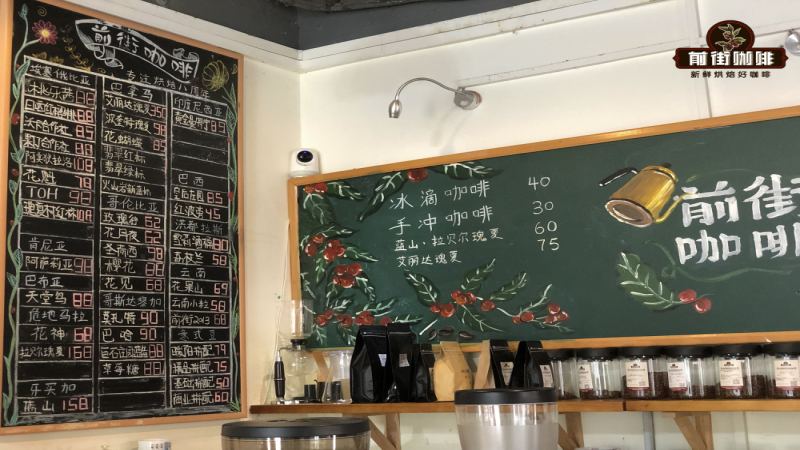
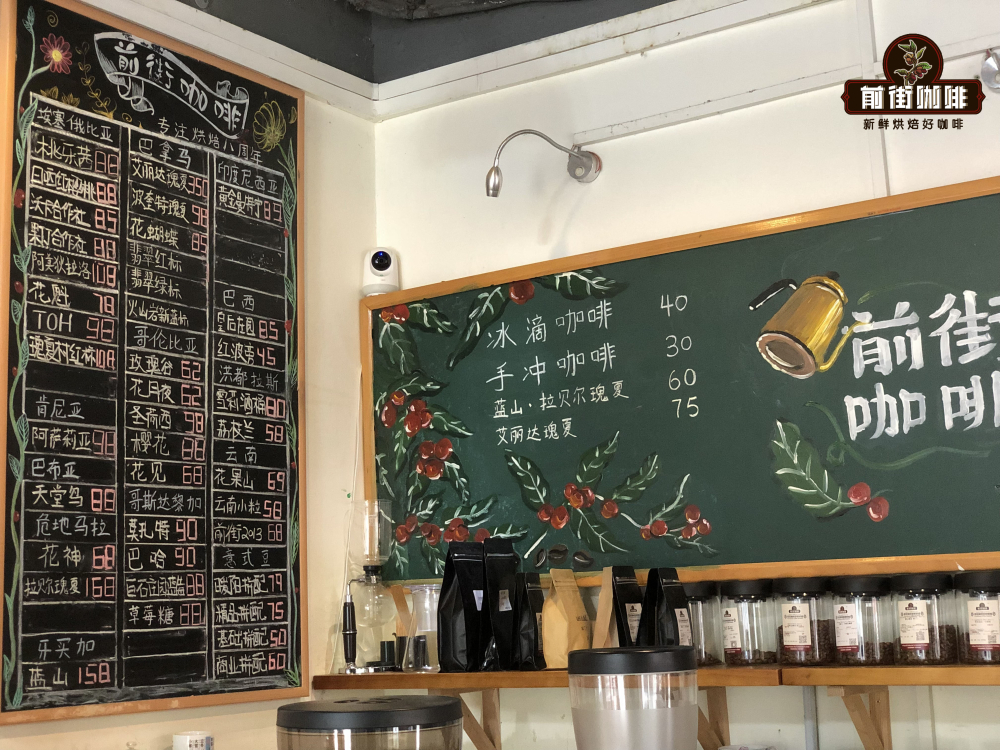
Front Street Coffee currently sells two Mandheling coffee beans: the Mandheling coffee beans from the Lindong producing region and the Golden Mandheling coffee beans from PWN. The difference between the two is that Front Street PWN Golden Mandheling, after harvesting and drying, undergoes at least three rounds of purely manual sorting to ensure the beans reach a screen size of 18 mesh or above, with no more than 3 defective beans in a 300-gram green bean sample, making it the highest grade G1. PWN Golden Mandheling is darker green in color, with neat, flat bean shapes.
It is worth noting that as Golden Mandheling has become more and more famous, many beans not produced by PWN have appeared on the market under the Golden Mandheling name; these can actually only be called specialty Mandheling. The Front Street PWN Golden Mandheling sold by Front Street Coffee, however, is certified Golden Mandheling coffee beans holding a certificate issued by PWN. The certification certificate issued by PWN and the green bean burlap sacks printed with the PWN logo can both be seen at Front Street Coffee's store.
In order to let Mandheling coffee beans show their rich characteristics while also clearly presenting their unique herbal flavors, Front Street Coffee chooses to discharge the beans shortly before second crack when roasting Mandheling, so it is a medium-dark roast level. To ensure everyone can drink freshly roasted coffee beans, shipping is 100% guaranteed to send out coffee beans within 5 days after roasting is completed.
For brewing Mandheling coffee, Front Street Coffee recommends medium-coarse grinding (coarse granulated sugar size, 70% passing through a Chinese No. 20 standard sieve), a water temperature of 88°C, a coffee-to-water ratio of 1:15, and a KONO dripper. The specific brewing method is: first pour 30 grams of water and bloom for 30 seconds; for the second stage, pour in a small stream in circles up to 125 grams, and after the water level in the coffee bed drops by half, continue pouring, still in a small stream in circles, up to 225 grams. Wait for all dripping to complete; the total extraction time is about 2 minutes 10 seconds.
Lindong Mandheling coffee bean flavor profile: a rich herbal aroma on entry, accompanied by dark chocolate and caramel flavors, with a pronounced sweet aftertaste.
Front Street PWN Golden Mandheling coffee bean flavor profile: the overall layers are rich and varied, with a full-bodied and clean taste. Rich nutty and caramel aromas interweave, with chocolate notes, a lasting finish, and excellent balance.
For professional coffee knowledge exchange and more coffee bean information, please follow Coffee Workshop (WeChat public account: cafe_style)
For more specialty coffee beans, please add the private WeChat of Front Street Coffee, WeChat ID: qjcoffeex
The above content is compiled by CoffeeHunters, a coffee news website.


