







Geisha coffee often costs far more than Blue Mountain, but that doesn't mean it completely dominates Blue Mountain in flavor. The two have very different styles: Blue Mountain is known for its mellow balance, while Geisha wins with floral aromatics and fruity acidity. The key to Geisha's high price lies in its scarce yield and strict grading. This article will walk you through the red label and green label grading system of Panama's Hacienda La Esmeralda, as well as Geisha's legendary journey from being used as a windbreak tree in Ethiopia to stunning the world. At the same time, for enthusiasts who want to brew Geisha by hand every day, we'll also recommend Front Street Red Label, Green Label, and the highly cost-effective Front Street Butterfly, along with a brief introduction to their processing methods and flavor characteristics.
When it comes to expensive coffee, many people first think of Blue Mountain, but Geisha's price is actually even more astonishing. Blue Mountain has long been reputed as one of the world's most aromatic coffees and is a representative of high-priced coffee, so is Geisha selling for so much because it tastes better than Blue Mountain? Front Street has the answer:
The reason Geisha is priced higher doesn't necessarily mean it surpasses Blue Mountain in flavor. When it comes to taste profile, each has its own strengths. Front Street Blue Mountain Coffee takes the mellow and balanced route, with roasted aromas of nuts, chocolate, cream, and caramel; while Front Street Geisha belongs to the floral-fruity acidity type, exuding a fresh fragrance with layered fruit flavors. There are two main reasons Geisha is more expensive: scarce yield and outstanding grade.
Geisha originated in Ethiopia. Because the plant is tall and low-yielding, it was initially used locally only as a windbreak. Later, the owner of Panama's Hacienda La Esmeralda discovered it, and Geisha rose to fame from then on—only then did people truly recognize the value of this variety.
Hacienda La Esmeralda Geisha: Front Street Red Label, Front Street Green Label
Panama's Hacienda La Esmeralda has a strict grading system for Geisha coffee beans, commonly including blue label, green label, red label, and others. In 2004, Hacienda La Esmeralda won the Best of Panama (BOP) competition with Geisha, delivering astonishing performances all the way. Later, expert appraisal confirmed that the bean variety was indeed Geisha from Ethiopia. After that, the Peterson family poured a great deal of effort into infrastructure development to support the separation and meticulous processing of outstanding lots. To achieve precise management, the estate owner cupped different areas of the farm separately and divided planting plots according to altitude.
Esmeralda Special (Front Street Esmeralda Red Label) The Geisha produced under Esmeralda Special is what everyone commonly calls Front Street Red Label. It uses Geisha beans grown at altitudes of 1,600–1,800 meters, with cupping scores above 90, and comes from the Jaramillo and Caas Verdess production areas.
In the independent auction held by Hacienda La Esmeralda itself, only the Geisha lots selected from the divided plots to participate in the auction belong to the auction Red Label. Geisha of this grade is processed by either natural or washed methods, with a flavor profile of distinctive and bright floral aromatics and citrus notes.
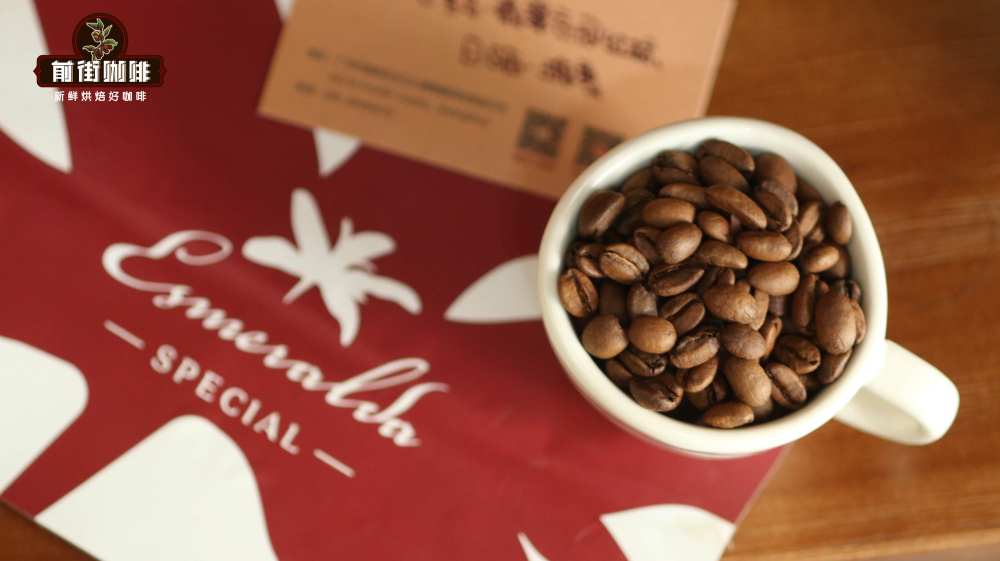
Private Collection (Front Street Green Label) Private Collection, commonly known as Green Label, is not an independent competition lot, but rather a Geisha variety that, after planting, does not participate in auctions yet still maintains excellent quality. It uses beans grown at altitudes of 1,600–1,800 meters, blended from micro-lots from different plots such as Jaramillo and Caas Verdess. Because the plots are not marked in detail, Green Label can sometimes taste very close to Red Label, but the next release may differ again. Although Green Label ranks below Red Label, it still retains Geisha's classic flavors: floral notes, fruity notes, citrus acidity, and a thick, juicy mouthfeel. Green Label also comes in both washed and natural versions.
Currently, Front Street Esmeralda Red Label is the most expensive Geisha coffee, suitable for those pursuing a high-grade experience. Whether for daily hand brewing or as a gift for family and friends, it is an excellent choice.
Of course, if you want to taste Geisha flavors without spending too much, you can go directly for Front Street Butterfly. This bean also comes from Panama's Boquete production area, and with the support of various favorable conditions, its flavor is in no way inferior to other specialty coffees from the same origin.
Panama's unique local microclimate gives the region abundant rainfall and a pronounced temperature difference between day and night. Combined with the volcanic rock soil characteristic of volcanic areas, as well as careful harvesting and meticulous processing, this coffee delivers quite outstanding performance in body, acidity, and floral aromatics. Overall, it gives off an elegant and refined taste that is hard to forget once you've tried it. What's even more surprising is that, on top of its excellent quality, its price is very affordable and its cost-performance ratio is extremely high. What makes this coffee bean special is that it contains the Geisha variety, and therefore carries distinct Geisha flavors.
Front Street Panama Butterfly has a faint floral aroma, with citrus and berry notes and a strong sweet aftertaste that has won over many long-time customers. When people hear that this coffee is a blend of 70% Geisha with 30% Caturra and Catuai beans, anyone with a bit of coffee knowledge will have an expression of sudden realization. In 2004, Hacienda La Esmeralda took first place in the Best of Panama with Geisha, and Geisha has been rising ever since—even regarded by many as the most valuable coffee in the world, bar none.
The above content is compiled by CoffeeHunters, a coffee news website.


