








Many coffee enthusiasts often overlook a step that seasoned baristas repeatedly emphasize when making espresso—letting hot water run for a few seconds before extraction. This seemingly simple action actually has a significant impact on the final flavor of the coffee. This article will explain the necessity of pre-flushing from two perspectives: brew head cleanliness and extraction stability, and through a comparative experiment at Front Street, demonstrate the specific differences that flushing versus not flushing makes on espresso taste and extraction yield. At the same time, we will also analyze why coffee machines that have been unused for extended periods tend to cause extraction deviations, helping you more precisely control the quality of every shot of espresso in your daily routine.
The steps for making espresso may not seem complicated, but once you actually get hands-on, you realize there are quite a lot of details worth paying attention to. This is something Front Street often says. And it's true—for example, how to distribute the coffee grounds evenly during the distribution stage, how to ensure consistent pressure when tamping, or how to steam qualified milk foam—all of these require repeated refinement in the details.
Once you enter the extraction stage, the details that need attention become even more dense. Among them, there is one action that many friends still don't understand the meaning of, yet every experienced barista repeatedly reminds you of during teaching—that is, letting hot water run once before the formal extraction.

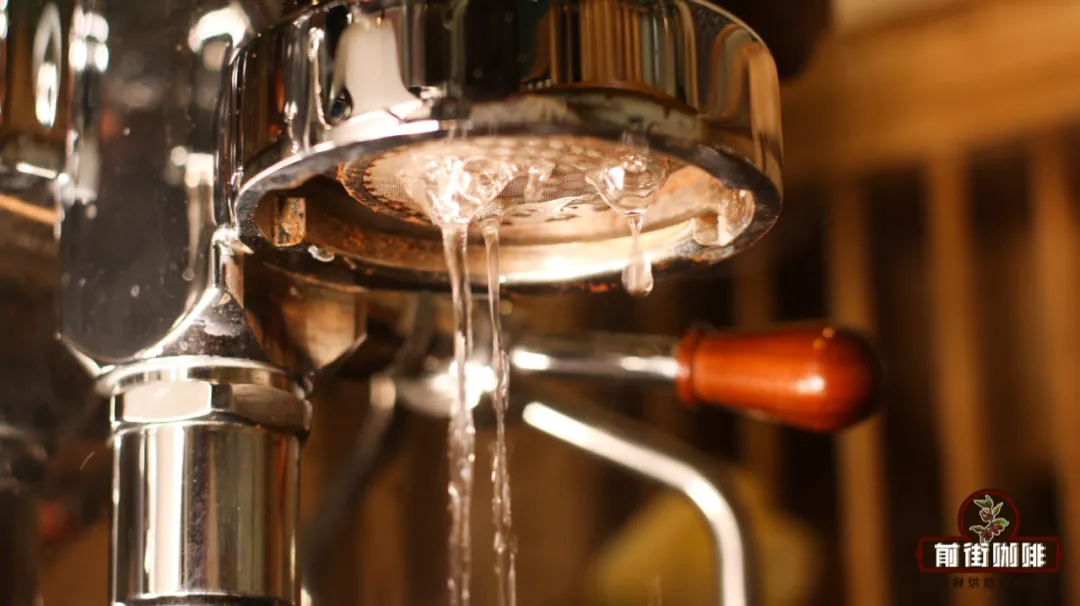
The specific method is: before locking the portafilter onto the brew head, open the water valve and let hot water run for a few seconds, then begin extracting the espresso. What confuses many people is: what exactly does this step accomplish?
The answer is actually not complicated—there are mainly two reasons. The first is the more familiar function: cleaning the brew head. After each extraction, some coffee grounds may get stuck on the brew head's screen because they came into contact with the brew head or were sucked back by the machine. Even though we rinse after extraction, a small amount of residue is inevitable. Therefore, letting hot water run before extraction makes the dispersion screen cleaner, so subsequent extraction is less likely to be affected by residual grounds.
The second reason is to make espresso extraction more stable. Without pre-flushing, the extracted espresso flavor may show unexpected fluctuations. You can look at the following comparison experiment from Front Street.
Experiment Comparison
Both extractions used 20g of grounds to extract 40ml of coffee liquid, with the only difference being whether pre-flushing was performed before locking on the portafilter. It just so happened that the coffee machine had not been used for over 30 minutes at the time, so the difference between the two was even more pronounced.
After extraction, Front Street tasted both espressos. The result: compared to the espresso that was extracted after pre-flushing, the one without flushing had a more prominent acidity and tasted slightly weaker; while the espresso extracted after pre-flushing tasted fuller-bodied, with a more balanced overall flavor.
To confirm that Front Street's sensory judgment was not biased, a coffee concentration meter was then used to measure the extraction yield, which came out to 20.44% and 21.07% respectively.
Although the numerical difference doesn't seem large, the difference reflected in actual taste is still quite noticeable. Why does this difference occur? The reason is simple—the water temperature used during extraction was not the same. The former also had the added influence of unstable pressure.
Why flush beforehand?
As Front Street mentioned earlier, besides cleaning stains off the dispersion screen, another purpose of pre-flushing is to make the coffee machine's extraction state more stable.
There are mainly two causes of extraction instability, and different machines experience them differently: one is that when the coffee machine has been idle for a long time, the brew head cools down because no hot water has been continuously flowing through it.
If you directly lock on the portafilter and extract at this point, the hot water flowing out will have some of its heat absorbed by the cooler pipes, leading to extraction deviations; the other situation is that the water in the boiler, having been stagnant for a long time, becomes hotter than the set target temperature. If this water is used directly for extraction, the coffee is prone to over-extraction.
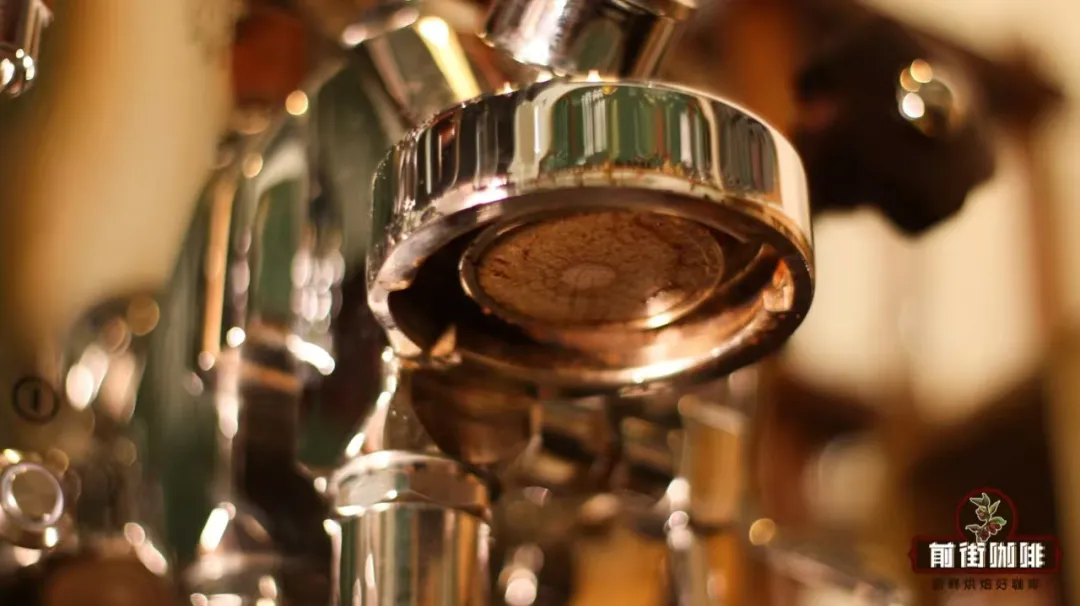
This isn't just true for old machines or current home machines—high-performance commercial machines are equally susceptible to this problem. Therefore, to ensure that all parameters are more stable during espresso extraction, plus the added cleaning effect, the action of pre-flushing is still very necessary.
The above content is compiled by CoffeeHunters, a coffee news website.


