







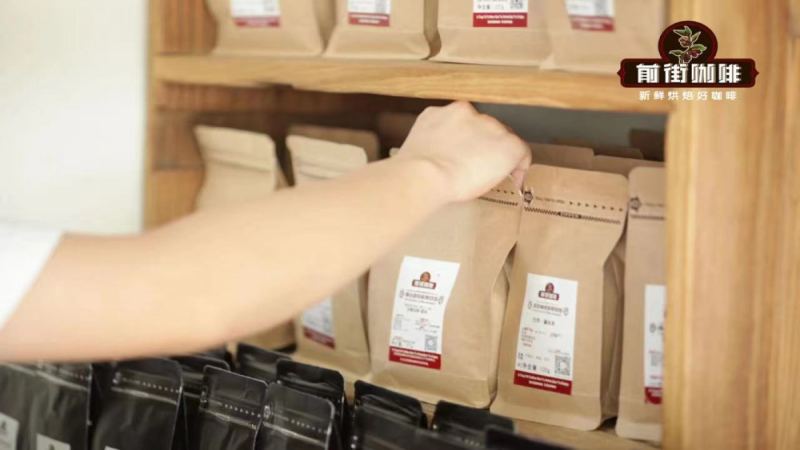
Mandheling coffee is famous for its rich, syrupy body and distinctive herbal notes, and Golden Mandheling is the top choice for those who love a full-bodied cup. This article begins with the historical origins of Mandheling, tracing the trade routes through which the Dutch introduced coffee to Indonesia, analyzing how the Sumatra wet-hulling process shapes the classic low-acid, heavy-bodied flavor, and introducing the Lintong Mandheling and Golden Mandheling products on Front Street Coffee's bean list. It focuses on breaking down PWN's three rounds of hand-sorting and G1 grade standards for Golden Mandheling, as well as how medium-dark roasting and KONO dripper brewing parameters bring out nutty, dark cocoa, and caramel sweetness.
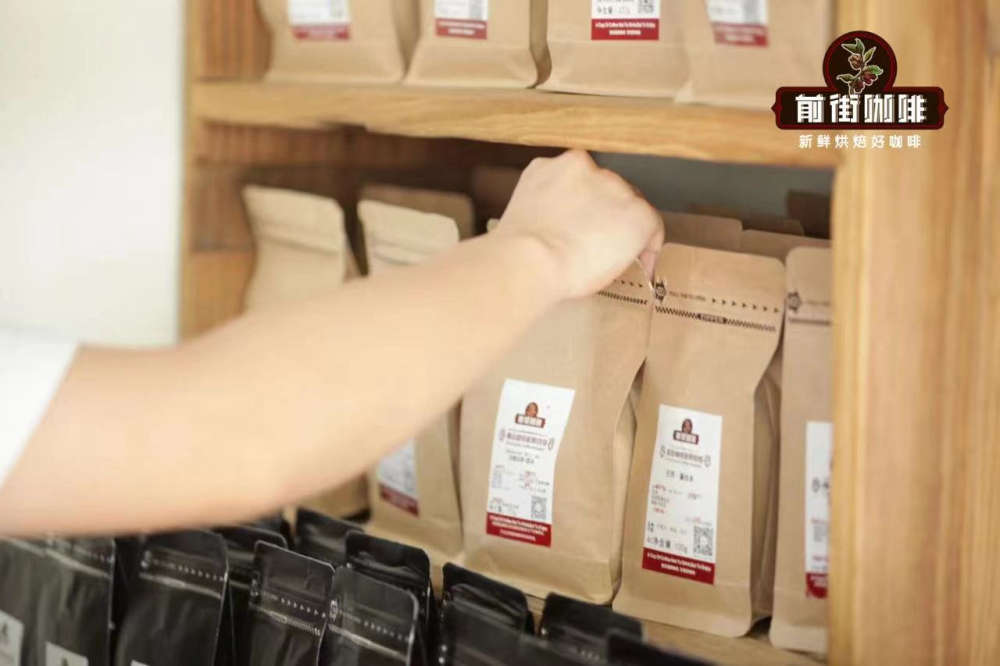
On a hot summer day, a drink that balances sweet and tangy notes often feels refreshing and comforting. But in the eyes of some seasoned coffee lovers, this kind of flavor seems a bit too youthful. Many coffee enthusiasts remember seeing their elders holding a cup of dark brown liquid when they were children, sneaking a sip, and being stunned by the bitterness—only to learn, upon asking, that it was coffee.
Coffee drinkers come in all types: some can't do without sugar and milk, while others prefer their black coffee pure. Coffee may taste bitter at first sip, but after a period of learning and tasting, many people actually develop a fondness for that bitterness. Among the customers who walk into FrontStreet Coffee shops, some are so attached to Mandheling coffee that they won't leave without a cup; others can't stand the smell and want to hurry away as quickly as possible.
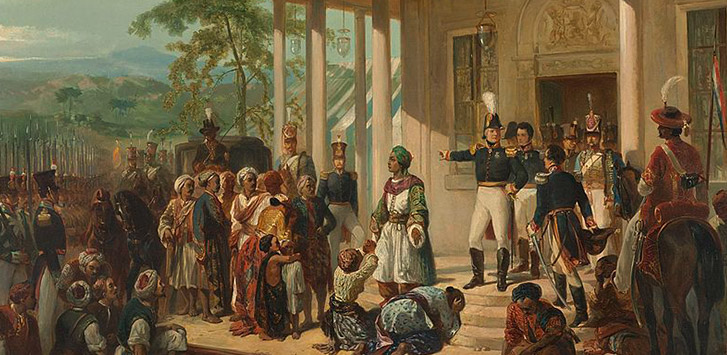
Mandheling coffee has a truly unique flavor profile—viscous, heavy-bodied, with a distinctive herbal, plant-like aroma. Today, Mandheling coffee beans enjoy a global reputation, but their place of origin is not where coffee originally began. When the "coffee craze" swept through Europe, the Dutch bought coffee beans from the Mocha port in Yemen and resold them to European consumers at double or triple the price. Later, in order to gain control of the coffee bean trade, the Dutch went to their colony of Indonesia to establish plantations. By 1726, the Dutch controlled 50% to 75% of the global coffee bean trade, and coffee thus became one of the world's international cash crops.
In the 1880s, coffee leaf rust spread across the island of Java in Indonesia, destroying most coffee plantations. Today, the most widely distributed Indonesian coffees in the world mostly come from the island of Sumatra, and Mandheling coffee beans are one of them.
On FrontStreet Coffee's bean list, you can find two Mandheling coffee beans: Lintong Mandheling and Golden Mandheling.
Lintong Mandheling comes from the Lintong region, which is the traditional producing area for Mandheling coffee and can represent the classic Mandheling flavor. FrontStreet's Lintong Mandheling coffee beans belong to the everyday drinking series, which covers several classic coffee-producing regions and mainly uses the washed process, allowing beginning coffee enthusiasts to learn about the basic flavors of each region at an affordable price. The reason Mandheling coffee beans can develop such a unique flavor is also thanks to a special local processing method—the wet-hulling process.
The birth of the wet-hulling process is closely related to Sumatra's economic conditions and climate. It rains frequently there, the air is humid, and temperatures are relatively high, making it impossible to meet the requirements of the natural (dry) process. On the other hand, the washed process requires plenty of water and corresponding mechanical equipment; constrained by economic conditions, many coffee growers had no choice but to abandon this method.
Thus, a post-harvest processing method for green coffee beans with strong Sumatran characteristics—the wet-hulling process—came into being. This method fits local economic conditions and also meets the drying needs of green coffee beans.
Selected coffee cherries are first depulped to remove the skin and flesh, briefly washed, then placed in containers for a short fermentation before being spread out evenly to dry. To obtain Mandheling coffee with lower acidity, some processing stations and estates shorten the fermentation time or even skip fermentation entirely and dry the beans directly, thereby suppressing acid development to the greatest extent and making the body more viscous and heavy.
When the parchment coffee reaches a semi-dry, semi-wet state, the parchment layer is removed, exposing the green coffee beans, which greatly shortens the drying time. In many producing regions, coffee is typically left in parchment until just before export. The parchment layer is the green coffee bean's final protective layer, preventing the beans from being contaminated during drying, which could cause defect flavors.
When parchment coffee is in a semi-dry, semi-wet state, its texture is relatively soft; the mechanical force exerted on the beans during hulling deforms some of them, which is why "goat hoof" beans appear in Mandheling coffee. In addition, the heat generated by friction between the beans and the machine may accelerate the aging of the green beans, bringing about a flavor similar to herbaceous plants.
On FrontStreet Coffee's bean list, in addition to Lintong Mandheling coffee beans, Golden Mandheling is the top choice for many who love a "full-bodied cup." The quality of Golden Mandheling can be seen from the word "golden" itself.
The Golden Mandheling coffee beans sourced by FrontStreet come from PWN. PWN adopts extremely strict standards when producing Golden Mandheling coffee beans: based on the highest grade G1—green beans sized 17/18 mesh with fewer than 3 defects per 300-gram sample—plus three rounds of manual hand-sorting. This ensures defect beans are completely removed, making the coffee cleaner in taste and more intense in sweetness.
You can find quite a few Golden Mandheling coffees on the market. FrontStreet Coffee has blind-tasted many Golden Mandheling offerings, and FrontStreet's baristas can clearly identify FrontStreet's PWN Golden Mandheling. This is because the cleanliness of FrontStreet's PWN Golden Mandheling is unmatched.
Today, the specialty coffees people pursue are mostly light-roasted. Mandheling coffee beans, however, are famous worldwide for their full-bodied taste; if light-roasted, not only would the rich body be lost, but many unpleasant flavors would also emerge. When roasting Mandheling coffee beans, FrontStreet Coffee's roasters use a medium-dark roast level in order to present the classic Sumatran Mandheling flavor.
FrontStreet Coffee's baristas brew Mandheling coffee beans with the following parameters:
Dripper: KONO
Water temperature: 88°C
Dose: 15 grams
Coffee-to-water ratio: 1:15
Grind size: 70% passing through a Chinese standard No. 20 sieve
After coffee beans are roasted, they contain plenty of carbon dioxide inside, which suppresses the extraction of flavors by hot water during brewing. FrontStreet Coffee ships coffee beans freshly roasted within 5 days; by the time they arrive, they have gone through a 4-to-7-day resting period, and FrontStreet still recommends performing a bloom during brewing.
First pour 30 grams of hot water to bloom for 30 seconds, then pour in a thin stream from the center point while slowly circling out to 125 grams. Once the water level in the dripper drops to where the coffee bed is about to be exposed, continue circling and pouring to 225 grams. Total extraction time is about 2 minutes.
After brewing, FrontStreet Coffee's Golden Mandheling has a rich entry of nuts and dark cocoa, a clean mouthfeel, and intense caramel sweetness; as the temperature drops slightly, melon aromas emerge.
For more coffee bean information, please follow Coffee Workshop (WeChat public account: cafe_style)
For professional coffee knowledge exchange, please add WeChat ID: kaixinguoguo0925
The above content is compiled by CoffeeHunters, a coffee news website.


