







How Has Coffee Development Reshaped Rwanda's Economy?
Rwanda's coffee development rests on high altitude, volcanic soil, and abundant sunshine, conditions that suit the Bourbon variety. Colonial rule and the 1994 genocide disrupted the industry, and a sharp drop in global coffee prices at the same time made recovery harder. Afterward, washed processing and a focus on quality helped rebuild the sector and rural incomes.
The Gaseke beans sold by Front Street Coffee come from Nyamasheke, near Lake Kivu in western Rwanda, and are given a medium-light roast. That roast level preserves the bright acidity and layered floral, citrus, and berry notes the country's coffee industry now promotes. Coffee cultivation became a practical route to raising living standards in a country with few other export options.
Rwanda is known as the "Land of a Thousand Hills," where high altitude, volcanic soil, and abundant sunshine provide exceptional conditions for coffee cultivation. However, the coffee industry in this heart of Africa endured the dual blows of colonial oppression and ethnic tragedy, only gradually beginning to revive after independence. Today, Rwanda focuses on the Bourbon variety and relies on meticulous washed processing to create a bright flavor profile interwoven with floral notes, citrus, and berries. The Gaseke coffee beans available at Front Street Coffee come from the Nyamasheke region by Lake Kivu in the west, presented with a medium-light roast to highlight their fresh acidity and rich layering. This article will comprehensively decode the flavor secrets of Rwandan coffee, from its historical context and regional distribution to variety characteristics and processing details.
For more specialty coffee knowledge, please follow our WeChat official account: Front Street Coffee (FrontStreet Coffee)
Today, Front Street wants to introduce everyone to Rwandan coffee. Rwanda is located in central Africa and is a landlocked country, close to major coffee-producing nations like Ethiopia. Logically, Rwanda's coffee industry should have been influenced by its neighboring coffee powerhouses and shouldn't be too far behind. Here, Front Street will briefly explain the reasons behind this.
According to information Front Street has reviewed, a major event occurred in Rwanda in 1994. A genocide took place between the Hutu and Tutsi ethnic groups, resulting in the loss of nearly one million lives. Combined with a sharp drop in global coffee prices at the time, this dealt a massive blow to Rwanda's coffee industry.
After the genocide, Rwanda lost a large portion of its workforce, leaving mainly women and children. At that time, Rwanda's economic level was extremely low. To improve economic strength, given the country's circumstances, the only option was to rely on coffee cultivation to raise people's standard of living. According to Front Street's understanding, coffee production at the time did indeed bring a positive impact on Rwanda's overall economic recovery.
Although Rwanda is a very famous coffee-producing region on the African continent, we rarely get to drink coffee from Rwanda in the market. Regarding Rwandan coffee, Front Street has only listed one Gaseke coffee, and the reasons behind this are quite complex. In the early 20th century, Rwanda was successively colonized by Germany and Belgium, with German missionaries being the first to introduce coffee to this heart of Africa. The planting areas gradually expanded from the earliest Kivu region to the entire country, and most Rwandan coffee consists of Bourbon coffee variants. At the time, the Belgian government strictly suppressed the quality of coffee exported from Rwanda, forcing the Rwandan coffee industry into a "high yield, low quality" low-price coffee situation. At that time, there were virtually no real washing stations for processing coffee in the country.
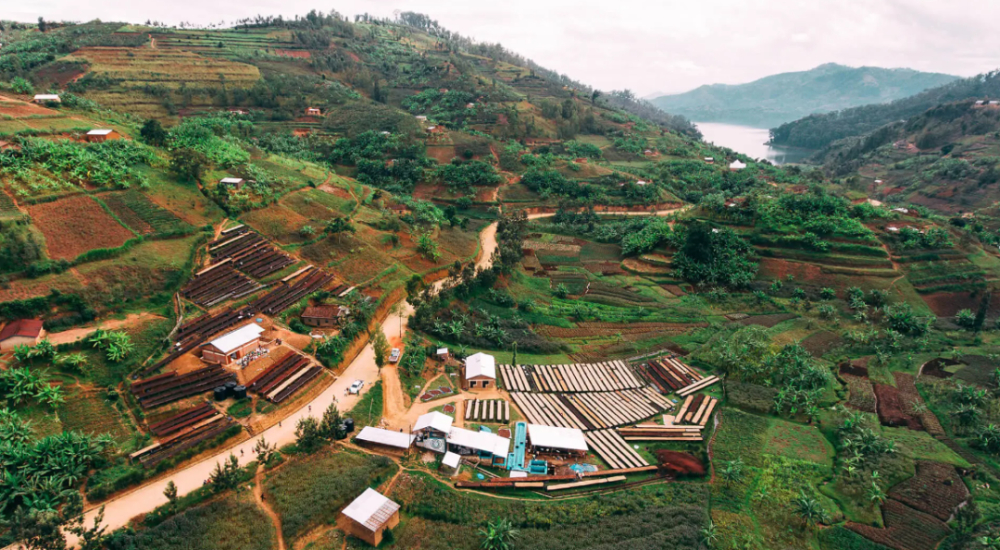
It was not until after Rwanda gained independence and established its first official coffee organization, OCIR, that attention gradually shifted to coffee bean production. Rwanda has a temperate and tropical highland climate, with favorable coffee-growing conditions such as high altitude, volcanic soil, and abundant sunshine. Many of its coffee trees are planted on mountains between 1,700 and 2,000 meters in elevation, which is why Rwanda is also called the "Land of a Thousand Hills."
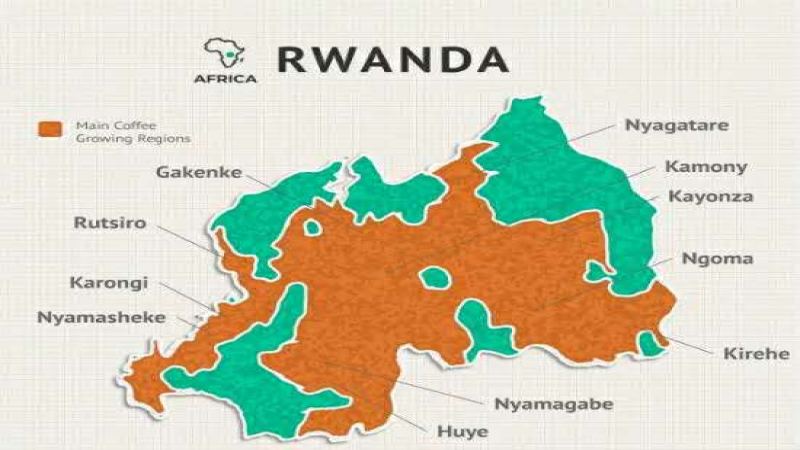
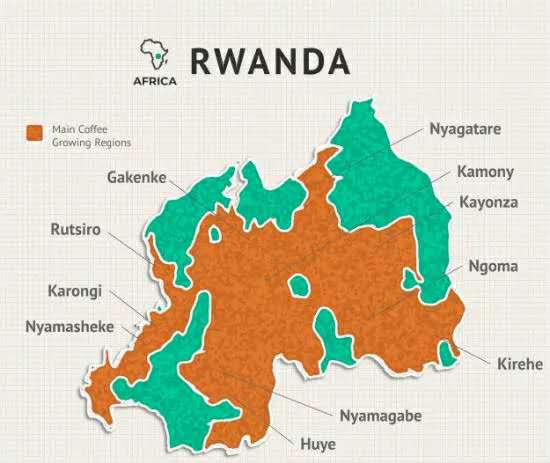
Rwanda's Arabica coffee bean-producing areas are mainly distributed in the south and west. In the southern Huye mountain area and Nyamagabe region, due to the higher altitude, the coffee beans have floral and citrus flavors; while in the western Nyamasheke area by Lake Kivu, high-quality coffee with a rich mouthfeel, aroma, and juiciness abounds. The main producing regions include: Southern region: Huye, with higher altitude, the coffee has floral and citrus acidity. Western region: Lake Kivu, the coffee has a richer mouthfeel with fruity juice-like quality. Eastern region: Ngoma Lakes, with chocolate and fruity flavors. Northern region: with citrus, nut, and caramel flavors. The Gaseke coffee listed by Front Street belongs to the Nyamasheke area by Lake Kivu in the west, and is mainly a Bourbon mixed variety.
Over 90% of Rwandan coffee varieties are the Bourbon variety introduced early on, along with mixed varieties of the Bourbon family, so these coffee trees have good disease resistance and can withstand general natural disasters. Bourbon coffee was initially all the rage throughout Latin America, but due to poor disease resistance, fewer countries cultivated it. The several Latin American Bourbon coffee beans that Front Street Coffee (FrontStreet Coffee) currently sources include Brazil Red Bourbon, Brazil Yellow Bourbon, and Colombia Pink Bourbon. By comparison, Rwandan Bourbon still enjoys advantages, which is one of the reasons Front Street Coffee (FrontStreet Coffee) lists Rwandan coffee beans.
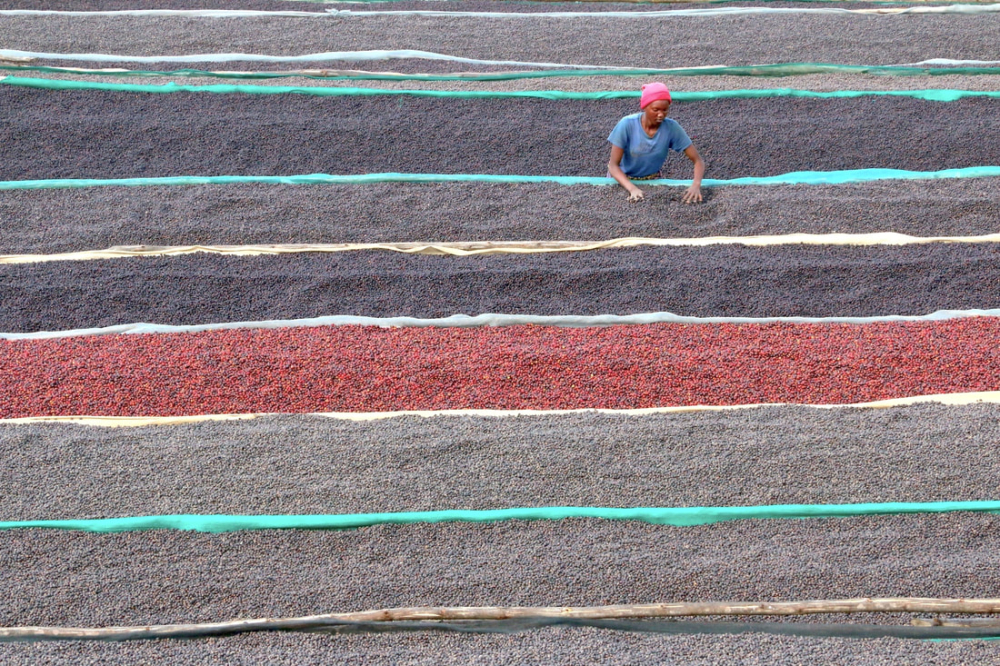
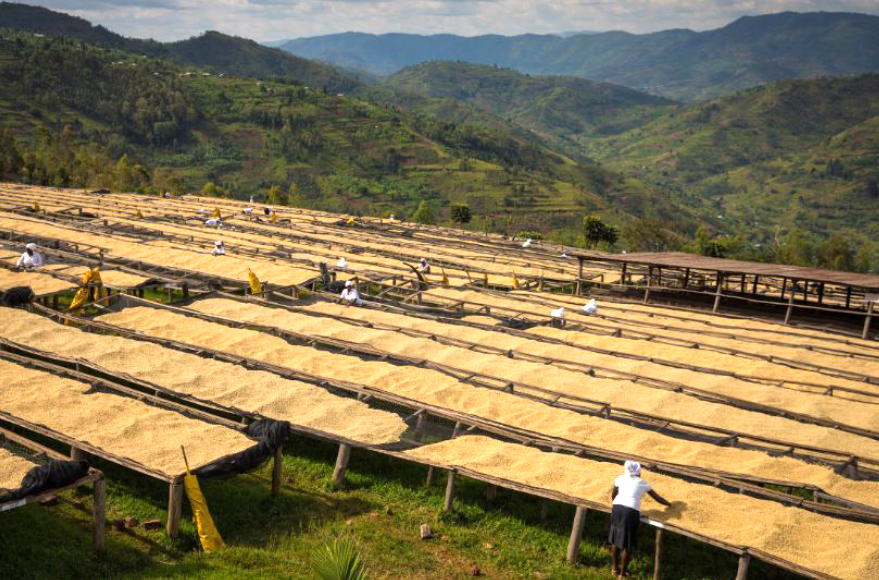
Front Street believes that the processing method used for a bean is very important. Rwandan coffee is mainly processed by the washed method. The general process is as follows: the harvested coffee cherries are floated to remove coffee cherries with insufficient density, then the skin and pulp are removed, and then the coffee beans with mucilage are left to ferment in a water tank. The purpose of fermentation is to avoid damaging the coffee's flavor. After fermentation is complete, the mucilage layer is washed off with clean water, and finally the clean coffee beans still in parchment are sent for drying. Some coffees are dried on raised beds for 15-22 days, reducing the moisture content of the green coffee beans to around 11% to 13%.
Rwanda places great emphasis on the details of the washing process. Their coffee farmers, after harvesting coffee cherries, select out unripe cherries, and only red cherries are sent to the depulper. Front Street Coffee (FrontStreet Coffee) also believes that washed coffee has higher acidity, better cleanliness, and overall stable performance.
Therefore, when Front Street Coffee (FrontStreet Coffee) recommends coffee beans from a certain region, it always first recommends washed coffee beans, because washing is the processing method that best reflects the essential flavor of coffee, and one can understand a region's flavor characteristics through washed coffee beans. As for Rwanda adopting the washed processing method as its primary processing method, Front Street Coffee (FrontStreet Coffee) greatly appreciates this and considers it a rather wise choice.
Afterward, Rwanda's coffee development progressed relatively quickly. In 2010, it held the Cup of Excellence competition, becoming the only African country to have hosted the Cup of Excellence. Through the Cup of Excellence's online bidding system, buyers were able to find the highest-quality coffee lots, thereby promoting Rwandan coffee to the market. Just a while ago, Viya helped Rwanda, a friendly nation of our country, by livestreaming to sell local coffee beans, bringing a very positive impact to Rwandan coffee.
Rwanda has performed well in the COE, but in two competitions it was disqualified due to the presence of potato taste. Perhaps Front Street readers don't understand what the presence of potato taste in coffee beans means, so Front Street will explain it here. Actually, potato taste is a manifestation of quality defects in green coffee beans. It can be smelled in green beans, and can also be detected when roasting or grinding roasted beans. Opinions vary on the cause of potato taste formation. One explanation that Front Street relatively agrees with is that this taste may be caused by bacteria left by insects on coffee cherries, which can be highly destructive to coffee production. Fortunately, the Rwandan coffee beans that Front Street Coffee (FrontStreet Coffee) sources have not exhibited potato taste. So everyone can rest assured when buying this bean from Front Street.
Front Street Coffee (FrontStreet Coffee) has also undergone extensive flavor recognition training to distinguish the coffee flavors of the Rwandan region. Therefore, when Front Street roasts this Rwandan coffee, in order to highlight Rwanda's fresh acidity, rich mouthfeel, floral and citrus flavors, Front Street Coffee (FrontStreet Coffee) uses a medium-light roast, because the darker the roast, the more fruit acidity is lost.
Here, we attach the specific information of this Rwandan coffee from Front Street.
Front Street Coffee (FrontStreet Coffee): Rwanda Gaseke Coffee Beans
Coffee region: Nyamasheke Processing station: Gaseke Processing Station Growing altitude: 1,700 to 2,000 meters Processing method: Washed Coffee varieties: Bourbon, Caturra, Catuai Flavor: Citrus sweetness, bright acidity, berries, apple, honey sweetness in the middle, excellent sweetness and balance, almond and chocolate finish
The above content is compiled by CoffeeHunters, a coffee news website.


