







For those just beginning to explore black coffee, understanding the flavor characteristics of coffee beans from different origins is the first step into the world of pour-over. This article reviews representative beans from the world's renowned coffee-producing countries, including Ethiopia, Indonesia, China's Yunnan, Costa Rica, Colombia, Guatemala, and Brazil. It covers classic origins such as Yirgacheffe, Mandheling, Yunnan small-bean, Tarrazu, Huila, Huehuetenango, and Cerrado, and includes detailed parameters and brewing flavor descriptions for the Front Street daily-bean series. It also explains the differences between pour-over coffee and American drip machines, as well as how pouring method, flow rate, and circling speed affect the final flavor, making it suitable for coffee enthusiasts who want a systematic understanding of specialty coffee fundamentals.
For more specialty coffee knowledge, please follow our WeChat public account: Front Street Coffee (FrontStreet Coffee)
In earlier years, when people mentioned black coffee, most would first think of Jamaican Blue Mountain. However, as the third wave specialty coffee movement gradually spread in China, the public's understanding of black coffee has moved beyond American-style coffee to more specific areas such as pour-over and single-origin coffee.
At Front Street stores, customers often ask for advice on selecting pour-over beans and about pour-over basics, such as how to set the water temperature and whether the grind should be coarse or fine. Next, Front Street will introduce the flavor characteristics of coffee beans from different origins.
Friends familiar with Front Street should know that our bean list includes a daily-bean series. Every bean in this series has been carefully selected by Front Street from numerous origins and can serve as a typical example representing a certain origin or processing method.
Based on Front Street's years of cupping experience, compared with post-processing methods such as natural and honey processing, washed processing best restores the truest taste of an origin. Therefore, the Front Street daily-bean series is mainly composed of washed beans. Of course, there are exceptions—Brazil uses semi-natural, and Indonesia uses wet-hulled, because semi-natural is a local traditional craft in Brazil, while wet-hulled is closely related to Indonesia's climate conditions and economic situation.
[Ethiopia]
Ethiopia is widely recognized as the birthplace of coffee and is also the first stop for many beginners. Among its regions, Yirgacheffe and Sidamo are the best known. In fact, Yirgacheffe originally belonged to the Sidamo region. Because its coffee has a unique jasmine floral aroma, it was later separated and upgraded to an independent main region.
In the 1970s, in order to improve green bean quality, the government introduced washed processing technology. Since then, coffee from the Yirgacheffe region has been mainly washed processed.
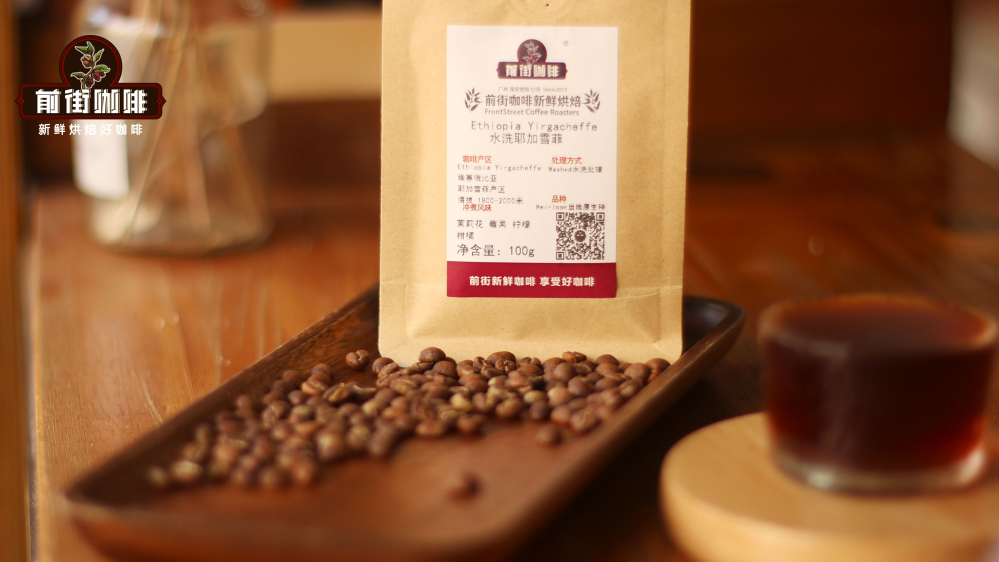
Front Street Ethiopia Washed Yirgacheffe Coffee Beans
Region: Yirgacheffe, Ethiopia
Altitude: 1,800 m—2,000 m
Variety: Local heirloom varieties
Processing Method: Washed
Brewing Flavor: Jasmine, berries, lemon, citrus
[Indonesia]
Among Indonesian coffees, besides the famous kopi luwak, Mandheling is also widely known. Mandheling's flavor and its processing method complement each other—wet-hulling created Mandheling, and Mandheling also made wet-hulling world-famous.
Indonesia's weather is changeable with frequent rainfall, and at the time economic conditions were limited, making it impossible to afford the cost of full washed processing. This gave rise to a unique semi-washed method—wet-hulling. Wet-hulling is divided into two drying stages. Before the second drying, when the coffee beans still have 50% moisture content, the parchment layer must be removed so the green beans directly contact the air for drying. It is precisely this step that gives Front Street Mandheling a fuller and smoother mouthfeel, with notes of herbs and spices.
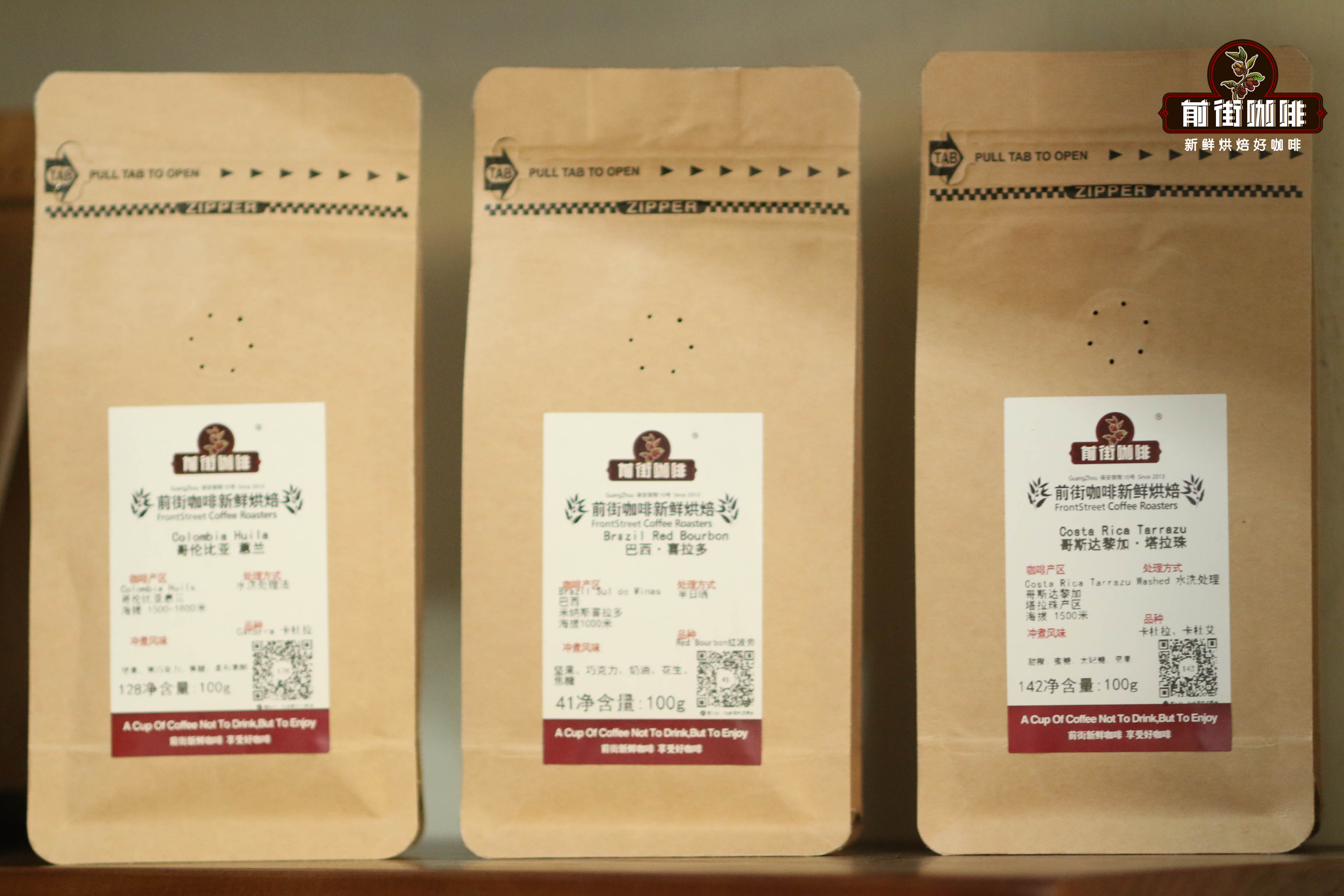
Front Street Indonesia Lintong Mandheling Coffee Beans
Region: Lintong, Sumatra, Indonesia
Altitude: 1,100 m—1,600 m
Variety: Tim Tim, Ateng
Processing Method: Wet-hulled
Brewing Flavor: Toasted bread, nuts, caramel, pine, herbs
[China]
After the movie Coffee or Tea became a hit, Yunnan coffee received unprecedented attention, and the Chinese people's enthusiasm for supporting domestic products was directly reflected in sales figures. China actually has three coffee-growing areas: Fujian, Hainan, and Yunnan. However, Fujian and Hainan are low-altitude coastal areas with relatively high temperatures and are not suitable for growing Arabica varieties. Specialty coffee cultivation is therefore concentrated in Yunnan. Front Street Yunnan small-bean coffee is rich but not bitter, aromatic but not harsh.
Front Street Yunnan Small-Bean Coffee Beans
Region: Baoshan, Yunnan, China
Altitude: 1,200 m
Variety: Catimor
Processing Method: Washed
Brewing Flavor: Melon and fruit aroma, sweet melon, brown sugar, plum, black tea feel
[Costa Rica]
Costa Rican coffee has always been known for being "sweet as honey," which is inseparable from its fame for honey processing. The country's coffee is grown at relatively high altitudes with significant day-night temperature differences, and the surrounding volcanic soil is fertile. The coffee produced is mostly strictly hard bean (SHB grade), with outstanding sweetness.
Front Street Costa Rica Tarrazu Coffee Beans
Region: Tarrazu, Costa Rica
Altitude: 1,500 m
Variety: Caturra, Catuai
Processing Method: Washed
Brewing Flavor: Sweet orange, honey, toffee, nuts
[Colombia]
Colombian coffee is one of the few coffees sold as a single origin under a country name. Anyone familiar with Colombia's "four treasures" knows that coffee is one of them. Colombia has a mild climate and humid air, and its diverse climate conditions allow harvests throughout the year, with different periods, types, and regions ripening one after another. Colombian coffee has outstanding quality, a rich mouthfeel, and a long finish, making it truly specialty.
The Colombian coffee in the Front Street daily-bean series comes from the Huila region. This region is Colombia's most prestigious specialty coffee producing area, surrounded by mountains, with growing altitudes above 1,500 meters. The country's most important rivers converge here, bringing abundant moisture and water resources.
Front Street Colombia Washed Huila Coffee Beans
Region: Huila, Colombia
Altitude: 1,500 m—1,800 m
Variety: Caturra
Processing Method: Washed
Brewing Flavor: Nuts, dark chocolate, caramel, soft fruit acidity
[Guatemala]
When Guatemalan coffee is mentioned, many experienced enthusiasts first think of that "smoky" note. Soft acidity and a balanced mouthfeel are the characteristics of Front Street Guatemalan coffee, and also a common trait of Central American coffee. In the Front Street daily-bean series, the Guatemalan representative comes from the Huehuetenango region.
The Huehuetenango region is surrounded by three volcanoes, and the soil is rich in minerals. Altitudes can exceed 2,000 meters, and the coffee produced has a rich fruity flavor.
Front Street Guatemala Huehuetenango
Region: Huehuetenango, Guatemala
Altitude: 1,500 m—2,000 m
Variety: Bourbon, Caturra, Catuai
Processing Method: Washed
Brewing Flavor: Nuts, lemon peel, berries, citrus
[Brazil]
Brazil is currently the country with the highest coffee production in the world. Although production is large, there are also many high-quality Brazilian beans. Whenever a customer wants coffee that is not sour, the baristas at Front Street Coffee first recommend Brazilian beans. Brazil mostly uses sun-exposed cultivation, the fruit ripens quickly, and the beans are relatively soft.
Front Street Brazil Cerrado coffee also shows a soft-bean style, with soft fruit acidity, good sweetness, a delicate and smooth entry, and overall balance.
Front Street Brazil Cerrado Red Bourbon Coffee Beans
Region: Cerrado, Minas Gerais, Brazil
Altitude: 1,000 m
Variety: Red Bourbon
Processing Method: Semi-natural
Brewing Flavor: Peanut, cream, nuts, chocolate, caramel
Front Street has learned that some friends who are just getting into pour-over are curious: is pour-over coffee really better than coffee machine coffee? The coffee machine mentioned here usually refers to household or office American drip machines. American drip machines and pour-over share a similar principle, both using hot water to brew coffee grounds and then filtering. However, the dripping method of drip machines is preset by the manufacturer, and the output of machines from different brands also varies in taste.
Pour-over coffee is completely different. The dripping process is entirely controlled by human effort, and the pouring technique has a huge impact on the final flavor. Taking the one-pour method and the three-stage method as examples, the one-pour method is more outstanding in cleanliness and acidity, but the mouthfeel is relatively thin.
In addition, the flow rate when pouring also affects the flavor direction. When pouring with a small stream, the liquid level in the dripper rises only slightly, the coffee bed on the wall is thicker, the extraction time is lengthened, the coffee concentration increases, and the mouthfeel is fuller.
The circling speed also brings changes. When circling faster, the scouring force of the water increases, the coffee bed in the dripper tumbles more violently, and the extraction yield rises accordingly.
The above content is compiled by CoffeeHunters, a coffee news website.


