







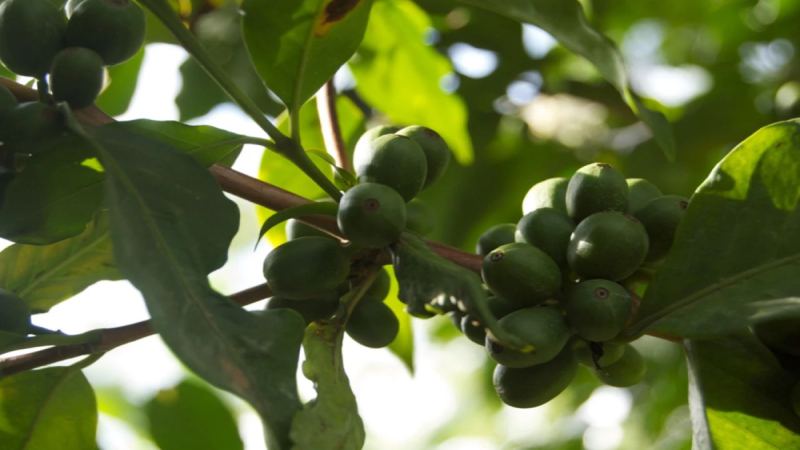
Although Kenya is adjacent to Ethiopia, the birthplace of coffee, its commercial coffee cultivation did not begin until the early twentieth century. Yet within just a few decades, it rose to become a benchmark for specialty coffee worldwide. The equator runs through the country, the East African Rift Valley stretches from north to south, and the volcanic highlands at 1,600 to 2,100 meters provide exceptional growing conditions for Kenyan coffee. This article, from the perspective of Front Street Coffee, will outline Kenya's coffee cultivation overview, the distribution of its six major producing regions, the origins and flavor differences of the representative varieties SL28 and SL34, and the K72 washed processing method that gives its berry notes such striking clarity. It also includes the brewing parameters and flavor description for Front Street's own roasted Kenyan Asalia coffee beans, offering a comprehensive introduction to this origin famed for its bold acidity and intense fruity aromas.
For more specialty coffee knowledge, please follow the WeChat public account: FrontStreet Coffee
Despite bordering Ethiopia, the birthplace of coffee, Kenya's coffee commercialization got off to a late start, only truly beginning in the early twentieth century. But astonishingly, in just a few decades, Kenyan coffee leapfrogged into an indispensable and important role on the global specialty coffee map.
Kenya Coffee Cultivation Overview
Kenya is located in eastern Africa, with the equator passing through the middle of the country and the East African Rift Valley running from north to south across the entire territory. To its east lies Somalia, to the south Tanzania, to the west Uganda, to the north Ethiopia and Sudan, and to the southeast the Indian Ocean. The country is predominantly highland, with an average elevation of about 1,500 meters.
Because it sits in the tropics, Kenya experiences two concentrated rainy seasons each year, which directly creates two coffee harvest periods annually. Coffee farms are mainly distributed in the volcanic zones from the capital Nairobi to the surroundings of the Kenyan mountains, at elevations of 1,600 to 2,100 meters. This altitude is extremely favorable for coffee bean flavor development—mountain temperatures are lower, coffee cherries grow slowly, aromatic substances accumulate fully, fruit acidity is more pronounced, and the beans are harder. This crescent-shaped, fertile coffee zone is precisely the core production area for Kenya's specialty coffee beans.
At the end of the nineteenth century, French missionaries brought Bourbon coffee seeds from the island of Bourbon (now Réunion) to the Kenyan coast. According to materials consulted by Front Street, John Paterson introduced this plant to Kenya in 1893 on behalf of a Scottish mission. In 1896, coffee was first introduced to Kenya's fertile Kiambu-Kikuyu region. By 1912, plantations covering hundreds of acres had been established there, mainly cultivating Bourbon and Kent varieties. After Kenya gained independence in 1963, local farmers, relying on long-accumulated expertise, jointly forged the high standard of quality that Kenyan coffee enjoys today. Currently, more than half of Kenya's coffee production comes from smallholder farmers.
Kenya places great importance on the cultivation of coffee varieties. SL28, selected and bred by a professional team, is a direct branch of Bourbon coffee beans and can be considered the finest representative of Kenyan coffee quality and flavor. Kenya is located in East Africa, adjacent to the ancient coffee country of Ethiopia. It is a world-famous coffee-producing country with a pivotal position, and its coffee is renowned globally for its high quality. Bold acidity and a heavy, aromatic fruity charm, such as blackcurrant and grapefruit, together shape the rugged yet mature character of Kenyan coffee.
Kenya Coffee Producing Regions
Kenya happens to lie along the equator, which provides unique climatic conditions for coffee cultivation. Deep, fertile volcanic soil, combined with well-drained soil in high-altitude areas, is especially suitable for Arabica varieties, while the acidic soil gives the coffee here a bright, uplifting, high-quality fruit acidity. The vast majority of Kenya's coffee trees grow between 1,400 and 2,000 meters in elevation, at temperatures between 15 and 24 degrees Celsius, rooted in deep, well-drained red volcanic soil.
Kenya's coffee cultivation is concentrated in six major producing regions: Thika, Kirinyaga, Mt. Kenya West, Nyeri, Kiambu, and Muranga. About 60% of production comes from the central regions of Thika, Nyeri, Kirinyaga, Muranga, and Kiambu. These places have fertile volcanic soil and just the right amount of sunlight and rainfall, allowing coffee cherries to fully absorb nutrients and develop rich fruity flavors.
SL28 and SL34
These two varieties are Kenya's most representative high-quality coffee varieties, winning over countless coffee lovers with their bright fruit acidity and elegant flavors of dark plum and blackcurrant. SL is the abbreviation for Kenya's Scott Laboratories. In the 1930s, a large-scale outbreak of coffee berry disease occurred in Kenyan coffee trees, and Scott Laboratories, commissioned by the government, began breeding disease-resistant new varieties. Among the research results, No. 28 and No. 34 showed strong disease resistance and outstanding flavor performance, so they were promoted to farmers for widespread cultivation.
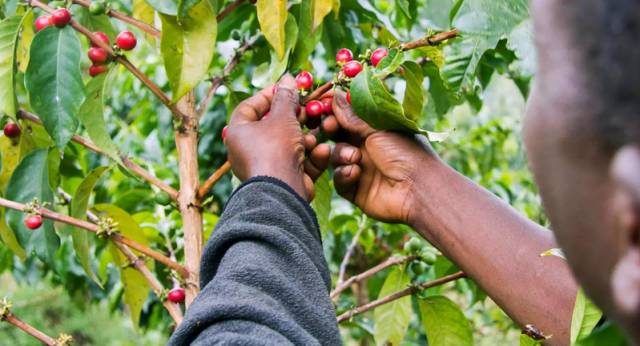
SL28 is a drought-resistant variety, presenting wine-like high acidity in cupping, accompanied by a rich, syrupy mouthfeel and intense, deep fruity aromas. SL34, on the other hand, has French missionary, Bourbon, and more Typica lineage. Its bronze leaves and broad-bean-shaped beans bring excellent sweetness, balance, and complex, ever-changing flavors, along with prominent citrus and dark plum characteristics.
Kenyan Coffee Flavor
Kenyan coffee is known for its vivid and complex berry and fruit flavors; its solid fruit acidity and sweet juiciness are unforgettable once tasted. The blackberry-like flavor is not only related to the phosphoric acid component in Kenya's local soil but also benefits from Kenya's most renowned K72 washed processing method.
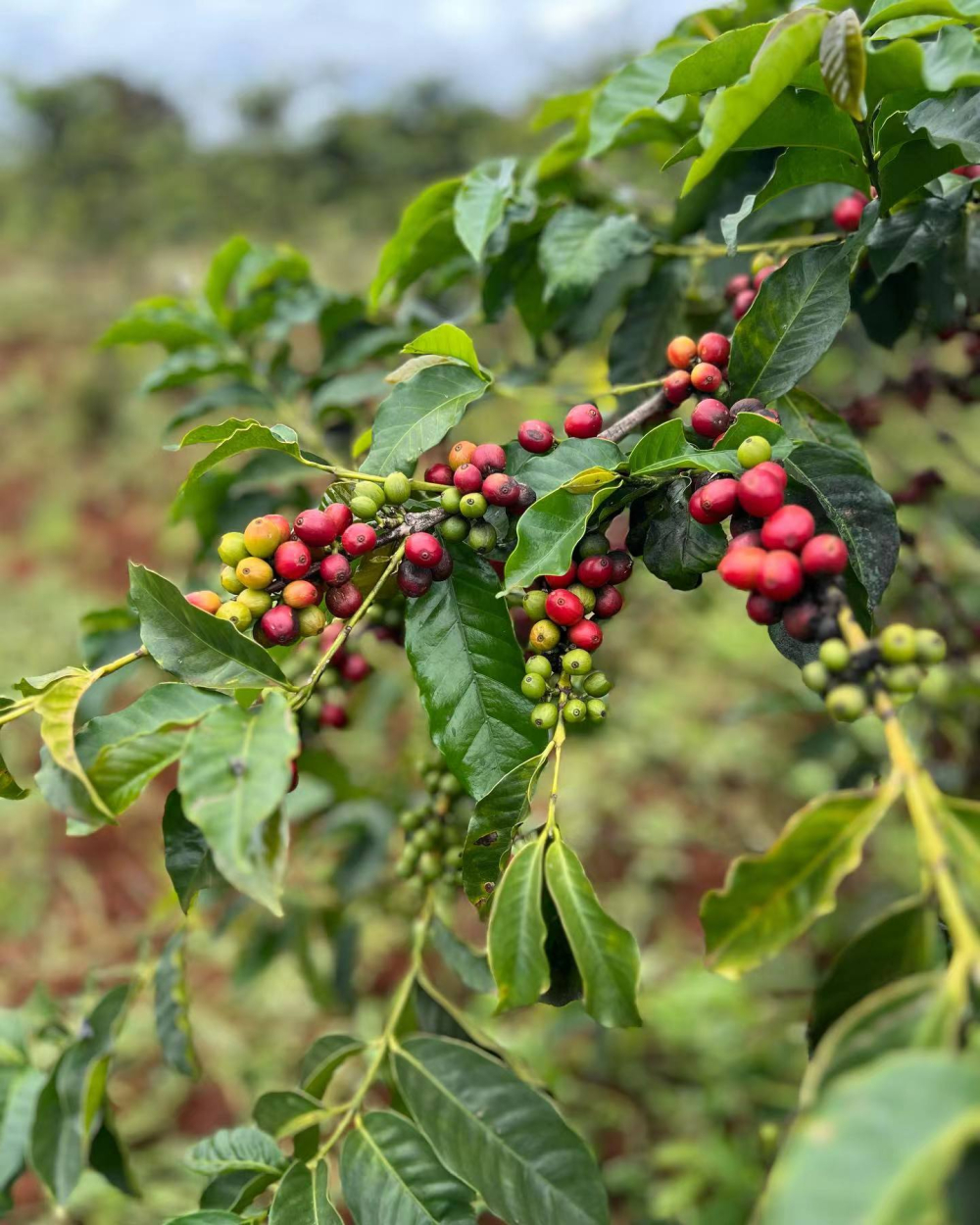
Front Street's own roasted Kenyan Asalia coffee beans are precisely processed using the K72-hour washed method, selecting local high-quality SL28 and SL34 varieties, as well as the highest local AA grade. Friends curious about what Kenyan coffee actually tastes like may want to give it a try.
Front Street Brewing Suggestions
Coffee-to-water ratio: 1:15
Coffee grounds: 15g
Total water poured: 225ml
Water temperature: 90℃~91℃
Grind size: fine granulated sugar coarseness | EK43s setting 10 (80% pass rate through No. 20 standard sieve)
The FrontStreet Coffee barista will use a three-stage extraction: after the coffee is ground and poured onto the filter paper, start pouring 30g of water from the center and bloom for 30 seconds, taking care to keep a steady circular pour with a small stream from inside to outside throughout; pour 95g of water in the second stage, and once the coffee liquid has nearly finished dripping, begin pouring 100g in the third stage, until all the coffee has filtered through, then remove the dripper. The time is about 2 minutes, with an error margin of about 10 seconds either way.
Brewed flavor: on the palate there are flavors of dark plum and cherry tomato; the mouthfeel has strong, full-bodied acidity, with prominent sweetness in the middle, a black plum-like juiciness, and a finish of berry aroma and brown sugar sweetness, accompanied by a faint tea-like note.
The above content is compiled by CoffeeHunters, a coffee news website.


