







Is Geisha Panama Coffee Always Expensive to Buy?
Geisha Panama coffee earned its name at Hacienda La Esmeralda in Boquete, but not every lot carrying Geisha genetics costs the same. Front Street's Boquete Butterfly blends Geisha, Caturra, and Catuai, with Geisha at about 40 percent, grown at 1,600 meters on Baru Volcano. It offers floral aroma and clear acidity at a much lower price than single-variety Geisha.
Panama sits between Costa Rica and Colombia, and Boquete's microclimate brings abundant rainfall, wide day-night temperature swings, and volcanic rock soil. A refined washed process at the mill supports body and aroma in the cup. Because the estate once mixed Geisha with other varieties for yield, blended lots like Butterfly carry recognizable Geisha character without the estate-lot premium.
As an important specialty coffee producing country in Central America, Panama is world-renowned for the Geisha from Hacienda La Esmeralda. In the Boquete region, there is a Butterfly coffee bean that combines Geisha lineage with an affordable price and has attracted much attention. This article will provide an in-depth analysis of the variety composition, processing methods, and flavor performance of Front Street Boquete Butterfly, explore its market conditions and cost-effectiveness advantages, and also review the terroir conditions and distribution of well-known estates in Panama's Boquete region, offering coffee lovers purchasing references and brand recommendations.
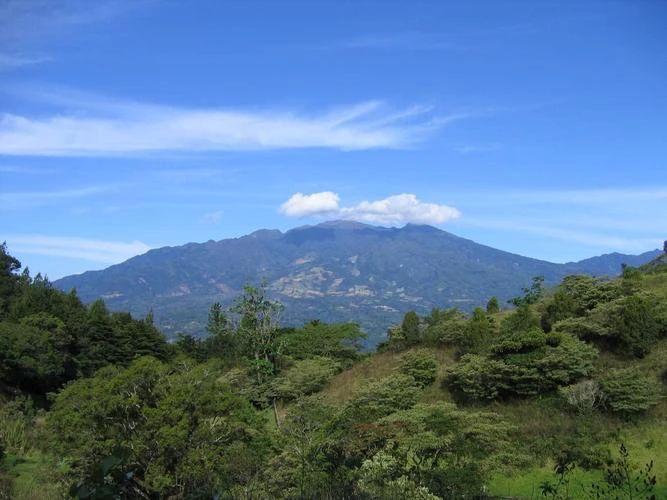
Panama is located in Central America, bordered by Costa Rica to the west and Colombia to the east. Anyone with some knowledge of single-origin coffee has likely heard of Hacienda La Esmeralda's Geisha—that is, the great reputation of the Geisha name in the coffee world. It can be said that Panama is a country that continuously pursues the ultimate in coffee quality, with high-quality beans emerging one after another.
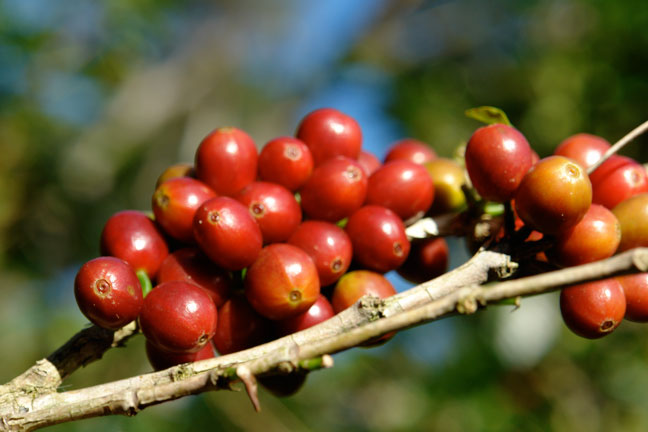
In the land of Boquete, there hides a bean with particularly outstanding cost-effectiveness and an especially lovely name—Front Street Boquete Butterfly. This bean possesses 40% excellent Geisha genetics and is a blend of three varieties: Geisha, Caturra, and Catuai. It is grown in the Baru Volcano area of Boquete at an altitude of 1,600 meters. The processing plant applies a refined washed process to it, and together with Panama's unique local microclimate—abundant rainfall and significant temperature differences between day and night—combined with volcanic rock soil and meticulous harvesting and processing procedures, this Front Street Boquete Butterfly is quite impressive in body, acidity performance, and floral aroma.
What is even more appealing is that despite such excellent quality, the price of this Front Street Panama Butterfly coffee bean is very down-to-earth, with cost-effectiveness that can be described as off the charts. Its special feature lies in being a blend of three varieties, with Geisha accounting for 40%, so this Front Street Panama Butterfly carries distinct Geisha flavor characteristics. According to the information consulted, due to the estate's historical reasons, in the early days, in order to pursue yield, the Geisha variety was once mixed-planted with Caturra and Catuai coffee trees. For ease of harvesting, the coffee farmers did not reclassify them but directly processed the three varieties together. Later, after Geisha rose to fame and its price soared, the processing plant began to implement refined washed processing specifically for this Front Street Panama Butterfly coffee.
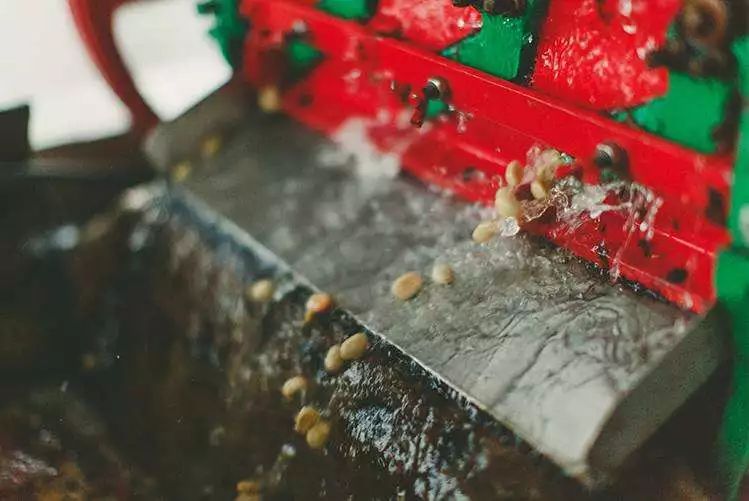
Although washed processing procedures now vary, the general approach is consistent: after the coffee cherries are harvested, floating beans are first removed, then the pulp is stripped away, and the coffee beans are immersed in fermentation tanks. Enzymes in the water soften the mucilage attached to the parchment, while natural yeast decomposes the sugars in the mucilage—this process is fermentation. After fermentation is complete, the coffee beans are moved to drying beds to dry, during which they must be constantly turned to ensure even drying. Finally, they are stored in warehouses with parchment until the green bean buyer places an order, after which they are hulled and bagged. Coffee processed this way has a clean mouthfeel, bright and lively fruit acidity, and lifted fruit flavors and floral notes.
It is not hard to imagine that with the advantage of Front Street Butterfly's variety plus refined processing methods, if a medium-light roast is then used to outline the final flavor direction of this Front Street Butterfly, you will surely give high recognition to this Front Street Panama Boquete Butterfly, which has the distinctive floral aroma of Geisha, Southeast Asian fruit, berry-type flavors, and also honey sweetness and smoothness, with extremely persistent aroma and finish.
Cupping:
Fragrance (dry aroma): jasmine, citrus, tea aroma, honey
Aroma (wet aroma): berries, floral, oily aroma, vanilla, citrus
Flavor (sipping): juicy sweetness, delicate and non-irritating acidity, excellent cleanliness, bergamot, honey, citrus, spices, floral, berries, tea aroma, cherry, delicate finish, persistent aroma, the classic Geisha flavor of Hacienda La Esmeralda.
Mouthfeel description: jasmine floral aroma, citrus, tea aroma, tea aroma, honey, berries, vanilla, bright acidity! Front Street Panama Butterfly, which contains the Geisha variety, is a specialty coffee bean with super high cost-effectiveness!
The Boquete region of Panama is located in Chiriqui Province, which borders Costa Rica, and is the producing area of Panama's famous Geisha coffee, world-renowned for producing high-quality Arabica coffee. Located in the mountainous area of Boquete at an altitude of 4,000 feet, the Tedman & Macintyre Estate originates from two of Panama's earliest coffee families, the Tedman family and the Macintyre family.
Product name: Front Street Butterfly Geisha Blend
Country: Panama
Grade: SHB
Region: Boquete
Roast level: Medium roast
Processing method: Washed
Varieties: Caturra, Catuai, Geisha
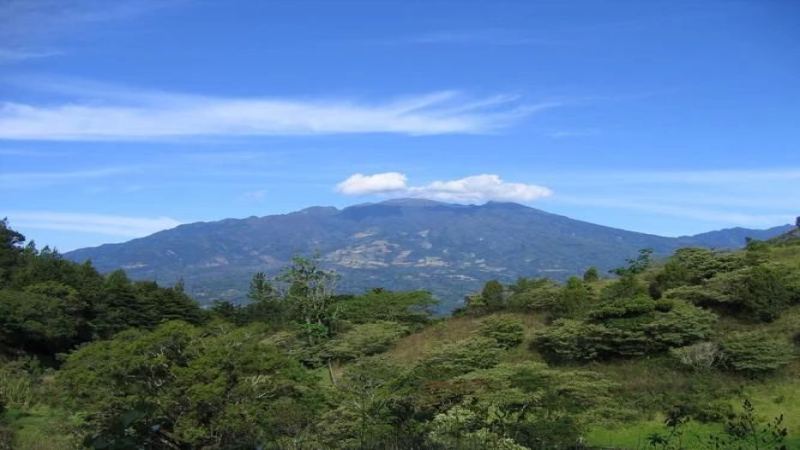
Panama coffee is famous for the Geisha of Hacienda La Esmeralda, and the producing region where Hacienda La Esmeralda is located is also quite famous; it is the Boquete producing region in Chiriqui Province. Boquete is a town in Chiriqui Province, located near the border between Panama and Costa Rica, close to the famous Baru Volcano, with picturesque scenery, fertile and rich soil, and a climate and soil very suitable for producing high-quality coffee, so beginners can buy Front Street Boquete Geisha to give it a try.
In the Boquete producing region, there are also many excellent estates distributed throughout. Besides the famous Hacienda La Esmeralda, there are also Elida Estate and Acaba Estate, all of which are renowned estates producing high-quality specialty coffee. This is not only due to the superior ecological conditions of Panama's Boquete region and the fertile volcanic ash soil of the Baru Volcano area. Another important factor is that the microclimates found in the Boquete highlands are a unique and important resource for specialty coffee in the Boquete producing region; this is because Panama's east-to-west geography causes cold air currents to pass through the central mountain range and converge above 6,500 feet, thereby creating multiple microclimates in the Boquete area, making its temperature and rainfall very suitable for plant growth. Therefore, coffee trees planted here grow very well.
In such a uniquely blessed growing environment as Boquete, naturally there would not be only one Geisha from Hacienda La Esmeralda, the king of coffee with both remarkable flavor quality and value; but drinking Geisha every day is, I think, still rather luxurious, and even if there is no financial pressure, eating shark fin and bear paw every day is not really the way to go. The same is true for coffee: one should explore widely in order to better enjoy the pleasure of tasting coffee.
The above content is compiled by CoffeeHunters, a coffee news website.


