







African beans are known for their floral notes and citrus acidity, while Brazilian coffee has taken a different path with its low acidity and mellow sweetness. This article focuses on the yellow Bourbon variety produced by Brazil's Queen's Farm Estate. This bean has a clean taste and pure flavor, making it a single-origin coffee that Front Street often recommends to drinkers who prefer bitter-toned coffee. The article will successively cover the origins of the Bourbon family, the principle behind yellow Bourbon's yellow color due to genetic mutation, the high-altitude advantages of the Mogiana region and the sun-dried processing details of Queen's Farm Estate, and finally provide Front Street's medium-dark roasting approach for this bean as well as specific brewing suggestions including dripper, water temperature, coffee-to-water ratio, grind size, and three-stage pouring technique, to help readers reproduce at home the flavor of rich chocolate interwoven with nutty caramel.
Coffee from African origins often carries floral notes and citrus-like acidity, while Brazilian coffee takes a different route, presenting an overall low-acidity, mellow profile. The selected yellow Bourbon variety from Brazil's Queen's Farm Estate has a clean taste and pure flavor, making it a single-origin coffee that Front Street frequently recommends to drinkers who prefer bitter-toned coffee. Below, Front Street will discuss how to brew Brazil Queen's Farm Estate coffee for the best taste.
Yellow Bourbon Variety
After reviewing the materials, Front Street learned that the world's Arabica coffee variety system is composed of Typica and Bourbon, along with the descendants derived from them. Bourbon is mainly popular in Central and South American countries and is also one of the primary varieties in Brazilian coffee.
The name Bourbon originates from Bourbon Island, which is present-day Réunion Island off the east coast of Africa. The island was called Bourbon Island when it was a French territory in the 17th century, and was only renamed at the end of the 18th century. In the 18th century, the French introduced round coffee beans from Yemen to Bourbon Island and let them take root and grow there; in 1860, Brazil brought round Bourbon back to its own country for cultivation, and it gradually spread to various Central and South American countries, becoming the oldest maternal variety of Latin American coffee. Bourbon fruit is small and round, the coffee beans have relatively high density, and when grown at high altitudes the sweetness is pronounced and the acidity is bright. It belongs to the same category of ancient excellent varieties as Typica, with better resistance to leaf rust than Typica, and its flavor is no less impressive.
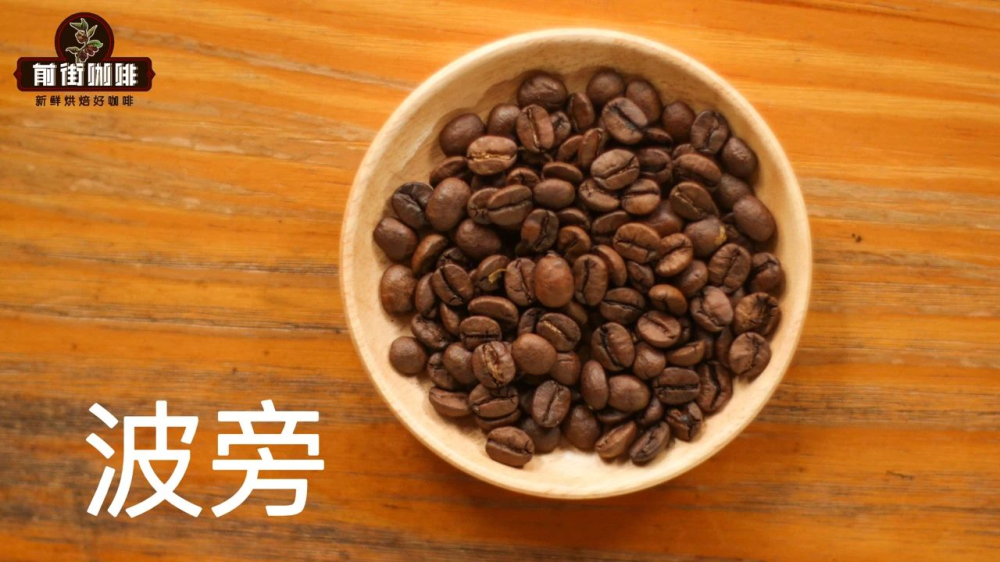
Common Bourbon changes color from green to slightly yellow, then red, and finally fully ripe dark red from flowering to fruit maturation, hence the name red Bourbon. Front Street's Brazilian daily coffee beans use precisely the red Bourbon variety with its pure flavor. In addition, there are Bourbon varieties that do not turn red upon maturity but instead turn a relatively rare yellow or pink, namely yellow Bourbon and pink Bourbon.
What Queen's Farm Estate is most proud of is the yellow Bourbon variety, which has won multiple Brazilian COE competition awards with its refined and delicate flavor. Common Bourbon coffee fruit changes from green to slightly yellow, orange-yellow, red, and finally fully ripe dark red, which is what we call red Bourbon. Red Bourbon grown at high altitudes has a balanced flavor, rich aroma, and soft acidity, and Front Street's daily coffee beans use red Bourbon.
Yellow Bourbon does not present a cherry-red color at the mature stage, but rather yellow, and was discovered in 1930. Later, researchers at the Campinas Agronomic Institute (IAC) found that plants carrying the dominant XcXc gene pair produce red berries, plants carrying the recessive xcxc gene pair produce yellow berries, and in rare cases, Xcxc plants with one dominant and one recessive gene produce orange berries. It can be seen that yellow Bourbon's "yellowness" comes from selection in color genetics. Yellow Bourbon planted at high altitudes accumulates large amounts of fructose, presenting a sweet and juicy flavor, and once swept Brazil's "Cup of Excellence" competition for two consecutive years, almost monopolizing the top three awards, becoming a sensation in the specialty coffee world.
Mogiana Queen's Farm Estate
The Mogiana region is near southern Minas, located in northeastern São Paulo, and together with the Cerrado region and southern Minas is one of Brazil's three major specialty regions. Unlike typical Brazilian coffee beans, Mogiana's cultivation altitude is 1100–1250 meters, considerably higher than other areas of São Paulo. The altitude difference also increases temperature variation, thereby improving coffee quality. At the same time, the rolling terrain means Mogiana can only use semi-mechanized and purely manual methods to harvest coffee cherries, and most of the coffee produced belongs to Brazil's specialty grade, namely Fine Cup, the grade with the best cup profile and highest quality.
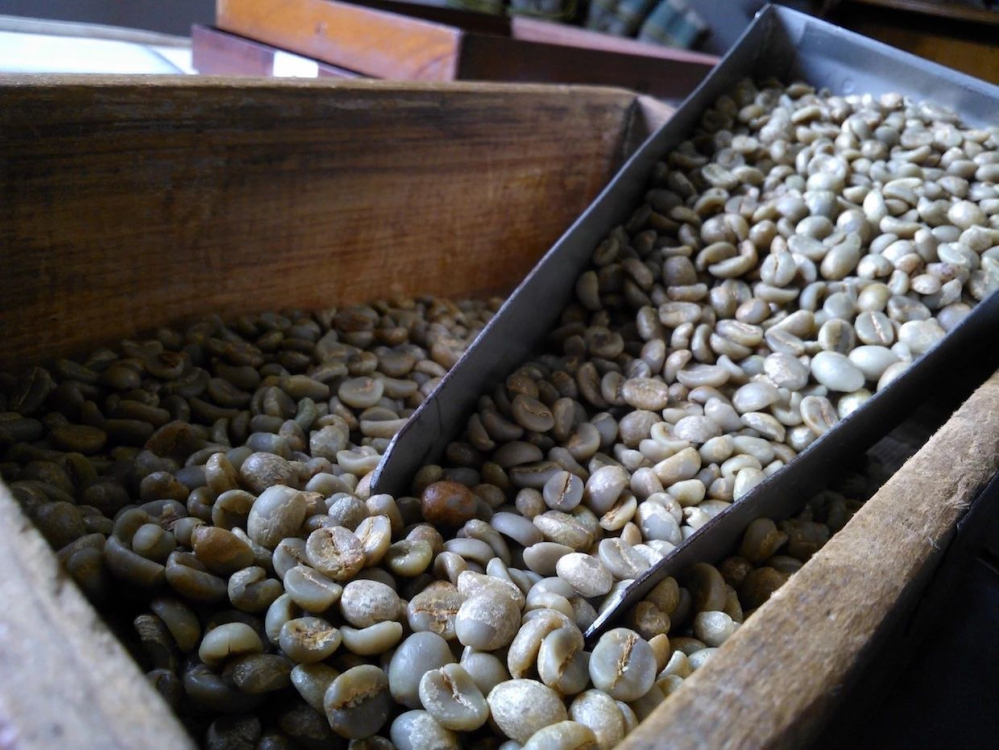
After harvesting ripe yellow Bourbon cherries, Queen's Farm Estate uses sun-dried processing, allowing the coffee fruit to absorb more sweetness from the pulp during drying. Brazil is located near the equator, and the harvest season coincides with the dry season, making coffee fruit very suitable for direct sun-drying and dehydration.
However, the traditional "sun-baking method" process is quite rough—after harvesting, the cherries are directly poured onto dirt ground to dry, and the resulting coffee easily picks up earthy flavors; uneven heating can also produce negative notes of over-fermentation. Queen's Farm Estate first pours the coffee cherries into water tanks, uses flotation to remove underripe fruit, then places the coffee in small batches on African raised beds with better breathability, turning them irregularly, thereby avoiding earthy and over-fermented flavors, with sweetness elevated even further compared to traditional sun-drying.
Front Street Queen's Farm Estate Coffee Pour-Over Reference
Front Street hopes to highlight Queen's Farm Estate's classic regional flavor, namely rich chocolate aroma, so a medium-dark roast is used. Through cupping, Front Street tasted that this Queen's Farm Estate coffee has very pronounced sweetness, so a three-stage pouring method is used in brewing, hoping to present more layers in the coffee.
Coffee beans enter their optimal flavor period 4–7 days after roasting; after this time (about a month and a half after roasting), the aroma may have dissipated and some woody flavors may develop. To avoid this situation, Front Street only ships coffee beans freshly roasted within 5 days, so everyone can taste coffee with excellent flavor.
Dripper: Medium-dark roasted coffee beans mainly present a rich and rounded mouthfeel. For this characteristic, Front Street uses the slower-flow KONO dripper for extraction. The upper part of the KONO is a smooth curved surface, and the lower part has guide ribs one-third of its length, allowing the filter paper to fit more closely against the dripper, restricting airflow upward so hot water can only flow downward, forming a siphon-style extraction effect that allows the coffee grounds' aromatic substances to be released more fully.
Grind size: Considering the darker roast, the coffee beans become looser in texture, and after grinding into powder easily absorb more water and release more soluble substances, easily bringing out unpleasant bitterness such as woody notes. Front Street Coffee baristas will coarsen the grind size, making the coffee particles larger, to reduce over-extraction. Here, a medium grind is used (70-75% passing rate on Chinese standard No. 20 sieve).
Water temperature: When brewing medium-light roasted coffee beans, Front Street uses higher water temperatures to release the aromatic substances from high-density coffee beans. But medium-dark roasted Brazilian coffee, having undergone a longer caramelization reaction, will easily present a thick and burnt bitterness if the same high-temperature water is used. Appropriately lowering the water temperature can help us reduce a certain amount of bitterness; Front Street uses 87–88°C water temperature.
Coffee grounds absorb about twice their weight in water. Front Street generally uses 15 grams of coffee grounds, extracted at a 1:15 coffee-to-water ratio, finally yielding close to 200ml of coffee liquid, which is 1–2 servings.
Dripper: KONO dripper
Water temperature: 87–88°C
Coffee dose: 15 grams
Coffee-to-water ratio: 1:15
Grind size: Medium grind level (70% passing rate on Chinese standard No. 20 sieve)
Use twice the coffee grounds' weight in water to wet the coffee bed, forming a dome and blooming for 30s, then pour in a thin stream in circles from inside to outside until reaching 125g, pause, wait for the coffee bed to drop to half the dripper's height, continue with the same thin stream pouring the third stage to 225g, until all coffee liquid has filtered through, then remove the dripper; the time is about 2 minutes.
Pour-over Brazil Queen's Farm Estate coffee smells of lemon, nuts, and peanuts; on the palate it is very mellow with nut, dark chocolate, and caramel flavors, noticeably sweet, with a creamy smooth mouthfeel, overall quite rounded.
Professional coffee knowledge exchange. For more coffee bean information, please follow Coffee Workshop (WeChat public account: cafe_style)
For more specialty coffee beans, please add private WeChat Front Street Coffee (FrontStreet Coffee), WeChat ID: qjcoffeex
The above content is compiled by CoffeeHunters, a coffee news website.


