








The variety and origin of coffee beans directly influence the flavor expression in the cup. Common coffee beans on the market can be divided by variety into three major categories: Arabica, Robusta, and Liberica, among which Arabica is the mainstream choice of specialty coffee shops. If distinguished by producing region, origins such as Jamaica, Ethiopia, Indonesia, and Tanzania each present distinctly different taste characteristics. Front Street Coffee, drawing on cupping experience, sorts out the flavor differences among representative coffee beans such as Costa Rican honey-processed beans, Ethiopian Yirgacheffe, Panamanian Geisha, and Diamond Mountain, helping coffee enthusiasts more clearly understand the characteristics and charm of different types of coffee beans.
For more specialty coffee knowledge, please follow the WeChat public account: Front Street Coffee
With the growing popularity of coffee culture, coffee has gradually become part of many people's daily lives. Some love the pure taste of black coffee, while others prefer espresso with sugar and milk. Because coffee bean varieties differ, the final flavors also vary greatly—some beans are full of fruity juiciness, some have bright acidity, and others carry a slight bitterness. Below, Front Street Coffee will sort out the main types of coffee beans for everyone.
Although there are countless categories of coffee beans, if classified by variety, the coffee beans circulating on the market can basically be divided into three major categories: Arabica, Robusta, and the relatively rare Liberica variety. The coffee beans selected by Front Street Coffee and other independent coffee shops all belong to the Arabica variety, while Robusta appears more often in the production of instant coffee.
If we look at it from another angle and divide coffee beans by producing region, the classification becomes even richer. For example, Jamaican coffee, Ethiopian coffee, Indonesian coffee, Tanzanian coffee, and so on. The taste experiences brought by coffee beans from different countries differ significantly, something Front Street Coffee has deeply felt through years of cupping practice.
Front Street Coffee has handled a huge number of coffee beans, covering more than 50 coffee-producing regions, and the flavor performance of each region is unique. Below, Front Street Coffee will share a few of the most impressive coffee-producing regions.
Costa Rican coffee beans are one of them. When Front Street Coffee cupped Costa Rican coffee beans, it found that the overall performance of the country's coffee beans is quite balanced, with a rich body, moderate acidity, and accompanying fruity aromas. The sweet aftertaste of the coffee lingers in the mouth for a relatively long time. Of course, not all Costa Rican beans are so outstanding. Ordinary-quality coffee beans do not have particularly prominent characteristics, and one needs to taste more to find the one that suits one's own taste.
When it comes to Costa Rican coffee beans, the most famous are honey-processed coffee beans. Among the Costa Rican single-origin coffees used by Front Street Coffee, there are more than two honey processing methods, such as the honey-processed Front Street Canet Estate Musician Series coffees—Front Street Bach and Front Street Mozart coffee beans.
Front Street Coffee has noticed that honey-processed coffee beans generally have higher sweetness than beans processed by other methods. Take a Front Street Bach coffee bean listed by Front Street Coffee as an example; it uses a raisin honey processing method. The coffee fruit first undergoes flotation, and the selected fruits are of relatively high ripeness. Then the peel and pulp are removed, but the beans are not placed in a water tank to ferment and remove the mucilage layer; instead, the mucilage is retained and the beans are directly sun-dried. Depending on the amount of mucilage retained, it can be further divided into yellow honey, red honey, and black honey: yellow honey retains about 40% of the mucilage, red honey retains about 25%, and black honey removes almost no mucilage.
The sweetness of honey-processed coffee beans is usually more prominent than that of other processing methods, while coffee beans using other processing methods also each have their own unique styles, such as Ethiopian coffee beans. Ethiopia's coffee bean varieties are also extremely rich. Due to economic conditions and variety protection policies, the country's coffee beans are collectively called local heirloom varieties, so when buying Ethiopian coffee beans, it is easy to find that the beans vary in size.
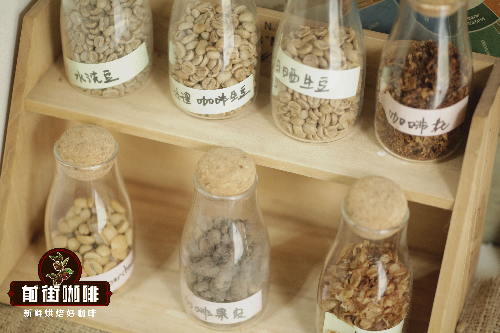
In Ethiopia, the most well-known producing regions are Sidamo and the Yirgacheffe region, which became independent from Sidamo because of its unique flavor. Both the washed and natural beans of the Yirgacheffe region are renowned. If you often come to the Front Street Coffee shop, you can see a large number of green bean and roasted bean samples in the store. Generally speaking, washed green beans are blue-green, while natural green beans tend toward yellow-green.

The differences between the two are also very obvious. Washed coffee beans retain more silver skin, while natural-processed beans have relatively less silver skin. Of course, the degree of roasting is also closely related to the silver skin; the darker the roast, the more thoroughly the silver skin falls off. Ethiopia's traditional processing method mainly uses natural processing to process Yirgacheffe coffee, but in order to stably produce high-quality coffee beans, the washed method is also used. Front Street Yirgacheffe Gutingding uses washed processing, with a mouthfeel reminiscent of citrus and black tea.
Panamanian coffee beans also perform excellently, and the most famous among them is Geisha coffee. Front Street Coffee has cupped Geisha coffee beans from Panama's Hacienda La Esmeralda and Ethiopia. When cupping Front Street Ethiopia Gesha Village Geisha, Front Street Coffee selected a relatively cost-effective Front Street Panama Hacienda La Esmeralda Green Label Geisha coffee that was listed. Its dry aroma carries a very clear berry note. After hot water is poured in, the coffee grounds gradually become saturated, releasing more aromas of ripe fruit. When Front Street begins to taste this Front Street Emerald Green Label Geisha, in addition to the rich sweet berry aroma, one can also feel the flavors of cherry and honey, and the aftertaste carries the fermented aroma unique to natural processing. After the coffee cools, Front Street tastes more berry and caramel flavors, with prominent sweetness and a long, lingering aftertaste.
In addition to Geisha, Panama's coffee bean varieties also include Caturra and Catuai. Hacienda La Esmeralda has implemented a strict grading classification for Geisha coffee, and has also classified the two varieties Caturra and Catuai, placing them under the two brands Diamond Mountain and Palmyra.
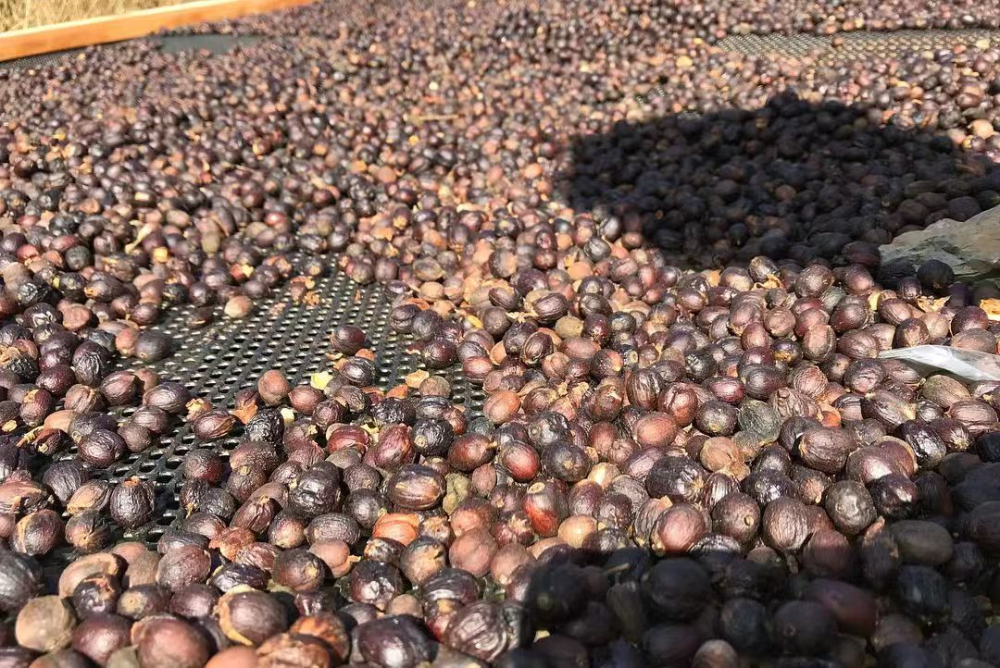
The new beans Front Street Coffee recently acquired are precisely Front Street Panama Diamond Mountain coffee beans. Front Street believes that although this Panamanian coffee bean is grown on the same estate as Geisha, the flavor difference is still very large. For example, this Front Street Panama Diamond Mountain coffee bean does not have the intense floral and fruity aromas of Geisha; instead, it has more prominent chocolate flavors, very obvious spice notes, and quite abundant sweetness.
Besides the above types of coffee beans, Front Street Coffee still has many coffee bean stories waiting to be shared with everyone. If interested, you are welcome to follow the Front Street Coffee public account.
The above content is compiled by CoffeeHunters, a coffee news website.


