







How Much Espresso Does 20g of Coffee Grounds Yield?
With 20g of coffee grounds, the espresso yield depends on the brew ratio and grind. Espresso uses pressurized short-time extraction, so a small grind change, even a 0.1-step difference, swings the cup between under- and over-extraction. Flow rate and flavor guide the adjustment rather than a sieve test.
Espresso particles must be finer and denser than fine salt, making them impossible to judge by eye. Because the grind is pressurized, strengths and flaws are amplified compared with americano drink coffee or cold brew. Taller ratios dilute the shot toward an americano-like drink; shorter ratios produce a concentrated cup.
To make a qualified espresso, the amount of coffee grounds and the grind size are the keys to success. Unlike pour-over or cold brew, espresso uses pressurized short-time extraction, so any slight deviation will be magnified. This article focuses on the core question of how much coffee liquid 20g of grounds should extract, explaining in detail how to determine the grind size range, choose the coffee-to-liquid ratio, judge flow rate and flavor, and properly taste espresso. It also recommends Front Street Classic Espresso Blend to help enthusiasts recreate a cafe-level espresso experience at home.
How Much Coffee Grounds Does Espresso Need - How to Drink Espresso - How Much Coffee Liquid Does 20g of Grounds Extract
Anyone who has worked with coffee making knows that grind size is the core variable affecting extraction results. Once the grind size is wrong or the particle distribution is uneven, coffee can easily end up under-extracted or over-extracted. Compared with atmospheric extraction methods such as pour-over and cold brew, espresso requires much finer particles, and adjustment must be more precise. Only in this way can the flavor performance expected of espresso be presented stably.
Just how fine is espresso grinding?
When talking about the particle size of pour-over coffee, Front Street habitually uses the Chinese No. 20 standard sieve to measure it, judging the grind level based on the percentage of coffee grounds passing through a fixed aperture. However, espresso is a pressurized short-time extraction, and all flavor characteristics - whether strengths or flaws - are multiplied. Therefore, the demands on grinding are almost strict to the extreme. Its particles are even finer and denser than fine salt, and the naked eye cannot distinguish the particle size or uniformity at all, let alone use a sieve to test it.
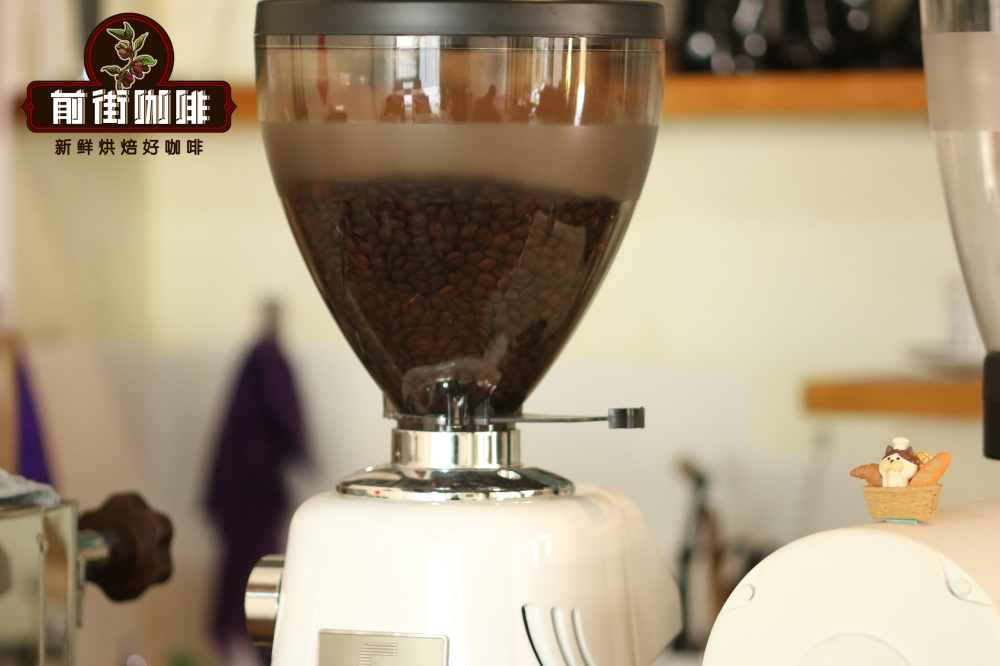
If the grind is slightly finer, the resistance of water passing through the coffee bed increases, making over-extraction likely; conversely, if the grind is slightly coarser, water flows through unimpeded, tending toward under-extraction. The cause of such deviation may be just a 0.1-step difference in grind setting. For this reason, we usually infer the suitable particle range during actual brewing by observing the flow rate of the espresso and tasting the flavor.
Choose the Right Coffee Beans
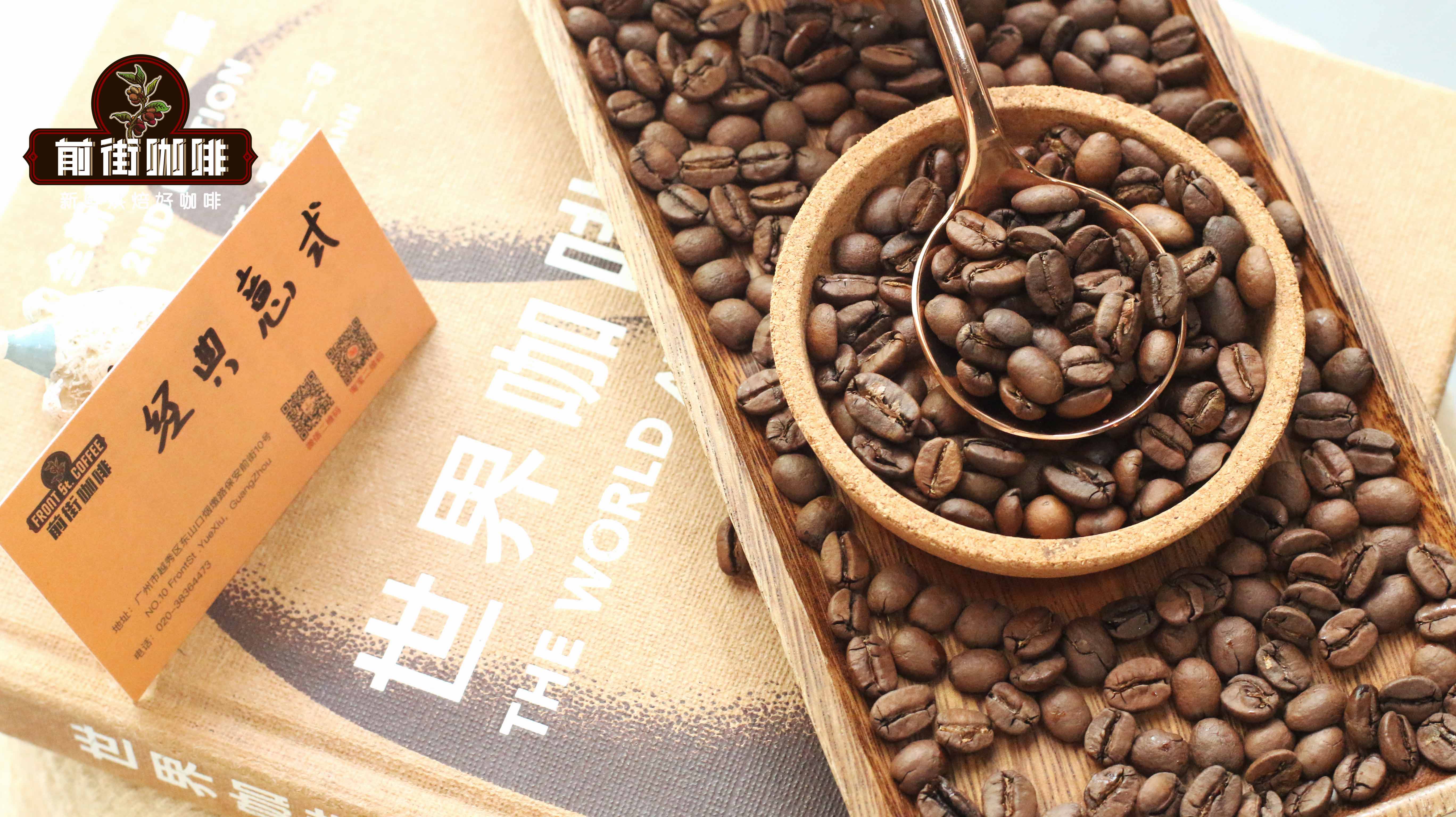
In fact, to make ideal espresso, besides adjusting various parameters, Front Street has always believed that choosing the right beans is fundamental, because it directly determines whether the coffee ultimately tastes good. If you want to recreate cafe-level espresso at home, Front Street recommends Front Street Classic Espresso Blend. This blend is composed of coffee from Brazil, Indonesia, and Vietnam, combining the caramel sweetness of American beans with the wild character of Asian beans. To maximize the rich aroma while allowing users to easily extract thick, dense crema, Front Street Coffee uses a deep roast. Whether making an Americano diluted with water or a latte paired with milk, it can handle it. It can be purchased at the Front Street Taobao store or the Front Street Tmall flagship store.
How do you first lock in the appropriate grind size range?
When you get a bag of unfamiliar coffee beans, if you want to brew a good cup, the first step is to determine the approximate grind size range. If the grinder has never been used and you do not know which setting to start from, you can first take a small amount of beans and test them one by one across several settings. When the coffee grounds are ground to a texture close to flour, feeling soft and dense when rubbed with your fingers, with no coarse granular feel, then it is roughly right.
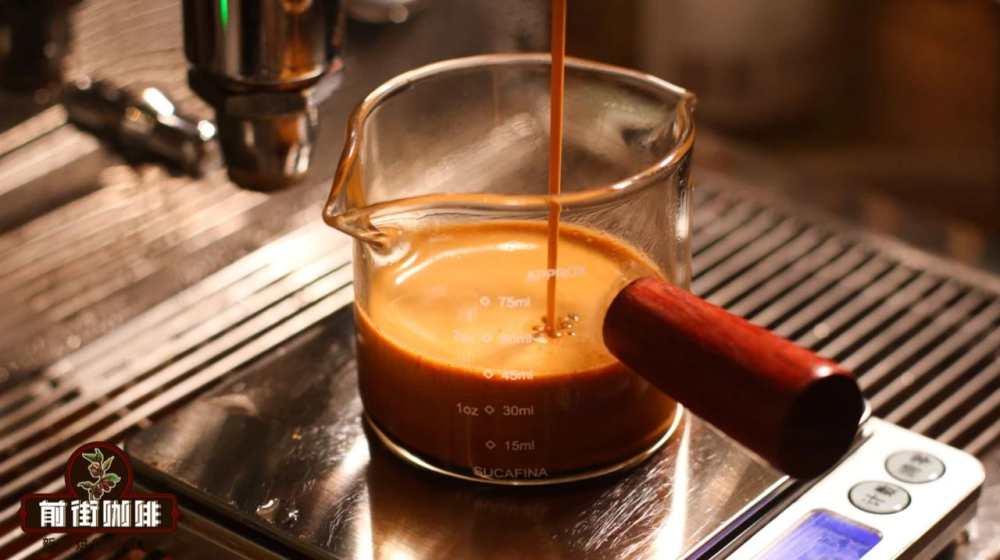
Next, you can apply the commonly used espresso formula to test extraction. Front Street recommends a coffee-to-liquid ratio of 1:2, meaning 1 gram of coffee grounds corresponds to about 2 grams of coffee liquid, with extraction time controlled between 20 and 30 seconds. For example, if Front Street uses a 20-gram capacity portafilter basket, then dose 20 grams of coffee grounds and ultimately extract 40 grams of coffee liquid. If the time is less than 20 seconds, it means the flow rate is too fast; if the espresso flow takes more than 30 seconds, it means the flow rate is too slow.
A fast flow rate means the contact time between water and coffee grounds is too short, and the taste is often weak or sour, so the grind needs to be adjusted finer. Adjusting the setting mainly relies on experience accumulated over time: if the difference from the target time is less than 5 seconds, you can fine-tune by 0.2 steps each time; if the gap is large, you may be bolder and adjust by 0.5 to 1 step. Even if it changes from taking too long to taking too short, this can help you lock in the upper and lower limits of the grind setting, then gradually narrow the range. Similarly, if the flow is too slow, it means the grounds are too fine, water struggles to pass through the coffee bed, and the coffee easily becomes bitter and astringent, so it needs to be adjusted coarser.
How do you find the correct grind setting?
The formula mentioned above by Front Street is only meant to help us quickly find the appropriate grind range; it does not mean that the espresso extracted this way will definitely taste good. Ultimately, it is still necessary to judge whether the extraction is qualified based on the characteristics of the coffee beans themselves and the actual taste.
If the espresso shows obvious burnt bitterness but the strength is moderate, it may be that the extraction time is too long, causing excessive release of bitter substances, and the grind can be adjusted slightly coarser. If the crema on the surface of the coffee liquid is lighter in color and thin in texture, it may be that too much of the final stage was extracted, so you can reduce the weight of the coffee liquid, that is, extract less, and it is suggested to increase the coffee-to-liquid ratio to between 1:1.5 and 1:1.7. When the espresso has a rich flavor but a short finish, you can extract a little more coffee liquid and try adjusting the ratio to 1:2.5.
In the end, the extraction formula is only a reference. If you are trapped by it, it will be hard to flexibly adjust for good flavor, and in the end you can only keep adjusting the grind size, wasting coffee beans for nothing. The 1:2 ratio is not necessarily the golden ratio for a certain bean; sometimes 1:1.7 tastes better, and sometimes 1:2.5 is what makes it shine. The time does not necessarily have to be limited to 25 to 30 seconds either; sometimes 36 seconds or 24 seconds is the best state for that bean. Front Street is daily cafe production, and parameter adjustments are based on experience accumulated over time. If we make fewer cups at home and find it harder to judge, Front Street suggests keeping records and summarizing more of the relationship between extraction parameters and flavor performance. This is more helpful for quick adjustments and can also reduce unnecessary waste.
How do you drink espresso?
Before formal tasting, it is best to take a sip of ice water first. Because the taste of espresso is simply too concentrated, drinking a sip of ice water beforehand can clean the palate and thereby improve our ability to perceive the coffee's flavor.
After drinking the ice water and rinsing your mouth, first take a spoon and stir the espresso. There are two reasons: first, the coffee is not at a uniform concentration as it drips, and stirring is needed to distribute the concentration evenly; otherwise, the coffee liquid at the bottom will be very strong while the surface is extremely thin. Second, it allows the crema to reintegrate into the coffee liquid. The reason many people taste something very bitter when taking a small sip is that some fine particles are hidden in the crema. These fine particles not only bring bitterness but also increase body. Through stirring, the advantages of the crema can be perfectly integrated into the coffee liquid, while the bitterness brought by the fine particles is dispersed.
Of course, not stirring is also fine, and this gives a richer layered experience. But if you are a beginner just starting out, Front Street still recommends stirring to reduce the bitter stimulation from the crema.
Then, we need to take a big sip, letting the evenly stirred espresso rush into the mouth, filling and wrapping around the tongue. This allows you to fully feel the silky touch brought by the crema, very pleasant! If what is used is not a dark roast but a light-roast SOE, then because the beans are roasted lighter, less crema is extracted, and the mouthfeel will be relatively thinner.
Next, begin to feel the coffee's finish. After swallowing, close your mouth and exhale, fully enjoying the flavor that rises back from the throat, as well as the coffee aroma that keeps blooming in the mouth! Finally, take another sip of clear water to feel the coffee's sweet aftertaste on the taste buds. It really could not be more relaxed!!
The above content is compiled by CoffeeHunters, a coffee news website.


