







How Do You Use a Moka Pot for SOE Coffee?
A moka pot lets you make a rich home americano without an expensive espresso machine. The device was invented because early commercial espresso machines in Italy, including La Pavoni's 1905 model, were costly and produced a thin, americano-like cup that ordinary families could not afford.
Sun-dried Huakui SOE coffee beans work well in a moka pot, giving floral and fruity aromas with caramel sweetness. The question of whether Huakui coffee powder suits moka pot americano is answered by following the detailed brew steps, which recreate a full-bodied, richly flavored cup at home.
Many people who love espresso are often captivated by its rich body and lingering sweetness. However, home espresso machines are quite expensive, and not every household can easily afford one. If you want to easily enjoy a cup of rich coffee at home, the moka pot is undoubtedly an ideal choice. This article will start from the historical origins of the moka pot, walk you through the invention story of this classic device, and answer a common question: is Huakui coffee powder suitable for making moka pot americano? At the same time, Front Street will also share detailed steps for making moka pot americano using sun-dried Huakui SOE coffee beans, helping you easily recreate at home a rich cup of coffee with floral and fruity aromas and caramel sweetness.
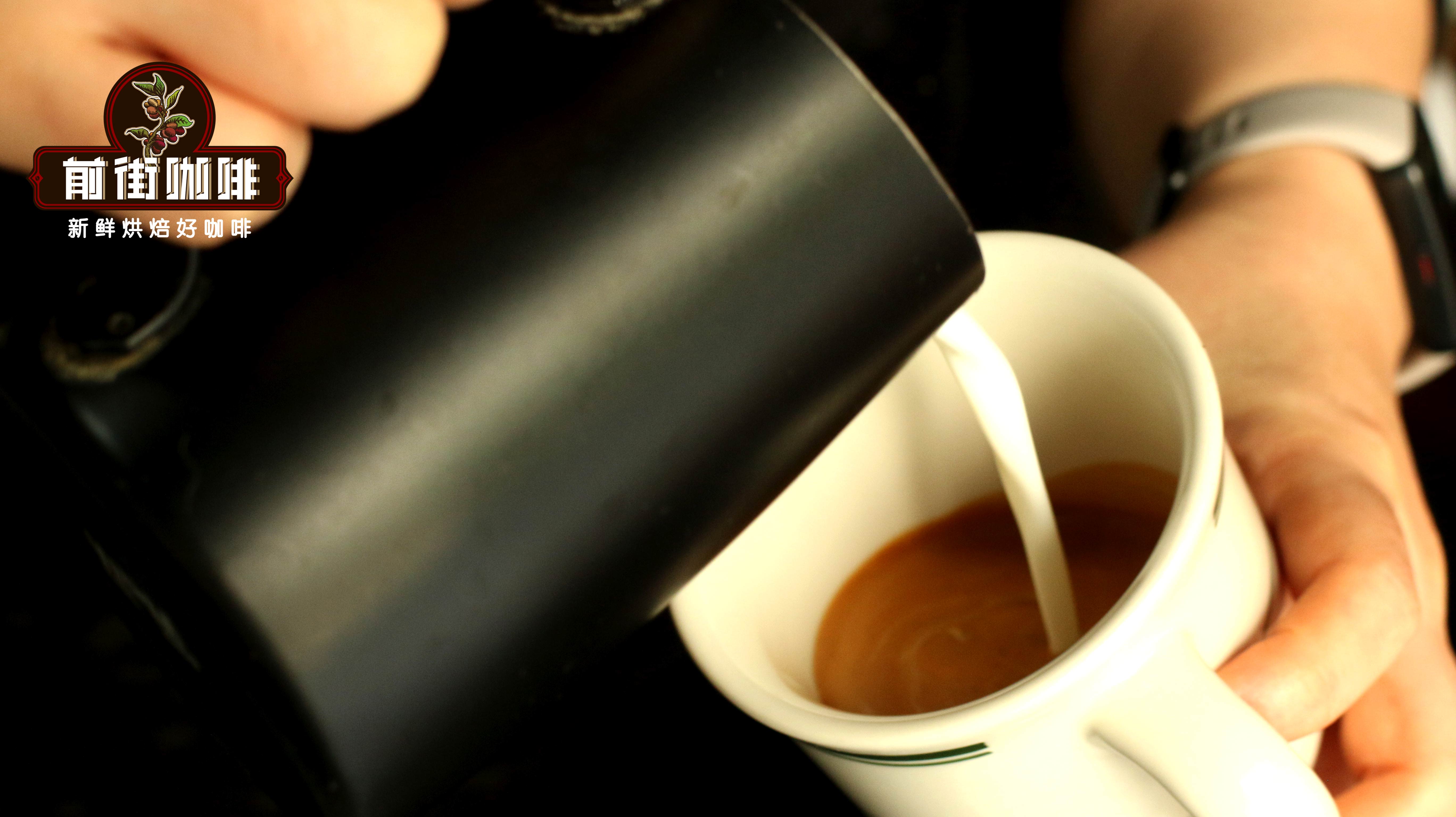
Many friends who have tasted espresso are drawn in by its intense flavor and long-lasting finish. However, not every household is equipped to have an espresso machine. If you want to easily make a cup of richly flavored coffee at home, you might consider getting a moka pot.
Speaking of the moka pot, Front Street would first like to look back with everyone at the background of its birth. As early as the late nineteenth to early twentieth century, Italians had already fallen deeply in love with strong-tasting coffee.
The world's first espresso machine was also born in Italy and made its debut in Turin. In 1905, the La Pavoni company manufactured a commercial espresso machine for bars and cafes, and it quickly set a trend. At that time, espresso machines needed to be placed directly on a heating device, the water temperature used was close to boiling, and the pressure was almost the same as atmospheric pressure. Therefore, espresso in that era did not have rich crema, and its mouthfeel was rather thin, actually quite similar to today's americano.
Although espresso at that time tasted weak and had a burnt bitterness, it did nothing to reduce Europeans' enthusiasm for coffee. However, in that era, those who could drink espresso were either rich or noble, and a cup of coffee in a cafe was also priced high, making it difficult for ordinary families to afford. Thus, the moka pot came into being.
One of the advantages and disadvantages of brewing coffee with a moka pot is that although it replaced the espresso machines of that time, its flavor performance was relatively ordinary.
According to historical records, the moka pot was introduced in 1933 in Crusinallo, northern Piedmont, Italy, and its inventor was named Alfonso Bialetti. This inventor had previously worked in the aluminum metal industry in France for more than ten years, and later returned to his hometown to found his own workshop, specializing in making and selling aluminum household goods.
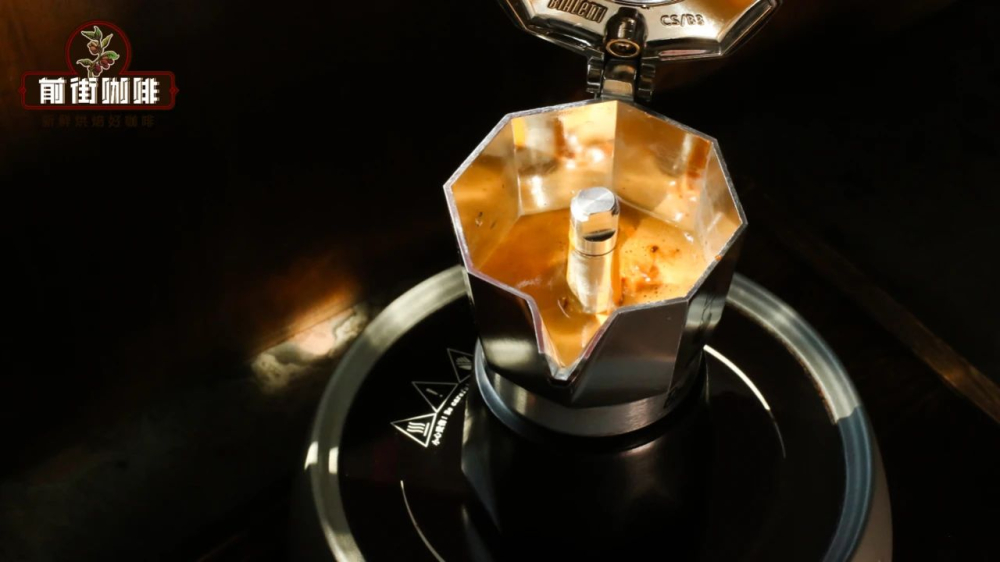
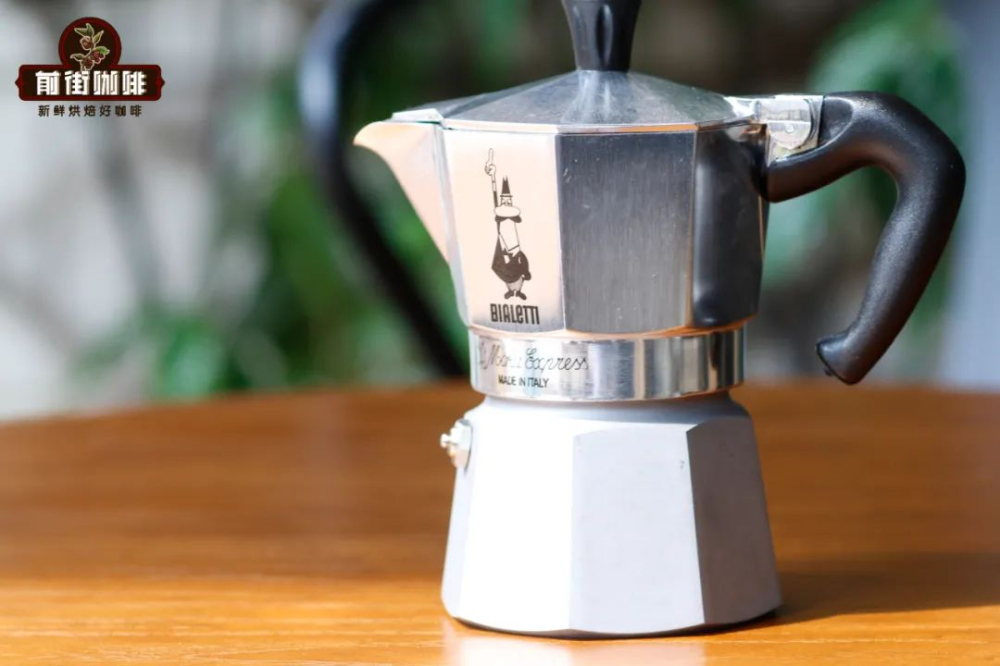
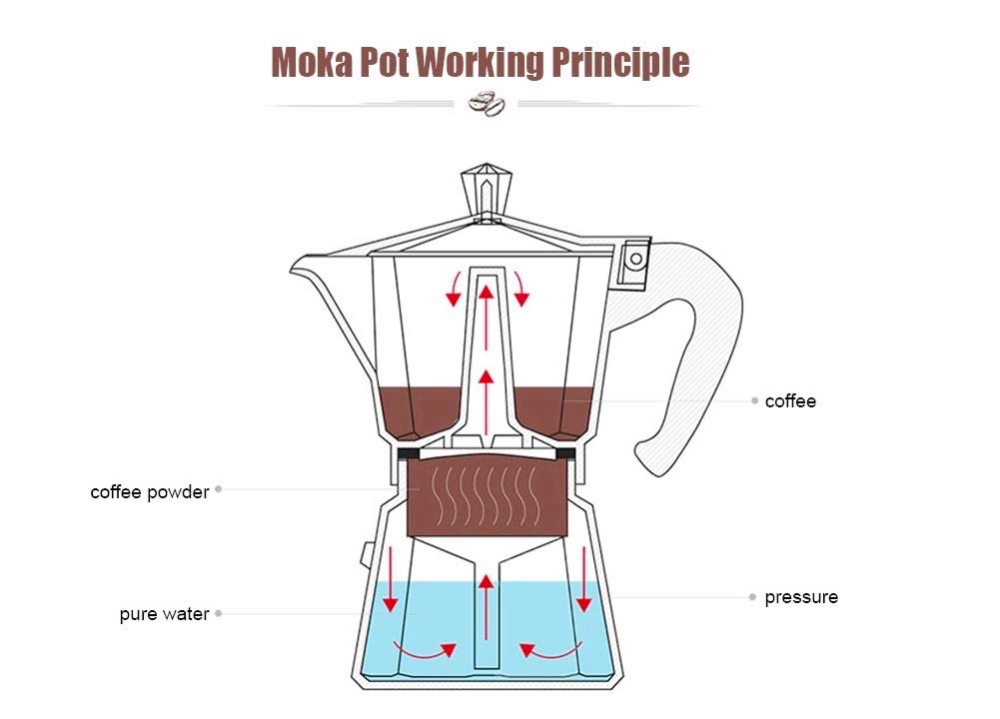
The Bialetti moka pot has an octagonal appearance, is made of aluminum, and its plastic handle provides heat insulation. The device is mainly divided into three parts: the bottom container is used to hold hot water and receive heat, the middle has a metal filter for holding coffee grounds, and the top container has a tube connected to the lower part to collect the brewed coffee liquid.
When brewing coffee with a moka pot, first fill the bottom chamber with hot water, fill the middle filter basket with coffee grounds and install it onto the bottom chamber, then screw the top chamber tightly onto the bottom chamber, and finally place the entire moka pot on a heater. When the hot water in the bottom chamber boils, the bottom chamber produces steam, and the pressure inside the pot rises accordingly, forcing the hot water through the coffee grounds in the middle and continuing to push the hot water through the tube running through the upper and lower chambers into the top chamber.
Friends who have noticed the gaps in the middle filter should know that the grind size usually used for espresso machines is not the same as moka pot coffee grounds. Because the holes in a moka pot's filter are larger, moka pot coffee grounds are slightly coarser than espresso grounds; you only need to make sure the coffee grounds will not fall into the bottom chamber.
What kind of coffee beans is a moka pot suitable for brewing?
After getting a moka pot, some friends begin to eager to try and want to brew a pot of espresso liquid themselves, but they often encounter a problem: why can't a moka pot produce crema?
Coffee beans usually used for pour-over coffee are roasted on the lighter side. The coffee crema everyone wants is actually made up of countless tiny carbon dioxide bubbles. Lightly roasted coffee beans need to release less carbon dioxide gas than dark roasted coffee beans, so the coffee crema everyone expects is naturally less.
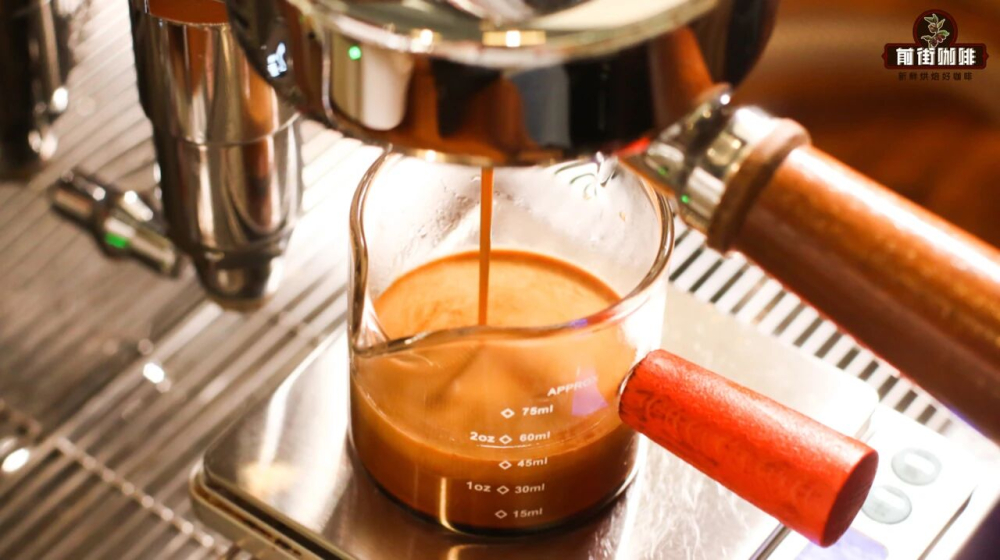
Because coffee brewed with a moka pot is relatively rich, Front Street recommends using medium-roasted Front Street sun-dried Huakui SOE coffee beans. This can preserve the floral and fruity aroma many people expect while also allowing moka pot coffee to show a certain caramel aroma and rich mouthfeel. So, how exactly should you use Front Street sun-dried Huakui SOE to make moka pot americano?
1. Pour purified water into the bottom chamber of the moka pot, keeping the water level about 0.5 cm below the safety valve.
2. Choose a coffee grind size slightly coarser than espresso. You can refer to the size of the gaps in the filter basket to make sure the coffee particles will not fall into the bottom chamber. Slowly pour the coffee grounds into the filter basket, tap gently to distribute the coffee grounds evenly, and when the coffee grounds form a small mound, level the coffee surface by distributing the grounds.
Filling the basket with grounds is to avoid extracting unpleasant defective flavors. Because the closer the density of the coffee grounds in the basket, the more you can avoid some coffee grounds being over-extracted or some being under-extracted, which would lead to uneven flavor or a bitter taste.
3. Put the filter basket into the bottom chamber, tighten the upper and lower parts of the moka pot, and place it on an electric ceramic stove over high heat;
4. When the moka pot heats up to a certain temperature and you hear a clear "hissing" sound from the moka pot, turn the electric ceramic stove to low heat and open the lid of the top chamber.
5. When the coffee liquid in the top chamber has come out halfway, turn off the electric ceramic stove. The residual heat and pressure of the moka pot will "push" the remaining coffee liquid into the top chamber.
6. When all the coffee liquid has been extracted into the top chamber, you can pour it into a cup. You can see that the coffee extracted by the moka pot is very rich and can also extract Crema, with a mouthfeel somewhat close to espresso. At this point, we can add hot water at a ratio of 1:3, and a cup of Huakui SOE americano is ready.
The above content is compiled by CoffeeHunters, a coffee news website.


