







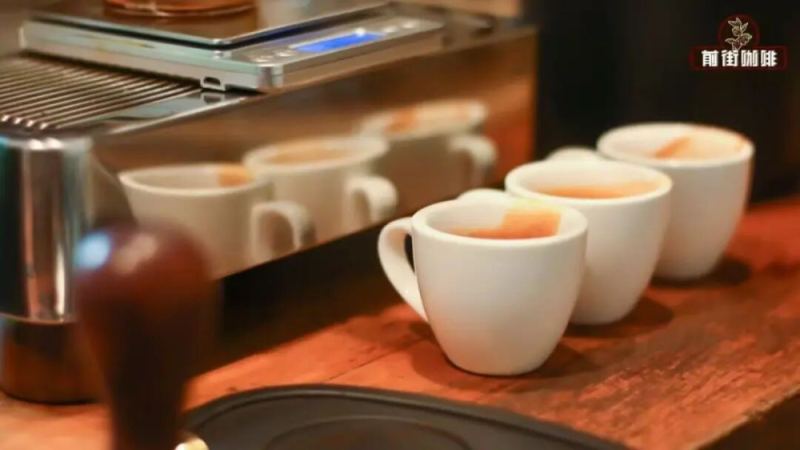
When Do You Adjust the Grind Setting on an Espresso Grinder?
Espresso grind setting needs adjusting every day, because bean condition and weather shift the extraction and the shot stops tasting as it did the day before. Baristas taste the shot first, decide whether it is under-extracted or over-extracted, then change one variable at a time, usually grinding finer or coarser.
Front Street uses a 1:2 coffee-to-water ratio and a 30-second extraction as the baseline, then tunes three variables: grind setting, dose, and liquid yield. Working in small steps against that baseline lets a barista reach a satisfactory taste while wasting only a small amount of beans, rather than half a bag.
Every day, the condition of coffee beans and the weather are changing, and the taste of espresso fluctuates along with them. Quickly dialing in a shot of espresso has become a daily required course for baristas. Starting from actual production, this article explains how to judge by tasting whether a shot is under-extracted or over-extracted, and how to adjust accordingly using three variables: grind setting, dose, and liquid yield. Front Street Coffee uses a 1:2 coffee-to-water ratio and a 30-second extraction time as the baseline, and, combined with the flavor performance of its classic blend beans, shares the specific operating steps of the three-grind dial-in method to help coffee lovers find ideal parameters while wasting only a small amount of beans.
For more specialty coffee knowledge, please follow: Front Street Coffee (Frontsteet Coffee)
The condition of coffee beans and the weather change every day, which directly affects the extraction result of espresso and also causes daily differences in coffee flavor. If you want to maintain a stable, good taste, you have to correct it by adjusting parameters. This is the daily task every morning-shift barista must do—dialing in the taste of espresso.
But for most baristas, especially those who have just entered the industry, dialing in espresso is not an easy task. A moment of carelessness can waste more than half a bag of beans. Sometimes when the flavor is not dialed in well, you end up feeling nauseated from drinking it yourself, and it is miserable. So, is there any method or technique that can help us quickly dial in espresso without wasting too many beans or too much time?
Of course there is. Most of the time, we can actually use some techniques to quickly find the corresponding parameters for espresso and dial in a satisfactory taste in just a few steps. The method is also very simple: you only need to "drink" to identify the problem with the espresso, then treat the symptom with the right remedy, and you can dial in espresso in a very short time, achieving the so-called three-grind dial-in, or even less.
What is the problem with espresso?
As Front Street mentioned earlier, the reason we need to dial in espresso is that its taste changes under the influence of its own condition and the weather, becoming less delicious than the day before, which is why adjustment is needed. So the problem we need to identify is where it tastes worse than the day before. Once we know the cause, we can know how to adjust it.
When the ratio remains unchanged, there are only two reasons that make coffee taste bad: under-extraction and over-extraction. Their corresponding manifestations in coffee are: sharp acidity, thin body/bitterness, and a heavy muddled sensation.
Under-extraction means that not enough substances have been extracted from the coffee grounds. There are not enough sweet and bitter substances to balance the acidity, so the flavor is mainly acidic and rather sharp. At the same time, because there are not enough substances, the coffee's concentration decreases and the body becomes somewhat thin;
Over-extraction means that too many substances have been dissolved out of the coffee grounds, for example, a large amount of bitter and muddled substances has been dissolved out, which is why the coffee becomes overly bitter and has a heavy muddled sensation.
So when we taste any negative condition in espresso, we only need to apply the right remedy and it can be easily corrected. For example, if the problem shown by the coffee is under-extraction, then we can increase the extraction rate by improving extraction efficiency; if it is over-extraction, then we reduce extraction efficiency to prevent excessive dissolution of bitter and muddled substances.
Of course, it sounds simple, but in actual adjustment there is still a certain degree of difficulty. For example, when dialing in, many friends often either see no change at all, or make an extreme, large shift, going directly from under-extraction to over-extraction. So next, Front Street will share how we can quickly dial in a shot of espresso.
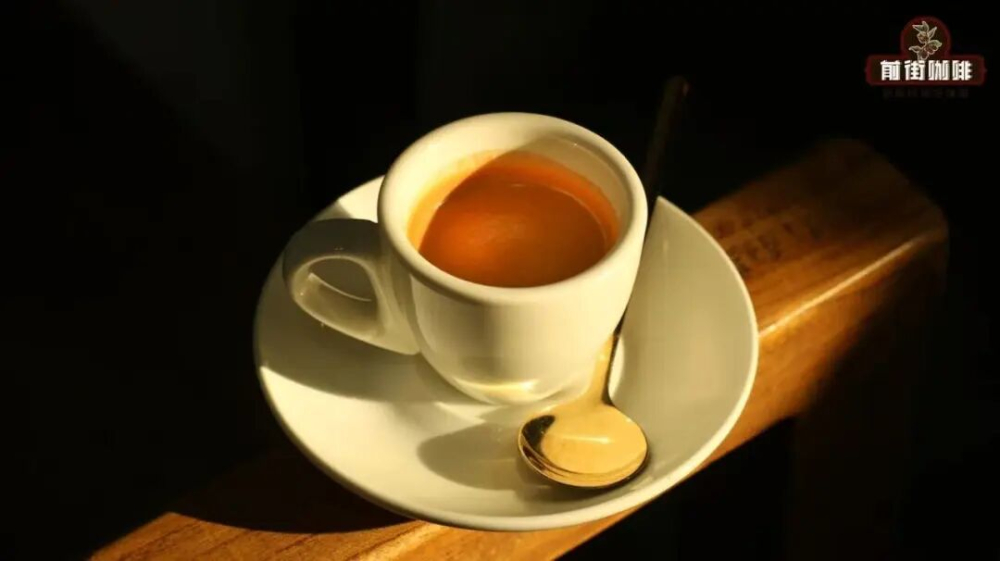
How do you dial in a shot of espresso?
Before dialing in espresso, we need to first set an approximate extraction formula, and then use this formula as the target to adjust the coffee parameters. The purpose is simple: to establish a reasonable baseline range in advance, which can effectively avoid resource waste caused by blind adjustment.
Taking Front Street as an example, when adjusting espresso, Front Street uses a "1:2 coffee-to-liquid ratio" and a "30-second extraction time." That is, if 20 g of coffee is used, then the liquid yield needs to land at around 40 ml, and the extraction time needs to be around 30 seconds. (These parameters are not fixed and can fluctuate slightly.)
A time of around 30 seconds can provide a certain guarantee for the espresso's extraction yield, so that the espresso produced will not be too far from delicious. At the same time, this ratio allows the espresso to have a certain strength, so it can be used as a base to make all kinds of rich and delicious fancy coffee drinks. Front Street's approach to dialing in espresso is to first adjust the parameters into the range set by the formula, and then make fine adjustments based on the coffee's taste. This is the secret of the three-grind dial-in method.
Dose, grind, and liquid yield are the three variables we need to control when extracting espresso. But because the former and the latter are both limited—for example, the filter basket you use limits the dose you can use, and concentration limits your ratio—the main object we adjust is the grind. Of course, Front Street is not saying that dose and liquid yield cannot be adjusted, only that the range within which they can be adjusted is relatively small, making them more suitable for changes when fine adjustment is needed.
The coarseness or fineness of the coffee grind is related to extraction yield and time. When other parameters remain unchanged, the finer the coffee is ground, the longer the extraction time will be and the higher the extraction yield will be; the coarser it is ground, the shorter the extraction time and the lower the extraction yield.
Combining the above two points, Front Street believes everyone should now know how to quickly dial in a shot of espresso. Here, still taking Front Street as an example, the coffee beans Front Street uses for espresso are the Front Street Classic Blend from its bean list. The perfect espresso extracted with it should have just the right high concentration, balanced taste, and prominent butter cookie, chocolate, and caramel flavors.
When adjusting it, Front Street will first extract a shot of espresso entirely according to the golden ratio of 1:2, and make a preliminary measurement of whether the grind setting is appropriate. Because the grind setting is related to extraction time, the standard for judging, besides taste, is also time.
It is easy to understand: under the condition that the dose and liquid yield are both fixed, see whether the extraction time can reach our set range of 30 seconds (±3 seconds). If it can, then this grind setting most likely has no problem, and next we only need to make fine adjustments to the dose or liquid yield based on whether the taste is suitable. But if it far exceeds this range, then we need to judge based on taste whether the grind should be adjusted.
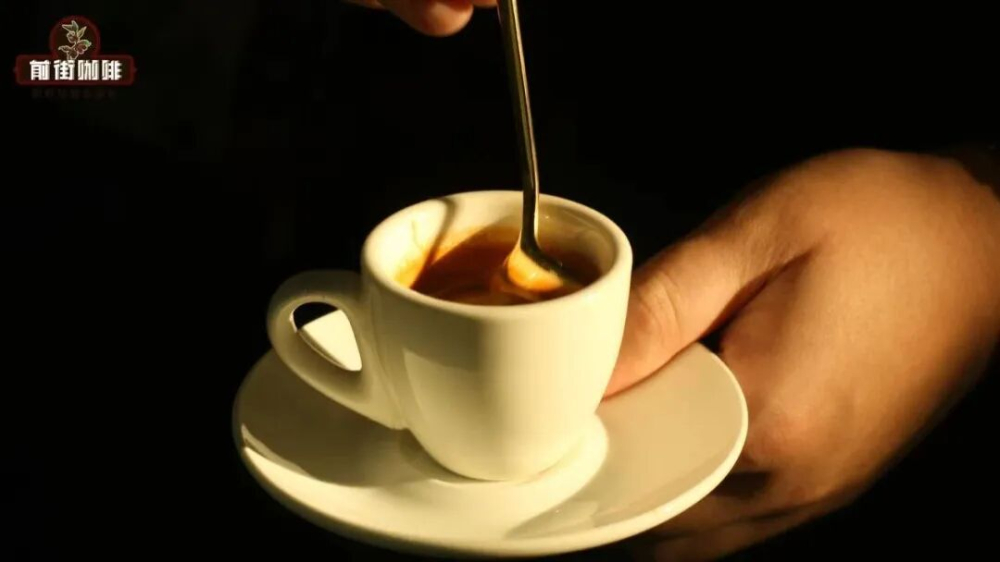
The dose Front Street used here was 20 g, the extracted liquid yield was 40 ml, and the extraction time was 23 seconds, greatly deviating from the set target. The taste also performed like the under-extracted coffee Front Street described, with a sharp acidic taste and a thin body. So, after tasting this espresso, Front Street adjusted the grinder two notches finer. (You need to taste first—what if the coffee extracted with this parameter is delicious?)
Because espresso extraction is relatively extreme, for every notch finer you adjust the grind, with other parameters unchanged, the extraction time will increase by 3–4 seconds. After adjusting the grind, Front Street then used the same dose to extract the same liquid yield. At this point the extraction time reached 31 seconds, which was within the formula time range that had been set. And the coffee taste tasted was not much different from what Front Street considered the ideal espresso performance: balanced taste, prominent flavors, only with a little bit of bitterness felt in the finish.
In this kind of situation, the coffee has been slightly over-extracted. We do not need to make a big change by adjusting the grind; we only need to appropriately reduce the liquid yield by 1–2 ml, or reduce the dose by 0.2–0.3 g, to lower the coffee's extraction yield and obtain a relatively perfect shot of espresso.
The above content is compiled by CoffeeHunters, a coffee news website.


