







American coffee seems simple—just espresso diluted with water—but what truly determines whether a cup of American coffee tastes good is often the combination of bean selection and extraction parameters. This article starts with the difference between blended beans and SOE, explaining how blending complements flavors and why SOE demands higher bean quality. Using three Front Street Coffee beans as examples, it provides specific blending ratios, flavor descriptions, and brewing parameters for three styles: sour-leaning, full-bodied, and balanced. The article also includes tasting steps to help readers fully experience the layers and lingering sweetness of a cup of American coffee, from smelling the aroma and observing the color to tasting.

The essence of American coffee is espresso diluted with water, typically using dark-roasted Italian-style beans. At Front Street, when making American coffee, we blend single-origin beans from two regions together. This compensates for the low acidity shortcoming of traditional Italian coffee and makes the overall mouthfeel richer. Many people ask: do you have to use Italian-style blended beans to make American coffee? If you switch to other beans, how would the flavor change? To answer this question, Front Street simply conducted a comparative experiment, using two of our own blended beans for actual testing.
What coffee beans are used for American coffee?
They can be roughly divided into two categories: one is blended coffee beans, and the other is SOE, which stands for single origin espresso. The core difference between the two lies in the number of bean types—blended beans contain at least two or more types of coffee beans, while SOE uses only one.
FrontStreet Coffee American Coffee Bean Offerings
The purpose of blending is to bring together the flavors of coffee beans from different regions to create a completely new taste expression, making the overall cup more balanced. For example, if a certain bean is smooth in mouthfeel but lacking in aroma, you can add another bean with a prominent aroma to make up for the shortfall and enhance each other. When blending, it is recommended to use three types of coffee beans, because once there are too many varieties, the combined flavor becomes difficult to control and prone to favoring one aspect at the expense of another.
The coffee beans chosen for SOE focus on highlighting the characteristics of the region itself. If you simply prefer the flavor of a certain region, choosing SOE will suit your taste very well. However, although SOE has a distinct personality, because it comes from a single origin, its flaws are also easily magnified. Once the bean quality is not good enough, the SOE coffee made from it will not taste good, and there may not even be other flavors to mask it. Therefore, in practice, SOE places relatively higher demands on technique in all aspects, which is one reason SOE coffee is usually sold at a higher price than regular espresso.
How does FrontStreet Coffee make American coffee?
Sour-Leaning American Coffee Beans
Take 【Front Street Sunflower Warm Sun Coffee Beans】 as an example
Using Front Street Honduras Sherry coffee beans and Front Street Yirgacheffe Red Cherry coffee beans, the blending ratio is 7:3. The flavor has distinct fruity acidity, a faint berry aroma, wine notes, rich chocolate flavor, and a clear lingering sweetness.
Suggested brewing parameters for American coffee: 18 grams of grounds in a double portafilter (with a tolerance of plus or minus 1 gram), extract 36 grams of coffee liquid, extraction time 28 seconds, pour the coffee liquid into a 330ml cup already filled with ice and water. If you prefer a stronger coffee taste, you can appropriately reduce the amount of water; if you want a more diluted taste, you can appropriately add more water.

Full-Bodied American Coffee Beans
Take 【Front Street Commercial Blend Coffee Beans】 as an example
Using Front Street Colombia coffee beans, Front Street Brazil coffee beans, and Front Street Robusta coffee beans, the blending ratio is 3:6:1. The flavor has caramel sweetness, nutty and cocoa-like notes, dark chocolate flavor, balanced acidity and sweetness, a slight bitterness, and a lasting finish.
Suggested brewing parameters for American coffee: 18 grams of grounds in a double portafilter (with a tolerance of plus or minus 1 gram), extract 36 grams of coffee liquid, extraction time 28 seconds, pour the coffee liquid into a 330ml cup already filled with ice and water.
Balanced and Moderate American Coffee Beans
Take 【Front Street Specialty Blend Coffee Beans】 as an example
Using Front Street Colombia coffee beans and Front Street Brazil coffee beans, the blending ratio is 3:7. The flavor has a soft slight acidity, light sweetness, nutty lingering sweetness, and the overall impression is not too stimulating, gentle, with medium body.
Suggested brewing parameters for American coffee: 18 grams of grounds in a double portafilter (with a tolerance of plus or minus 1 gram), extract 36 grams of coffee liquid, extraction time 28 seconds, pour the coffee liquid into a 330ml cup already filled with ice and water.
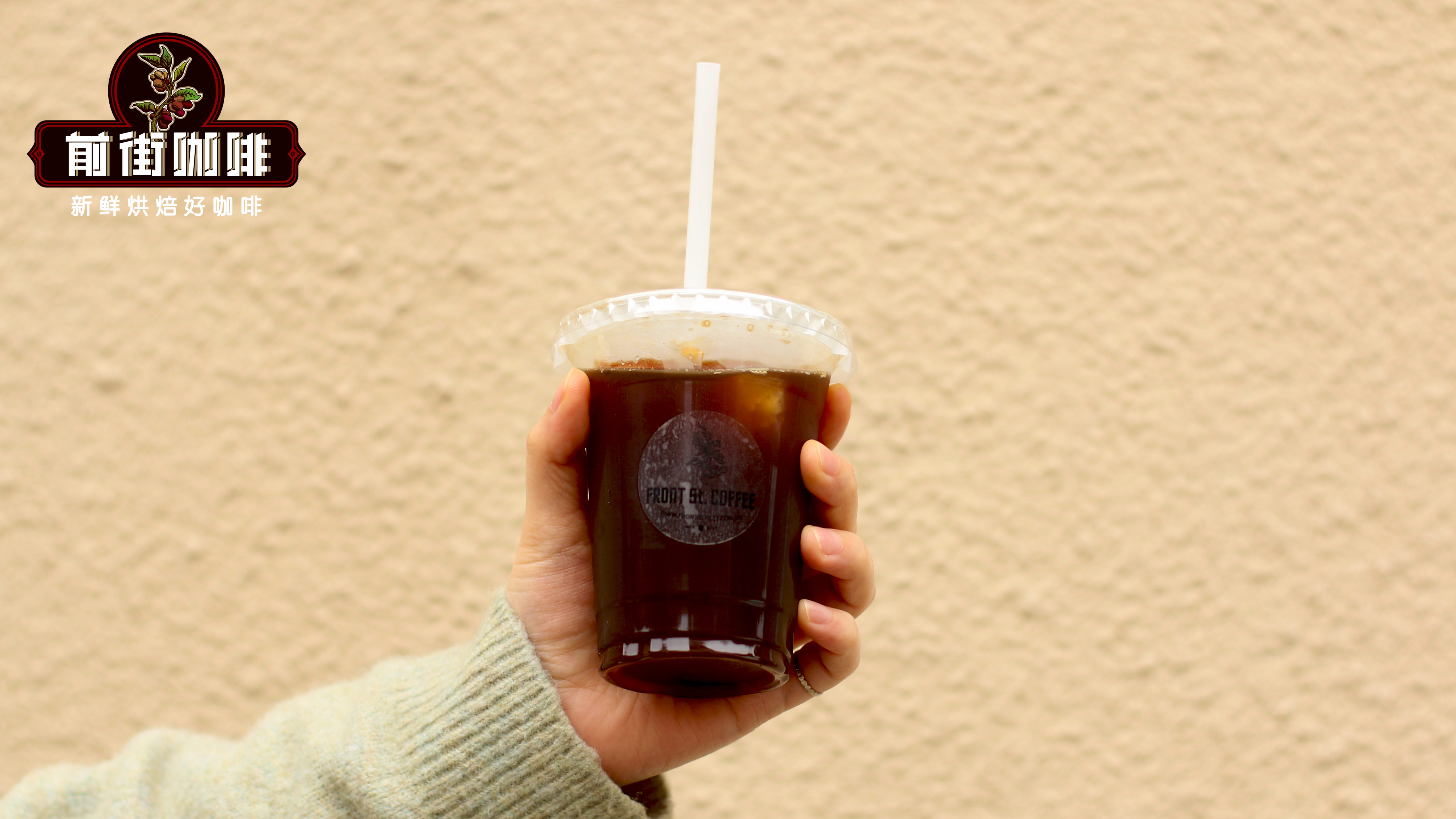
FrontStreet Coffee American Coffee Beans
The American coffees made from the above three blended beans each have different flavors. Friends who like acidity will find 【Sunflower Warm Sun Blend Coffee Beans】 very suitable; those who want something fuller-bodied should choose 【Commercial Blend Coffee Beans】; and if you want neither too sour nor too heavy, 【Specialty Blend Coffee Beans】 is the compromise choice.
Tasting Steps
When a cup of coffee is placed in front of you, do not rush to drink it. You should proceed step by step, like tasting tea or wine, to achieve the purpose of relaxation, refreshment, and enjoyment.
The first step is to smell the aroma and take in the rich fragrance of the coffee wafting toward you;
The second step is to observe the color. Coffee is best when it appears dark brown, rather than pitch-black and bottomlessly dark;
The third step is to taste. First take a sip of black coffee to experience the true flavor of the coffee. When it enters the mouth, the coffee should have some sweetness, slight bitterness, and slight acidity without astringency. Then sip it little by little. Do not rush to swallow the coffee in one gulp; instead, hold it in your mouth for a moment, let the coffee mix briefly with saliva and air, and then swallow.
The above content is compiled by CoffeeHunters, a coffee news website.


