







To make a dense, silky latte or cappuccino at home, the key lies in milk frothing and the pairing with espresso. Based on the practical experience of Front Street Coffee, this article systematically explains the selection and preservation of whole milk, the complete steps of steaming and texturing, and the parameter control in the extraction stage. It also introduces the flavor differences and blending ratios of three espresso coffee beans from Front Street — Sunflower Warm Sun, Black Cocoa, and Specialty Blend — helping coffee lovers choose the espresso beans that suit their taste preferences and master a stable espresso extraction method.
For more specialty coffee knowledge, welcome to follow: Front Street Coffee (Frontsteet Coffee)
In cafés, many people order a milk coffee based on espresso, such as a latte, cappuccino, or Americano. Different espresso drinks each have their own character: the latte emphasizes a balanced blend of coffee and milk, the cappuccino is known for its thick milk foam, and the flat white takes a light and gentle route — each has its own fans. Today Front Street Coffee (FrontStreet Coffee) will talk about the ins and outs of making espresso drinks.
A delicious fancy coffee depends on two things: a properly extracted espresso and a pitcher of well-frothed milk. By combining these two in different proportions and orders, you can create all kinds of flavors. Latte and cappuccino are made this way, except that the latte has a thinner layer of milk foam on top.
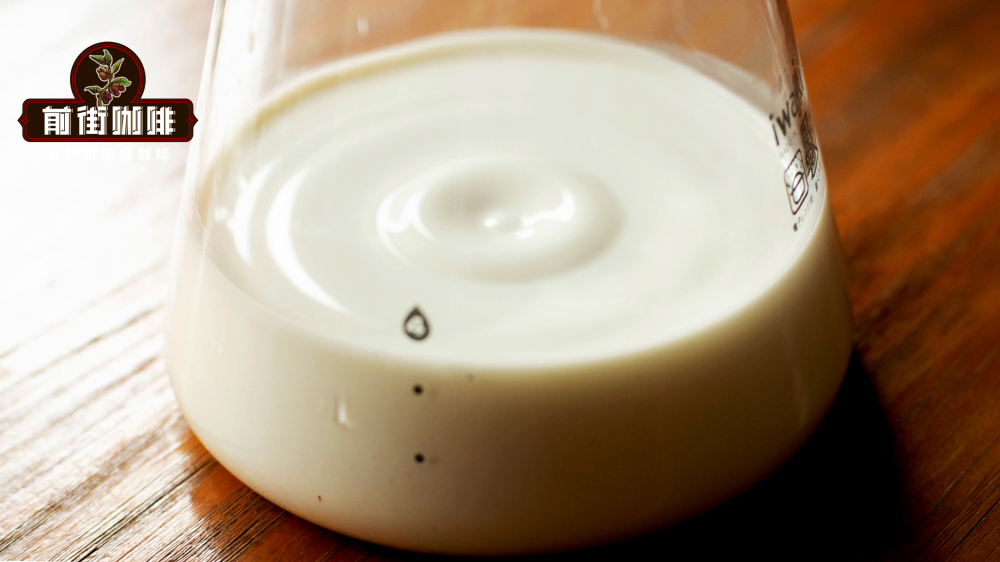
Milk plays a pivotal role in the whole cup of coffee. High-quality milk can amplify the flavor characteristics of the coffee itself, and only when combined with well-frothed milk can it present a smooth, sweet milk texture. Front Street Coffee (FrontStreet Coffee) usually chooses whole milk, because the fat and protein in whole milk not only enrich the mouthfeel but also help keep the foam stable.
The freshness of milk is also worth noting. After milk is stored for several days, the protein gradually breaks down into amino acids, and the flavor declines accordingly. Refrigerating it can slow down this change, but if you take it out and forget to put it back in time, it will actually speed up spoilage, even if it currently smells and tastes fine. Therefore, Front Street suggests that any leftover milk must be returned to the refrigerator immediately.
Once the milk is chosen, we move on to the frothing stage. Milk frothing is divided into two phases: steaming and texturing. Next, Front Street Coffee (FrontStreet Coffee) will introduce the specific procedure.

1. Pour the milk into the pitcher; the liquid level should be controlled between one-third and two-thirds below the pitcher's spout.
2. First clean the steam wand to remove any residue.
3. Move the pitcher close to the steam wand so that the tip is just submerged below the surface, with the submersion point slightly off the center of the liquid surface. Open the steam valve and pay attention to the hissing sound of the steam.
4. When enough fine foam has accumulated, slowly lower the pitcher. This stage is steaming; at this point the milk temperature must not exceed body temperature! Heat the milk to about 60 degrees, and never exceed 70 degrees, otherwise the protein structure in the milk will be damaged.
5. Next is texturing. Using the pitcher's spout as a pivot, lift the pitcher upward so that the steam wand goes deeper into the milk; the milk should form a vortex under the action of the steam.
6. When the pitcher starts to feel hot to the touch, at about 60–65°C (you can judge by touching the bottom of the pitcher; at this temperature you usually can't hold on for 3 seconds), texturing is complete.
7. Don't rush to close the steam valve yet; use the steam to clean the steam wand.

8. Tap the side of the pitcher lightly to break the large bubbles on the surface, then swirl the pitcher to fully blend the liquid and the foam. At this point, a proper batch of milk foam is ready.
Now that we've talked about milk, let's move on to espresso. The first step is choosing beans — picking a coffee bean that matches your taste preferences is crucial. The espresso blend currently used by Front Street Coffee (FrontStreet Coffee) is the Sunflower Warm Sun coffee bean, composed of two beans: Honduras Sherry and Ethiopia Yirgacheffe Red Cherry. Through repeated adjustments by Front Street Coffee (FrontStreet Coffee) baristas, a 6:4 blending ratio was determined. The espresso made with it has clear fruit acidity, with berry aroma and wine notes, and a long, comfortable sweet aftertaste.
This espresso blend is roasted by Front Street Coffee (FrontStreet Coffee) itself. In addition, there are three other espresso blends with different styles. For example, an espresso bean recommended by many Front Street Coffee (FrontStreet Coffee) baristas — Front Street Black Cocoa Blend coffee beans: made from Yunnan coffee beans and Brazilian beans in a 3:7 ratio. The espresso made with it has soft fruit acidity, caramel sweetness, obvious nut and dark chocolate flavors, and a smooth, viscous mouthfeel, but the overall taste is on the lighter side.
Next, look at Front Street Coffee (FrontStreet Coffee) Specialty Coffee Blend: using Colombia and Brazil, blended by Front Street Coffee (FrontStreet Coffee) baristas in a 3:7 ratio. The espresso made with it is slightly sour and gentle, lightly sweet, with a nutty aftertaste, overall not pungent and balanced, and the crema performance is medium.
Once the beans are selected, extraction can begin. Below are Front Street Coffee (FrontStreet Coffee)'s parameters for extracting the Sunflower Warm Sun coffee beans:
Grinder: Galileo Q18 Grind setting: 1.6 Pressure: 9 bar Temperature: 90.5–96°C Time: 20–30 seconds Dose: 20g (double espresso) Yield: 40ml
Ideally, the coffee liquid flowing from the spout should be uniform in both color and thickness. If the flow rate fluctuates, it may be that the beans are ground too fine or the tamp is too firm, lengthening the time for water to pass through the coffee puck and causing over-extraction (prominent bitterness); conversely, if the beans are ground too coarse or the tamping pressure is insufficient, water passes through the puck too quickly, leading to under-extraction (a watery taste and a thin mouthfeel).
If extraction is successful, Front Street Coffee (FrontStreet Coffee)'s espresso will present this flavor: smooth mouthfeel, medium body, obvious fruit acidity on entry, accompanied by a faint berry aroma and whiskey notes, rich chocolate flavor, and a clear sweet aftertaste.
The above content is compiled by CoffeeHunters, a coffee news website.


