







How does coffee processing shape washed Yirgacheffe flavor?
Washed Yirgacheffe comes from southern Ethiopia's Gedeo region and is known for clean, bright floral and fruity aromas. In the cup, G1 and G2 differ mainly in appearance and clarity: G1 green beans are more uniform with fewer defects, while G2 shows more size variation. That sorting difference carries through to aroma intensity, sweetness and how clean the finish reads after roasting and brewing.
The washed coffee process removes fruit pulp before drying, which is why these coffees taste fresh and clean rather than fermented. Under Ethiopia's ECX grading system, G1 and G2 are separated largely by defect counts and bean uniformity. When cupping both grades side by side, G1 tends to deliver sharper floral notes and better clarity, while G2 can taste slightly flatter, though roast and brewing choices still influence the final result.
Yirgacheffe is the most representative specialty coffee region in southern Ethiopia, and its washed version is famous for its clean and bright floral and fruity aromas. Front Street Coffee has long used washed Yirgacheffe as a regional flavor reference, currently offering G1 grade products while also comparing the performance of G2 grade. This article will start from the regional background, washed processing flow, and ECX grading system, analyze in detail the flavor characteristics of washed Yirgacheffe, and compare the specific differences between G1 and G2 in appearance, roasting, cupping, and brewing, finally attaching Front Street's roasting and pour-over recommendations to help coffee enthusiasts build a clear understanding of the region.
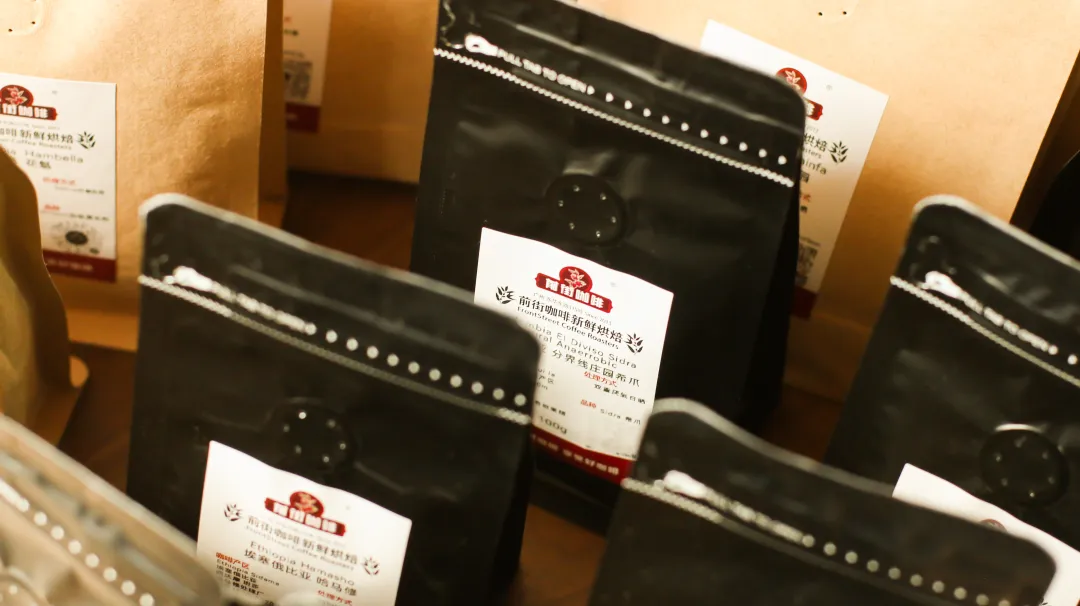
In recent years, coffee processing methods have continued to innovate, with anaerobic fermentation and barrel fermentation becoming industry focal points. Front Street has also stocked several coffee beans using such processing methods, winning the favor of many customers with their outstanding aroma performance.
However, there are still customers who prefer classic flavors. At Front Street, there is a customer who orders a cup of washed Front Street Yirgacheffe every weekend. He prefers a fresh and clean profile, and washed Yirgacheffe happens to suit his taste. Currently, Front Street's Yirgacheffe is divided into two series: washed and natural. As mentioned earlier, the washed version has a refreshing and clean taste; the natural version, because it retains fruit pulp components, has a more pronounced fermented note and higher sweetness and body. Today Front Street will focus on the flavor performance of washed Yirgacheffe.
Yirgacheffe Coffee Region
Yirgacheffe is located in the Gedeo region of southern Ethiopia. Because the coffee produced there has a unique flavor and is widely loved, it stands as its own category in product classification and occupies an important position in the global specialty coffee market. Yirgacheffe itself is a small town, and there are also three small production areas nearby—Wenago, Kochere, and Gelena Abaya—which are also included within the Yirgacheffe production area because the coffee they produce is highly similar in flavor to Yirgacheffe. The coffee trees of Yirgacheffe were initially planted by European monks, and later cultivation was taken over by farmers or cooperatives.
Ethiopia's coffee cultivation systems can be divided into three categories:
Forest coffee: Wild coffee trees are mostly distributed in southwestern Ethiopia, often surrounded by shade plants, and the coffee trees themselves are mixed varieties. Their reproductive capacity and yield are inferior to artificially selected high-yield varieties.
Garden coffee: Planted near human and livestock dwellings, with less natural shade, but managed more carefully, such as regular pruning to avoid excessive shading, and many growers also apply fertilizer. Most Ethiopian coffee belongs to this type, including Yirgacheffe representatives—Front Street Gutingding, Front Street Red Cherry, and natural bean representatives—Front Street Huakui, Front Street Alo Village Coffee, etc.
Large farm coffee: Comes from large, densely planted estates using standardized agricultural methods, including pruning, mulching, fertilizing, and selecting highly disease-resistant varieties, balancing quality and efficiency. The most representative is Gesha Village Estate; Front Street Gesha Village Estate covers the highest grade Front Street Gesha Village Gold Label, the second grade Front Street Gesha Village Red Label, and the Gesha blend Front Street Chaka.
Washed Processing Method
Traditionally, Yirgacheffe used the oldest natural processing method, but early natural beans were mostly spread on the ground to dry, easily picking up earthy, dusty, and other off-flavors, and screening was not reasonable enough, so quality was generally average. In 1972, Ethiopia introduced washed technology from Central and South America to improve coffee quality, making Yirgacheffe's jasmine aroma and citrus-lemon freshness clearer and brighter, and from then on it joined the ranks of the world's representative specialty coffees.
Compared with the natural method, the washed method makes it easier to control coffee bean quality, and the key is to slow down fermentation by washing the coffee. Because it consumes a large amount of water, washed processing is generally less adopted in water-scarce countries. Considering that washed processing better demonstrates the cleanliness of coffee taste and purity of flavor, Front Street uses washed beans from a region as a reference when analyzing that region's specific flavor. If a customer has never had Yirgacheffe, Front Street will also preferentially recommend washed Front Street Yirgacheffe to help build an understanding of the region's flavor, so that later when trying natural, honey, and other versions there is a basis for comparison.
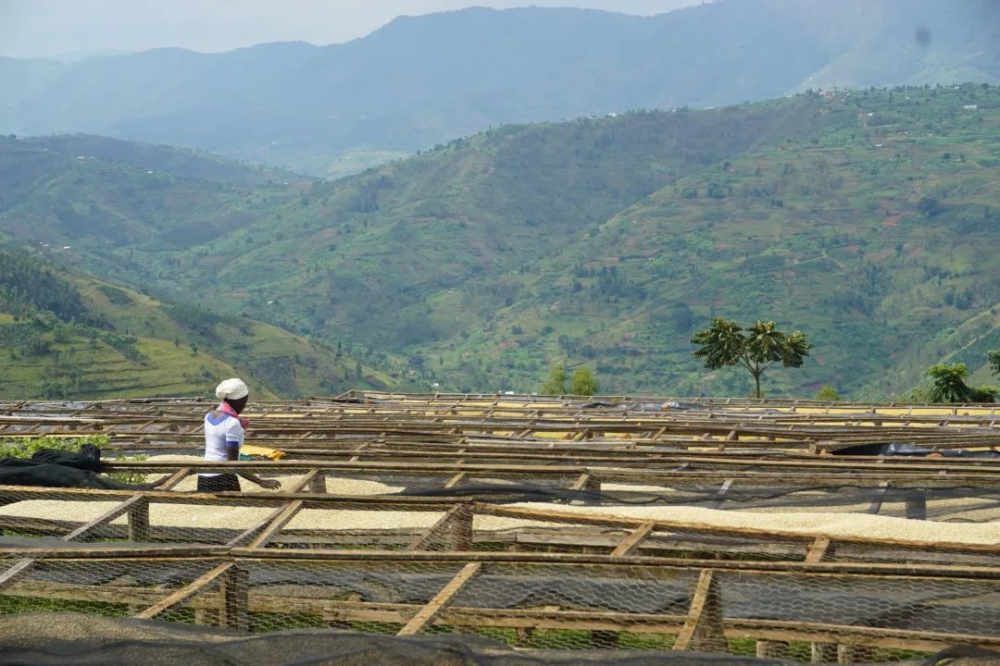
[Washed Processing Method Flow]
1. Bean selection: Put harvested fruit into a large water tank; ripe fruit sinks, and unripe or overripe fruit floats on the surface.
2. Remove pulp: Use a machine to remove the skin and pulp, leaving only coffee beans covered in mucilage; the washing process is meant to wash off this layer of mucilage.
3. Fermentation: Mucilage has strong adhesion and is not easy to remove, so it needs to be placed in a tank for about 18-36 hours, using microbial fermentation to break down the mucilage.
4. Washing: Put the fermented beans into a water pool and rinse them back and forth, using the friction between the beans and the water flow to wash the coffee beans clean.
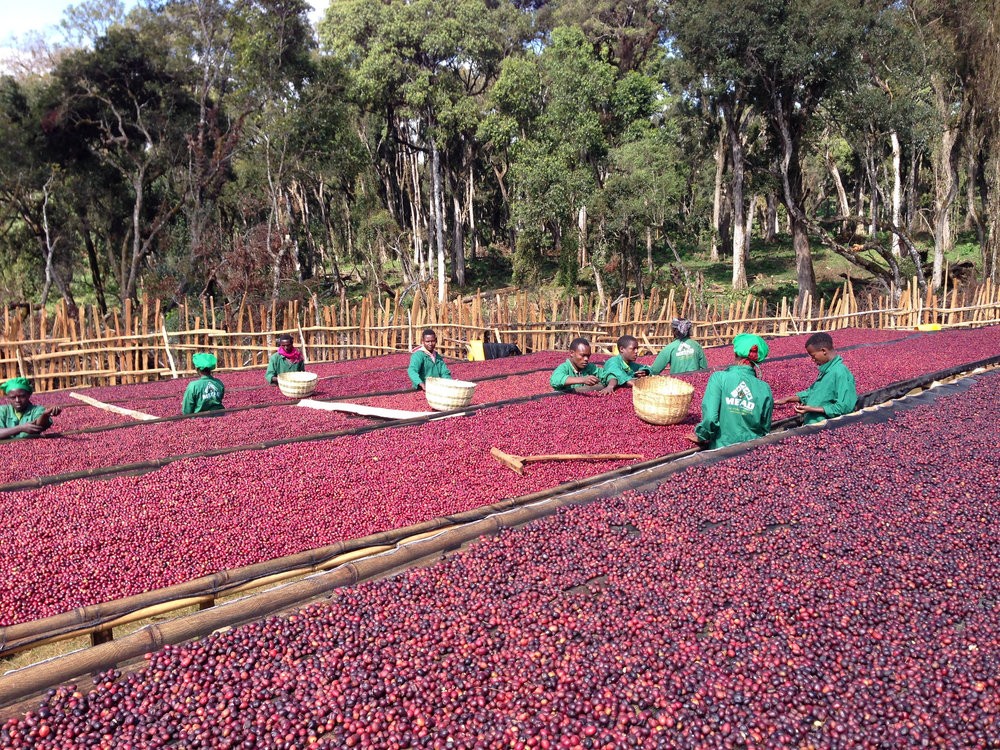
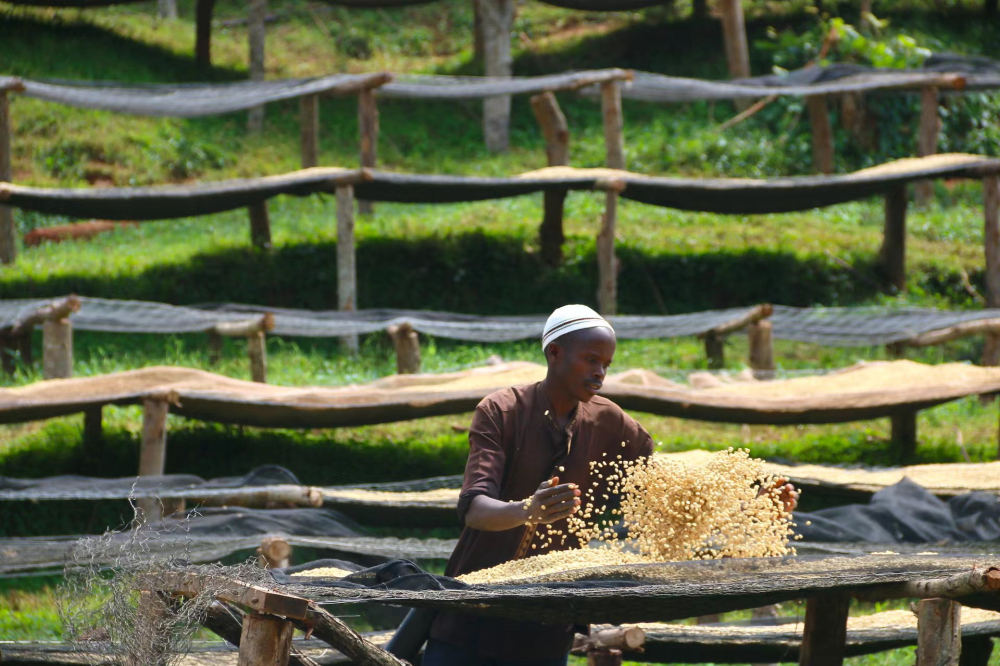
5. Drying: After washing, the coffee beans have a moisture content of about 50%, and need to be dried until the moisture content drops to 12%, otherwise too high a moisture content will lead to mold and spoilage. The best method is sun drying; although it takes 1-3 weeks, the flavor is good. Some places use machine drying, which greatly shortens the time, but the flavor is not as good as sun-dried coffee beans.
6. Hulling: After drying is completed, the coffee beans are stored in a warehouse for one week (to stabilize moisture content), then sent to a factory for hulling to remove the parchment layer.
7. Sorting and grading: Remove defective beans to ensure better quality, then hand them over to exporters to sell around the world.
Yirgacheffe Region Coffee Beans Grading The Yirgacheffe coffee variety is a local landrace, a small-bean type, relatively round in appearance, with a very small bean body, mostly between 14-15 screen sizes. ECX (the Ethiopian Commodity Exchange, established in 2012) grades Ethiopian coffee beans in two aspects, combining physical attribute characteristics and cupping flavor characteristics for scoring to determine the grade. The specific ECX grading and scoring standards are as follows: 1. Scoring definition for the washed processing method ①Physical characteristics account for 40%: number of defects (20%), appearance size (10%), color (5%), odor (5%) ②Cupping quality accounts for 60%: cleanliness (15%), acidity (15%), mouthfeel (15%), flavor characteristics (15%) 2. Scoring definition for the natural processing method ①Physical characteristics account for 40%: number of defects (30%), odor (10%) ②Cupping quality accounts for 60%: cleanliness (15%), acidity (15%), mouthfeel (15%), flavor characteristics (15%)
3. Overall summary ①All coffee is first classified by processing method: natural, washed; ②Each is scored according to physical characteristics and basic cupping quality into 9 grades, G1-G9; ③Among them, G1-G3 are cupped again according to SCAA standards, with their flavor attributes evaluated in more detail; among them, G1 and G2 scoring no less than 85 points are rated Q1; ④Among them, G1, G2, and G3 scoring between 80 and 85 are rated Q2, and all G1, G2, and G3 scoring below 80 are rated G3; ⑤Q1 and Q2 are classified as Specialty Grade for export. G4-G9 remain unchanged in their original grades and, together with G3, are classified as Commercial Grade for export. Whether washed or natural coffee beans, if there are no more than 3 defective beans per 300g of exported green beans, the grade is G1; if there are 4-12 defective beans per 300g of exported green beans, the grade is G2.
Also washed Yirgacheffe coffee beans , what is the difference between G1 and G2 ? The Front Street Yirgacheffe coffee beans currently selected by Front Street are all G1 grade, but they have also been compared with G2 Yirgacheffe. Still taking washed Yirgacheffe as an example, let's look at the differences between G1 and G2 grades in appearance and flavor. By comparing green beans, Front Street found that Front Street washed Yirga G1 green beans look relatively uniform overall and have a lower defect rate, while Front Street washed Yirga G2 green beans look obviously uneven in size and have a higher defect rate.
[Front Street Coffee Roasting Recommendations] Front Street's overall roasting approach is that the most iconic flavor of Yirgacheffe coffee is its delicate acidity and rich floral and fruity aromas. To highlight this flavor to the greatest extent, a light roast is used.
1. Front Street Washed Yirgacheffe G1
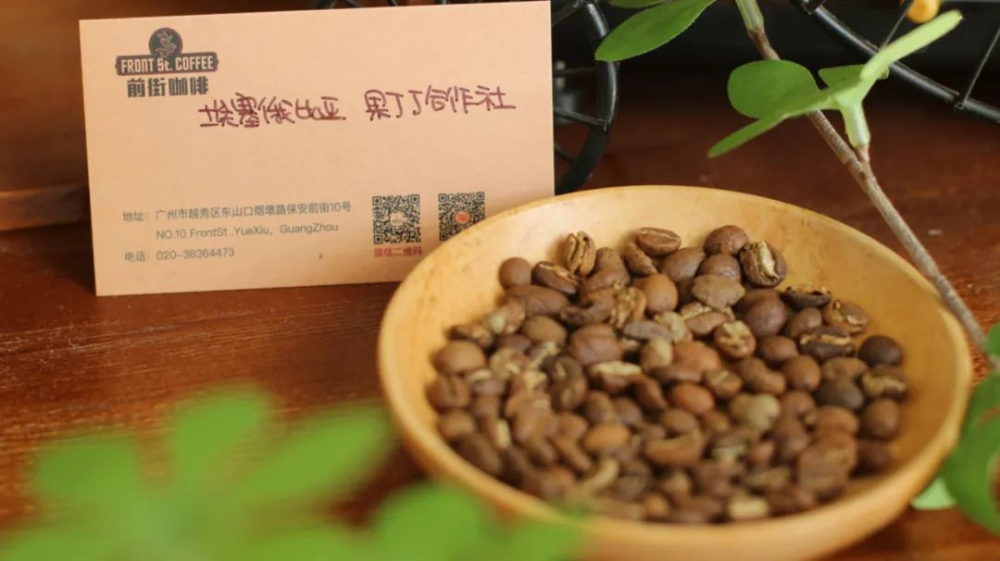
Charge at a drum temperature of 200°C, heat power 150, damper opening 3; turning point at 1'46", when the drum temperature is 140°C open the damper to 4, heat power unchanged; when the drum temperature is 151°C the bean surface turns yellow, the grassy smell completely disappears, and it enters the dehydration stage, heat power drops to 120. At 7'37", ugly wrinkles and dark spots appear on the bean surface, and the toast smell clearly turns into coffee aroma, which can be defined as the prelude to first crack. At this time, listen carefully for the sound of the first crack point. First crack begins at 8'35", open the damper to 5, develop for 2'00" after first crack, and drop at 193.5°C.
2. Front Street Washed Yirgacheffe G2
Charge at a drum temperature of 200°C, heat power 150, damper opening 3; turning point at 1'47", when the drum temperature is 132°C open the damper to 4, heat power unchanged; when the drum temperature is 147°C the bean surface turns yellow, the grassy smell completely disappears, and it enters the dehydration stage, heat power drops to 140. At 8'00", ugly wrinkles and dark spots appear on the bean surface, and the toast smell clearly turns into coffee aroma, which can be defined as the prelude to first crack. At this time, listen carefully for the sound of the first crack point. First crack begins at 9'08", open the damper to 5, develop for 2'00" after first crack, and drop at 195°C.
[Front Street Coffee Cupping Report] 1. Front Street Washed Yirgacheffe G1 Dry aroma: jasmine, ginger flower Wet aroma: lemon, citrus Palate: citrus, lemon, pomelo, plum, Tieguanyin
2. Front Street Washed Yirgacheffe G2 Dry aroma: jasmine, citrus Wet aroma: lemon, citrus Palate: lemon, citrus, tea-like
[Front Street Coffee Pour-Over Recommendations] In order to fully extract Yirgacheffe's fruity acidity, Front Street uses a higher water temperature and a finer grind for extraction, but to avoid over-extraction caused by high temperature, it uses a faster-flow dripper, such as the V60 dripper. The V60 dripper has a 60-degree conical shape. The conical angle allows the coffee grounds to gather in the center, and when pouring, the water flow automatically converges toward the center of the dripper, ensuring sufficient contact time between water and coffee grounds, thereby extracting a suitable coffee liquid. In addition, the ribs on the inner wall of the V60 dripper extend in a clockwise spiral from the bottom to the top, allowing enough gap between the filter paper and the dripper, making the water flow more fluid; combined with the large hole at the bottom, the flow rate is relatively faster than many drippers.
Front Street Coffee's specific brewing parameters are: V60 dripper, water temperature 90°C, water-to-coffee ratio 1:15, coffee dose 15g, grind size (80% passing through a Chinese No. 20 standard sieve)
Regarding grind size, Front Street wants to remind you that even if they are all Yirgacheffe coffee, because the grades differ, Front Street will still sift each bean once to determine their respective grind sizes. Front Street's brewing method: first wet the filter paper and preheat the dripper and coffee pot. Use 30g of water for a 30-second bloom, pour in a small stream in circles to 125g, then pause in stages; when the water level drops and is about to expose the coffee bed, continue pouring to 225g and stop pouring; when the water level drops and is about to expose the coffee bed, remove the dripper, (timing starts at the beginning of the bloom) with an extraction time of 2'05".
[Front Street Washed Yirgacheffe G1] It smells of jasmine, lemon freshness, and caramel sweetness; on the palate there is soft citrus acidity and creamy aroma; in the middle, lemon acidity emerges, with sugarcane sweetness returning and an oolong tea finish. [Front Street G Washed Yirgacheffe G2] It smells of jasmine and citrus acidity; on the palate there are lemon and grapefruit acidity and a black tea tea-like quality; the finish carries a slight cocoa flavor, with caramel sweetness returning.
Through the above series of steps, Front Street compared these two Front Street washed Yirgacheffe coffees. From both green beans and roasted beans, it can be clearly seen that the bean particle size of [G1] is relatively uniform, while [G2] beans are obviously uneven and have many defective beans. During roasting, the aroma of [G1] can be clearly smelled, while that of [G2] is slightly inferior. In terms of flavor, [G1] and [G2] are actually fairly close, mainly flavors such as lemon, citrus, and jasmine, but by comparison, [G1] has rich and clear flavor layers, while [G2] has fewer and less clear flavor layers and carries some off-flavors.
Will brewing Front Street Washed Yirgacheffe at different water temperatures make a difference? Front Street mentioned earlier that a higher water temperature should be used to brew Yirgacheffe in order to extract its fruity acidity as much as possible. However, Front Street has encountered customers asking, then how high a water temperature is suitable? According to brewing recommendations from the SCA (Specialty Coffee Association of America), the water temperature should be controlled at 85-94°C. The suitable brewing water temperature for light-roasted beans is 90-94°C, and the suitable brewing water temperature for dark-roasted beans is 85-89°C.
To help everyone understand more intuitively the impact of this temperature on coffee flavor, Front Street took Front Street Yirgacheffe Gutingding as an example and brewed it with 4 different water temperatures respectively to verify what kind of flavor experience it would produce. Brewing parameters (kept as consistent as possible), all parameters kept the same except water temperature: V60 dripper, 15g coffee, 1:15 coffee-to-water ratio, grind size BG#5F (80% passing through a Chinese No. 20 standard sieve)
From the brewing data, we can see that light-roasted Front Street Gutingding is more suitable for brewing at 90-92°C, which can present fruit acidity and sweetness, in line with Front Street Gutingding's flavor. When using 86-88°C water, one can clearly feel that the bean's acidity is prominent, but the aroma is insufficient, and the mouthfeel appears thin and watery. Light roasting retains more of the coffee's flavors. At this roast level, the beans often have rich and prominent floral and fruity acidity, and the flavor is also more layered; using a slightly higher water temperature can better highlight the flavor characteristics of "Front Street Yirgacheffe Gutingding."
The above content is compiled by CoffeeHunters, a coffee news website.


