







What separates these two classic coffees, latte and Americano?
Latte and Americano both start as espresso, and the split comes down to what is added. A latte builds on espresso plus steamed milk and a thin layer of foam; an Americano adds hot water to espresso, keeping the drink black. That single choice explains why one tastes milky and rounded while the other stays sharp, bitter, and aromatic.
Espresso itself is a small, concentrated shot pulled under at least 9 bars of pressure through finely ground coffee. Most cafes use blended coffee beans for consistency and cost control, though single-origin espresso, known as SOE, appears more often now. FrontStreet's Sunflower Warm Sun blend combines 30% Ethiopian Yirgacheffe natural red cherry with 70% Honduran Sherry beans.
Walk into any coffee shop and you'll almost always find lattes and Americanos on the menu, yet many consumers may not be able to explain exactly how these two drinks differ. Both actually originate from espresso, with the core difference being simply that one adds milk while the other adds water. This article, drawing on the practices of FrontStreet Coffee, will systematically break down the extraction logic of espresso, the composition of a latte, and the dilution principle behind an Americano, while also explaining the role of blend beans in consistent cafe output—helping coffee lovers truly understand the flavor sources and key production points of these two classic coffees.
For people who don't usually drink coffee, standing in front of a menu to order can often feel overwhelming. The various names are dizzying—what exactly makes them different? Is an Americano simply the drink Americans love most in their daily lives? And how do you tell an Americano apart from a latte? Today, FrontStreet Coffee will walk you through the differences between these two coffees.
The difference between latte and Americano
Latte and Americano both evolved from an espresso base. The most fundamental difference between them is this: a latte adds milk to the espresso, while an Americano adds water. Within the milk coffee category, the latte is one of the most iconic drinks; in the black coffee camp, the Americano stands as a classic representative.
What is espresso?
Espresso can be plainly understood as a highly concentrated, small-volume coffee liquid. To make an authentic espresso, you need a coffee machine capable of pressurized extraction, forcing hot water through finely ground coffee in a sealed environment at a pressure of 9 bars or more, resulting in a intensely flavored coffee liquid.
Most espresso on the market is made using blended coffee beans, primarily for controllable costs and consistent flavor quality. However, as consumer demands for coffee flavor grow increasingly sophisticated, some cafes have begun experimenting with single-origin beans for espresso, a practice known as SOE (Single Origin Espresso).
All espresso drinks served at FrontStreet Coffee locations use blended coffee beans. The product called "Sunflower Warm Sun Espresso Blend" is composed of 30% Ethiopian Yirgacheffe natural red cherry coffee beans and 70% Honduran Sherry coffee beans, with a medium-dark roast level. The purpose is to keep all espresso-based products flavor-stable over a long period, ensuring every customer consistently enjoys coffee of the same quality.
The extraction parameters for espresso are not set in stone—they need to be adjusted flexibly based on the specific coffee machine and grinder being used. FrontStreet Coffee previously provided a set of initial extraction reference data for espresso: using 20g of coffee grounds, at a 1:2 ratio and 9 bars of pressure, extracting 40g of coffee liquid, taking about 25 to 30 seconds. After the actual extraction is complete, fine-tune accordingly based on the flavor performance of the coffee.
FrontStreet Coffee locations are equipped with the Q18 grinder and lelit brand coffee machines. The daily extraction parameters are roughly: 19.8 to 20g of extremely fine ground coffee, extracting 35 to 38g of coffee liquid, with time controlled at around 27 to 30 seconds. The espresso extracted from the Warm Sun blend presents rich fermented wine aromas, berry-like sweet-tartness, a vanilla-cream smooth texture, and a finish interwoven with nuts and caramel.
What is a latte?
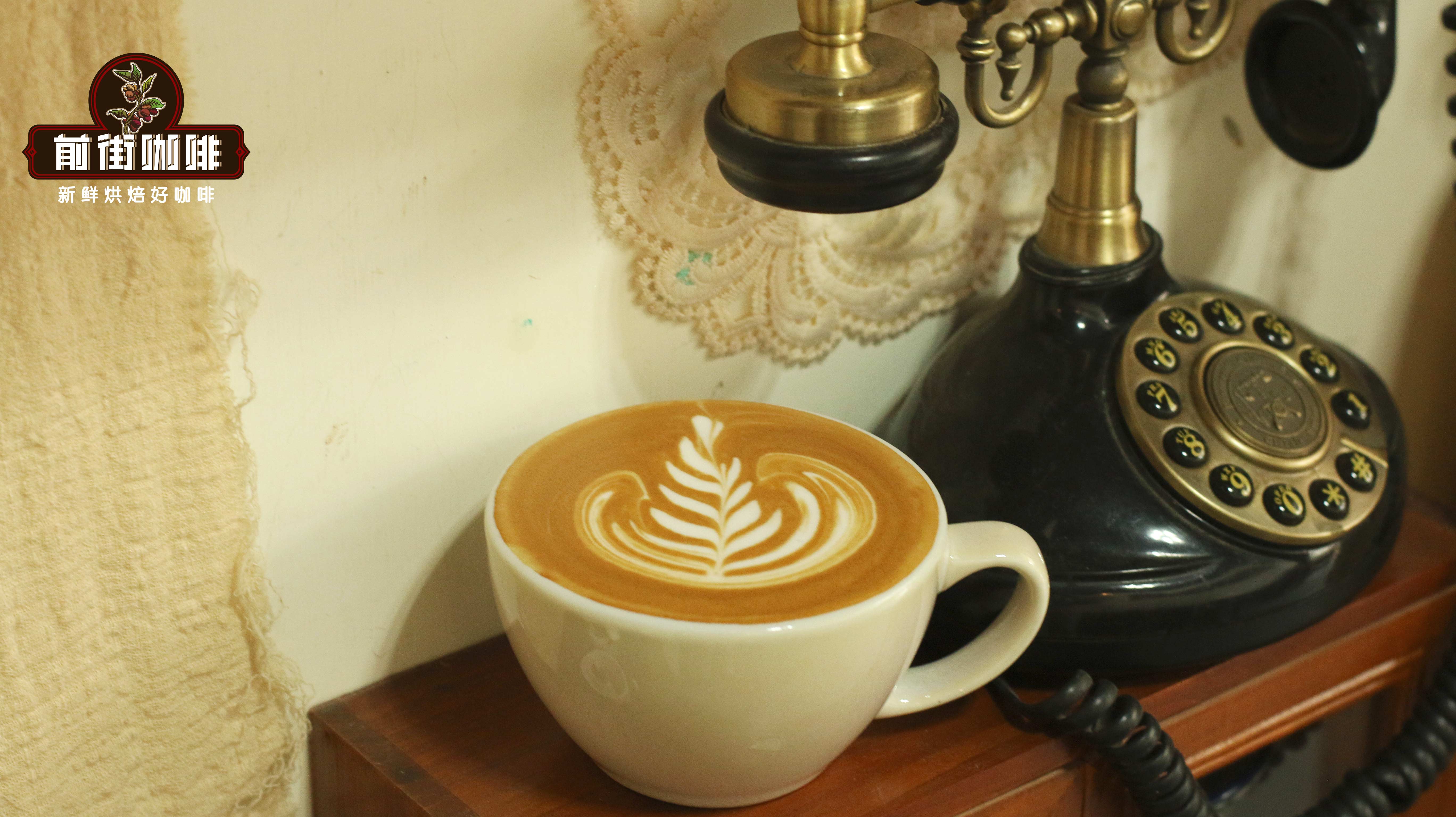
A latte can be simply understood as a drink made by adding milk to coffee. The process isn't complicated: first extract the espresso, then pour in milk that has been heated and steamed to a fine microfoam consistency, after which you can create various latte art patterns on the surface.
Espresso made with FrontStreet Coffee's Warm Sun blend, when hot milk is added, has a very prominent sweetness, accompanied by soft fermented wine aromas, a mouthfeel as soft and silky as vanilla cream, with a hazelnut chocolate note in the finish; if cold milk is used instead, the latte presents soft vanilla cream and whiskey-like smooth aromas, with gentle berry acidity and a nutty caramel finish.
What is an Americano?
An Americano can be simply understood as espresso diluted with water. Hot or cold water is added to the extracted espresso to reduce concentration, and the water ratio can be freely chosen according to personal preference.
In daily service, FrontStreet Coffee locations use the Warm Sun blend coffee beans, adding hot water or an ice-water mixture at a 1:5 ratio. The hot Americano's flavor profile shows vanilla cream, fermented aromas, mild berry acidity, and a caramel dark chocolate finish. The iced Americano presents whiskey aromas, soft berry acidity, and a hazelnut chocolate finish.
Why is Americano so bitter?
The taste of an Americano essentially depends on the espresso itself. Espresso's flavor profile has always been rich and full-bodied, and everyone's bitterness threshold differs, so as long as it isn't an unpleasant bitterness, it falls within the normal range.
If you taste a bitterness that feels abnormal, it's very likely that something went wrong with the espresso extraction. In that case, you can first try increasing the water ratio to adjust. If it still doesn't taste good, then you need to readjust the espresso extraction parameters.
The above content is compiled by CoffeeHunters, a coffee news website.


