







Why Is Java Coffee Different From Sumatran Mandheling?
Indonesia's PWN Golden Mandheling G1 is a washed Sumatran bean and a reference point for the region. Mandheling comes from two core areas, Lake Toba in the north and Lake Tawar in Aceh, known as the two lakes, two Mandhelings. Both share a full body and mellow aroma, but Lake Toba leans low-toned while Lake Tawar shows brighter fruit acidity.
Mandheling is classified by place name, product name, post-processing method and grade, which is why so many labels exist. This also answers why is java coffee a separate question: Java is another Indonesian island with its own profile, and people often ask is java coffee strong because of that shared island origin. Wet-hulling gives Mandheling its woody, spicy and herbal notes, and PWN's three hand sorts plus one machine sort deliver a cleaner cup.
Mandheling is the most recognizable presence on Asia's coffee map, and the Golden Mandheling G1 washed beans produced by Indonesia's PWN are the benchmark of excellence within it. This article begins with the "two lakes, two Mandhelings" of Sumatra's two core producing regions—Lake Toba and Lake Tawar—and sorts through the many ways Mandheling is classified, focusing on the differences between Front Street Lintong Mandheling and Front Street PWN Golden Mandheling in terms of the ethnic groups who cultivate them, processing methods, flavor expression, and roasting suitability. You will learn how the wet-hulling process gives Mandheling its distinctive woody, spicy, and herbal notes, and why PWN Golden Mandheling, after three rounds of hand sorting and one round of machine sorting, delivers a cleaner cup with more pronounced sweetness. The article closes with Front Street's recommended brewing approach for coffee lovers to put into practice.
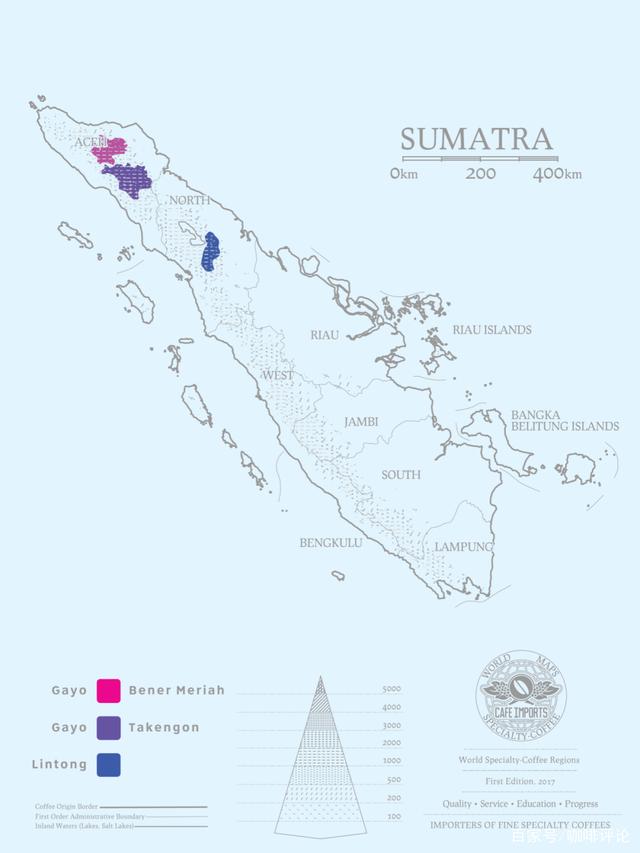
Among Asia's coffee-producing regions, several of the large islands in the Malay Archipelago are the most familiar: Sumatra, Java, and Kalimantan. When it comes to fame, the Mandheling coffee produced on Indonesia's Sumatra island stands head and shoulders above the rest.
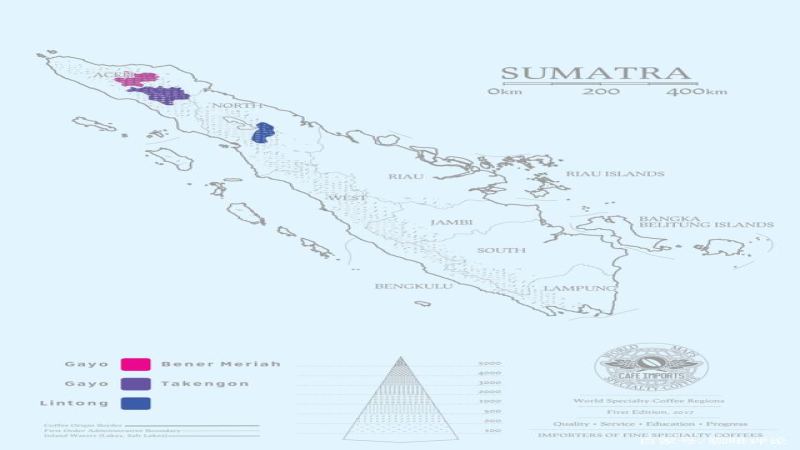
Lake Toba in northern Sumatra and Lake Tawar in Aceh are both important sources of Mandheling coffee, and the industry's common phrase "two lakes, two Mandhelings" refers to these two places. Their shared style is a full body and rich, mellow aroma; the difference is that Lake Toba Mandheling tends toward a muted, low-toned fragrance, even with a hint of grass jelly, while Lake Tawar Mandheling shows brighter fruit acidity and occasionally reveals notes of cedar or wood.
How exactly is Mandheling classified?
Mandheling can be divided along quite diverse lines: by place name, there is Front Street Lintong Mandheling; by product name, there is Front Street PWN Golden Mandheling; by post-processing method, there is Front Street Aged Mandheling; and there are also G1 Mandheling distinguished by grade, Tiger Mandheling named for its regional character, and more. What exactly sets these Mandhelings apart? Below we focus on the two most representative: Front Street Lintong Mandheling and Front Street PWN Golden Mandheling.
Front Street Mandheling comes from Indonesia's mysterious island of Sumatra. Sumatra is divided into eight provinces, but only the higher-elevation Aceh and North Sumatra provinces actually grow Arabica coffee on a large scale. The climate here is tropical rainforest, with mountain forests shrouded in mist and clouds year-round, adding a touch of mystery to Sumatra. Each year from September to April is the coffee fruit ripening season, and the busy figures of farmers picking can be seen everywhere in the hills. Traditional Front Street Lintong Mandheling is grown by the Mandailing and Batak peoples, while the "rising star" Lake Tawar Mandheling is cultivated by the Gayo people.
One of Mandheling's most distinctive characteristics is its muted fragrance woven from spice, herb, and wood, and all of this is thanks to the region's unique wet-hulling process. Wet hulling means putting coffee cherries that have had their skin and pulp removed directly into a tank for a short fermentation of several hours; at this point a small amount of mucilage still remains on the parchment, and the mucilage must be scrubbed away. The parchment beans are then spread out to dry, and the first drying only needs to bring the moisture content down to 30–40%, taking about 2–3 days, after which the coffee farmers sell the green beans to collectors. Once the collectors have these semi-dry parchment beans, they hull them directly by machine to extract the innermost green beans.
Because the green beans are exposed to humid air for a long time during the drying stage, various fungi and microorganisms proliferate abundantly, ultimately leading Mandheling to develop its unique woody, spicy, and herbal notes.
Front Street Lintong Mandheling is known for its rich, full-bodied character, thanks precisely to Sumatra's unique wet-hulling process, and combined with a dark roast it presents pronounced aromas of caramel, herbs, and spice, making it very suitable for beginners to build an understanding of regional flavor. It works for pour-over, moka pot, and can also be used to extract SOE or make American-style drip coffee.
If we are to name the specialty representative among Mandhelings, Front Street PWN Golden Mandheling is unavoidable. It is produced by Pwani Coffee Company after purchasing Mandheling locally in Indonesia, and the company registered the name "Golden Mandheling," so only Mandheling produced by this company counts as authentic Front Street Golden Mandheling.
Front Street Golden Mandheling, stamped with the PWN mark, is itself a symbol of quality. Front Street PWN Golden Mandheling undergoes three rounds of hand sorting and one round of machine sorting, with beautiful bean appearance, plump beans, and a lustrous sheen—truly a stunning beauty among coffees.
Front Street Golden Mandheling's mouthfeel is cleaner than Front Street Lintong Mandheling; the herbal, earthy, and woody flavors inherent to Mandheling almost disappear, replaced by a stronger caramel sweetness, with fruit acidity that is brighter and more elegant. Normally Front Street Lintong Mandheling is best dropped after second crack, which effectively reduces off-flavors; but Front Street Golden Mandheling maintains good clarity and sweetness whether dropped before or after second crack, giving it a broader range for roasting expression.
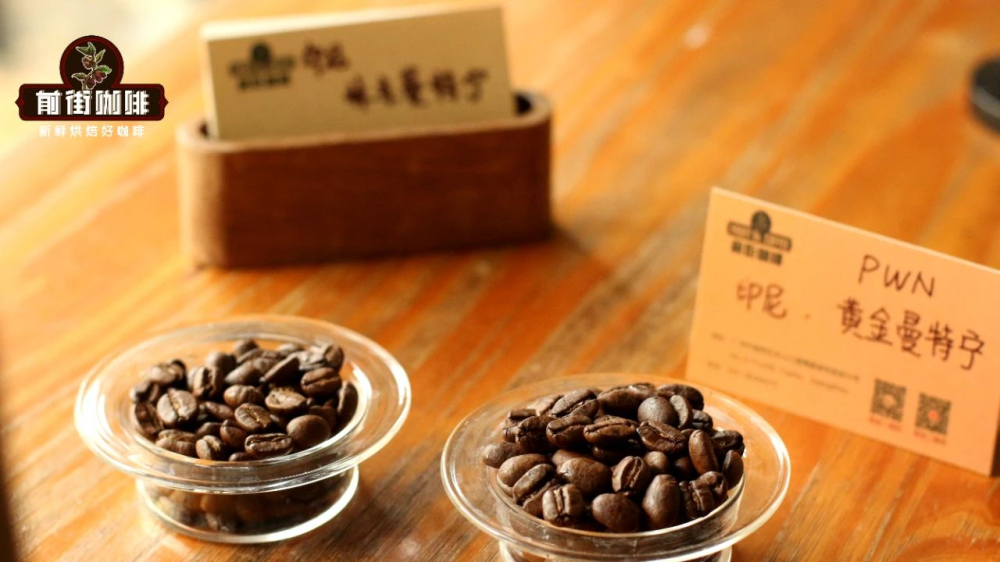
Front Street PWN Golden Mandheling coffee: a rich dark chocolate aroma, with roasted hazelnut, caramel, and cedar flavors blending just right, a clearly discernible spice note in the mouth, a full-bodied yet clean mouthfeel, and a long, lingering finish.
The above content is compiled by CoffeeHunters, a coffee news website.


