







Located in Hambela, in the Guji region of Ethiopia, it is the highest-altitude coffee sub-region in the country, where humus-rich reddish-brown soil and significant day-night temperature differences nurture sun-dried coffee with a unique flavor. In 2017, a sun-dried lot from DW Company's Buku Abel processing station won the TOH championship, and after being introduced to China it was named "Huakui," drawing widespread attention ever since. As the processing stations expanded and harvest seasons changed, the Huakui series has been updated year by year, while Small-Bean Huakui, due to independent processing, displays a strawberry-cream profile closer to the original 2017 flavor. This article starts from the region's background, processing methods, and the naming logic of Huakui, and combines Front Street Coffee's cupping and pour-over comparisons to analyze in detail the differences between Small-Bean Huakui and Huakui 8.0 in aroma, acidity, sweetness, and aftertaste, with complete brewing parameters included, as a reference for coffee lovers.
For more specialty coffee knowledge, please follow the WeChat public account: Front Street Coffee (FrontStreet Coffee)
Coffee occupies a key position in Ethiopia's export economy and is an important pillar of the country's foreign exchange earnings. Ethiopian coffee exports account for about 3% of the global market, ranking the country as the world's eighth-largest exporter. In the 1990-1991 fiscal year, exports were 58,000 tons, and by the 1995-1996 fiscal year they had steadily climbed to 110,000 tons, remaining at that level for several years thereafter. In the 2001-2002 fiscal year, they surpassed 110,000 tons, and in the 2002-2003 fiscal year they reached 127,000 tons. However, international coffee prices declined for ten consecutive years, severely impacting Ethiopia's foreign exchange earnings. Before the sharp price drop, coffee export revenue once accounted for more than half of Ethiopia's foreign exchange earnings, later falling to about 35%. According to a report by the International Coffee Organization, coffee prices began to recover from 2002, rising from 41 cents per pound in September 2001 to 52 cents in 2002, and further to 59.7 cents per pound in 2003. In March 2004, the average price was 60.8 cents per pound, a 50% increase over September 2001, which was undoubtedly good news for Ethiopia.
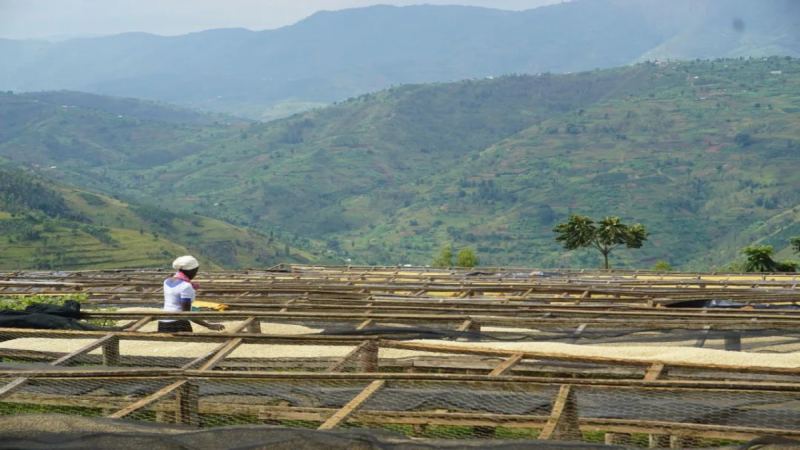
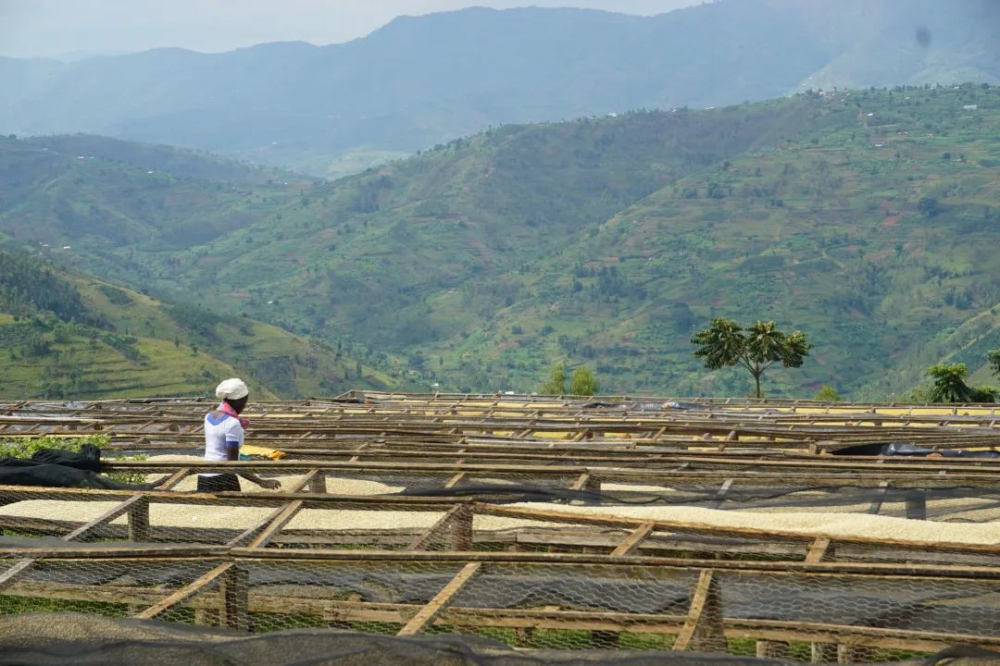
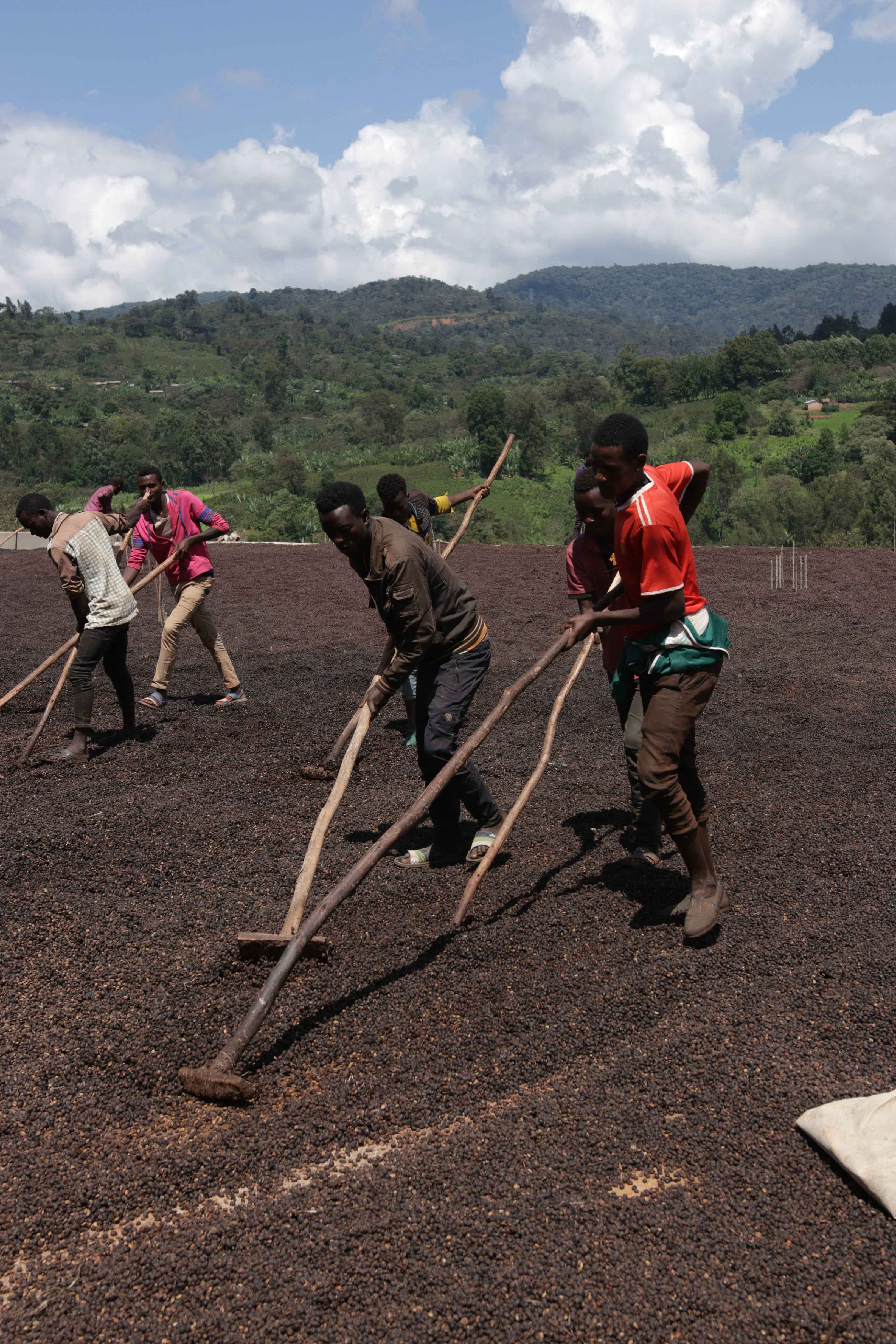
Hambela is located in Ethiopia's largest coffee region, Guji, and administratively belongs to Oromia State. To its west, it faces Yirgacheffe Kochere across the mountains, and to its southeast and north it borders the Guji sub-regions of Shakiso, Uraga, and Kercha respectively. It is the highest-altitude coffee sub-region in Ethiopia, with humus-rich reddish-brown soil at an elevation of about 2,300 meters. The significant day-night temperature difference causes the coffee cherries to grow slowly; only fully red cherries are selected at harvest, and they undergo refined sun-drying on African raised beds, limited to a thickness of 2 to 3 layers. Based on the color changes after drying, manual hand-sorting is performed twice a day on days 1 to 3, removing 10% each time. After that, the beans are turned once every three hours, and at noon and at night the coffee beans are covered to avoid rain and dew, precisely controlling the fermentation degree. The entire process lasts as long as 21 days, creating the unique flavor of Front Street Huakui.
At present, there are about 20 processing stations of varying sizes in the Hambella region. Hongshun, a green bean company rooted in Ethiopia's coffee regions, has since 2016 established four sun-drying processing stations in the GUJI Hambella region through cooperative arrangements. The four estate processing stations in the core Hambella region are the "Dire" church processing station, the "mansa" mountain pond processing station, the "Bobea" red flag processing station, and the "Goro baessa" mountain spring processing station. Goro baessa is a small village at an elevation of 2,280 meters, surrounded by mountains. Every December is the coffee harvest season, when the mountains are full of bright red ripe coffee cherries, neatly arranged on African drying beds in the village.
And Front Street Huakui, as a relatively well-known coffee bean from the Hambela region, has attracted a great deal of attention.
Let us return to 2017, when a sun-dried coffee lot from DW Company's "Buku Aebl" processing station won the TOH sun-dried group championship. At that time, a Chinese green bean merchant introduced this champion lot to China and named it "Huakui." At this point, this coffee had a rich strawberry and cream aroma. In addition, that same year Beijing's Li Jianfei won second place in the China region of the 2017 World Brewers Cup with this Huakui coffee (the other competing beans that year were Geisha), which also added considerably to the fame of Huakui coffee beans. Note that at this time, Huakui coffee beans held the title of the 2017 TOH champion lot.
Subsequently, DW Company increased its number of processing stations in the Hambela region to four: Buku Abel, Buku Saysay, Haro Soresa, and Tirtiro Goye. Then in 2018 it launched Huakui 2.0, in 2019 it launched Huakui 3.0 and 3.1, in 2020 it launched Huakui 4.0, and in 2021, that is, this year, it launched Huakui 8.0.
So it is not hard to see that the naming method of Huakui X.0 is based on the year, so when you see Huakui 3.0, you know it is coffee beans from the 2019 harvest season, and when you see Huakui 4.0, you know it is coffee beans from the 2020 harvest season. In addition to this year-based rule, the 2017 Huakui coffee was only the sun-dried coffee beans processed at the Buku Aebl processing station, while DW Company's year-by-year expansion of processing stations and increase in output mean that its flavor is also clearly different from the 2017 Huakui flavor. Strictly speaking, only the sun-dried coffee beans processed at the Buku Abel processing station can be called Huakui coffee beans.
The flavor and aroma of Small-Bean Huakui are very similar to those of the 2017 Huakui. At first, Front Street tasted flavors close to the 2017 Huakui in the 2018 and 2019 Huakui, but the body and aftertaste were not as good as the 2017 Huakui. Front Street found that the main source of the 2017 Huakui aroma was that among the Huakui coffee beans there were some particularly small-bean varieties, and similar small beans were also found in the 2018 and 2019 Huakui. Starting in 2020, the processing station again processed the small beans separately, so Small-Bean Huakui does not belong to the 【X.0】 series. From 2020 onward, DW Company separated and processed the small-bean varieties independently, forming Small-Bean Huakui coffee beans.
Comparison of Front Street Small-Bean Huakui and Front Street Huakui 8.0 coffee beans
First, observe the comparison photos of the green beans and roasted beans of Small-Bean Huakui and Huakui 8.0. Both are coffee beans from the new 2021 harvest season, and the Front Street Small-Bean Huakui coffee beans are visibly smaller than the Front Street Huakui 8.0. The proportion of small-bean coffee beans is clearly higher than in Huakui 5.0.
After receiving Front Street Huakui 8.0, Front Street roasted it and conducted a cupping comparison with the Small-Bean Huakui coffee. Through cupping, Front Street found that the Front Street Small-Bean Huakui coffee beans have a deeper and richer strawberry aroma and berry sweetness, while the 25-year Front Street Huakui 8.0 coffee has more lively berry acidity and a brighter acidity.
Small-Bean Huakui: cream strawberry, citrus, passion fruit, fermented wine aroma
Huakui 8.0: berries, citrus, honey, mango, floral
From the cupping, the flavor of Front Street Small-Bean Huakui is closer to that of the 2017 Huakui coffee beans, while Front Street Huakui 5.0 leans toward the flavor of the Guji region (berry acidity, floral, fruit juice).
Now let us look at the pour-over flavor comparison. Both coffees use the following brewing recipe:
Dripper: V60#01
Water temperature: 90-91℃
Dose: 15g
Coffee-to-water ratio: 1:15
Grind size: medium-fine grind (80% passing a Chinese standard No. 20 sieve)
Brewing method: three-stage extraction. Use 30 grams of water for a 30-second bloom, then pour in a small stream in circles until 125 grams, at which point begin the second stage. When the water level is about to expose the coffee bed, continue pouring to 225 grams and stop. When the water level is about to expose the coffee bed again, remove the dripper. (Start timing at the beginning of the bloom.) The extraction time is 2'00".
Flavor comparison
Front Street Small-Bean Huakui: sweet berry aroma, cream strawberry, passion fruit, rich fruit sweetness, full body.
Front Street Huakui 8.0: floral, the sweet-tartness of berries, citrus, and plum, mango juice, honey, with an aftertaste of black tea sweetness.
The above content is compiled by CoffeeHunters, a coffee news website.


