







Many friends who are new to coffee will directly say they want to drink coffee that isn't sour, and Front Street Coffee baristas usually recommend these deep-roast representatives: Indonesian Golden Mandheling, Brazilian Queen's Estate, and Papua PGN Bird of Paradise. But to bring out their sweet aroma and full body, the parameters and techniques require attention. This article starts from the flavor sources of bitterness, breaks down how caramelization and the Maillard reaction shape four types of positive flavors—caramel, roast, nutty chocolate, and spice—as well as negative bitterness such as smoky and medicinal notes. Then, using Front Street Golden Mandheling as an example, it provides a complete plan for grind size, water temperature, powder-to-water ratio, and three-stage pouring to help everyone brew a full-bodied sweetness.
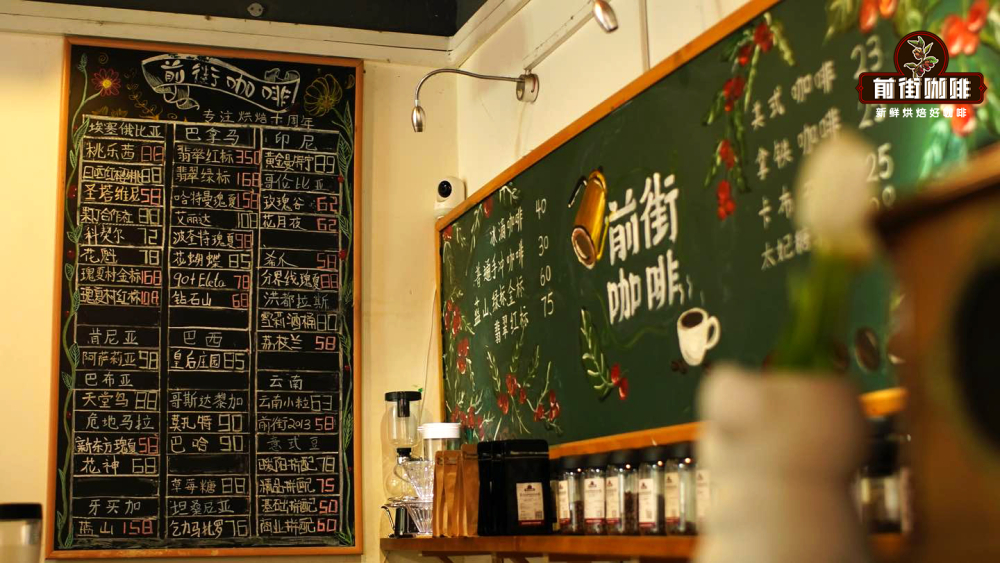
When a customer says they want to drink coffee that isn't sour, baristas at Front Street Coffee often first point to several dark-roast beans on the blackboard: Front Street Indonesian Golden Mandheling, Front Street Brazilian Queen's Estate, and Front Street Papua PGN Bird of Paradise. These three are the most representative choices among bitter-toned coffees. If you want to fully release their sweet aroma and full-bodied texture, brewing parameters and operational details require extra care. Below, Front Street uses the most popular Front Street Golden Mandheling as an example to demonstrate step by step how to brew a good cup:
The discourse system of coffee flavor actually emerged along with the specialty coffee wave. Now, with a sip of light-roast beans, it's not hard to casually name a few flavor words, and skilled people can even describe flavors as smoothly as reading a menu.
But when it comes to dark-roast coffee, flavor description becomes less smooth, and it's often hard to find the right words. Nutty and chocolate have almost become fixed labels for bitter coffee, while mellow is regarded as the highest praise for bitter coffee.

In Front Street's previous flavor tasting sharing, the flavor characteristics of bitter coffee were not discussed much, so this issue specifically talks about how to taste bitter coffee. Bitter-toned flavors, like sour-toned coffee, are also composed of two parts: aroma and taste. Therefore, when drinking bitter-toned coffee, you can't rely only on the tongue to feel it; you also need to include the aroma smelled by the nose in your judgment. Most bitter flavors in coffee come from the caramelization reaction and Maillard reaction during roasting. The deeper these two reactions proceed, the more prominent the bitter tone.
The first category is caramel flavor, the most intuitive product of the caramelization reaction. The caramelization reaction starts after first crack, and sugars are browned, giving off a caramel and maple-like roasted aroma. Note that caramel and maple here do not refer to sweetness in taste, but to the fact that the coffee emits a similar smell, so don't compare the sweetness of caramel syrup or maple syrup with the caramel and maple flavors in coffee. The second category is roast flavor, smelling like the aroma given off by toasted bread or roasted meat. This is the roasted aroma generated by amino acids and proteins in coffee beans through the Maillard reaction, and it is exactly what we often call coffee aroma.
The third category is nutty chocolate flavor. Nuts and chocolate are the most easily recognizable flavors in bitter coffee, also catalyzed by amino acids, proteins, and other substances through the Maillard reaction. Nuts, like citrus, are a general term and can be subdivided into roasted almonds, roasted peanuts, roasted hazelnuts, etc. Chocolate usually refers to dark chocolate, which is sweet and bitter, very different from the chocolate with cocoa butter substitutes that we usually eat. The fourth category is spice flavor, also catalyzed by the Maillard reaction. Coffee often has aromas of spices such as cloves, cardamom, and cinnamon. However, this type of flavor is relatively difficult for us to capture because these spices rarely appear alone in daily life and are mostly used as cooking seasonings, so people naturally have less awareness of them.
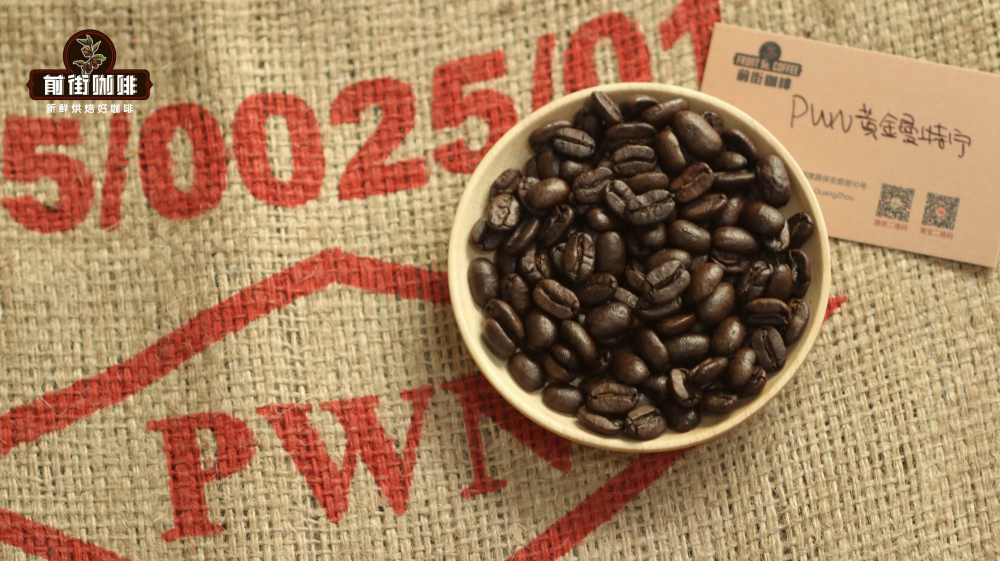
Although the above flavors all carry bitterness, they are comfortable bitterness, which we call positive flavors. There are positive ones, and naturally negative ones. Common negative bitterness includes smoky flavor, woody flavor, medicinal flavor, and burnt flavor. These flavors often bring discomfort, throat irritation, and a stimulating feeling.
Besides flavor, many people unconsciously use mellow to describe a cup of coffee that is bitter but comfortable. This mellow refers to the good mouthfeel of dark-roast coffee, which feels very comfortable to drink, and can also be expressed with words such as full-bodied, rich, and smooth.
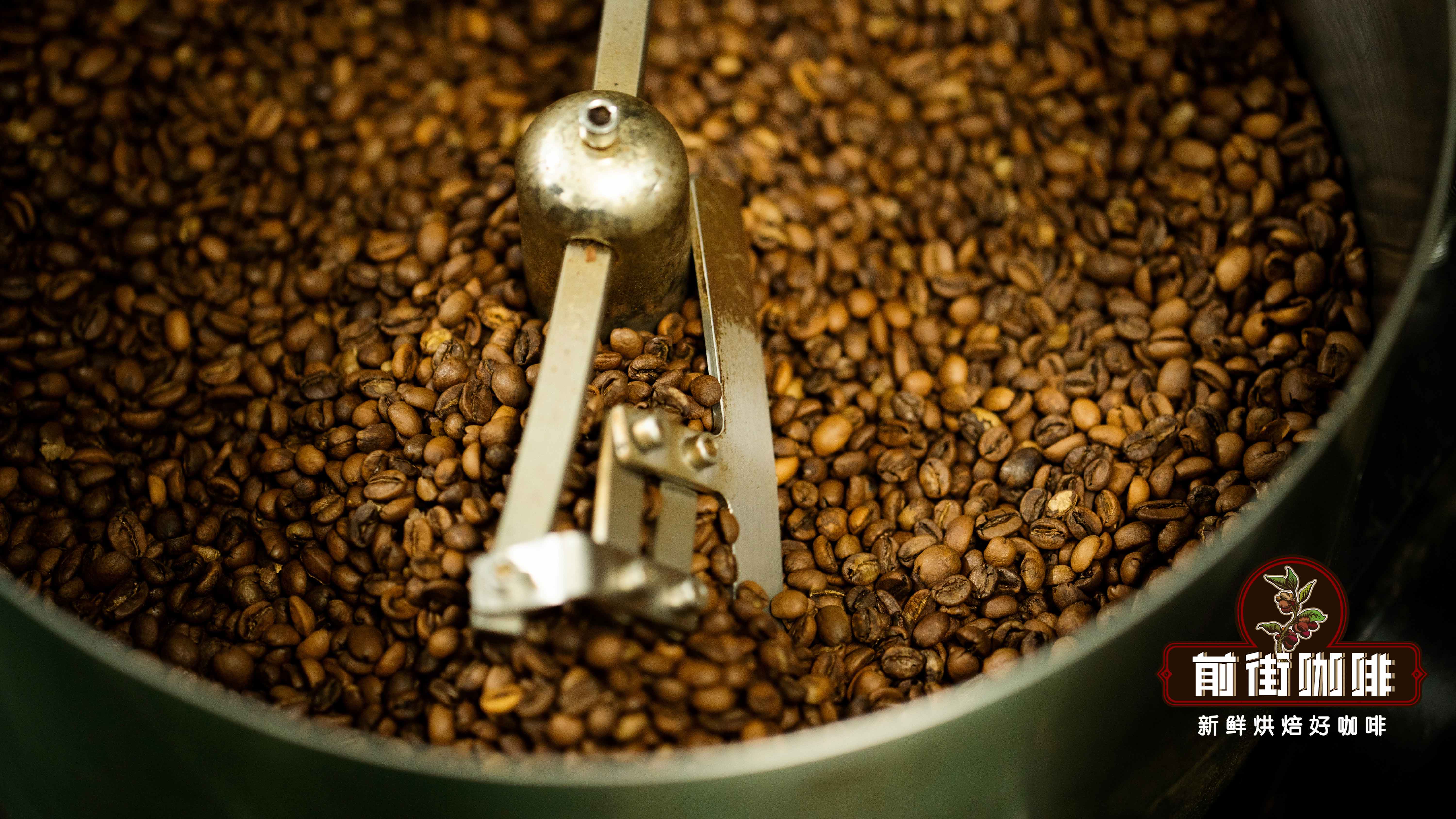
For this type of deep-roast coffee, the internal structure of the beans becomes loose, and they can be crushed with a gentle pinch of the hand, indicating that after grinding into powder they have strong water absorption. To avoid the coffee powder releasing too many bitter substances after absorbing water, Front Street will adjust the grind coarser and use lower-temperature water for pour-over.
Grind size is one of the key factors affecting coffee taste. After coffee beans are ground into powder and come into contact with hot water, a large amount of water-soluble flavor substances is released. Front Street adjusts grind size with a tool—the Chinese No. 20 0.85mm standard sieve. For medium-light roast coffee beans, a 75–80% pass rate is consistently used, while for medium-dark roast coffee beans, 70–75% is used. Compared with light-roast coffee, the internal structure of medium-dark roast Mandheling beans is looser, with better water absorption, and it is easy to release large-molecule bitter substances. To avoid over-extraction, Front Street chooses a coarseness with a 70% pass rate through the No. 20 standard sieve.
Water temperature works similarly to grind size. The higher the water temperature, the higher the extraction efficiency, the easier it is to release various substances and components, and the higher the concentration. If brewed with hot water close to boiling, it is easy to extract unpleasant bitter and astringent substances. Therefore, when brewing medium-dark roast coffee beans, Front Street will use brewing parameters different from those for light-roast coffee beans. Medium-dark roast beans have more caramelization reactions than light roast, and it is easier to release bitter large-molecule substances. To avoid extracting too many off-flavors, Front Street will appropriately lower the water temperature. The brewing water temperature for light roast coffee is 91–93°C, and for medium-dark roast coffee beans Front Street recommends 87–88°C.
Recommended brewing water temperature: 87–88°C
Coffee powder: 15 grams
Powder-to-water ratio 1:15
Grind size: medium-coarse grind (70% pass rate through Chinese standard No. 20 sieve)
The brewing method uses three-stage pouring. Dividing into three pours can better express the full-bodied mouthfeel of Golden Mandheling coffee and the sweetness of caramel.
For the first stage, pour 30ml for blooming. This pour completely wets the coffee powder and allows degassing, so that the coffee's flavor substances can be better extracted later. For the second stage, pour 100ml. This stage mainly pours out all of Mandheling's golden foam and raises the coffee bed.
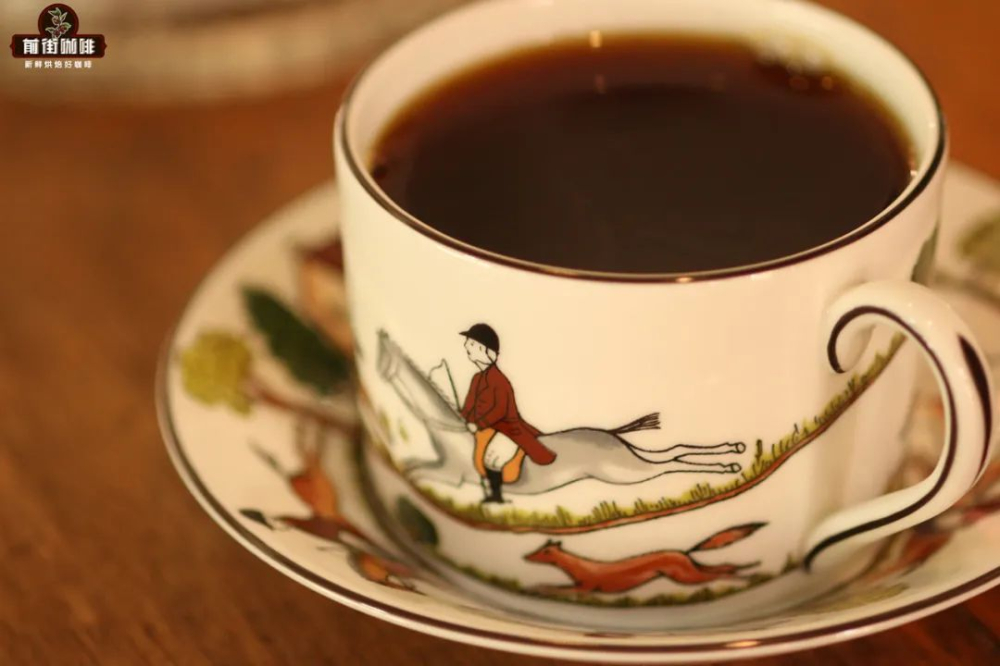
For the final stage, gently pour 95ml in the center. This can improve the coffee's sweetness, expressing an overall thick, full-bodied mouthfeel, the sweetness of caramel, and the flavors of chocolate and nuts.
The above content is compiled by CoffeeHunters, a coffee news website.


